Amazon publishes its own six steps for a new seller: get ready, list, price, choose fulfilment, advertise, get reviews. They are accurate and they are in the wrong order for the decisions that matter, because the step that decides whether the business works is the one before the account exists, and the step that gets most accounts into trouble is the registration nobody thought was worth reading about.
This is the path in the order it actually happens. Each step has a decision in it, and where that decision has an article of its own, this piece says what the decision is and sends you there rather than repeating it.
There are two businesses that both get called selling on Amazon, and they need different capital, different paperwork and different patience. One owns a product: private label, or a brand bringing its own range to the marketplace. The other sells products somebody else made: wholesale from a distributor, or buying at retail and reselling.
The owner's route costs more up front and takes longer to pay, and in return it owns the listing, the reviews and the brand. The reseller's route can start in a week with a few hundred dollars of stock, and in return it competes on price for a listing it does not control and can be gated out of a category by a policy it did not know existed. What Amazon actually permits a reseller to do, and where the gates are, is set out in
reselling on Amazon and what is allowed.
Neither is wrong. What is wrong is choosing one because a video said so and discovering the other was the fit after the stock has been bought.
Amazon offers two selling plans. The Individual plan costs $0.99 per item sold and covers listing, static pricing and both fulfilment options. The Professional plan costs $39.99 a month and adds bulk tools, automated pricing, brand building features, advertising, Amazon Business and access to the APIs. If you expect to sell more than about forty units a month the Professional plan is cheaper, and advertising and most of the programmes worth having require it, so it is the plan a business registers on.
Before you start the registration, have these ready, because it stalls without them: a government issued photo ID, an email address, an internationally chargeable credit card, a bank account with its routing number, your business licence or registration where you have one, proof of your residential address from the last 180 days such as a bank or credit card statement, and your tax information. Amazon then verifies your identity either from a photograph of you holding the ID or on a video call with an Amazon associate, and says that usually takes three business days or less.
Two things about the account that are not on Amazon's list. The first is that it is one account: a second one for the same business is against policy and is the most common way a new seller gets suspended before selling anything. The second is that the account is the asset. Everything you build sits inside it, and Amazon's performance rules apply from the first order. What those rules are and what happens when they are broken is the subject of
account health and getting reinstated, and it is worth reading before the first order rather than after the first notice.
A product that sells on Amazon has demand you can see, competition you can beat on something other than price, and margin left after every fee. Most first products fail the third test, and they fail it because the seller priced from the retail price downwards rather than from the landed cost upwards.
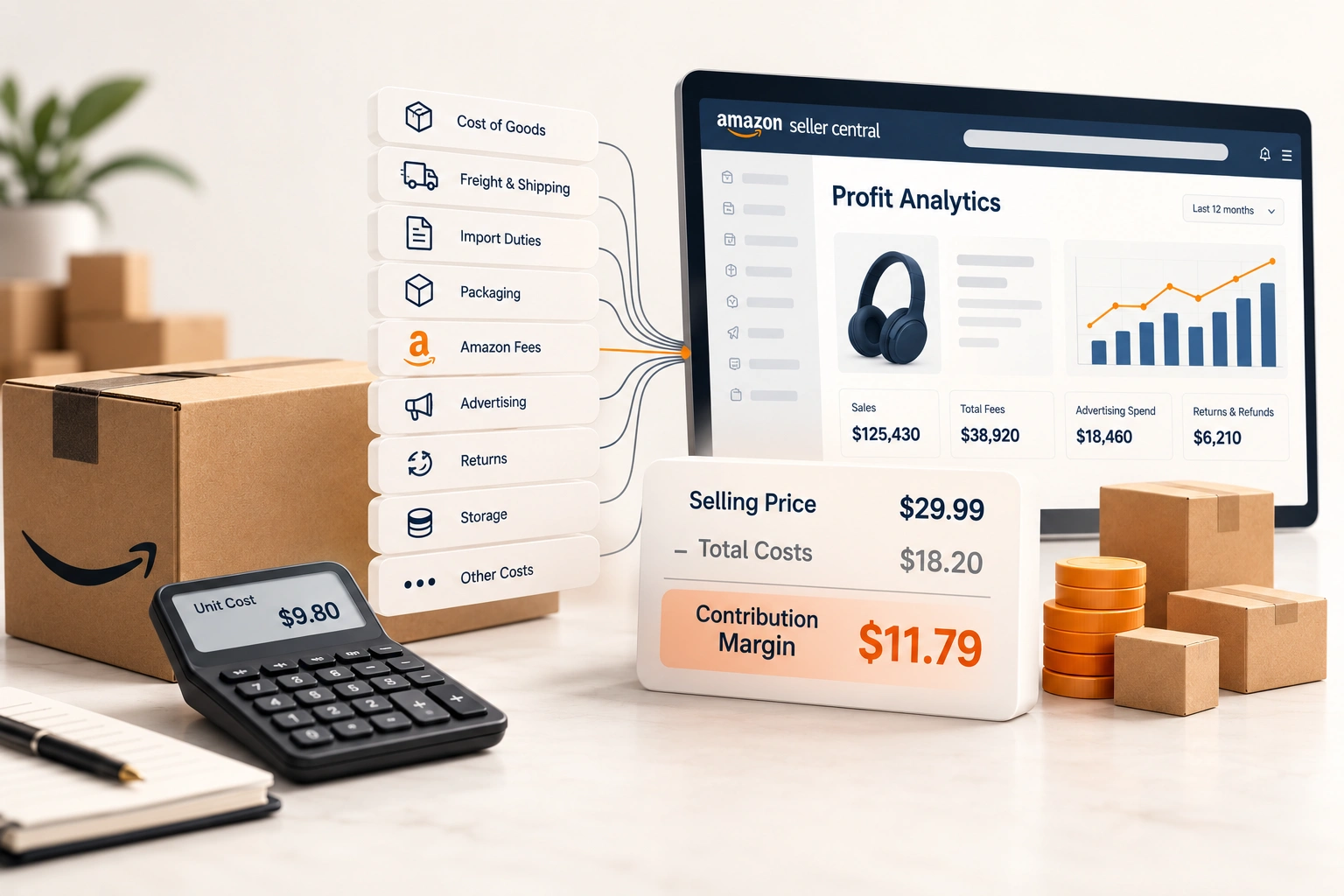
Landed cost is what the unit costs at Amazon's door: the goods, the freight, duties, the prep, and the inbound shipment. Add the referral fee, which is a percentage of the price by category, fulfilment if Amazon does it, storage, returns, and the advertising it will take to be seen at all, and what remains is the margin. Do that sum before sourcing a single unit. The full cost stack, item by item, is in
what it costs to sell on Amazon.
Where the stock comes from decides what the paperwork looks like and how much cash sits in inventory. Manufacturers want minimum orders and lead times. Distributors want a resale certificate and give you the invoices Amazon will one day ask for. Retail arbitrage needs neither and gives you receipts Amazon does not accept as proof of authenticity. The choices and what each demands are in
where to source products to sell.
If the product already exists on Amazon you attach an offer to its listing, and the listing is not yours. If it does not, you create it, and you will need a product identifier, usually a GTIN, before Amazon will let you. A brand with its own products should enrol in Brand Registry as early as its trademark allows, because the listing tools that matter, the storefront, the enhanced content and the protection against other sellers changing your page, all sit behind it.
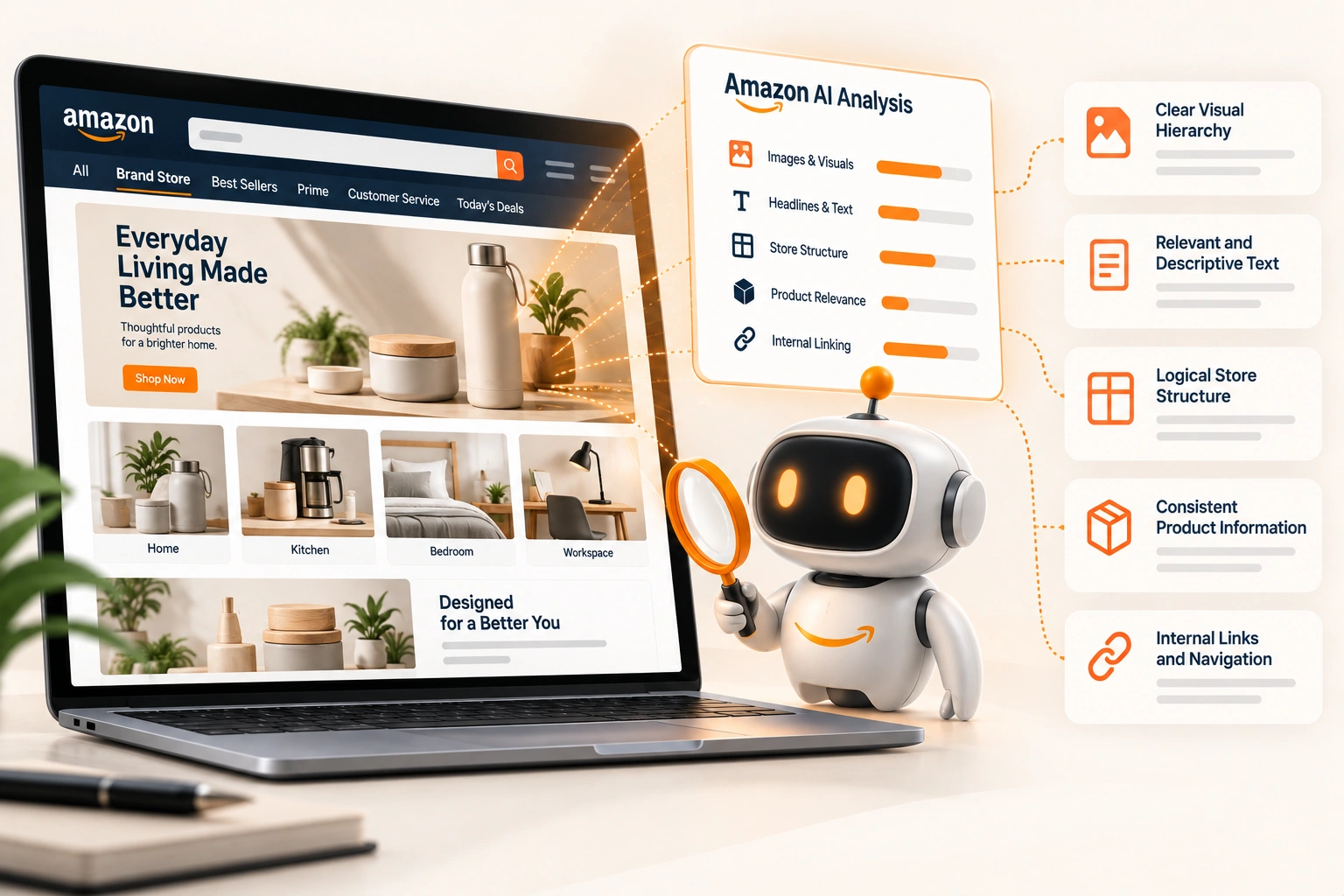
The listing itself is a title that reads like the product, bullets that answer the questions a shopper actually has, a main image on white that survives being shrunk to a thumbnail, and a category that is right, because the referral fee and the search placement both follow the category. Some categories and brands are gated, and approval to sell in them is asked for before listing, not discovered afterwards.
A listing is never finished. It is the thing every later result depends on, which is why the work of improving it is a cluster of its own on this site rather than a paragraph here.
The referral fee is a percentage of the total price, set by category, or a minimum amount, whichever is greater. Amazon's published range runs from 5% to 45% with a $0.30 minimum in most categories, and most physical goods sit in the middle of it. It is charged whether you or Amazon fulfils the order.
That number, plus fulfilment and storage, sets a floor below which the product loses money on every unit, and the floor is the one price that has to be known exactly. The competitor's price is information; the floor is a rule. A launch may deliberately sit near the floor for a few weeks to earn the first sales and reviews, and that is a decision with an end date, not a strategy.
Fulfillment by Amazon means you send stock into Amazon's network and Amazon stores, picks, packs, ships and handles the customer and the return, for a fee per unit and a storage charge per month. The product becomes Prime eligible, which is most of the reason to do it. Fulfilled by Merchant means you ship it yourself, keep the fee, and take on the labour and the delivery promise.
For a first product the answer is usually FBA, because it removes the operational half of the business at the point where you have the least capacity for it. For a heavy, slow or seasonal product it is usually not, and the honest way to decide is per product rather than per account, from the fee band and the storage the product will incur.
A new listing has no sales history, no reviews and no rank, and none of the three arrives on its own. Advertising buys the first sales, the first sales earn the first reviews, and the reviews and sales together earn a position on the terms the product needs. Judging the first campaigns on their cost alone ends them a fortnight before they would have worked; what the money is actually buying at that stage is explained in
how Amazon pay per click works.
Reviews are asked for through Amazon's own request, and only that way. Every other route, incentives, friends, purchased reviews, is against policy and detectable, and the consequence is the account rather than the review.
Stock is the third thing. A launch that sells out in week three loses the rank it paid for, and rebuilding it costs more than the stock would have. Order the second batch before the first one proves the point.
We take brands through this path in this order, and the part most of them need help with is the sum in the product step, because it is the one that cannot be redone once stock is bought. Running the account from the first listing onwards, the listings, the advertising, the inventory and the account's standing, is what
Amazon account management is.
Related reading: How a DesignRush Ranking Is Put Together, and How to Read One, How to Read an Agency's Clutch Profile Before You Hire, What a Google Business Profile Tells You About an Agency, and What It Does Not, Trustpilot for B2B Services: How to Read a TrustScore, GoodFirms Listings: What They Measure and How to Read One, Amazon Vine in 2026: What It Costs, Who Qualifies and What It Does for a Launch, Amazon's New Selection Program (2026): What a New ASIN Gets and the October Deadline, Can You Sell Used Items on Amazon? Conditions, Categories and the Rules, How to Choose an Amazon Agency: What Full Service Must Include, and Who Should Not Hire One, How to Increase Sales on Amazon: The Twelve Levers, in the Order to Pull Them, How to Close an Amazon Seller Account, and When to Downgrade Instead, Amazon Private Label, and What It Actually Takes, Launching a Product Without Burning the Budget, ASINs, Barcodes and Product Identifiers, Seller Central: The Reports Worth Reading and Amazon Business, and What Selling to Companies Changes.