Where to Source Products to Sell
Four routes, each with a different economics and a different failure mode. Choosing badly is the most expensive mistake available.


Loading Article banner
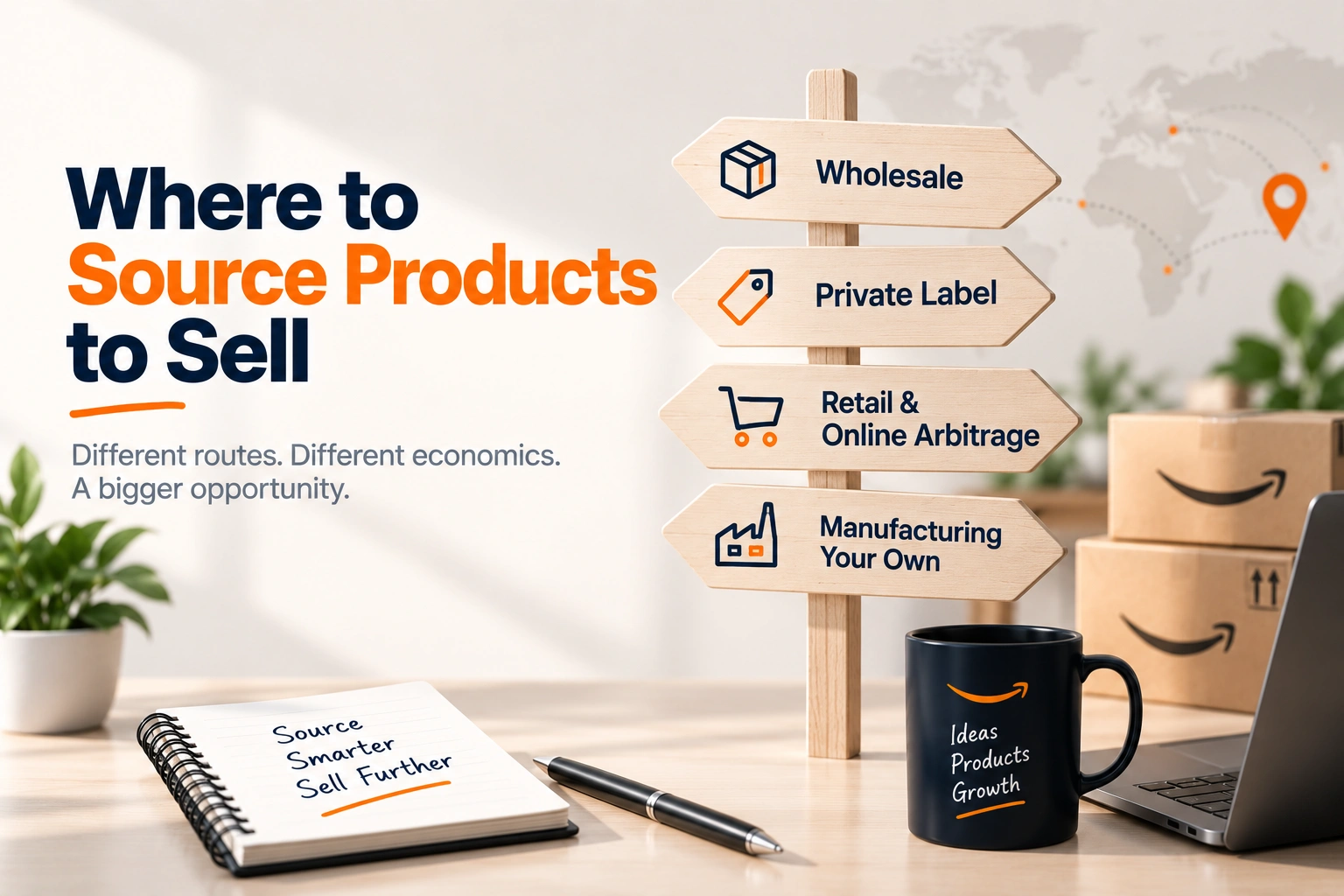
There are four ways to get something to sell, and they are different businesses wearing the same name. The economics differ, the work differs, and so does the way each one fails.
Most sellers who stall have picked a route that does not suit their capital, their patience or their appetite for risk, rather than picked a bad product.
Wholesale
Buy established brands from an authorised distributor and resell them. The products already sell, the demand is proven, and there is nothing to invent.
It needs working capital, a real business account with distributors, and tolerance for thin margins fought over with other resellers. The failure mode is a category where five sellers all reprice each other into the ground.
It also needs invoices you can produce on request, because authenticity checks are routine and a supply chain you cannot document is a suspension waiting to happen.
Private label
Put your own brand on a manufactured product. Higher margins, control of the listing, and something that can become an asset.
It needs a trademark to be defensible, upfront stock, and a launch that costs money before it earns any. The failure mode is a product that is identical to nine others with a different logo, which is a race with none of the advantages of wholesale.
The version that works starts from a complaint. Read the negative reviews on the category leaders, find the fault that repeats and is fixable, and make that product properly.
Retail and online arbitrage
Buy discounted stock from retailers and resell it. Almost no capital, immediate feedback, and a genuine way to learn how the marketplace behaves.
It does not scale, the sourcing is the whole job and never stops, and many brands are gated in ways arbitrage cannot pass. Treat it as an apprenticeship rather than a business model.
Manufacturing your own
Design it, tool it, own it. The best margins and the only route with a real moat at the end.
It needs capital, time, and a tolerance for the first production run being wrong. It is where a successful private label line goes rather than where a first-time seller starts.
Dropshipping, and where it sits
A fifth route people expect to see here, and the reason it is not in the four is that most of what is sold as dropshipping is not allowed on Amazon: buying from another retailer and having them ship to your customer breaches the dropshipping policy outright.
What is allowed is being the seller of record with a supplier who ships on your behalf, with your details on the packing slip and nobody else's. That is a legitimate arrangement and it is a supply relationship rather than a shortcut.
The economics are the harder objection. You carry the marketplace fees and the customer service without the margin that comes from owning stock, and you have no control over the thing that decides your metrics, which is whether it ships on time.
How to judge a supplier
Ask for a sample and pay for it. Ask what their minimum order is and what it is really. Ask who else they supply into your marketplace, because the honest answer changes what you are buying.
Check they can produce the compliance documents your category needs before you order, not after. Safety marking, test reports and material declarations are cheap to get with an order and slow to get without one.
And on wholesale, verify the distributor is authorised. A supply chain that cannot be documented is worth less than the discount that made it attractive.
What we do with this
Sourcing decides most of what happens afterwards, which is why it comes up before anything else on a new Amazon account: the margin, the defensibility and the compliance risk are all set at the point of purchase.
The route also decides which marketplaces suit you. Wholesale catalogues often do better on Walmart and eBay than people expect, because there is less competition per listing.
If you are choosing between routes rather than between products, that is the more useful conversation to have.
Related reading: How to Start Selling on Amazon: The Account, the Product, the First Listing and When Import Duties Rise, Raising the Price Is the Last Move.
Frequently asked questions
The questions that come up most often on this subject.
Four routes: wholesale from authorised distributors, private label from a manufacturer under your own brand, arbitrage from retail discounts, or manufacturing your own design. They are different businesses with different capital needs and different failure modes.
Arbitrage teaches the mechanics cheaply and does not scale. Wholesale is the most straightforward real business if you have the capital and can get distributor accounts. Private label pays best and asks for the most upfront.
Trade shows, brand websites and their distributor lists, and industry directories. Verify the distributor is authorised by the brand, because a supply chain you cannot document is worth less than whatever discount made it attractive.
Thinner than private label, and fought over with other resellers on the same listing. That is the trade for proven demand and nothing to invent, and it makes the buy box and your cost base the whole of the game.
Not to sell, but without one you cannot enrol in Brand Registry, which means no control of your listing content, no A+ content and no Vine. It is what makes a private label product defensible rather than just unbranded.
As a way to learn and to make some money, yes. As a business, it does not scale, the sourcing never stops, and gating keeps it out of many of the categories worth being in.
For a paid sample, their real minimum order, who else they supply into your marketplace, and the compliance documents your category needs. The documents are cheap to get alongside an order and slow to get afterwards.
Order shallow enough to be wrong about, inspect before it ships if you can, and treat the first batch as buying information as much as stock. The first reorder carries the real decision.
Yes, and from the supplier rather than a retailer. Authenticity checks are routine, they come with a short deadline, and an invoice you cannot produce turns a routine request into a removed listing.
Usually, and it is one of the better reasons to add a channel: the sourcing work is already done, so a second marketplace is mostly listing and fulfilment rather than a new supply chain.