How to Read an Agency's Clutch Profile Before You Hire
A Clutch profile is a stack of client interviews, not a testimonial page. What the platform verifies, what the numbers underneath a rating mean, and the five things to read before you shortlist anybody.


Loading Article banner
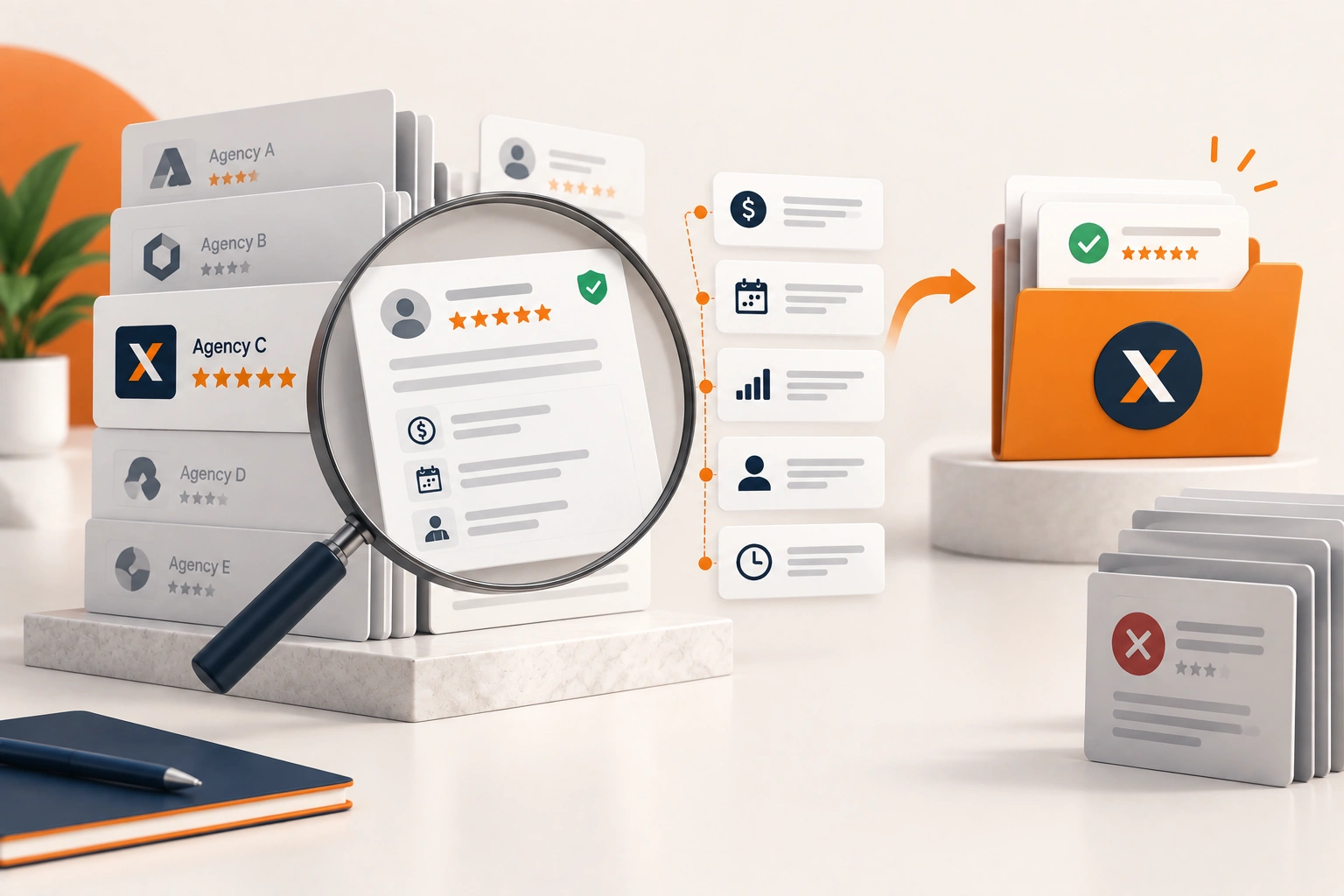
Every agency shortlist starts the same way: five tabs open, five sites saying the same six adjectives, and no way to tell which of them has done your work before. Review platforms exist for that moment, and of the five this company is listed on, Clutch is the one built specifically for business services buyers.
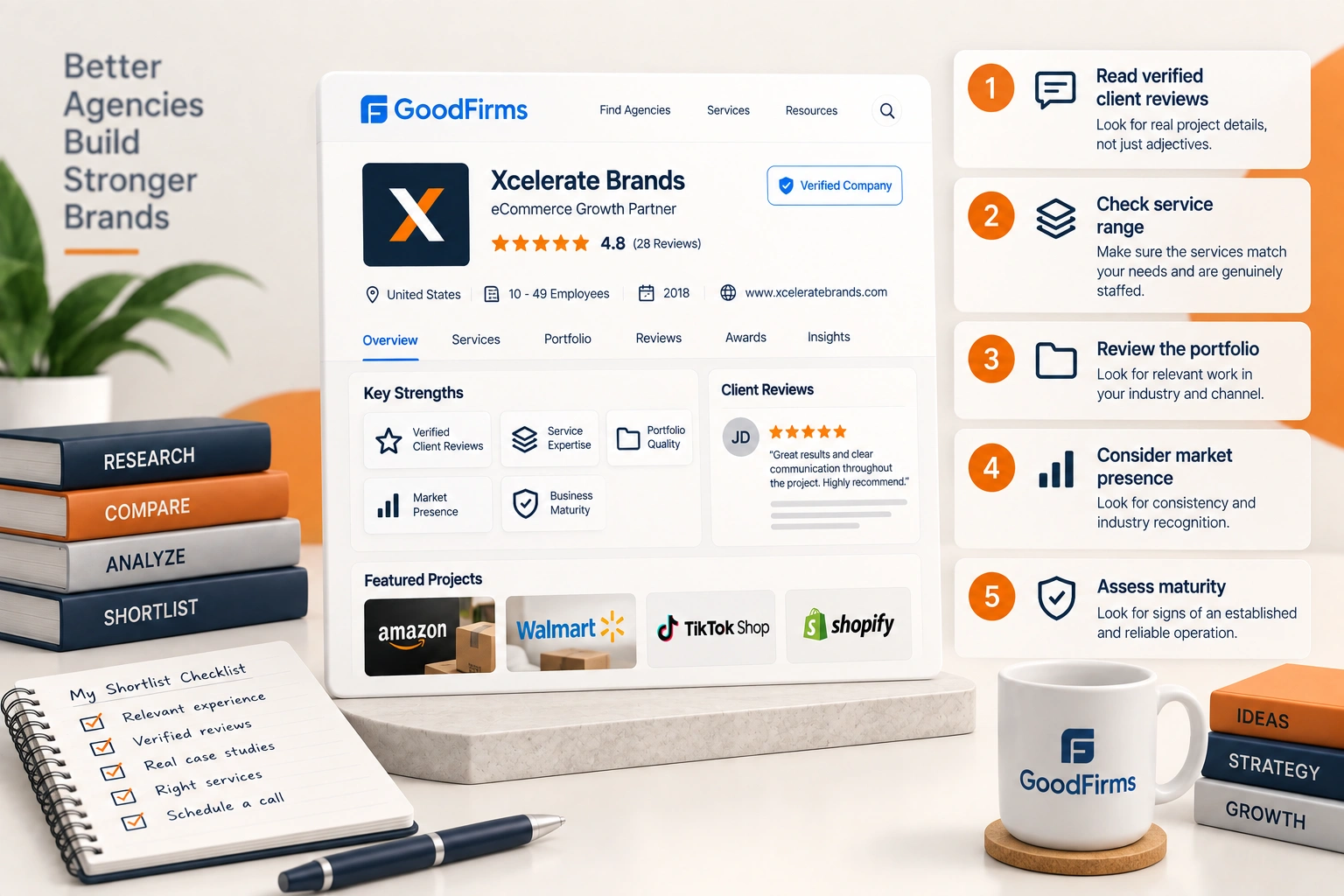
It is also the one most often read wrongly. A Clutch profile is not a testimonial page with stars on it. It is a stack of client interviews with the project details attached, and the details are where the answer is. Here is how to read one properly, using what Clutch publishes about its own process, read on 21 September 2026.
What Clutch actually verifies
To leave a review at all, the reviewer needs "a LinkedIn, Google account, or company email address," and Clutch uses "information from your account login, such as your email address and contact information, as part of the verification process." Beyond that, Clutch says it verifies reviews "using reviewer-provided information & online research" and then, deliberately, stops explaining: "To protect the integrity of our process, we do not provide specifics about our verification methods."
That opacity is the point, and it is worth understanding rather than resenting. A platform that published its exact checks would be publishing the instructions for passing them. What matters to a buyer is the outcome: a review either carries verification or it does not. Where Clutch cannot confirm the reviewer or the project, it says so on the review itself: "If we can't verify the reviewer's identity or project details, but the information is still useful for buyers, we'll publish the review as Not Verified."
A reviewer or the agency can also complete the verification afterwards, so a Not Verified review is not necessarily a suspicious one. It is an unfinished one. Read it, and weigh it lower than the ones beside it. It is also widely reported that Clutch analysts interview reviewers by telephone for many reviews; that is not something Clutch states on the page above, so treat it as reported rather than as a rule.
The numbers under the rating, which are the useful part
A rating out of five tells you almost nothing on its own, because almost every agency on the platform sits between 4.6 and 5.0. The details attached to each review are what separate them, and they are the first thing to read.
Project size. A review from a $5,000 engagement and a review from a $250,000 one describe different companies working in different ways. If your budget sits at one end of an agency's range, you are either their largest client, which brings attention and risk, or their smallest, which brings neither.
Project duration. An agency whose reviews are all three month projects is a project shop; one whose reviews describe three year relationships is built for retainers. Marketplace work is the second kind, and an agency with no long engagements on its profile has not proved it can hold an account through a year of fee changes and a fourth quarter.
The reviewer's role. A review from a founder and a review from a marketing coordinator are worth the same as evidence and describe different things: one saw the invoices and the growth, the other saw the work. Both are useful when you know which you are reading.
Industry and channel. This is the one most buyers skip. An agency with thirty reviews from SaaS clients and one from a marketplace seller is a good agency that has not done your job. Look for reviews that name Amazon, Walmart, TikTok Shop or Shopify by name, and read what the client says the work actually was.
What a profile cannot tell you
It cannot tell you who will run your account. Agencies are people, and the strategist in the reviews from two years ago may have left. Ask by name and ask what else that person runs.
It cannot tell you what went wrong. Review platforms collect completed engagements, and the engagements that ended badly rarely get written up by either side. That absence is not dishonesty; it is selection. The way round it is to ask an agency directly for an account they lost and why, and to listen for an answer with a mechanism in it rather than a shrug.
And it cannot tell you what the work costs to keep. A five star review of a launch says nothing about month fourteen, when the weekly advertising routine is the whole of the job and the interesting part is over. Ask what the eighth month looks like.
The five checks, in order
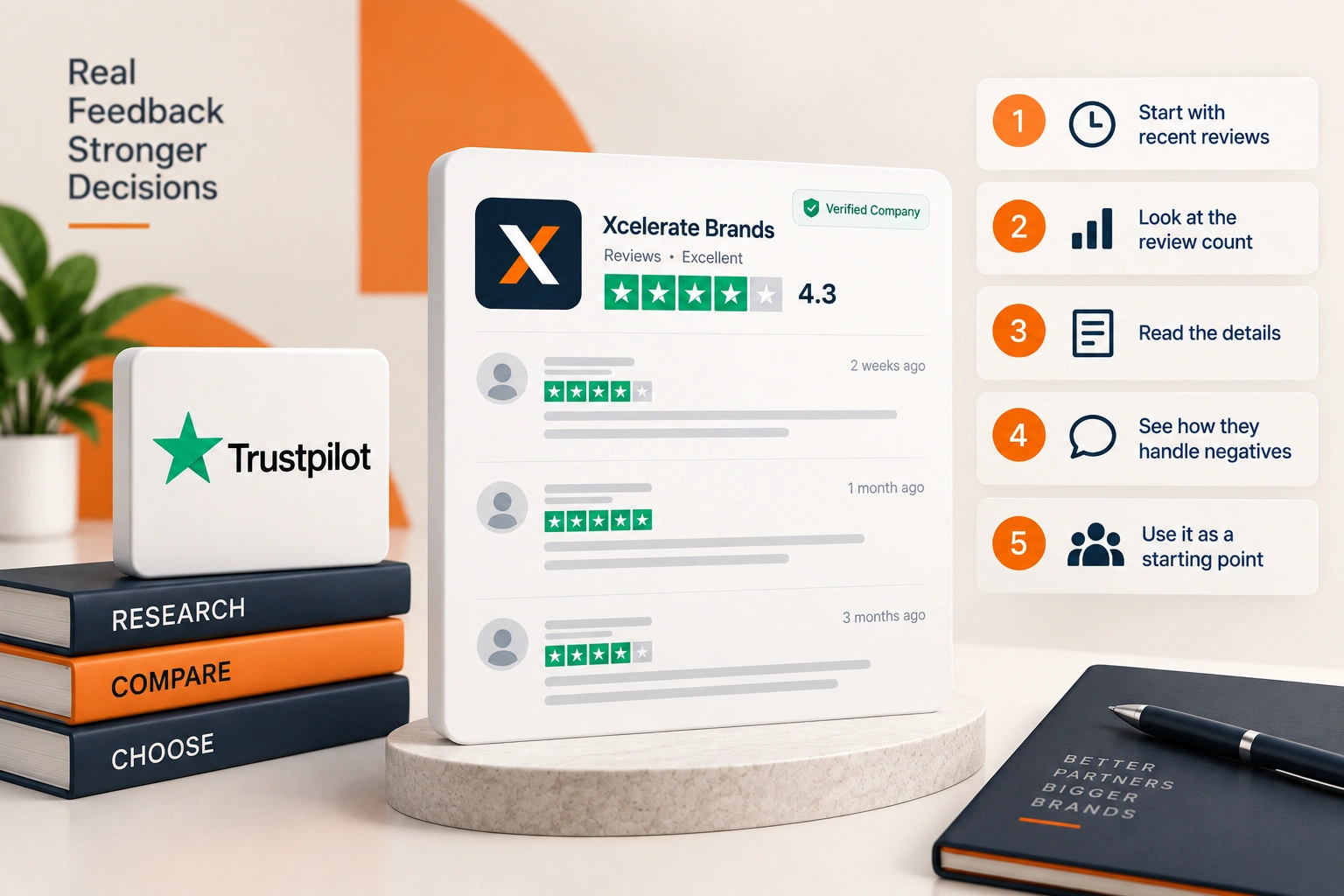
One: filter the reviews to your channel and your budget band before reading a single word. Two: read the three most recent, not the three at the top; recency tells you what the agency is now. Three: check whether the reviews describe the same service you are buying, because a brilliant advertising agency is not automatically a listing one. Four: count the Not Verified ones and read them last. Five: take two reviewers' names to a call and ask the agency what happened on those accounts after the review was written.
That last one is the whole exercise compressed. Anybody can collect reviews. Far fewer can tell you, without notes, what happened to a client's account eighteen months after the case study was published.
Where we sit on it
Our own listing is at clutch.co/profile/xcelerate-brands, and everything above applies to reading it: check the channel, the size, the duration and the role before you read the adjectives. If what you are weighing up is marketplace management across Amazon, Walmart, eBay, TikTok Shop and Shopify, the useful next step is not more profiles. It is a conversation in which you ask about an account that did not work, and hear what was done about it.
The full guide to choosing an agency covers the rest of the shortlist: the contract, the reporting, the access, and the questions that separate an agency that manages from one that reports.
Frequently asked questions
The questions that come up most often on this subject.
They are collected under a verification process rather than submitted anonymously: a reviewer needs a LinkedIn account, a Google account or a company email address, and Clutch says it verifies reviews using reviewer-provided information and online research. It deliberately does not publish the specifics of those checks. Where it cannot confirm the reviewer or the project it still publishes the review, marked Not Verified, so the status on each review is the thing to read rather than the platform's reputation in general.
In Clutch's words, that it could not verify the reviewer's identity or project details but judged the information useful to buyers, so it published the review with that label. A reviewer or the agency can complete the missing details afterwards and the review can be verified after publication. Treat one as unfinished rather than false, and weigh it below the verified reviews beside it.
The project size, the duration, the reviewer's role and the industry on each review. Almost every agency's average sits between 4.6 and 5.0, so the rating separates nobody. The details tell you whether the agency has run work like yours, at your budget, for long enough to have hit a difficult quarter.
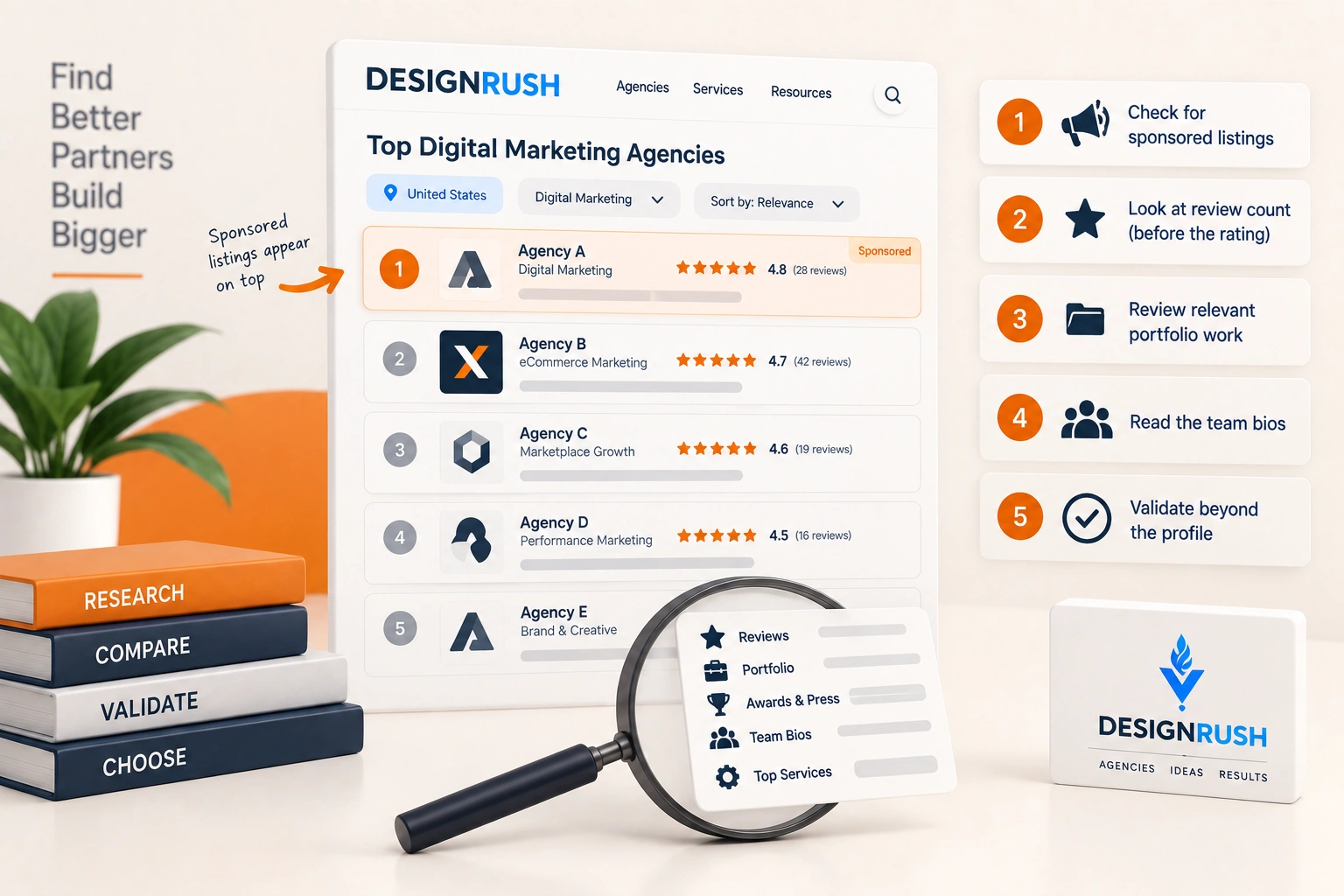
Ratings come from client reviews, and the review process is the verification described above rather than something an agency writes for itself. Directories in general do sell sponsorship and advertising placement, which is why the sensible habit is to read the reviews and their details rather than the position in a list, on any platform.
Fewer than you would think, and more recent than you would accept. Five detailed reviews from the last eighteen months, in your channel and your budget band, are worth more than forty across six years and nine industries. What you are testing is whether the agency has done your job recently, not whether it has been busy.