Amazon Private Label, and What It Actually Takes
The pitch is that you own the listing instead of fighting for it. The part that gets left out is that owning it means carrying everything, including the mistakes.


Loading Article banner
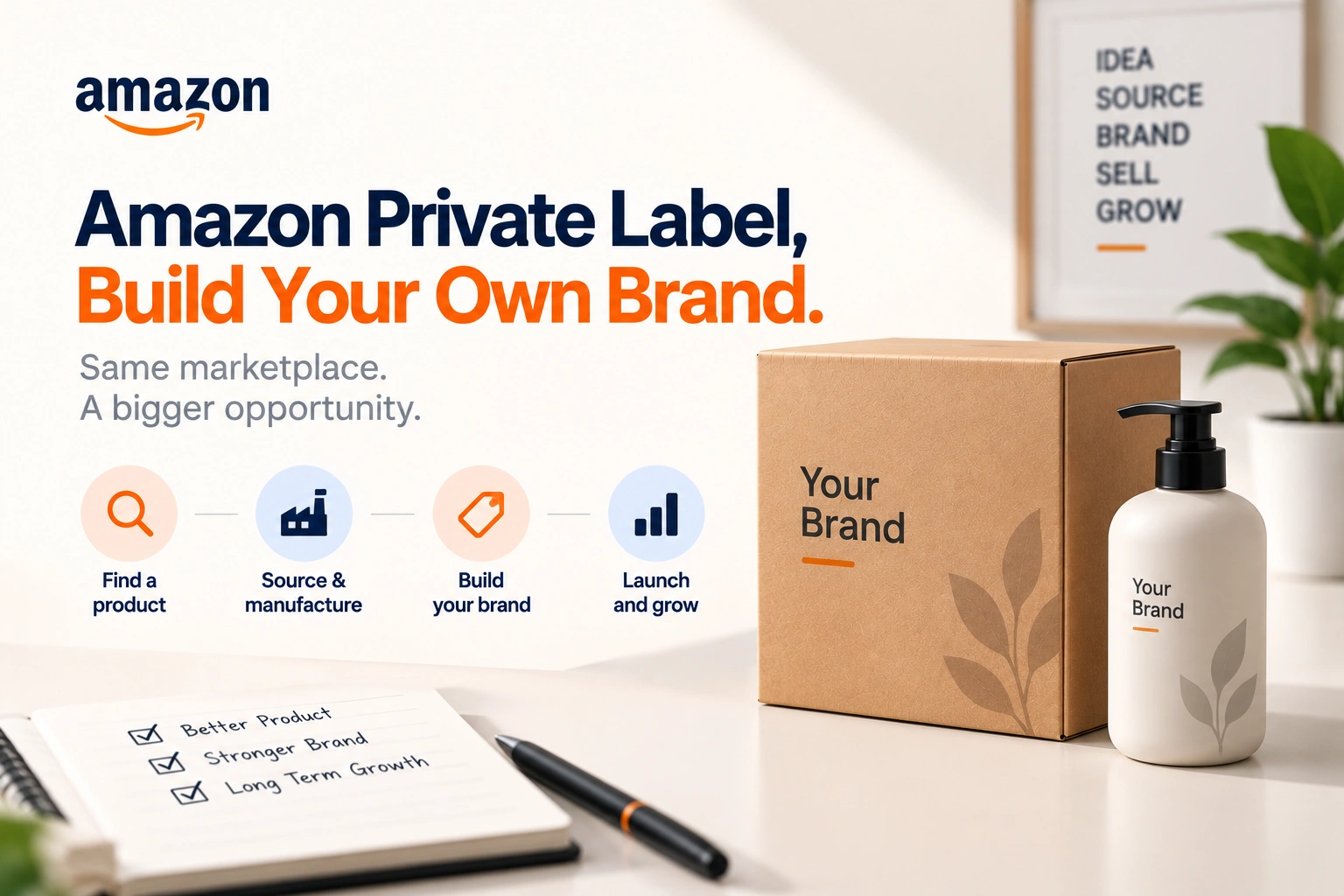
Private label means putting your own brand on a product somebody else manufactures, and then being the only seller of that listing. It is the model most Amazon education sells, and the reason it is attractive is genuine: a private label listing has one seller, so there is no buy box to lose, no undercutting, and no arriving one morning to find eleven other sellers on your page.
What that trade actually costs is the part worth understanding before committing capital, because it is not mainly money and it is not mainly time. It is that everything becomes yours.
What changes when you own the listing
Reselling means competing on a page somebody else created, for a product with existing demand and existing reviews. The listing works or it does not, and either way it is not your problem to fix. What is and is not permitted there has its own rules, covered in what reselling on Amazon actually allows.
Private label removes the competition on the page and hands over every job the page needs doing. The images are yours to get right. The copy, the keywords, the price, the reviews from zero, the questions, the returns and the complaints. Nobody else is going to improve that listing while you sleep, which is the upside and the whole of the work.
The demand question changes too, and this is the one that catches people. A reseller sells into demand that already exists. A private label seller has to establish that demand exists for their version, at their price, against incumbents who have thousands of reviews.
Where the capital actually goes
Most first budgets are built around the inventory and are wrong by roughly half, because the inventory is the part that is easy to price.
The first order is the obvious cost, usually with a minimum order quantity that is larger than a cautious person would choose. Samples come before it and are cheap. Freight, duty and customs come after and are not.
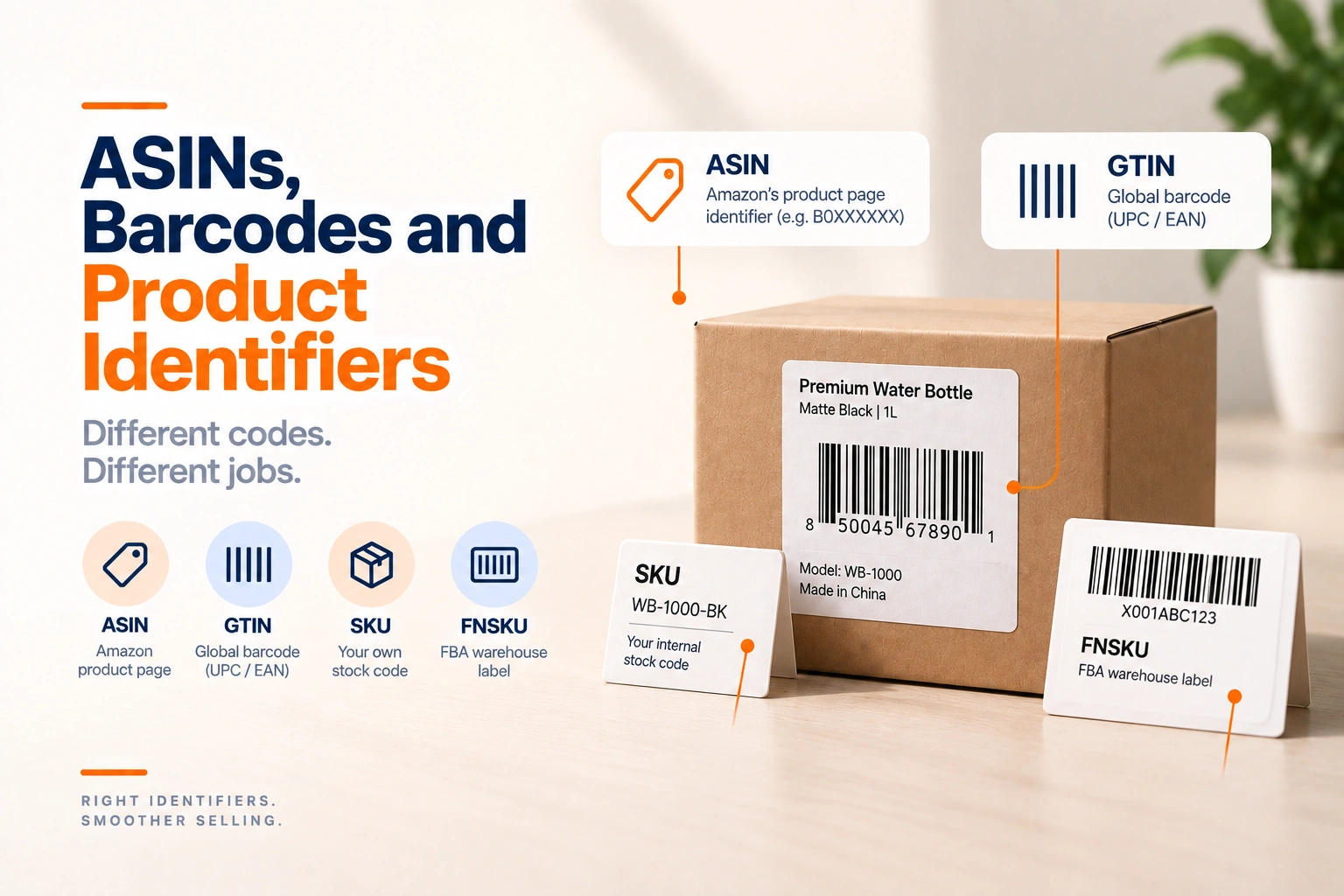
Then the things that are not the product: photography that works at thumbnail size, which is the single highest leverage spend available and the one most often done on a phone. A trademark application, which is what Brand Registry requires and takes months rather than weeks. Barcodes. Packaging design and the packaging itself.
And then the launch, which is advertising against listings with years of history. That budget is not a marketing extra, it is the cost of being visible at all for the first months, and running out of it halfway is the most common way a viable product fails. Campaign structure for a product launch covers how that spend should be shaped.
How long it takes, honestly
Sourcing and sampling is measured in weeks and involves iteration: the first sample is rarely right, and each round is a shipping cycle. Manufacturing is weeks more. Freight is weeks more again, and it is the leg most likely to slip.
The trademark runs in parallel and is the long pole for Brand Registry, which unlocks A+ content, Sponsored Brands and the brand reporting. A launch without registry is possible and it is a launch with fewer tools.
So the gap between deciding and selling is months, and the gap between selling and knowing whether it works is months more, because the first weeks of data are distorted by launch advertising and by having no reviews. Anybody planning on a quarter is planning on the wrong horizon.
How it actually fails
Rarely because the product was bad. The three common ones are all decisions made before a unit shipped.
Choosing a product with no differentiation, in a category with entrenched incumbents, on the basis that the category is large. Large categories are large because they are well served. The reasoning behind product selection is covered in where to source products to sell.
Underestimating the launch budget, running out during the period where nothing looks like it is working yet, and stopping just before the compounding starts.
And ordering too much of the first version. The first order should be sized to learn rather than to scale, because the second version is always better and the first one is usually wrong about at least one thing. Capital tied up in the wrong version of a product is capital that cannot buy the right one, and the holding costs run while it sits. What Amazon owes when stock goes missing is worth knowing before that stock exists.
Who it suits
It suits somebody with enough capital to survive being wrong once, a genuine reason their version is better than the incumbent, and the patience for a twelve month horizon. It suits an existing brand extending a range far better than it suits a first time seller, because the brand already has an audience and a reason to exist.
It suits somebody who wants to build an asset rather than run a trade. A private label listing that works is worth something on its own: it can be sold, it accumulates reviews and ranking that nobody can take, and it is not dependent on a supply arrangement continuing.
It does not suit somebody looking for the fastest route to revenue, and reselling usually is. Neither is more legitimate than the other, and the mistake is choosing between them on which sounds more impressive rather than on which matches the capital and the patience actually available. Which model fits, and what it needs operationally, is the first conversation in Amazon account management.
Frequently asked questions
The questions that come up most often on this subject.
A reseller competes with other sellers on a listing somebody else created, for demand that already exists. A private label seller creates the listing, is the only seller on it, and has to establish that demand exists for their version at their price. One removes competition on the page and hands over every job the page needs doing.
Most first budgets underestimate by roughly half, because they are built around the inventory. Beyond the first order there is freight, duty, photography, a trademark application, barcodes and packaging, and then the launch advertising, which is the cost of being visible at all for the first months rather than a marketing extra.
Months rather than weeks, and then months more before the numbers mean anything. Sampling involves iteration and each round is a shipping cycle, manufacturing and freight add weeks each, and the trademark that Brand Registry needs takes months and runs in parallel.
Not to sell, but effectively yes to compete. Registry needs a registered trademark and unlocks A+ content, Sponsored Brands and the brand reporting. Launching without it is possible and means launching with fewer tools than the listings you are competing against.