Amazon's New Selection Program (2026): What a New ASIN Gets and the October Deadline
Since 30 July a new branded FBA product gets its referral fee capped at 10% on its first hundred units, free storage and returns for four months, and credits toward coupons and Vine. What the programme gives, in Amazon's figures, what it does not, and the confirmation due by 31 October.


Loading Article banner
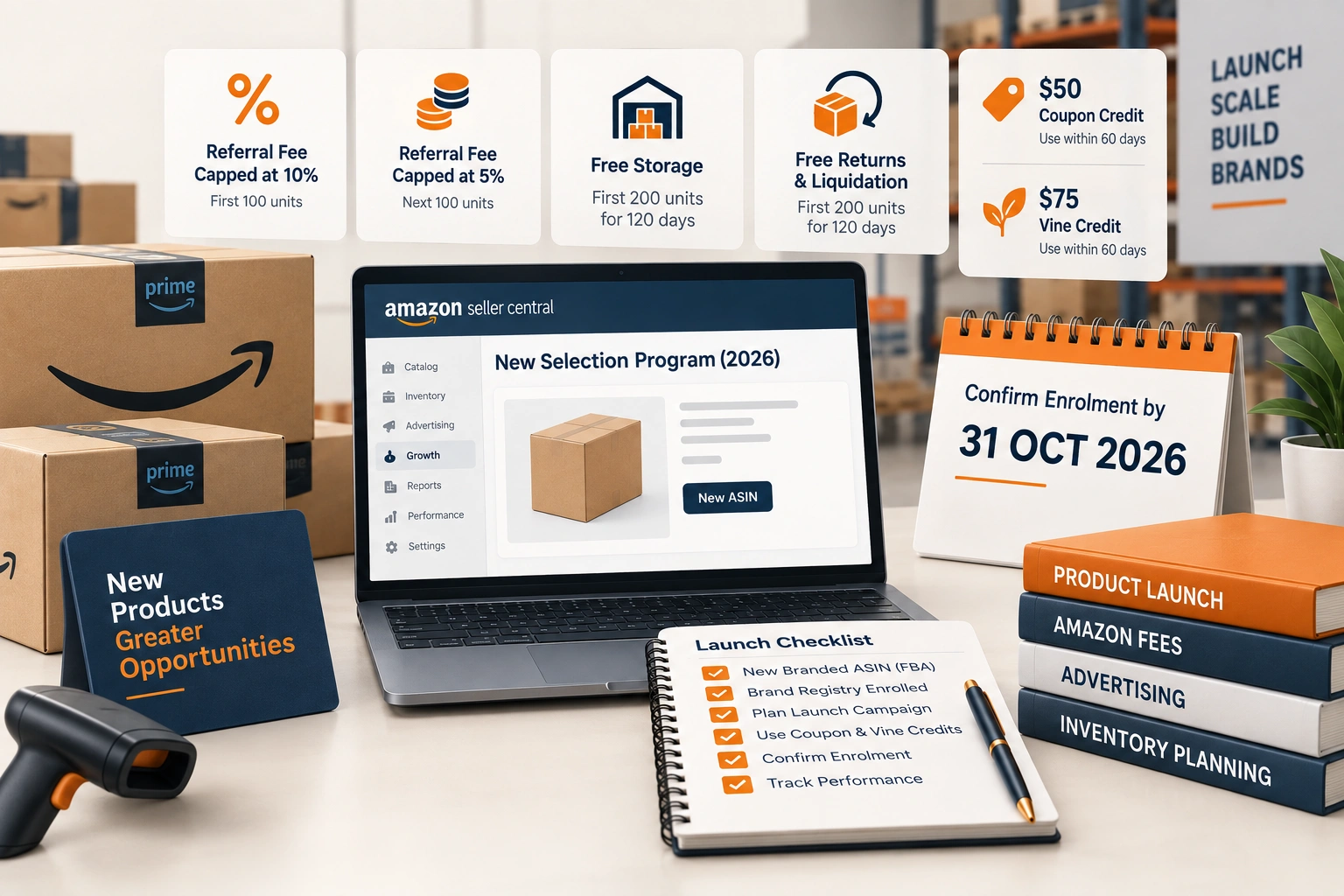
Amazon replaced its New Selection Program on 30 July 2026. The old one ended that day; the new one, called New Selection Program (2026), applies to new branded FBA ASINs launched from then on, and it comes with a date: sellers have to confirm their enrolment by 31 October to keep the benefits after that. Two replies on the forum questioned the logic of a launch date in the middle of the summer. The rest of the thread is sellers working out what they get.
This is what they get, in Amazon's own figures, what the programme does not do, who qualifies, and how the confirmation works.
The fee credits
The centre of the programme is a set of instant fee credits on a new ASIN's first units. On the first 100 units, credits equivalent to capping the referral fee at 10%. On the next 100 units, credits equivalent to a 5% referral fee, or the product's existing rate where that is already lower. Amazon describes the credits as applying to the major fees, referral and fulfilment among them, and they are applied as the units sell rather than claimed afterwards.
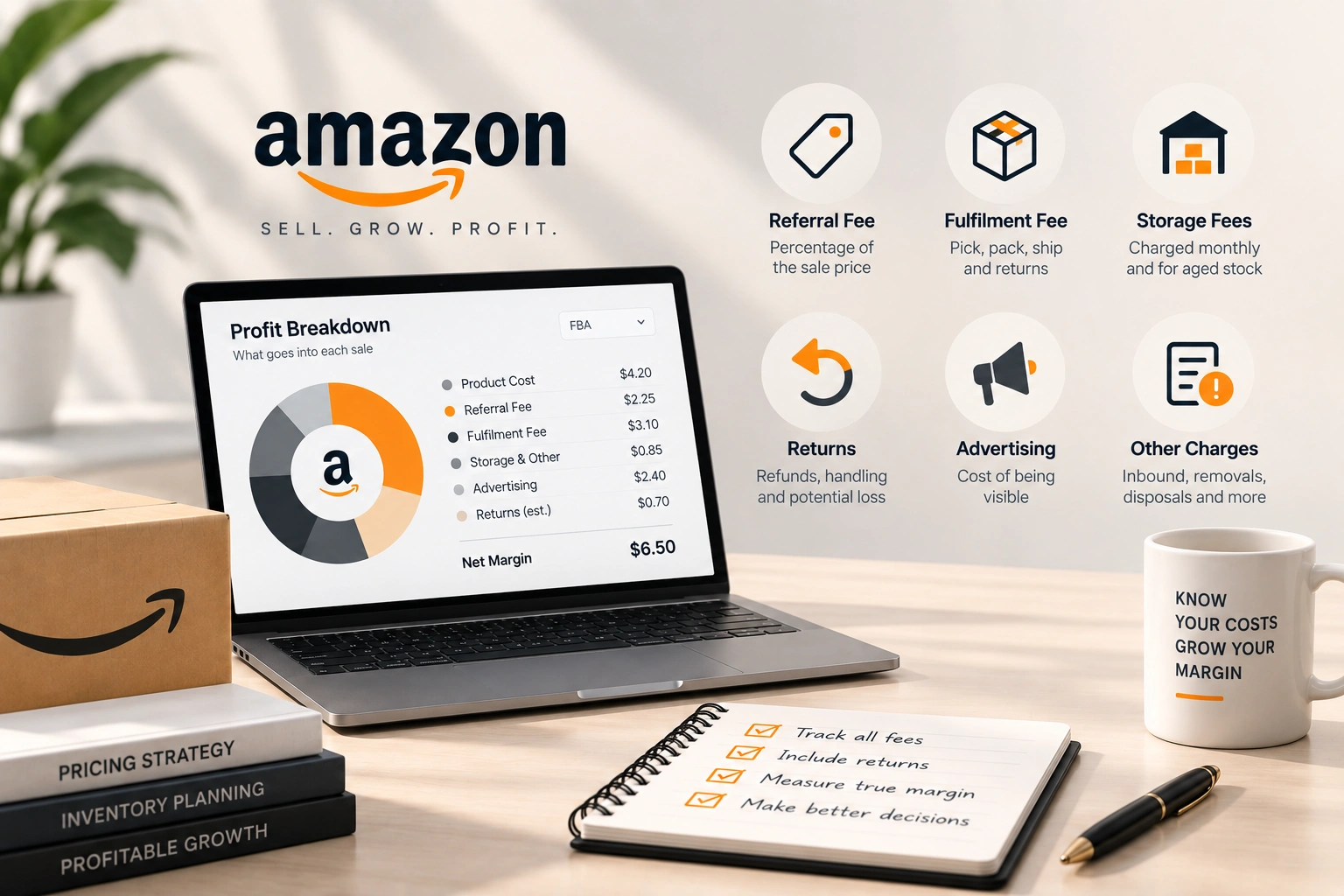
For a product in a 15% category selling at $30, the first hundred units carry a referral fee of $3 rather than $4.50, and the next hundred of $1.50: about $450 across the two hundred units, at the moment in a launch when margin is thinnest and the advertising is heaviest. The fee stack the credits sit against is the one in Amazon seller fees explained.
Free storage, returns and liquidation
On the first 200 units, for 120 days, Amazon waives storage, customer returns processing and liquidation fees, and applies neither the low inventory level surcharge nor the storage utilisation surcharge. That is the part of the programme most launches do not price in and should: a new product's returns run higher than an established one's, and the first quarter's storage is the period in which a slow start turns into aged inventory. Four months without either charge is a launch that can afford to learn.
The window extends by 45 days when the product uses Vine Pre-launch, Amazon's route to reviews before the listing is public, which is the same programme the credits below pay toward.
The advertising and review credits
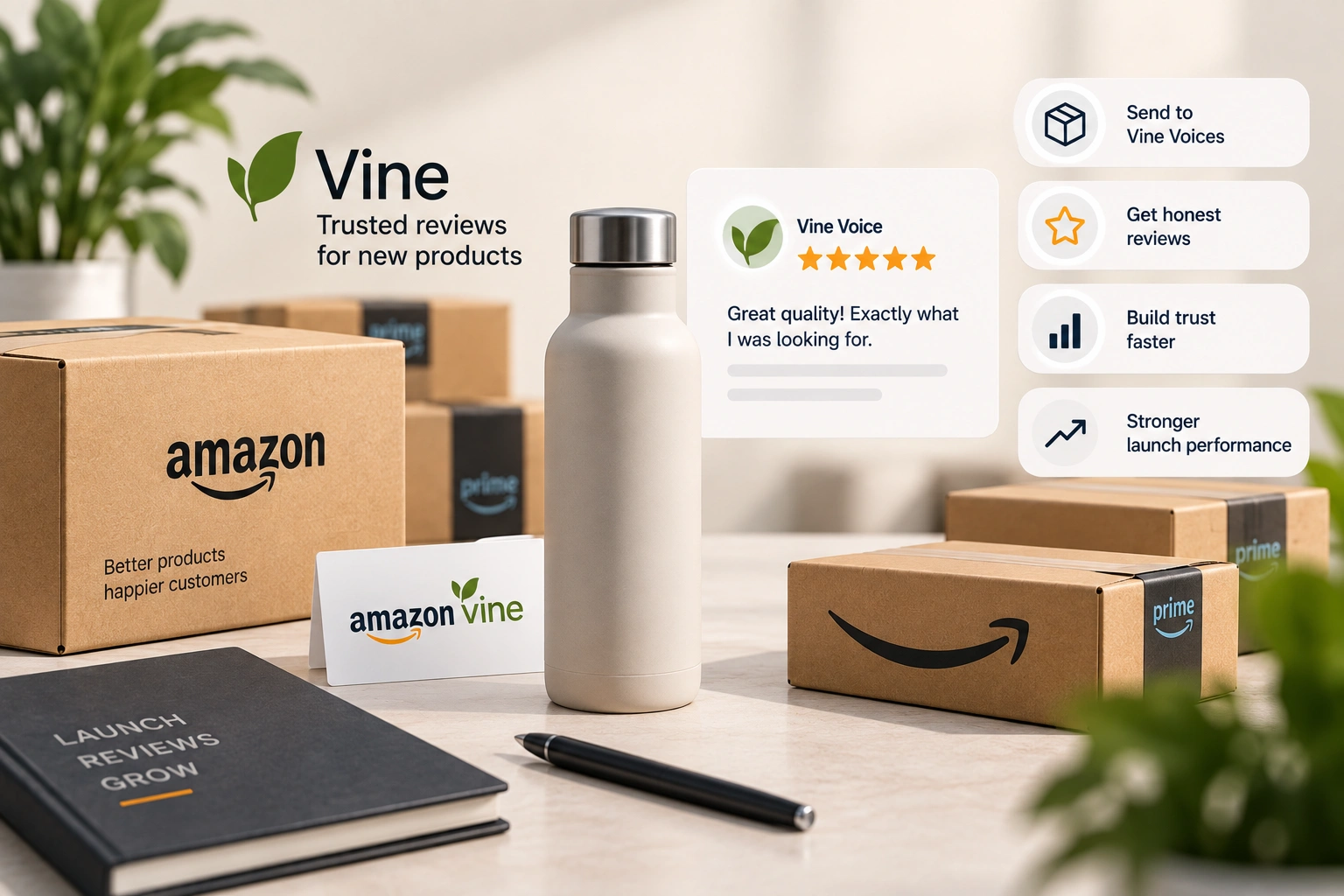
Two credits with a clock on them: $50 toward coupon variable fees and $75 toward Vine enrolment fees, both to be used within 60 days. Vine's enrolment fee is the cost of putting a new product in front of Amazon's reviewers for the first reviews; the coupon credit covers the per redemption fee on a launch coupon. Neither is large, and both expire, so they belong in the launch plan for the first two months rather than in a drawer.
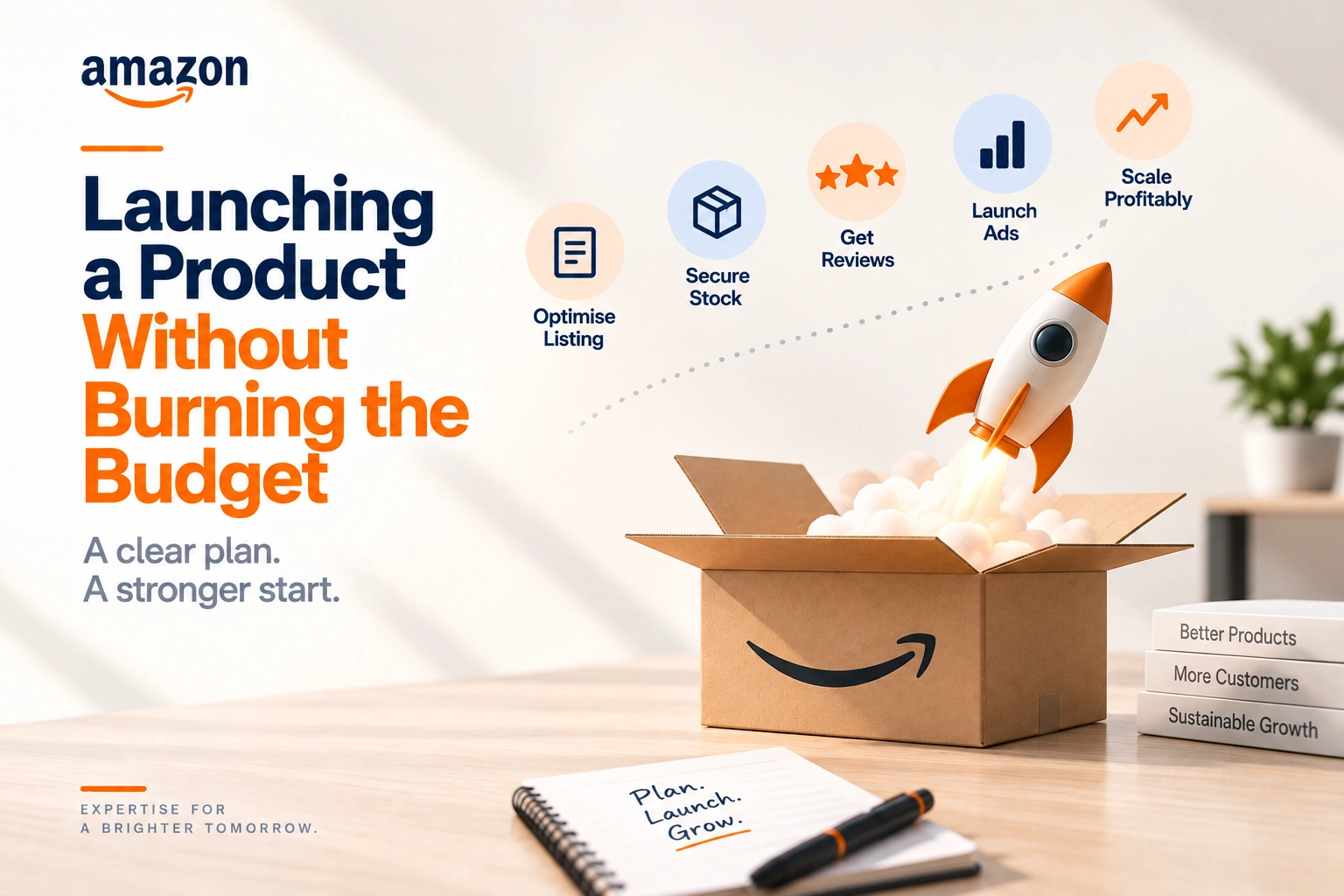
The launch itself, the sequence of listing, Vine, coupon and advertising that a new product runs through, is the subject of the launch campaign structure article, and the programme's credits pay for parts of it.
Who qualifies, and what it does not stack with
New branded FBA ASINs launched from 30 July 2026. Branded means the brand is enrolled in Brand Registry; new means a new ASIN, not a relaunch of an existing one under a new offer; FBA means the units ship from Amazon's fulfilment. A merchant fulfilled launch gets none of it, which for a brand deciding how to launch is a point for FBA worth about the size of the credits.
The one limit Amazon states plainly: the programme's benefits do not stack with New Seller Incentives. A seller in their first year who is already receiving the new seller credits chooses one set, and for most the choice is decided by which is larger for the products they are launching. The other limit is time: the benefits are per ASIN and per unit, and they end when the units or the days run out.
What the programme does not do
It does not make a product sell. The credits reduce the cost of the first two hundred units; they do not bring the customers who buy them, and a launch that relies on the programme instead of on a listing, a review plan and advertising ends up with two hundred cheaper units in storage when the four months run out. It does not cover a relaunch: a product moved to a new ASIN to qualify is a duplicate listing problem, not a launch. And it does not extend past its own limits, which are two hundred units for the fees and a hundred and twenty days for the storage, however the product is doing when they arrive.
The honest way to read it is as a discount on the specific lines that make a launch expensive, at the specific moment they are expensive, for a product that was going to launch anyway. Read that way it is worth several hundred dollars a product and a month of runway. Read as a reason to launch, it is neither.
The confirmation by 31 October
The programme's introductory period runs to 31 October 2026. To keep receiving the benefits after that, a seller confirms enrolment on the programme's enrolment page in Seller Central. Amazon's post says confirm; it does not say re-apply, and the confirmation is a button rather than a form. It is the kind of deadline that is missed because it asks for nothing difficult.
For the brands we run under Amazon marketplace management, the confirmation was done the week the post appeared, and every launch planned for the autumn is priced with the credits in: the capped referral fee on the first two hundred units, the four months without storage or returns fees, and the Vine and coupon credits spent inside their sixty days. What a launch costs without them is in what it costs to sell on Amazon; the programme is worth reading as a discount on exactly the lines that make a launch expensive.
Frequently asked questions
The questions that come up most often on this subject.
Amazon's programme for new branded FBA ASINs launched from 30 July 2026: fee credits equivalent to a 10% referral fee cap on the first 100 units and 5% (or the existing rate if lower) on the next 100, free storage, returns and liquidation on the first 200 units for 120 days with no low inventory or storage utilisation surcharges, and $50 in coupon and $75 in Vine credits usable within 60 days.
Confirm your enrolment on the programme's enrolment page in Seller Central. The introductory period ends on 31 October, and only sellers who have confirmed keep the benefits after that date.
New branded FBA ASINs launched from 30 July 2026: the brand enrolled in Brand Registry, a genuinely new ASIN, and units fulfilled by Amazon. Merchant fulfilled launches do not qualify.
No. Amazon states the two do not stack, so a seller in their first year chooses the set that is larger for the products they are launching.
It ended on 30 July 2026, the day the 2026 programme launched. ASINs launched before that date were under the old terms; the new benefits apply to launches from 30 July.