What a Google Business Profile Tells You About an Agency, and What It Does Not
Google reviews are the easiest to leave and the easiest to read badly. What Google's own policy forbids, what review patterns actually mean, and how to use a profile as one signal rather than the verdict.


Loading Article banner
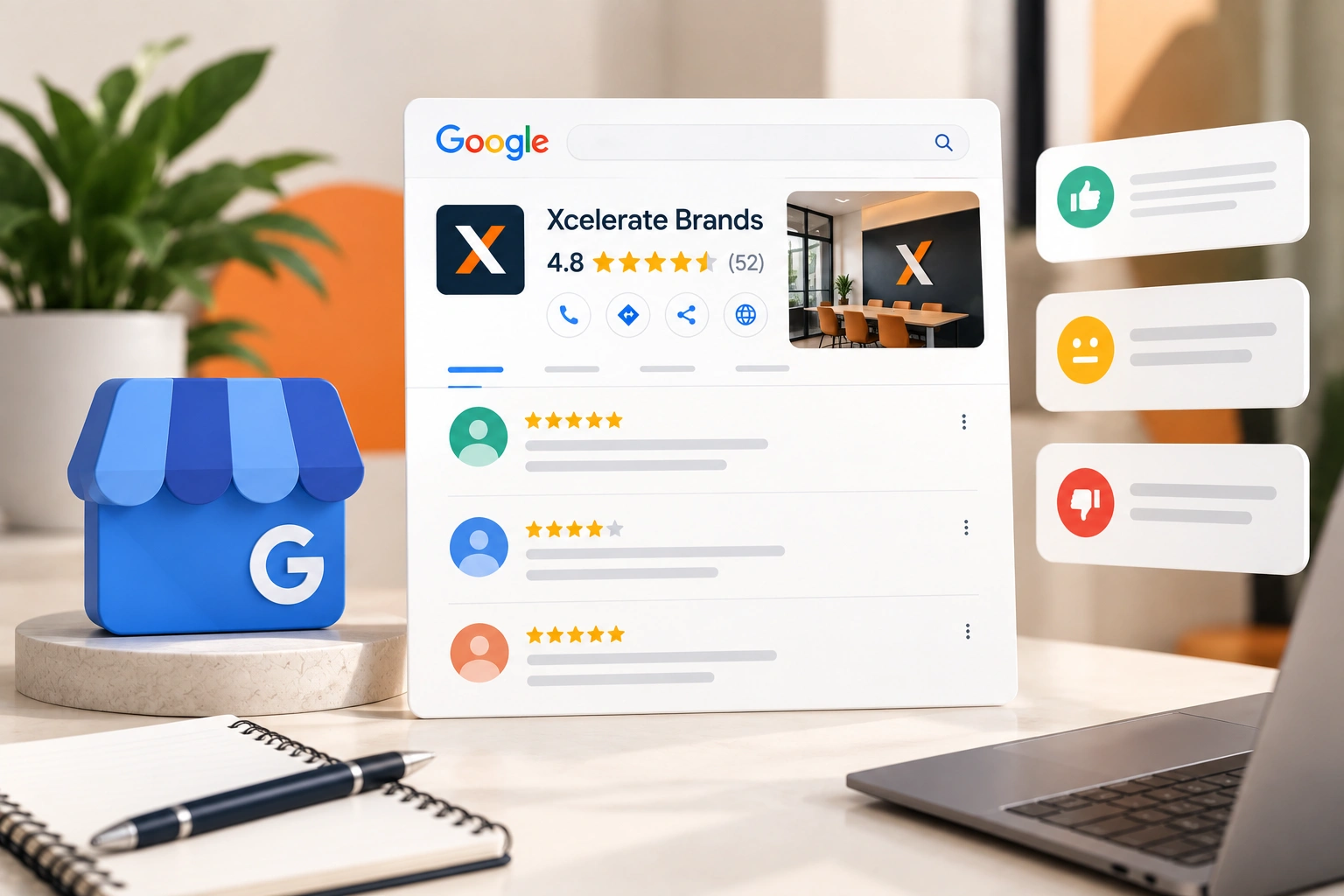
Google is where most people check a company, because it takes no decision to do it: the reviews are already on the screen beside the search result. That convenience is also the problem. A Google profile is the lowest friction review surface a business has, which makes it the most representative in volume and the least specific in content.
It is still worth reading, as long as you read it for what it can tell you. This is what Google's own policy actually forbids, what the patterns mean, and where a profile stops being evidence.
What Google forbids, in its own words
Google's prohibited content policy for Maps and Business Profiles is blunt about fake engagement. Content must not be "not based on a real experience or does not accurately represent the location," reviews may not be "paid for, directly or in kind," and a business must not "solicit or encourage the posting of content that does not represent a genuine experience."
Incentives are out entirely. Google removes content "posted due to an incentive offered by a business, such as payment, discounts, free goods and/or services," and businesses must not offer "incentives, such as payment, discounts, free goods and/or services, in exchange for posting any review." So the agency offering a discount for a five star review is not being generous; it is breaking the policy on the reviewer's behalf.
Conflicts of interest are out too, and this is the clause most relevant to reading an agency's profile. Reviews are removed where there is a "conflict of interest" involving "current or former employment, a contractual or consultory relationship, or other professional or personal affiliations," and a business must not ask staff to "solicit a certain number of reviews" or "solicit reviews that include specific content." Impersonation is separately prohibited: content "seeking to impersonate any person, group, or organization" or pretending "to be a verified authoritative source."
Enforcement is not only about the content. Google states that where behaviour "harms our users, community, employees or ecosystem, we may take actions that will range from suspending the account privileges to account termination."
What the patterns mean
Read the shape before the words. Five reviews in one week and nothing for a year is a campaign, not a reputation, and the week it happened usually coincides with something: a rebrand, a bad month, a new business push. Thirty reviews spread evenly across two years is an ordinary business that asks properly.
Read the replies, and read them for content rather than politeness. A reply that answers a specific complaint with what changed is a company with a process behind it. A reply that says "we're sorry you feel that way" on every negative review is a template, and a template is a fair prediction of what happens when your account has a problem.
Read the reviewers. A profile of reviewers with one review each, all left within days of each other, means something different from a profile of reviewers with review histories. Google's policy on fake engagement exists because this pattern is the oldest trick on the platform.
And read the negatives first. Every business with real customers has them. What you are looking for is whether the complaint is about the work or about the relationship, and whether it is the same complaint twice. Two people describing the same failure eighteen months apart is a system, not a bad week.
Where a Google profile stops being evidence
For a service business, Google reviews are short. They have to be: the reviewer is typing on a phone, from memory, with no structure asked of them. You will learn that somebody was happy. You will rarely learn what the engagement was, what it cost, how long it ran, or what the work did to the numbers, which are the four things that decide whether an agency fits you.
That is what the business-services platforms exist for, with their interviews and project details. Use Google for the shape of a company's reputation, and the platforms built for buyers for the substance, where a review carries the project size, the duration and the reviewer's role. The guide to choosing an agency covers what to do with that detail once you have it.
What this has to do with your own listings
If you sell on marketplaces, the rules above should feel familiar, because they are the same argument you have already had about product reviews. Amazon forbids incentivised reviews for the same reason Google does, and the sanctioned route to early reviews on a new listing is the programme Amazon runs itself, which the launch guide puts in its place. The instinct to buy a reputation is the thing every marketplace and every review platform is built to catch, and the cost of being caught is always higher than the review was worth. That is also true of the agency you hire: an agency that games its own reviews will game yours.
For what to do about a review you did not want, on a platform where you sell, what can be done about a bad Amazon review is the practical version of this argument.
Where we sit on it
Keep reading
Our own profile is at this Google listing, and we would rather it was read the way this article describes: the shape, the replies, the negatives, then the platforms that carry the detail. If you are weighing up marketplace management, ask us for an account that went wrong and what changed afterwards. That answer tells you more than any five star line ever will.
Frequently asked questions
The questions that come up most often on this subject.
No. Google's policy removes content posted because of an incentive such as payment, discounts, free goods or services, and prohibits a business from offering those incentives in exchange for a review. Asking a happy customer to leave a review is fine; paying for one in any form is not.
No. Google treats them as a conflict of interest, which covers current or former employment, a contractual or consultory relationship, and other professional or personal affiliations. A business also may not ask staff to solicit a set number of reviews or to solicit reviews containing particular content.
Look at the shape rather than the score. A cluster of reviews in one week from accounts with no other review history is the oldest pattern on the platform. Reviews spread over time, from people with review histories, describing specific work, are the ordinary look of a business that asks its clients properly.
It is not disqualifying for a business-to-business service, where most clients never think to leave one and the substantive reviews live on the platforms built for buyers. What matters more is whether detailed, recent, verifiable reviews exist somewhere, and whether they describe work like yours.
It removes content that is not based on a real experience or that misrepresents the location, and its enforcement is not limited to deleting the review: Google states that behaviour harming its users, community, employees or ecosystem can lead to actions ranging from suspending account privileges to terminating the account.