TikTok Shop's AI-Generated Content Rules, Effective 2 September 2026: What a Listing Image or Video May and May Not Be
TikTok Shop updated its AI-generated content rules for US sellers, creators and affiliates on 2 September 2026. What must be labelled, what AI may never change about a product, the uses TikTok says are fine, the image rules that sit underneath, and what it means for a brand building its listing images and videos.


Loading Article banner
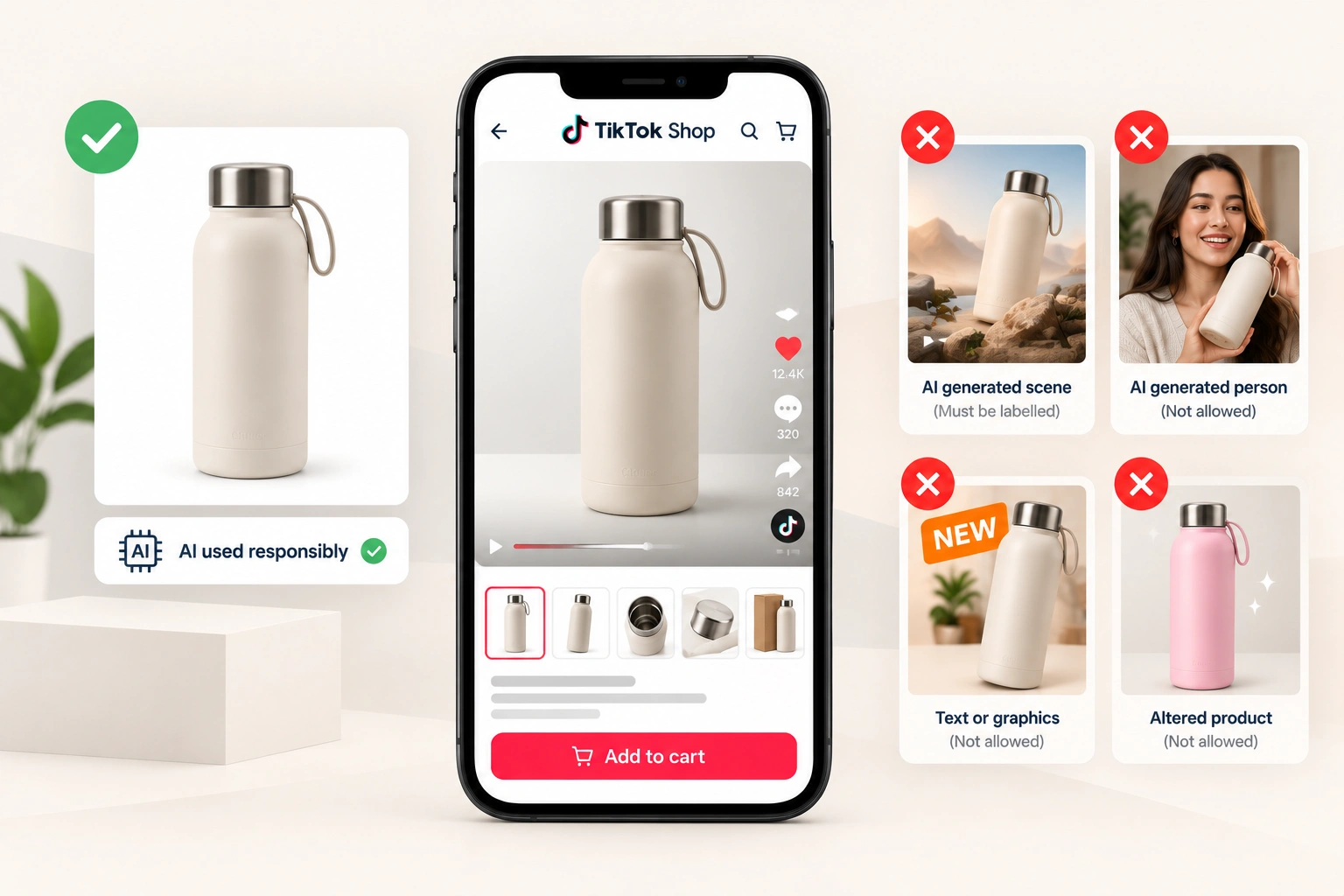
TikTok Shop sells on video and images more than any other marketplace, and generative tools have made both cheap. A product can be rendered before it exists, a model can be invented, a result can be shown that the product has never produced. On 2 September 2026 TikTok Shop published an updated set of rules for exactly that, applying to sellers, creators and affiliates in the United States.
This is what the rules say, in TikTok's words, what they mean for the images and videos on a product listing, the listing policy that sits underneath them, and the way to brief a creative team so nothing it makes has to be taken down.
The rule in one sentence, and the label
TikTok's governing line: "Content must be truthful and accurate and must not contain exaggerated, false, or misleading claims". Everything else in the policy is an application of it to AI.
The disclosure rule follows: "If your content is fully or significantly created/altered by AI, you should label it", either with on-screen text or with the platform's AI-generated content toggle. The threshold is fully or significantly. A colour correction does not trigger it. A generated scene, a generated person or a generated demonstration does.
What AI may never change about a product
The policy lists the attributes that have to survive any generation or edit intact. AI may not be used to alter a product's "size, color, material, quantity, bundle contents, features, compatibility, safety attributes, or performance". That list is the whole of what a listing image is for, which is the point: an image exists to tell a buyer what will arrive, and TikTok's earlier guidance on the same subject says plainly that "AI making your product look different from what buyers actually receive" is a product-not-as-described problem, not a creative one.
Results are treated the same way. TikTok's example is a "shampoo that instantly grows hair", and the rule extends to showing a product performing faster than it realistically does. A before-and-after that the product cannot produce is a false claim whether a camera or a model made it.
People and property are covered too. Content may not use the "likeness, voice, name, trademarks, or other intellectual property, of any third party without proper permission", and a generated doctor, professor or expert endorsing a product is prohibited outright. TikTok's shorter guide gives the example of AI avatars acting as experts to push efficacy claims.
What TikTok says is fine
The policy is not a ban on AI. It permits converting live-action footage into styles such as cartoons, anime or illustrations; using AI for editing and quality improvement; translation, dubbing and subtitles; and copywriting and script support, provided the content stays accurate. For a brand that means the production work (cutting, cleaning, captioning, versioning for markets) can be automated freely. The representation of the product cannot.
The image rules underneath
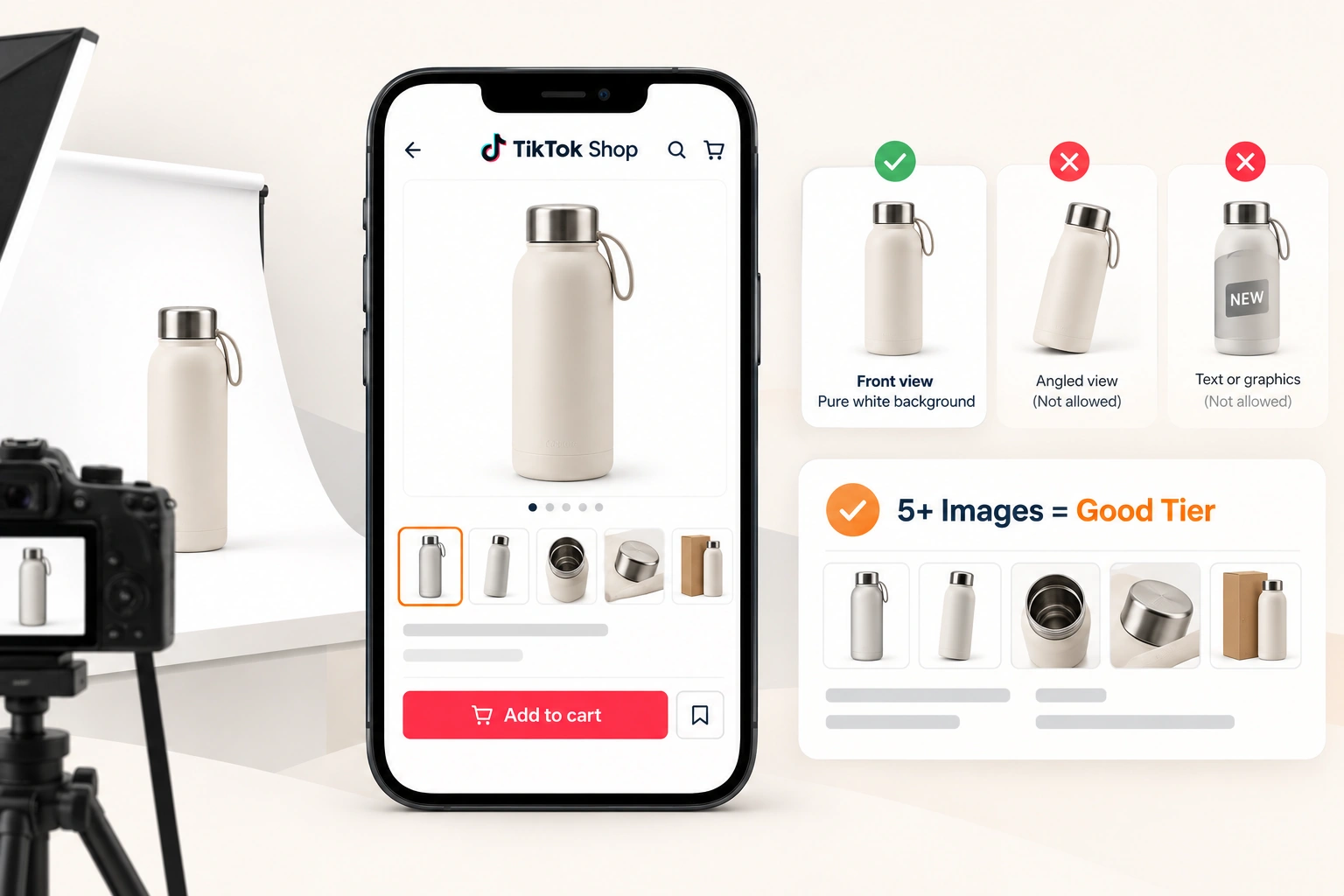
The AI policy sits on top of TikTok Shop's Product Listing Policy, updated on 1 September 2026, and the two have to be read together. The listing policy says "Placeholders and digital renderings of a product are not allowed" and that images must show what customers will receive. So a fully generated product image is not a disclosure question at all; it is prohibited as a rendering, label or no label. The main image must show the front physical view of the product on a pure white background, which is the subject of its own rules, and the whole image set may not include "any added logos, text, borders, watermarks, or graphics".
The technical limits are modest: up to nine square images of at least 600 by 600 pixels, in colour, and one video of up to 5MB. The modesty is deceptive. A nine-image set with no text on any image has to do its explaining through the photographs themselves, which is harder than an infographic and the reason product photography that sells treats each shot as the answer to one question.
What enforcement looks like
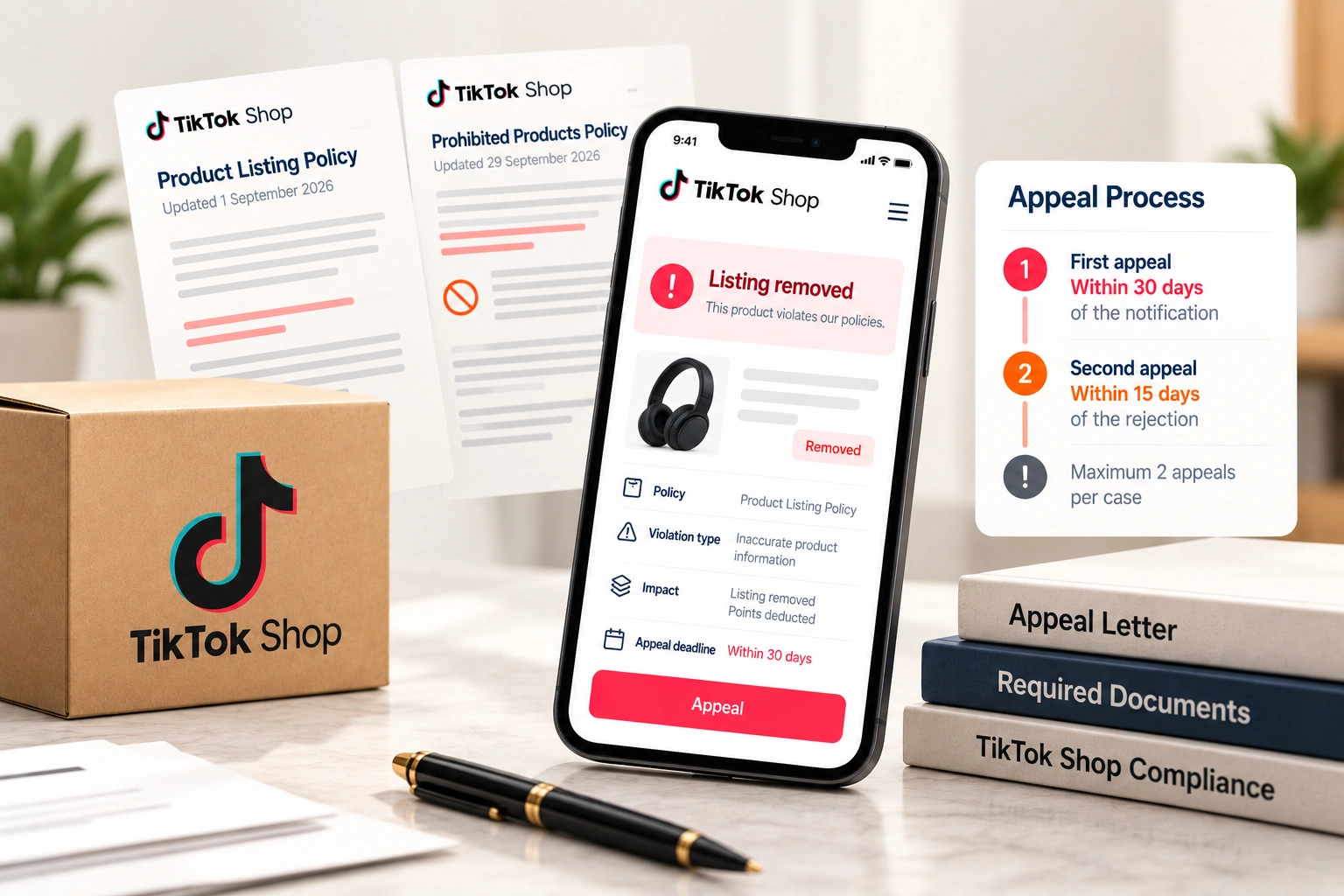
The AI policy names both account-level and content-level consequences. Accounts receive warnings for minor violations, then posting restrictions, commission suspension or permanent bans for repeated or severe ones. Content can have its visibility restricted, its product links removed, and its Creator Health Rating points deducted. The listing policy adds the seller side: deductions from the Account Health Rating, listing removal, revocation of selling privileges and refunds to customers.
That last list is why this is a seller's problem even when a creator made the video. A creator's generated demonstration that overstates a product is a false claim attached to the seller's listing, and how the Account Health Rating works explains how points accumulate into restrictions. The brief a brand gives its creators is the control it has, and who should make your TikTok Shop content is where that brief belongs.
How to brief listing images and video under the rules
Photograph the product. Generate the context. The product in every image is a photograph of the real item: its colour, its size against something known, what is in the box. Backgrounds, settings and styling can be generated, and the image is labelled if the generation is significant.
Demonstrate only what the product does, at the speed it does it. A demonstration video shows a real use in real time. If a result takes a week, the video says a week.
No invented people, no invented experts. A real person on camera, or a plainly illustrated figure. Never a photorealistic generated presenter, and never anybody who looks like a professional endorsing a claim.
Label what is generated, and keep the files. The toggle or the on-screen text, and the source files kept so the label can be shown to have been applied.
Keep text off the images. The listing policy forbids added text and graphics on product images. The explaining goes into the title, the description and the video, and the video formats that sell on TikTok Shop covers how a video carries the information an Amazon infographic would.
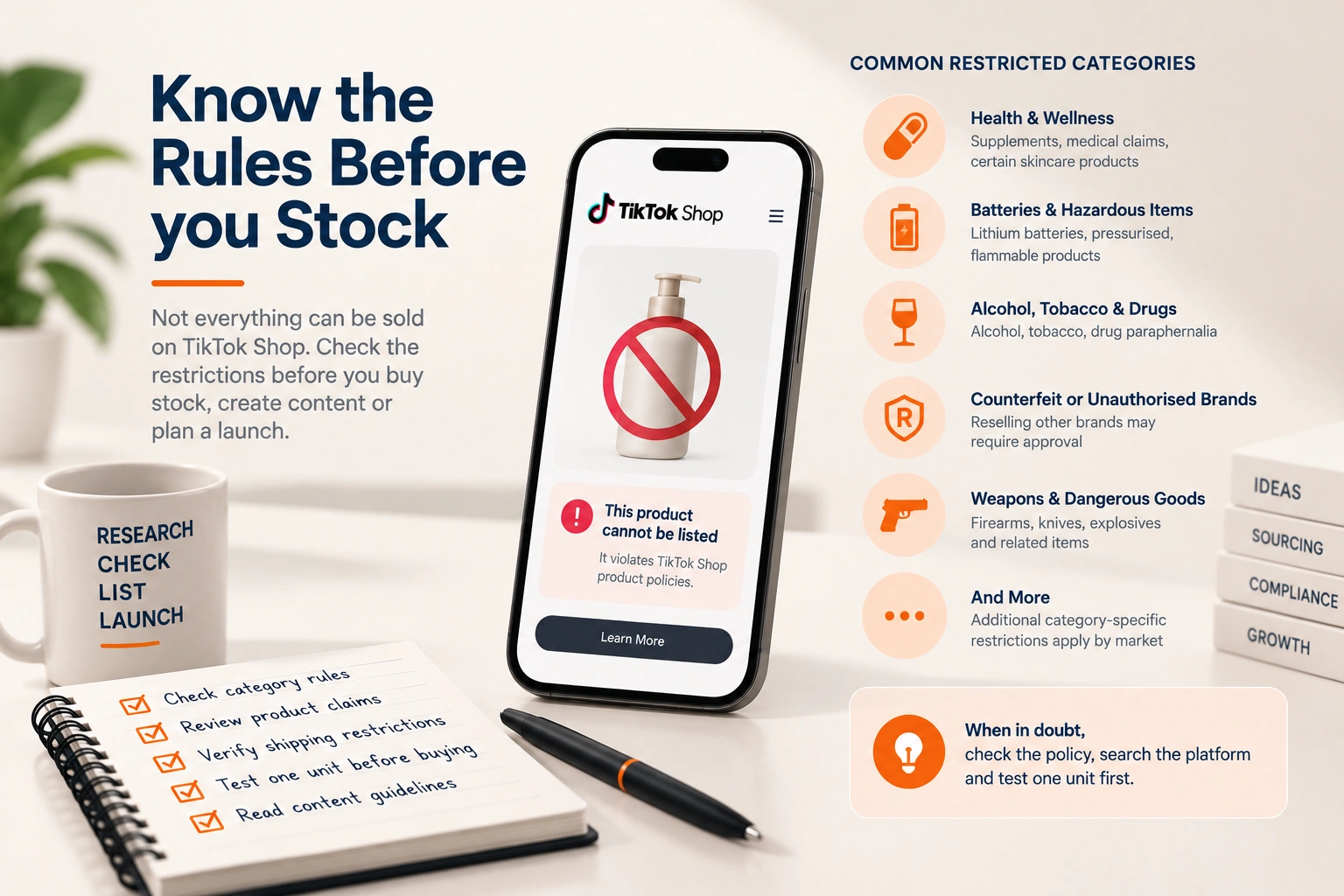
Check the category. Some categories carry their own content rules on top of these, and TikTok Shop's prohibited products and category rules is the list.
Where we come in
We build listing image sets that pass these rules by design: the product photographed, the context generated where it helps and labelled where it must be, nothing on the image that the policy forbids, and the claims checked against what the product can be shown doing. That is the work of our listing images service, on TikTok Shop and on the marketplaces whose rules differ from it. If your TikTok listings were built before September 2026, a review against the two policies is a morning's work and worth doing before a creator's video brings the listing to the moderators' attention.
Frequently asked questions
The questions that come up most often on this subject.
Partly. TikTok Shop's Product Listing Policy, updated on 1 September 2026, prohibits placeholders and digital renderings of a product, so the product itself must be photographed. AI may be used for editing, backgrounds and styling, but content that is fully or significantly created or altered by AI must be labelled, and AI may not change the product's size, colour, material, quantity, bundle contents, features, compatibility, safety attributes or performance.
Yes. TikTok's rule, effective 2 September 2026 in the US, says that if content is fully or significantly created or altered by AI you should label it, either with on-screen text or with the platform's AI-generated content toggle.
Converting live-action footage into cartoon, anime or illustration styles; editing and quality improvement; translation, dubbing and subtitles; and copywriting and script support, provided the content remains truthful and accurate.
Content can have its visibility restricted, its product links removed and Creator Health Rating points deducted. Accounts receive warnings for minor violations and posting restrictions, commission suspension or permanent bans for repeated or severe ones. Under the listing policy a seller can also lose Account Health Rating points, have listings removed, lose selling privileges and be required to refund customers.
Under the Product Listing Policy effective 1 September 2026: up to nine square images of at least 600 by 600 pixels, in colour, with no added logos, text, borders, watermarks or graphics, plus one video of up to 5MB. The main image must show the front physical view of the product on a pure white background.