TikTok Shop Setup: What a Brand Needs First
Getting approved is the easy part. The setup that decides whether it works is the catalogue, the affiliate terms and who is making the videos.


Loading Article banner
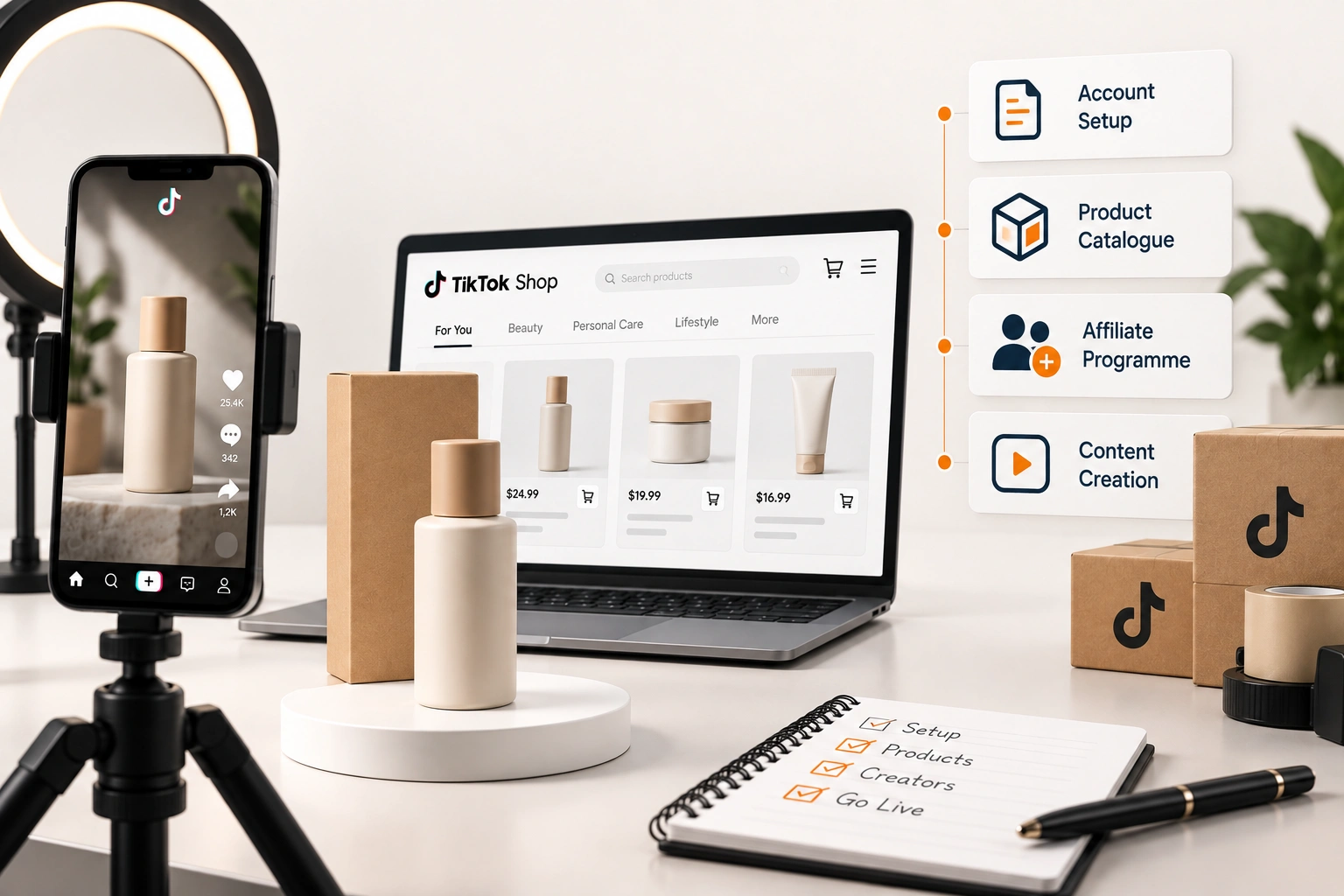
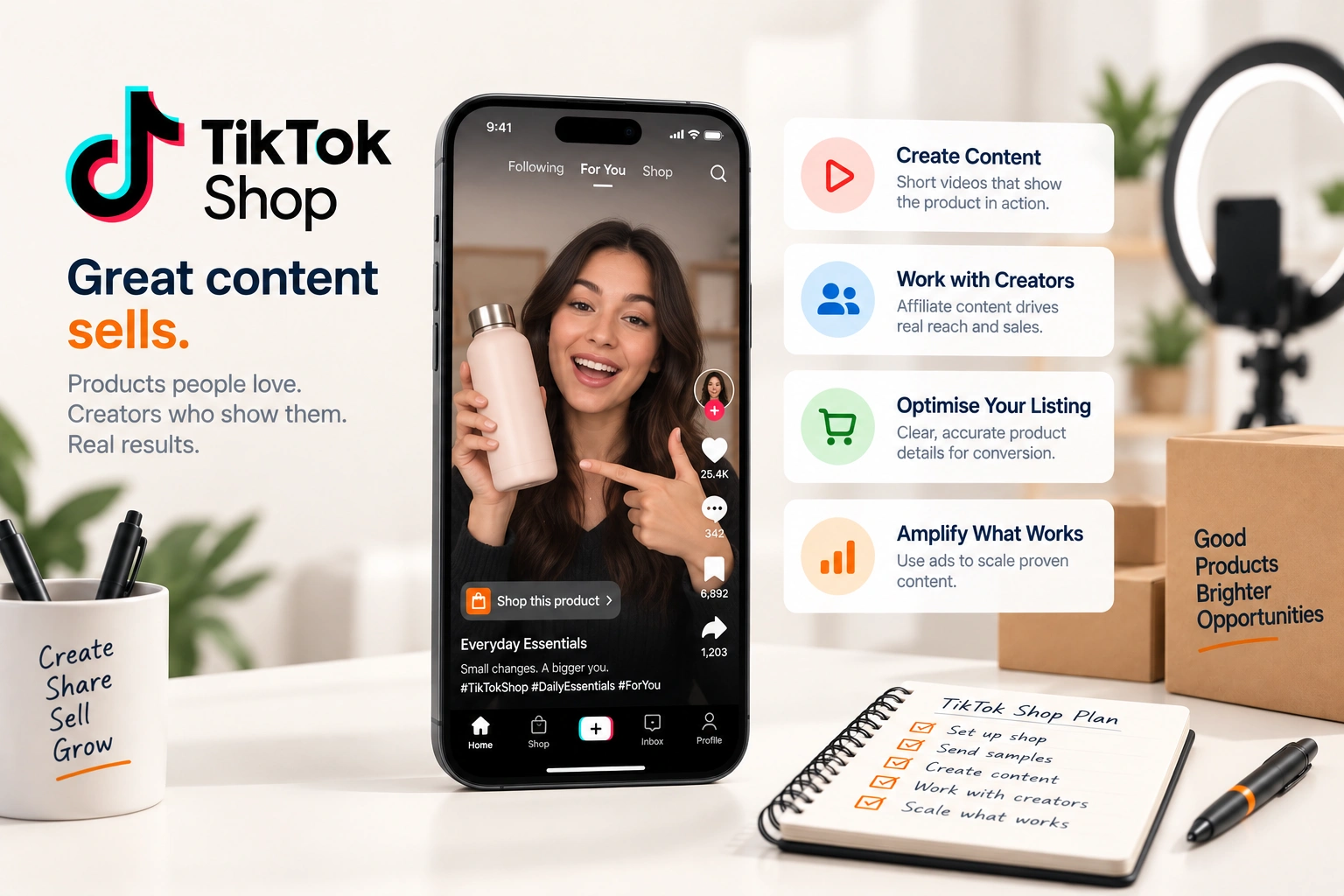
TikTok Shop is not a marketplace with a video feed attached. It is a content channel that happens to take payments, and brands that set it up like a marketplace get a catalogue nobody sees.
The setup work splits into the part that gets you selling and the part that decides whether anything sells. Most brands do the first and stop.
Approval and the boring prerequisites
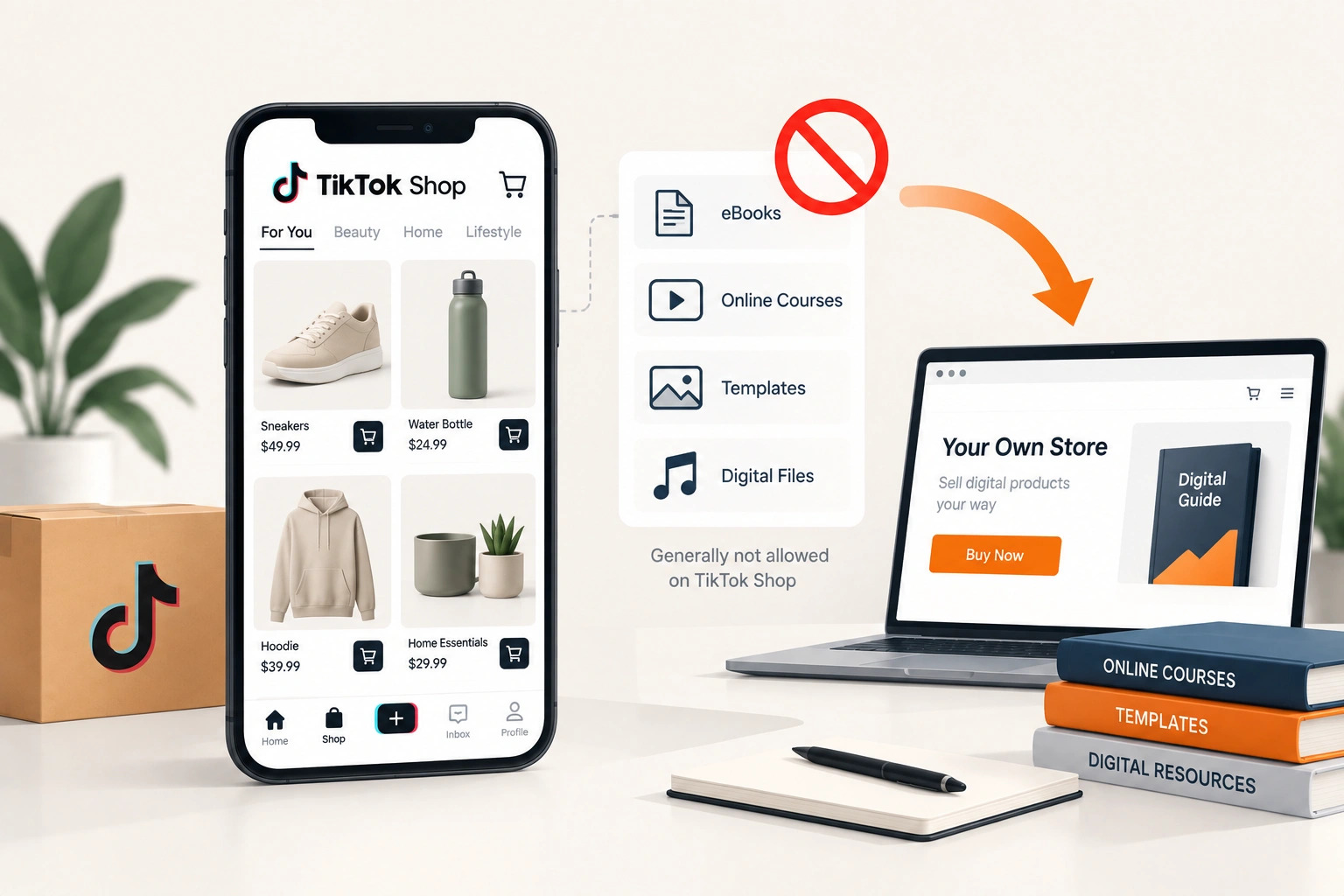
A business entity, the documents to prove it, a bank account, and category eligibility. Some categories are gated and some are prohibited, and finding out at the document stage is cheaper than finding out after the catalogue is built.
Approval is usually days rather than weeks, and the commonest delay is a mismatch between the business name on the documents and the one typed into the application.
The catalogue is the easy half
Products, images, variants, price and stock. The requirements are lighter than Amazon's and the discipline should not be: the same product data feeds the shop tab, the video product cards and the affiliate marketplace, so an incomplete listing limits all three at once.
Images matter differently here. The product card appears over a video at small size, so an image that reads at thumbnail scale beats one that is technically better and illegible.
Fulfilment decides the promise
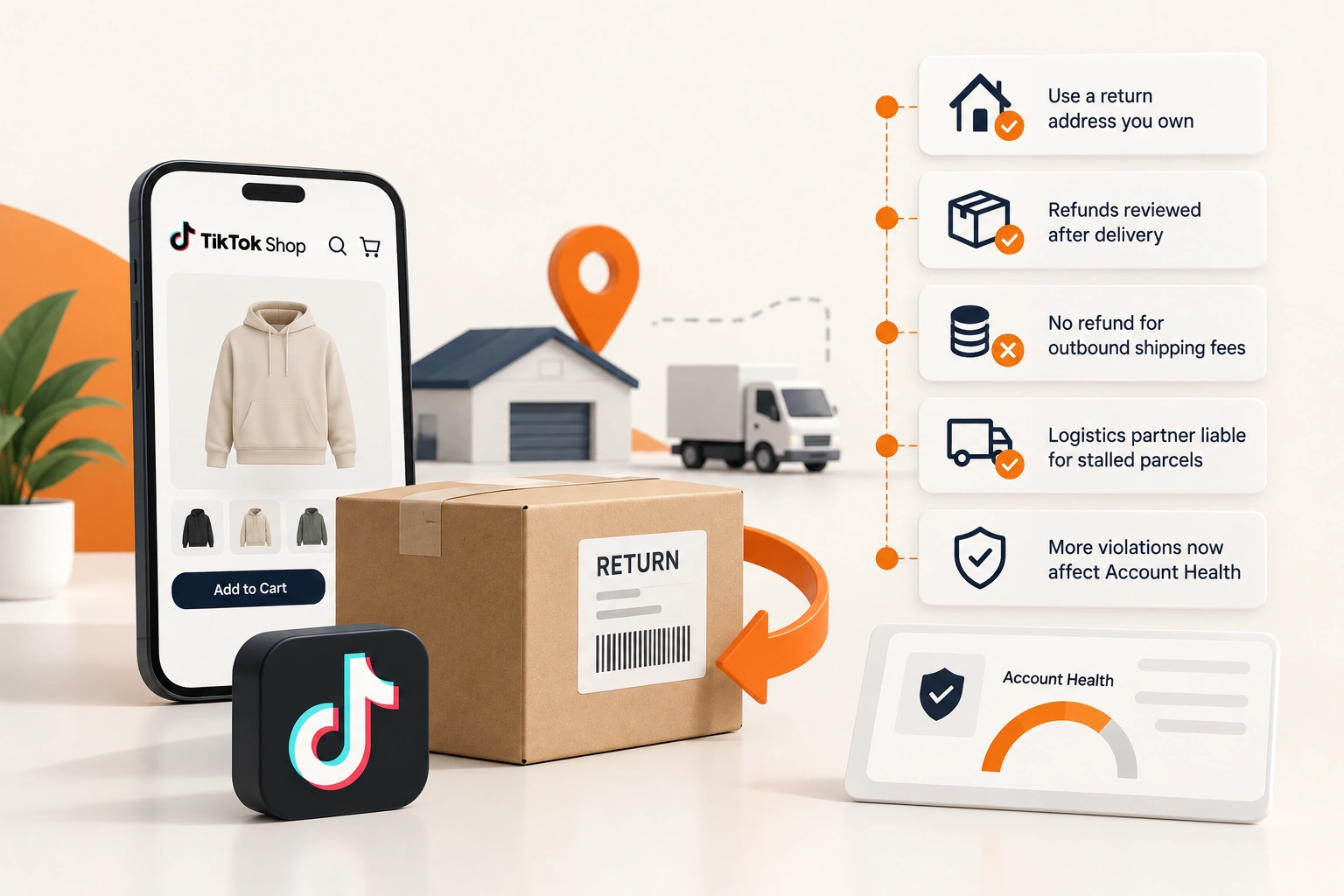
Ship it yourself, or use the platform's fulfilment where it is available in your market. The trade is the familiar one: control and margin against speed and the badge that comes with it.
Whichever it is, dispatch times are enforced and they feed seller performance, which feeds how much reach the shop gets. Late dispatch is not just a customer service problem here, it is a distribution problem.
The affiliate programme is the channel
This is the part brands underestimate. Creators pick products from the affiliate marketplace and make videos about them, and the commission you set is the main reason they pick yours over an identical product from somebody else.
Set it too low and nobody takes it. Set it without knowing your contribution margin and you will grow a channel that loses money on every order. The number has to come from the unit economics rather than from what a competitor is offering.
Sample seeding matters as much as the rate. A creator who has the product makes a better video than one working from a product page, and the good ones are asked constantly.
Content is not optional
A shop with no video is a catalogue on a platform where nobody browses catalogues. The brand's own account, creator content and live selling are the three routes, and they need different work.
The brand account is the cheapest to control and the slowest to grow. Creator content is faster and less controllable. Live is the highest effort and, in categories where it works, by some distance the highest converting.
None of that is a launch task. It is an operating rhythm, which is why the honest question before opening a shop is who is making a video this week.
Advertising, later
Paid amplification of content that is already working beats paid promotion of a product nobody has made a video about. The order matters: find the creative that converts organically, then put budget behind it.
Benchmarks across channels move constantly and are worth checking rather than assuming; we keep ours in the ROAS standards article.
What we do with this
Setup, catalogue, affiliate terms and the content rhythm are one job, which is why TikTok Shop management covers all four rather than the parts that fit in a dashboard.
For brands already on Amazon or Walmart, the inventory plan has to include this channel from the start: TikTok demand arrives in spikes, and a spike against no stock is a wasted video.
If you are deciding whether the channel is worth the operating commitment, that is the conversation.
Frequently asked questions
The questions that come up most often on this subject.
Register as a seller with your business documents, pass category eligibility, connect a bank account, then build the catalogue and choose fulfilment. Approval is usually days. The setup that decides whether it sells is the affiliate commission and the content plan, and neither is part of the application.
A registered business, documents that match the name on the application, a bank account in that name, and a product category that is eligible in your market. The commonest delay is a mismatch between the documents and what was typed, not the review itself.
Whatever your contribution margin can carry, worked out before you publish a rate rather than copied from a competitor. Too low and no creator takes the product; set without knowing the margin and the channel grows while losing money on every order.
Somebody does. A shop with no video is a catalogue on a platform where nobody browses catalogues. The three routes are your own account, creator content through the affiliate programme, and live selling, and most brands use all three in different proportions.
It is worth it where the product demonstrates well on video and the margin can carry a commission. It is a poor fit for products that need explaining in text or that sell on specification. The commitment is a content rhythm rather than a launch, and a brand unwilling to make that commitment is better off not opening the shop.
Ship yourself or use the platform's service where it is available in your market. Either way dispatch times are enforced and feed seller performance, which affects how much reach the shop gets. Late dispatch is a distribution problem here, not only a service one.
Yes, and treat it as a budget rather than a favour. A creator holding the product makes a materially better video than one working from a product page, and the creators worth having are asked constantly, so the offer has to be easy to say yes to.
Amazon captures demand that already exists; TikTok creates it. That changes everything downstream: the product research, the imagery, the pricing and the pace of stock. Running it as a second Amazon account produces a catalogue nobody sees.
After something works organically. Paid amplification of a video that is already converting beats paid promotion of a product nobody has made a video about, and it costs less per order because the creative has been proven first.
Treating it as a listing exercise. The catalogue takes a week and the channel takes a rhythm, so the honest question before opening a shop is who is making a video this week, every week.