Fulfilled by TikTok, and What It Changes
TikTok holding your stock buys the same things Amazon's warehouse buys: a badge, a delivery promise, and one less thing to run. It costs the same things too.


Loading Article banner
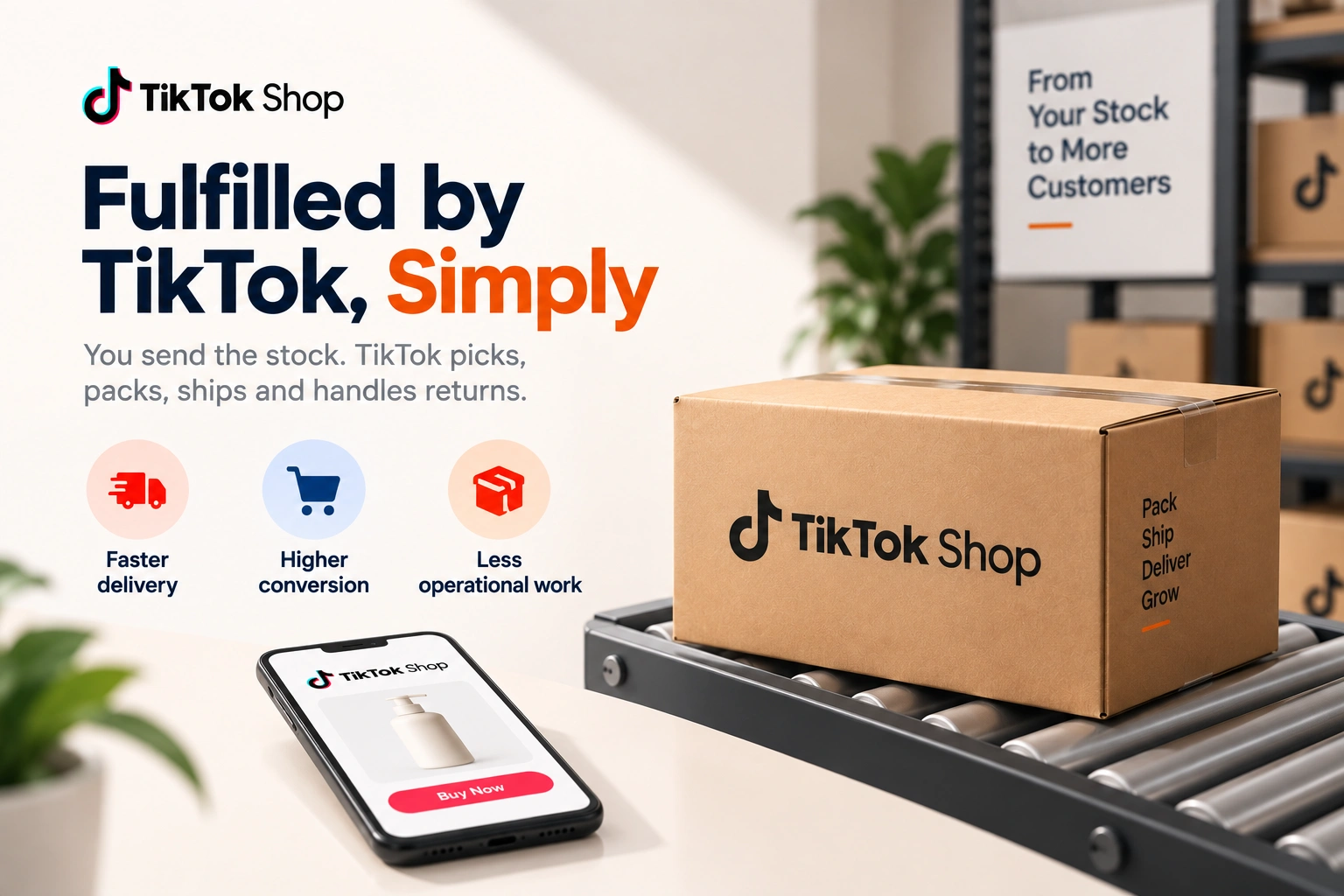
Fulfilled by TikTok is the same arrangement every marketplace eventually offers: send stock to the platform, and the platform picks, packs, ships and handles the returns. The reason to care is not the logistics. It is that the platform rewards it, and on TikTok Shop the reward matters more than it does elsewhere.
Social commerce converts on impulse. A shopper who has watched forty seconds of video and tapped is not comparing delivery estimates across sellers, they are deciding in a moment, and a faster promise with a fulfilment badge attached removes the last hesitation. That is worth more here than on a marketplace where somebody arrived already intending to buy something.
The stock commitment nobody plans for
The difficult part is not the fee. It is that social commerce demand is spiky in a way marketplace demand is not, and platform fulfilment asks you to commit inventory in advance to a channel that might do nothing for three weeks and then sell a quarter's stock in a day because a video worked.
Under-commit and the one video that lands sells through in hours, which is the worst outcome available: the demand existed, the momentum was real, and the listing goes out of stock at exactly the moment the algorithm was ready to keep showing it.
Over-commit and capital sits in a warehouse serving one channel, unable to fill orders from anywhere else. That is the same duplicate inventory problem every multi-channel seller has, and it is worse here because the demand signal is so much harder to forecast.
There is no clever answer to this. What works is treating the first commitment as an experiment sized to be affordable if it fails, and letting the second one be informed rather than hopeful.
What it costs against shipping yourself
Per unit, more than your own warehouse for most products, and the comparison is not the point. What you are buying is the promise and the badge, and the question is whether the conversion difference covers the fee.
On a low priced impulse product it usually does, because the whole transaction turns on removing friction and the margin per unit is thin enough that a lost sale costs more than a fee. On a considered higher priced purchase it often does not, because the buyer is willing to wait and the fee is a larger absolute number.
The honest test is to run both for a period on comparable products and compare conversion rather than cost. Almost nobody does this and almost everybody has an opinion about it.
The shipping standards apply either way
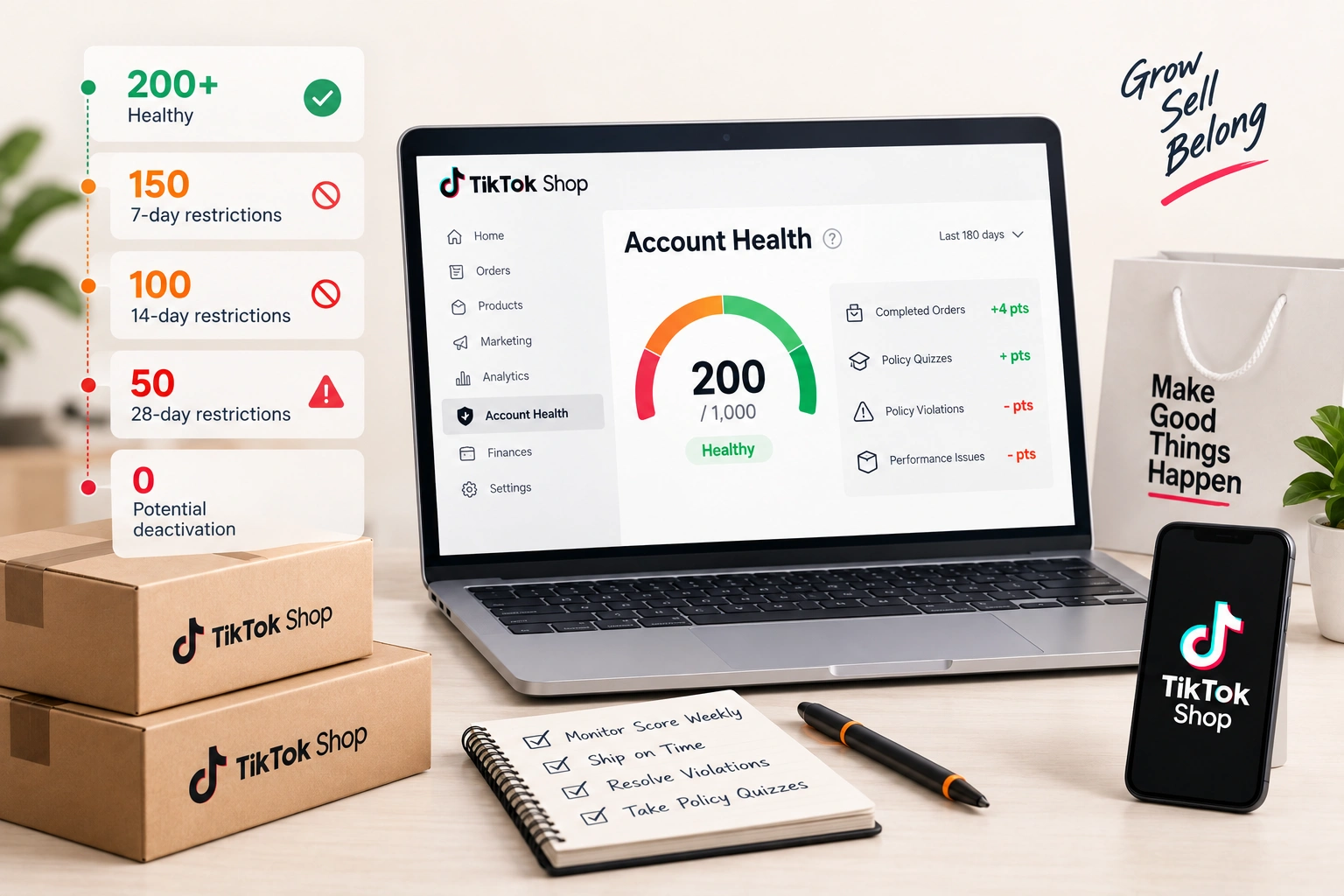
Whichever arrangement you use, TikTok Shop holds sellers to dispatch deadlines and cancellation rates, and the consequences escalate: reduced visibility first, then restrictions. A seller shipping themselves is meeting the same bar without the platform's warehouse doing it for them.
That is the honest argument for platform fulfilment and it is an operational one rather than a commercial one. If the alternative is a small team packing orders around everything else they do, the bar is the problem rather than the fee. If there is already a warehouse meeting it for other channels, the calculation is different.
The same reasoning applies on every marketplace, and it is why fulfilment decisions are rarely about fulfilment. Selling in more than one place at once is covered in what works and does not on TikTok Shop.
How to decide
Three questions, in order. Is the product an impulse purchase at a price point where friction decides the sale? Can you meet the dispatch standards yourself, consistently, including at weekends? And can you afford the inventory commitment to be wrong once?
Three yeses to the first and third with a no to the second is the clearest case for it. Three noes is a clear case against.
The middle is where most brands are, and the answer there is usually a subset: platform fulfilment for the two or three products that actually sell through video, and your own for the rest. Which products those are is not knowable in advance, which is the argument for starting narrow. The wider version of that decision is in what a reasonable return looks like across these platforms, and the operational side of running it belongs with TikTok Shop management.
What it does not fix
It is worth being clear about this, because platform fulfilment is often sold as a growth lever and it is not one. It removes friction from a sale that was already going to be considered. It does not create the consideration.
On TikTok Shop the consideration is the video. A product with no content behind it and perfect fulfilment sells nothing, because nothing is putting it in front of anybody. Fulfilment is the last few per cent of a conversion that content and advertising have to produce first.
That order matters when budget is limited. A brand choosing between committing capital to platform inventory and committing it to content should generally choose content, because the content failure is total and the fulfilment failure is marginal.
The exception is a product already selling well where the delivery promise is visibly the objection: reviews mentioning shipping time, a conversion rate that falls off against faster competitors. Then the fee is buying back something specific rather than being spent in hope. Working out which of those you are looking at is the same diagnostic as deciding what actually sells on the platform.
Where this goes next
The comparison most sellers are really making is with Amazon, and using Amazon to fulfil orders you did not sell on Amazon is the other way to keep one stock pool. Where fulfilment sits in the whole account, and what else has to be true before an order exists, is in how to sell on TikTok Shop, and what moves units.
Keep reading
Frequently asked questions
The questions that come up most often on this subject.
The arrangement where TikTok holds your stock and picks, packs, ships and handles returns, in exchange for a fee. The reason it matters is not the logistics: the platform rewards it with a faster promise and a badge, and on a channel that converts on impulse that removes the last hesitation.
On a low priced impulse product usually yes, because the transaction turns on removing friction and a lost sale costs more than the fee. On a considered higher priced purchase often not, because the buyer will wait and the fee is a larger absolute number. Run both on comparable products and compare conversion rather than cost.
Enough that it is affordable if the channel does nothing, because social commerce demand is spiky in a way marketplace demand is not. Under-committing means the one video that lands sells through in hours and goes out of stock exactly when the algorithm was ready to keep showing it.
Yes. Dispatch deadlines and cancellation rates apply either way, and the consequences escalate from reduced visibility to restrictions. Platform fulfilment does not lower the bar, it meets it for you, which is an operational argument rather than a commercial one.