Amazon Related Account Deactivation: Why It Happens and How to Appeal
Amazon deactivates accounts that share information with an account it has already deactivated, and the appeal that works is about the other account, not yours. What makes two accounts related, the order the appeals go in, what to do when you recognise it and when you do not, and the mistakes that slow it down.


Loading Article banner
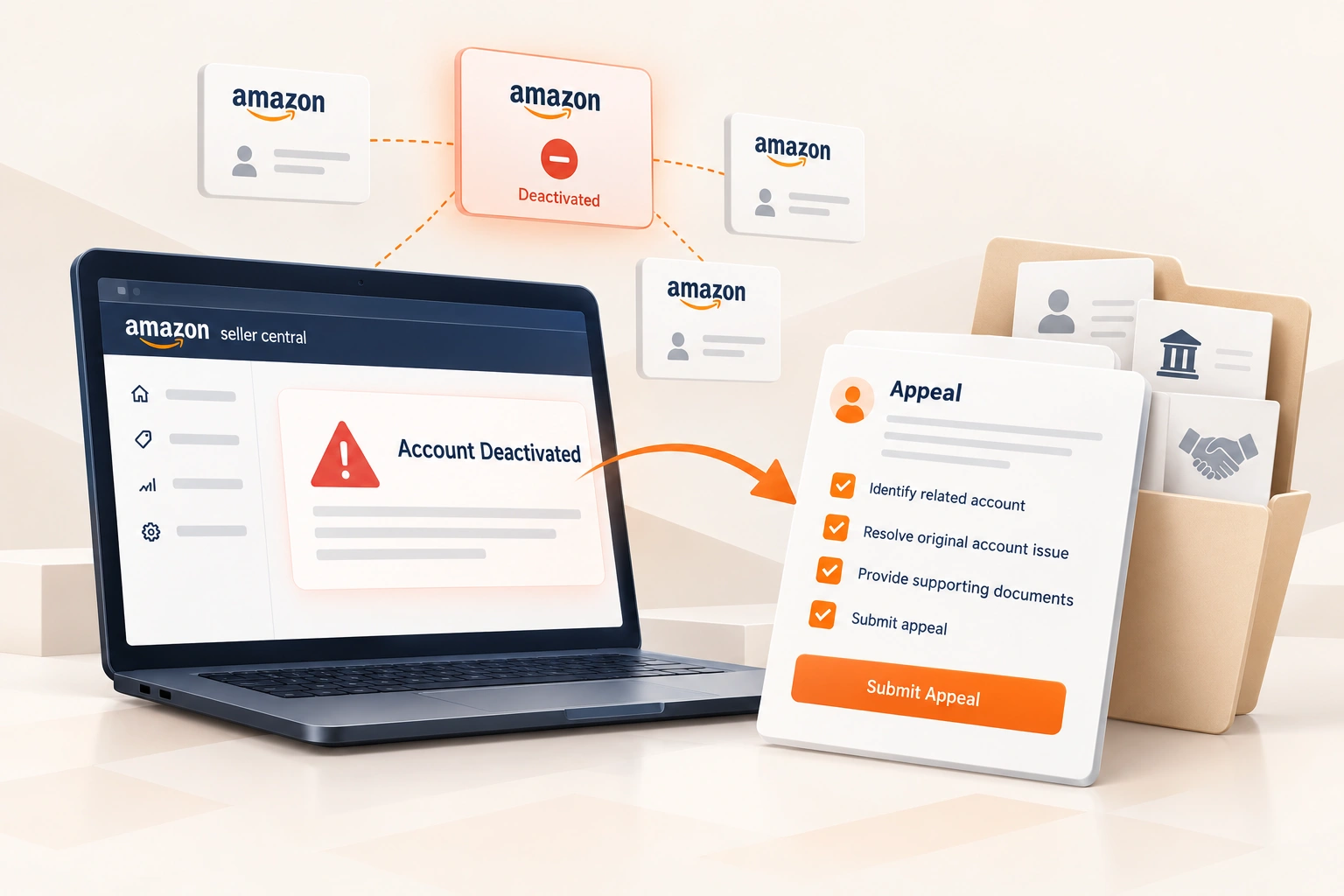
Few Amazon notices confuse sellers more than the one saying their account has been deactivated because it is related to another. A seller who owns one account, broke no rule and may never have heard of the other one finds their selling stopped by somebody else's problem, and every appeal about their own conduct comes back with the same reply.
The reason is that a related account appeal is not about your conduct. Amazon's staff have explained the mechanism and the order of the appeals on the Seller Forums more than once, and their explanations agree. This is what makes two accounts related, why your appeal waits on the other account, what to do when you recognise it and when you do not, and the mistakes that make it slower.
What related means
The starting point, in a post by Roxy_Amazon, is that "Amazon's standard policy is to allow one Seller Central account per seller." A seller with a legitimate business need may operate more than one, "without prior approval", and an earlier staff post gives examples: owning several brands run as separate businesses, manufacturing for two distinct companies, or being recruited into an Amazon programme that needs separate accounts.
The consequence is the part that catches people: "If one of these accounts violates an Amazon policy and is deactivated, this could affect the selling ability across all associated accounts." Explaining one case, a staff member put the reason plainly: "Your account does share at least one significant point of information with this other account. That information connects their status and actions to your account."
Amazon does not publish the list of what it compares, and its staff speak only of significant points of information. Assume that anything two accounts genuinely share can connect them.
How accounts become associated
Roxy_Amazon's post names three routes: "Access to another account, by the seller or their employees"; "Use of a third-party account management service"; and "Creating a global account without completing ID verification in a different marketplace".
The first two are where most innocent relations start. A consultant or agency holding a login on several clients' accounts is a point they all share. One seller on Amazon's forums described exactly that: they managed a supplier's UK account through their consultancy, their own US account was deactivated over an authenticity request, and the supplier's account was then deactivated as related, because they were its primary user. In another thread, a friend who had helped a seller through the verification video was enough.
The third is the one sellers do not know they did. An account in another marketplace, created through global selling and never verified, is on Amazon's list of ways accounts become associated, and it can be the deactivated one. Roxy_Amazon's advice is to check the store dropdown beside the Seller Central logo, which lists every country the account is registered in, and to read the performance notifications for each.
Why your appeal waits on the other account
Every staff answer gives the same order. In Roxy_Amazon's words: "the violation or violations that led to the deactivation of the original account must first be resolved individually. Only when the original account is reactivated, can the secondary account be reactivated." An earlier staff post told a seller to "reinstate the originally enforced account by following the appeal directions in the e-mail".
That is why an appeal about the related account's own good record is refused: it answers a question Amazon did not ask. The fix is on the other account, or in proving there is no longer a connection to it.
If you recognise the other account
Appeal on the other account first, answering its own notice, whatever it was: an authenticity request, a verification failure, a policy breach. Then follow Abella_Amazon's steps: "Once the other account is reactivated, take a screenshot of its home page. Then, from your current account, submit an appeal by clicking on "Submit additional information" and confirm that the policy violations of the other account have been addressed by selecting "I recognize the other account.""
If the owner of the other account cannot get into it, a staff reply to a seller in that position said the owner "will need to file the appeal with the required documentation to reactivate their account directly from your account." And do not close it. The same reply was explicit: "Closing your friend's account while the account is still blocked, will significantly delay resolution times", and reactivating it "is basically the only path forward to reinstate your account." Roxy_Amazon's post adds that an unwanted marketplace account can be closed "only after all associated accounts are active and in good standing."
If the relationship has ended
Where you once shared a business, a login or an agency with the other account and no longer do, the appeal is about the ending. Roxy_Amazon's post asks for "additional documents proving you are no longer the owner or have any relationship with that account, such as sales deeds, purchase or business transfer contracts, contract termination". A staff reply on Amazon's UK forum asked a seller in this position for a timeline of when the partnership began and ended and what services were provided, with the contract or termination notice and payment records behind it.
One seller quoted the option on their own appeal form as "I recognise the other account but it does not belong to me", and it asked for a signed affidavit explaining who owns the other account and the relationship, notarised or signed before a lawyer or similar professional, with official documents such as a bank statement in support. That is one seller's form; expect the wording on your own notice to govern.
If you do not recognise it at all
Look for the likely sources before concluding it is a mistake: an account in another marketplace, an old login you gave somebody, a former agency or consultant, a partner from a business that has since closed. A staff reply on the UK forum pointed a seller in this position to the notification itself, which should name the associated store.
If it is genuinely not yours, Roxy_Amazon's post says to "file an appeal and confirm that the account does not belong to you", and is frank about the stakes: "If it is not possible to confirm that the account is not yours, your account will not be reinstated and you will not be permitted to conduct business on Amazon in the future." Sellers in this position describe the same templated reply arriving after each appeal, which is why the evidence has to answer the relation itself rather than restate that you did nothing wrong.
The mistakes that make it slower
Appealing your own conduct. The relation is the subject, and the other account's status is the evidence. How an appeal is built still applies, aimed at the right account.
Closing the other account. Amazon's staff say it significantly delays resolution, and an account closed while blocked is a relation nobody can clear by reactivating it.
Opening a new account. A new account opened while another is deactivated is one more account related to a deactivated one. Closing or pausing an account sets out the routes that do not create new problems.
Ignoring the other marketplaces. Check every country in the store dropdown and every performance notification, not only the account you sell from.
Preventing the next one
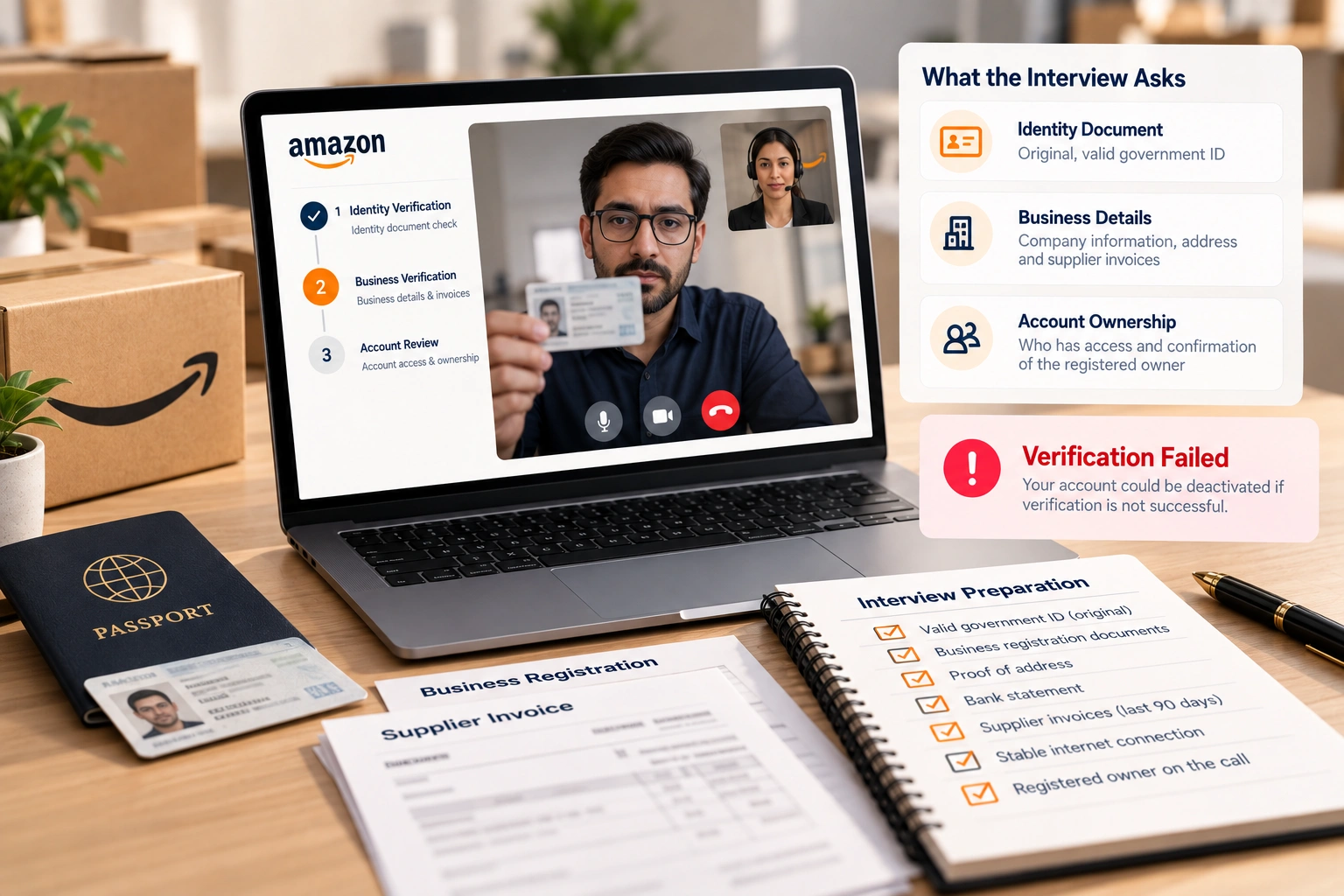
Most related account cases begin with access. Give every person who works on the account their own login rather than the primary user's, remove access the day a relationship ends, keep the contracts that show when it began and ended, and never let an outside party hold the primary login. Complete identity checks in every marketplace an account is registered in, including the ones it does not sell in; why verification shows at risk and what the video verification asks cover the two that stall most often.
How we approach it
Our account reinstatement work on a related account deactivation starts with a map rather than a letter: every account in every marketplace, who has had access to each and when, and which one was deactivated first and why. The appeal then goes where the problem is, in the order Amazon's staff describe, with the documents that prove the relation or prove it has ended.
Frequently asked questions
The questions that come up most often on this subject.
That your account shares at least one significant point of information with an account Amazon has deactivated, and Amazon has deactivated yours because of it. Amazon's staff say the other account's violations have to be resolved first; only when it is reactivated can yours be.
Amazon's standard policy is one Seller Central account per seller, but a seller with a legitimate business need may operate more than one without prior approval. Amazon's staff give examples such as owning several brands run as separate businesses. If one account is deactivated, every associated account can be affected.
No. Amazon's staff say closing the other account while it is still blocked will significantly delay resolution, and that reactivating it is basically the only path forward. An unwanted account can be closed only after all associated accounts are active and in good standing.
Check the notice and the performance notifications in every marketplace first, since the notification should name the associated store, and look for a forgotten global account, an old login or a former agency. If it is genuinely not yours, appeal and confirm that it does not belong to you, with evidence that answers the connection itself.
Yes. Amazon lists access to another account by the seller or their employees, and the use of a third-party account management service, among the ways accounts become associated. Give an outside team its own logins with only the permissions it needs, and remove them when the work ends.