How to A/B Test an Amazon Main Image With Manage Your Experiments, and What to Change Between the Two Versions
Asked in Amazon's own 2026 photography thread whether the number of images affects search, Amazon's moderator answered that a brand can test it. How Manage Your Experiments works in Amazon's words, who qualifies, what to change in a main image without breaking its rules, and how to read the result.


Loading Article banner
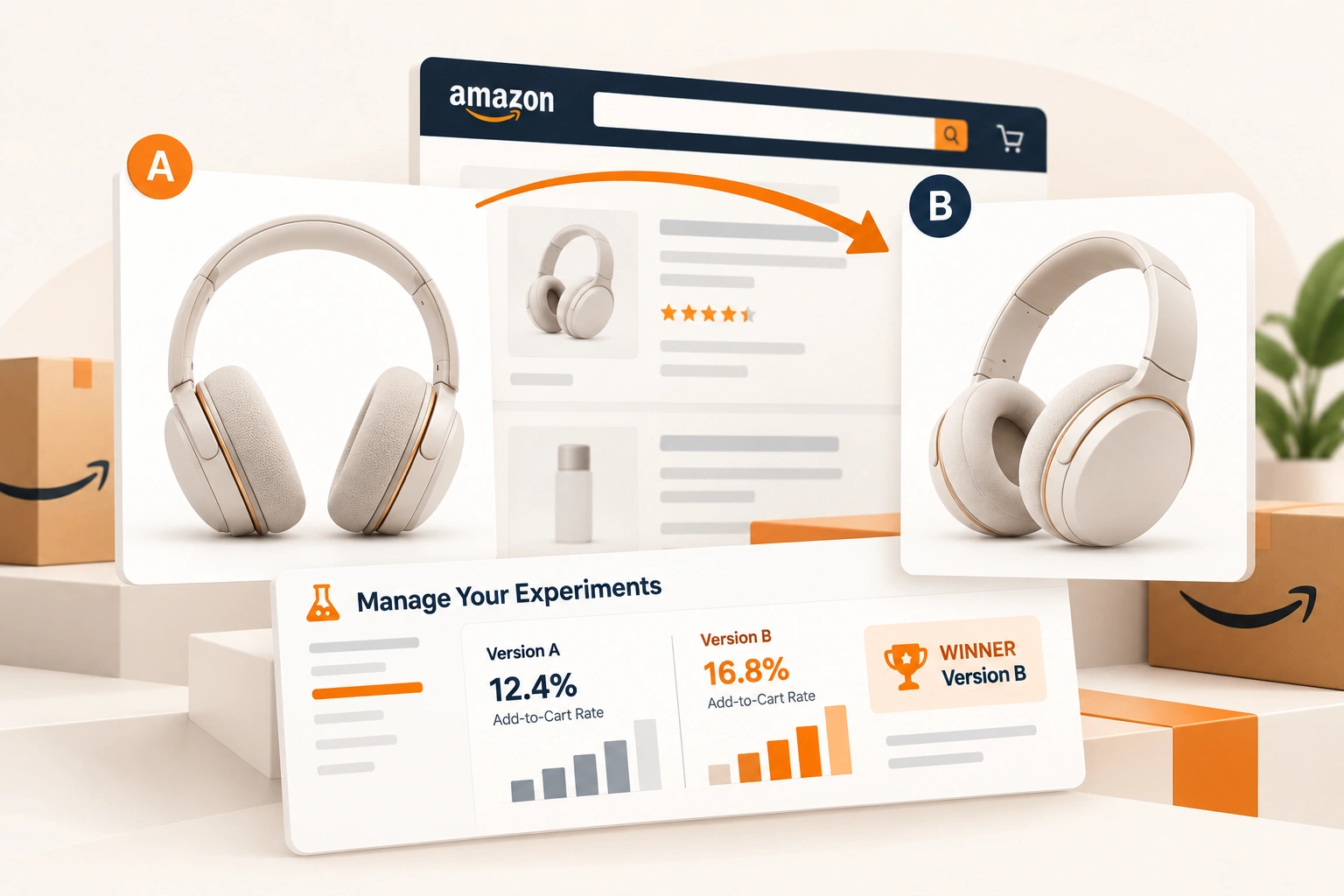
In Amazon's Seller Forums thread on photography standards for 2026, a seller asked whether the number of images on a listing affects search. The Amazon moderator replied that "Images are just one facet of Amazon Search" and suggested: "you can A/B test the number of images on a specific ASIN to identify search results increase/decrease."
Testing is the platform's own answer, and it matters most for the main image, the one picture a shopper sees on the search page before deciding to click. Most brands still change it on opinion. Amazon gives Brand Registered sellers a free tool, Manage Your Experiments, to settle the question with their own shoppers. This is how it works in Amazon's words, who can use it, what to change between two main images that must both pass the rules, and how to read the answer.
What Manage Your Experiments does
Amazon describes it as a "free tool" for "Professional sellers enrolled in Amazon Brand Registry". It splits shoppers rather than time: "customers that view your product listing are randomly split into two groups", one seeing version A, the current content, and the other version B, the new content. Because both groups shop in the same weeks, a sale or a competitor's price cut lands on both versions alike, which a before and after comparison never manages.
Amazon's guide lists "product titles, images, descriptions, bullet points, or A+ Content" as testable, and its first forum post on the tool named "your product title, main image or A+ content". A+ Content and Premium A+ covers testing the modules further down the page; this article is about the picture at the top.
Who can run one: the brand and the traffic
Two conditions. The seller is enrolled in Brand Registry for the brand, which Brand Registry and listing protection walks through. And the product qualifies on traffic: an ASIN is eligible "if it belongs to your brand and has received enough traffic in recent weeks."
Amazon does not publish the threshold. Its nearest statement, in a post on running several experiments at once, is this: "Depending on the category, high-traffic products might get several dozen orders per week, or more." The Manage Your Experiments page in Seller Central shows which ASINs qualify. A product that does not qualify yet has its main image decided by the rules and by judgement until it does.
Among eligible products, test first where a small change is worth most: the best seller, or the product that ranks well and wins few clicks. What a good Amazon conversion rate looks like explains why one product's rate is no guide to another's.
What to change between version A and version B
Amazon's advice is blunt: "Try to make the two versions as different as possible." And: "The greater the difference, the better the chance that the performance results will be meaningful." The tool warns when two versions are too similar to give a conclusive result.
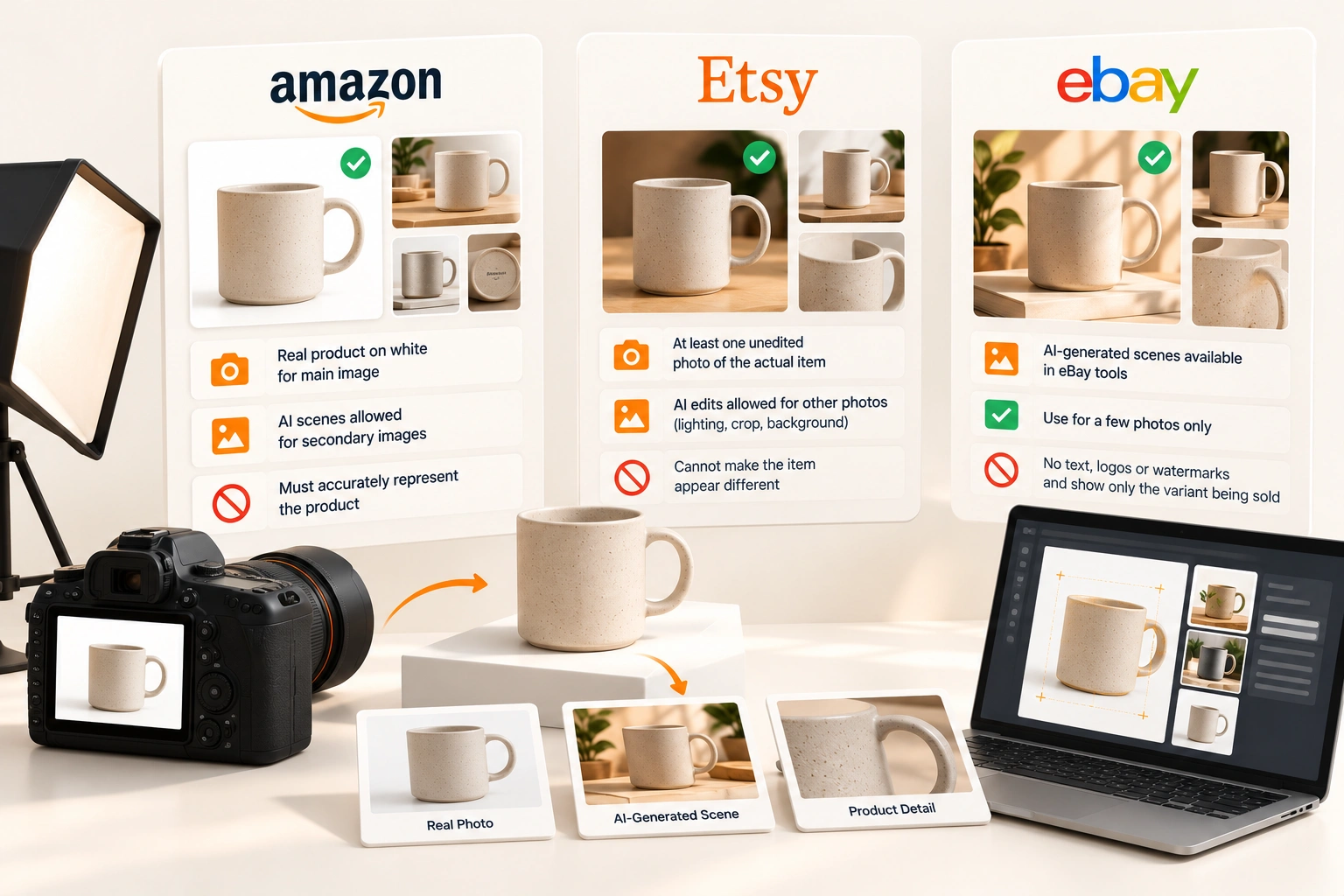
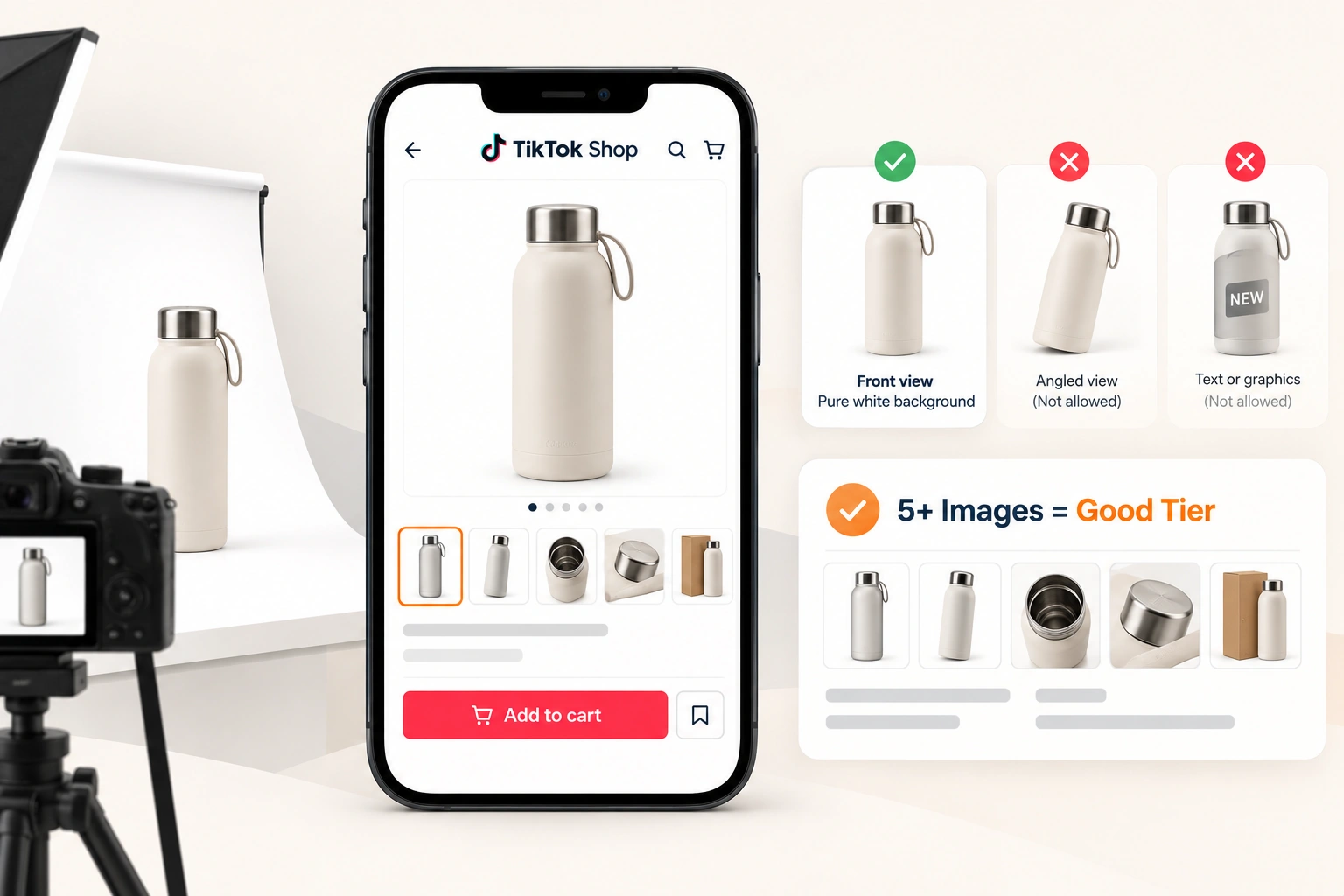
For the main image, the difference has to be found inside fixed rules, because both versions are live main images. Amazon's moderator listed them for 2026: "Pure white (RGB 255, 255, 255) for main images", "Your product should fill 85-100% of the image frame", "Show the entire product", "Display only what's included in the purchase", and "Avoid text, graphics, logos, watermarks, or promotional messaging on main images". Amazon's main image rules and how a suppression is cleared sets them out in full. So Amazon's suggestion to compare "lifestyle against product photography" does not apply to the main image, and in our practice the variables are these four.
Angle. Front on against a three-quarter view, which shows depth and often reads as the product itself at thumbnail size.
Scale. The same shot at the bottom and at the top of the 85 to 100% range. On a page of small squares the larger product is the more legible one, and how much that is worth is for the test to say.
What is shown. One unit against the full set the purchase includes, and never two views of the product, which Amazon names as a common mistake.
The product's state. Closed against open, folded against unfolded, where each is honestly what the shopper receives.
Questions the rules leave open are not test variables. Sellers in the same thread asked about a hand holding the product, white products on a white ground, furniture shown in a room, and 3D renderings. The only visible staff answer was on the hand: "There is no specific mention that a human hand is not allowed in the main image." A version B later judged outside the rules ends the test and can suppress the listing, so both images must be clearly compliant.
How Amazon decides a winner
By default an experiment runs "to significance", ending when there is enough data to call it, and Amazon "updates experiment results once a week until the experiment ends". Its first guidance gave a length: "8-10 weeks is ideal for a high confidence decision."
The result is "the percentage of the probability that one version of your content is better than the other", beside "units sold per unique visitor, conversion, units sold, sales, and sample size" for each version, and "the projected one-year impact on sales of your winning content."
With auto-publish left on, "we'll publish the alternate content automatically if it performed significantly better." An older Amazon post on auto-publishing title and image winners set the bar: "Amazon will only publish the winning content version if it is at least 66% better than the other content version." Amazon has not said whether that still applies, and we read the figure as the probability on the results page, not the size of the lift. A two in three chance is a low bar for the most important picture on the listing, so we switch auto-publish off and make the decision ourselves.
Reading the result without fooling yourself
Read the sales line, not only the rate. A main image that wins more clicks can bring in less certain shoppers, lowering a per-visitor rate while raising units sold. The probability, the units and the sales, read together, are the answer.
Hold everything else still. A coupon or a price change lands on both versions but changes who is shopping. We keep the price, the title and the advertising steady while a main image test runs.
An inconclusive test is an answer. It says the two images do the same job. Keep the one that is easier to hold consistent across the catalogue, and test a bigger difference next time.
Should you start a main image test in late October?
Not on a product that matters in the fourth quarter. A test that runs eight weeks from now ends in the holiday weeks, when gift buyers and deal hunters arrive in proportions that are gone by February, and a seller replying to Amazon's post on running several experiments at once made the same point about the turn of the year. The Q4 2026 calendar for sellers has the dates. The useful work now is to shoot the variants, check both against the rules, and schedule the test for January, when the result describes the year ahead rather than the season behind.
Where we fit
A main image is a set of decisions about angle, scale and what is shown, and each of them can be measured once the product has the traffic. Designing both versions to the rules, briefing the shoot that produces them, and reading the experiment with the brand is part of our main image design work. If you would like a second opinion on which change is worth testing first, the current main image and the search page it competes on are where we would start.
Frequently asked questions
The questions that come up most often on this subject.
Yes. Amazon describes it as a free tool for Professional sellers enrolled in Amazon Brand Registry. The product also needs enough traffic in recent weeks to qualify, and the tool shows which products do on its page in Seller Central.
By default Amazon runs an experiment to significance and updates the results once a week. Its earlier guidance was that 8 to 10 weeks is ideal for a high confidence decision. Products with less traffic take longer, and a test that crosses the holiday weeks should be read with care.
Usually traffic. An ASIN qualifies if it belongs to your brand and has received enough traffic in recent weeks. Amazon publishes no threshold; its nearest statement is that, depending on the category, high-traffic products might get several dozen orders per week or more.
No. Both versions are live main images, so both must meet the main image rules: a pure white background, the product filling 85 to 100% of the frame, only what is in the purchase, and no text, graphics, logos or watermarks. Test the angle, the scale, what is shown and the product's state instead.
It can. With auto-publish on, Amazon publishes the new version if it performed significantly better, and an older Amazon post set the bar for title and image tests at the winner being at least 66% better. You can switch auto-publish off and decide on the probability, units and sales yourself.