Brand Guidelines for eCommerce Brands: The Visual Rules and the Written Standard Every Platform Checks
A brand that sells on marketplaces is drawn by many hands and checked by several platforms before a shopper sees it. What its guidelines need, from logo versions, palette and type to vocabulary and a claims register, in the platforms' own words, and how the document is carried into each one.


Loading Article banner
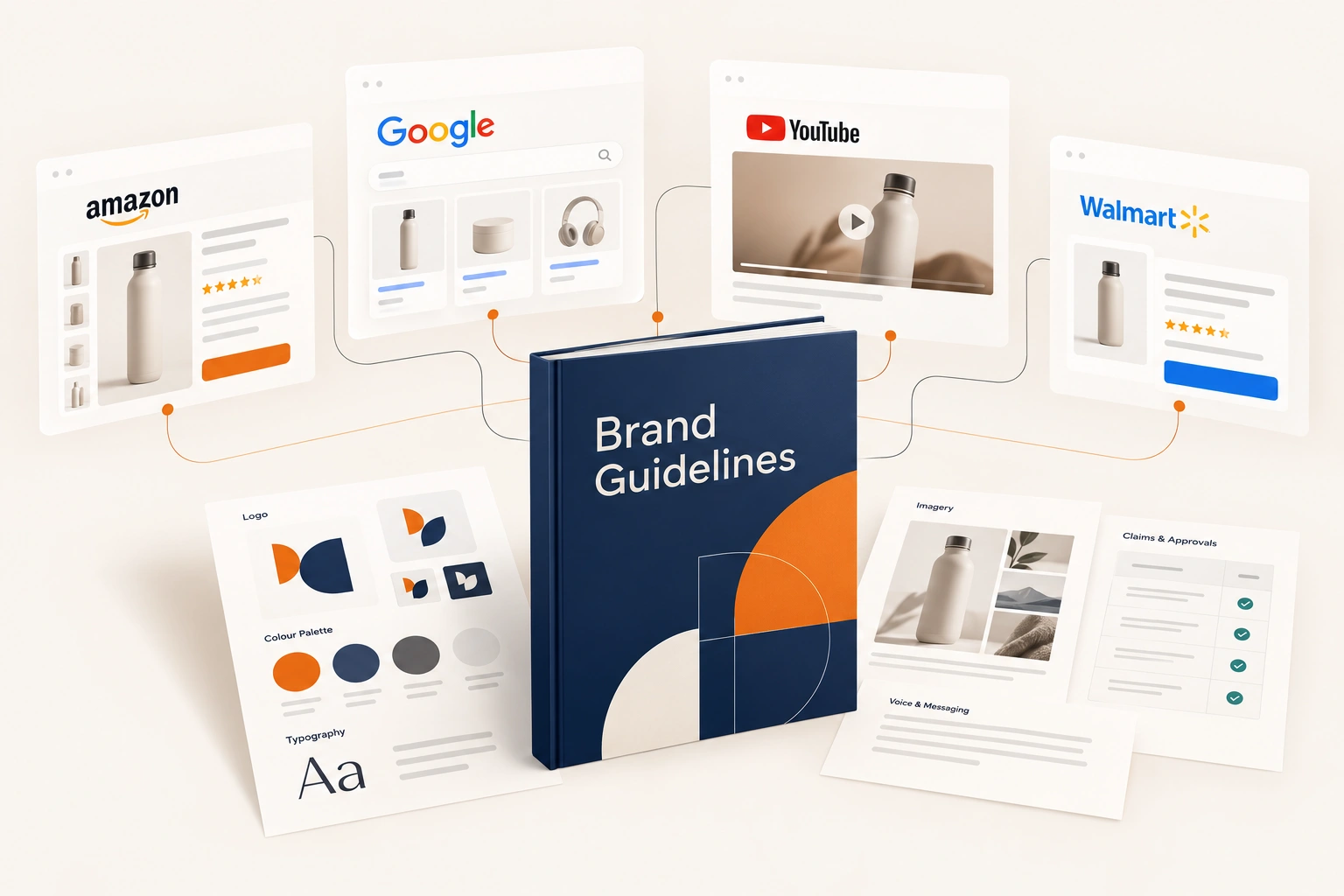
A brand that sells only from its own site is drawn by its own designers. A brand that sells on marketplaces is drawn by everybody: the studio making listing images, the freelancer building A+ modules, the media buyer in Google Ads, Google's systems assembling an ad from parts, and, from January 2027, an Amazon assistant answering shoppers in the brand's name. Most of them never open the brand's guidelines, and some of them are machines.
So an eCommerce brand's guidelines have a second job. Besides saying what the brand looks and sounds like, they hold the versions, values and statements the platforms check before anything goes live. This is what the document contains, what the platforms ask of it in their own words, and the deeper guide to each part.
The platforms check the brand before a shopper does
Amazon moderates Sponsored Brands ads, and its guide to that moderation is specific about the logo. It should "Fill the entire image or be on a white or transparent background" and "Be consistent across all ads so customers recognize your brand right away", and it should not "Be a combination of logos". "A brand logo must be your brand's registered logo", and the checklist adds: "The brand name matches the brand logo."
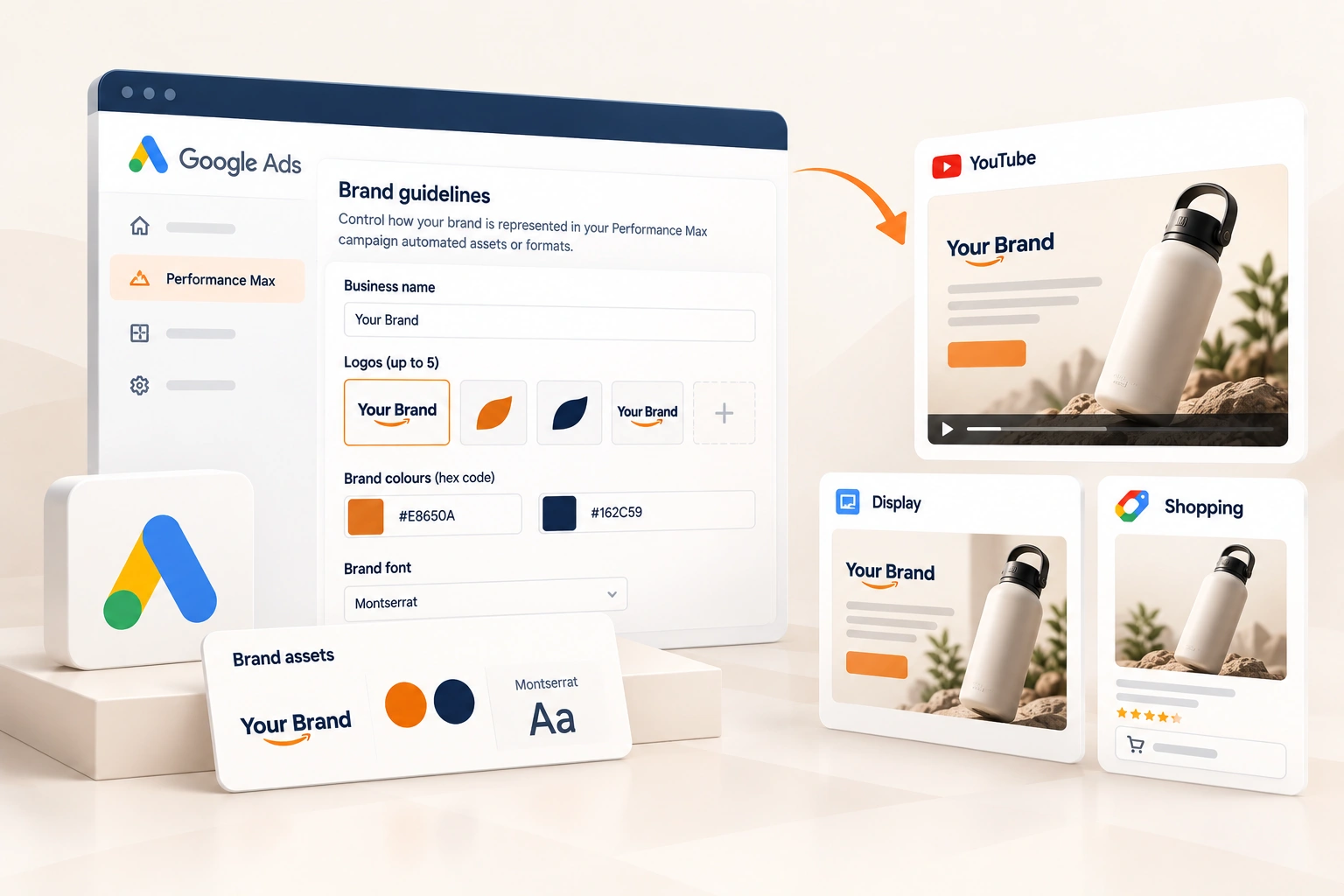
Google asks again, in its own form. A Performance Max campaign carries brand guidelines of its own: a business name that must match "your verified legal name or domain name to avoid disapproval", one to five logos legible at small sizes and "approved and visible on your landing page", and a colour pair and a font for autogenerated YouTube videos and responsive display ads. Left blank, "Google AI will infer font and colors from your Final URL." What Performance Max uses and what it guesses takes each field in turn.
Merchant Center asks a third time, for the brand profile Google shows on Search: a square logo at a 1:1 ratio, between 500 and 2000 pixels a side, no larger than 5 MB, in BMP, JPEG or PNG, "reviewed to make sure it follows Free listing policies", which Google says can take five to seven business days.
None of this is difficult. Each is a decision made in a hurry when the document does not already answer it, and made differently each time.
The visual system, in the versions platforms ask for
The visual half is the familiar one, written here for files rather than for a presentation.
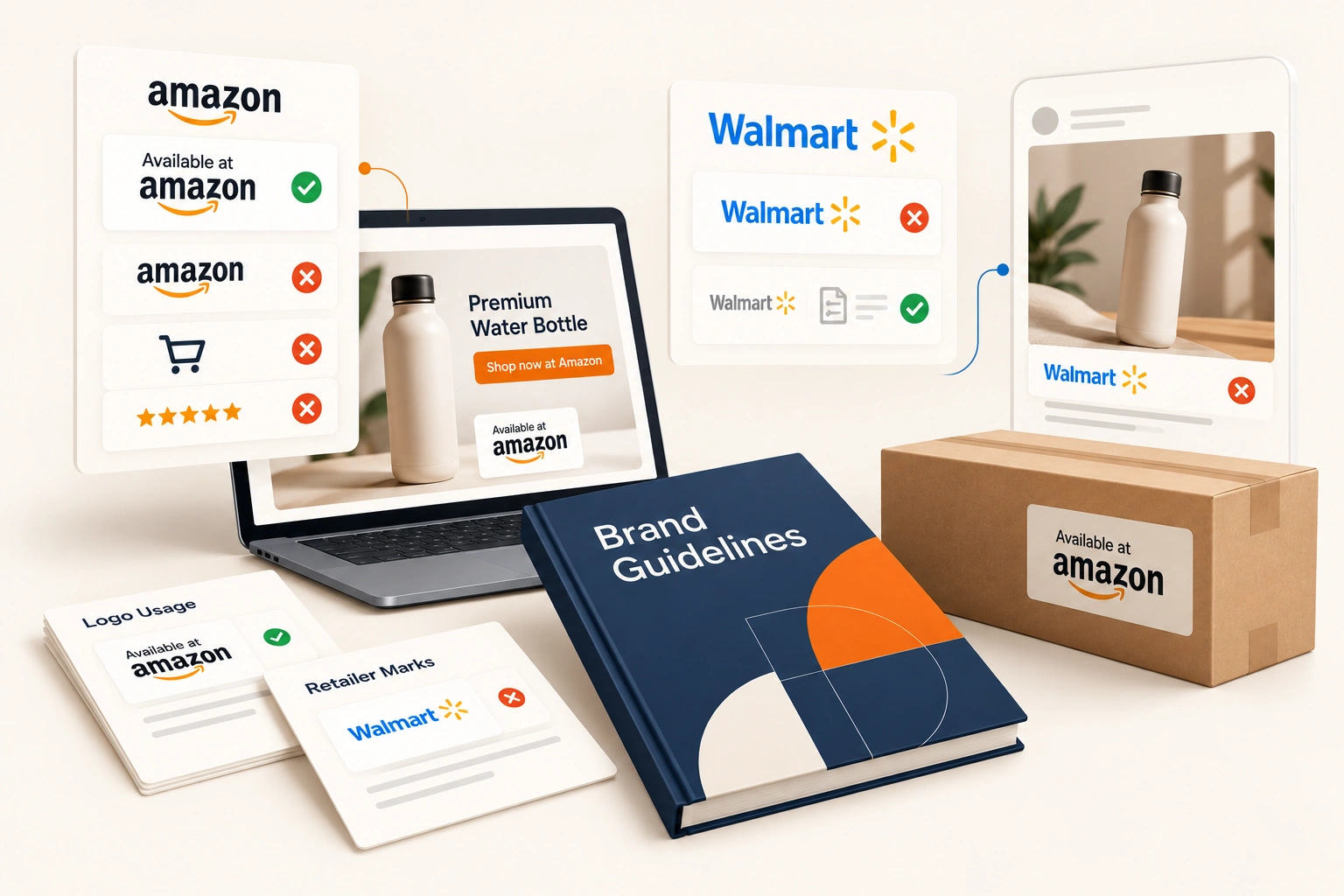
The logo, in every shape. The master, a square version that still reads in a small tile, a wide version, each on white and on transparent, with the registered form named. Two logos side by side stay out of ad placements, because Amazon's guide says a logo should not be a combination of logos.
The palette, with values. Hex values for screens, print values for packaging, and the two colours to use when a system has room for only two, as Performance Max has.
The typefaces, with substitutes. The brand's own, and the nearest of the fonts ad systems offer, named once so every media buyer picks the same one.
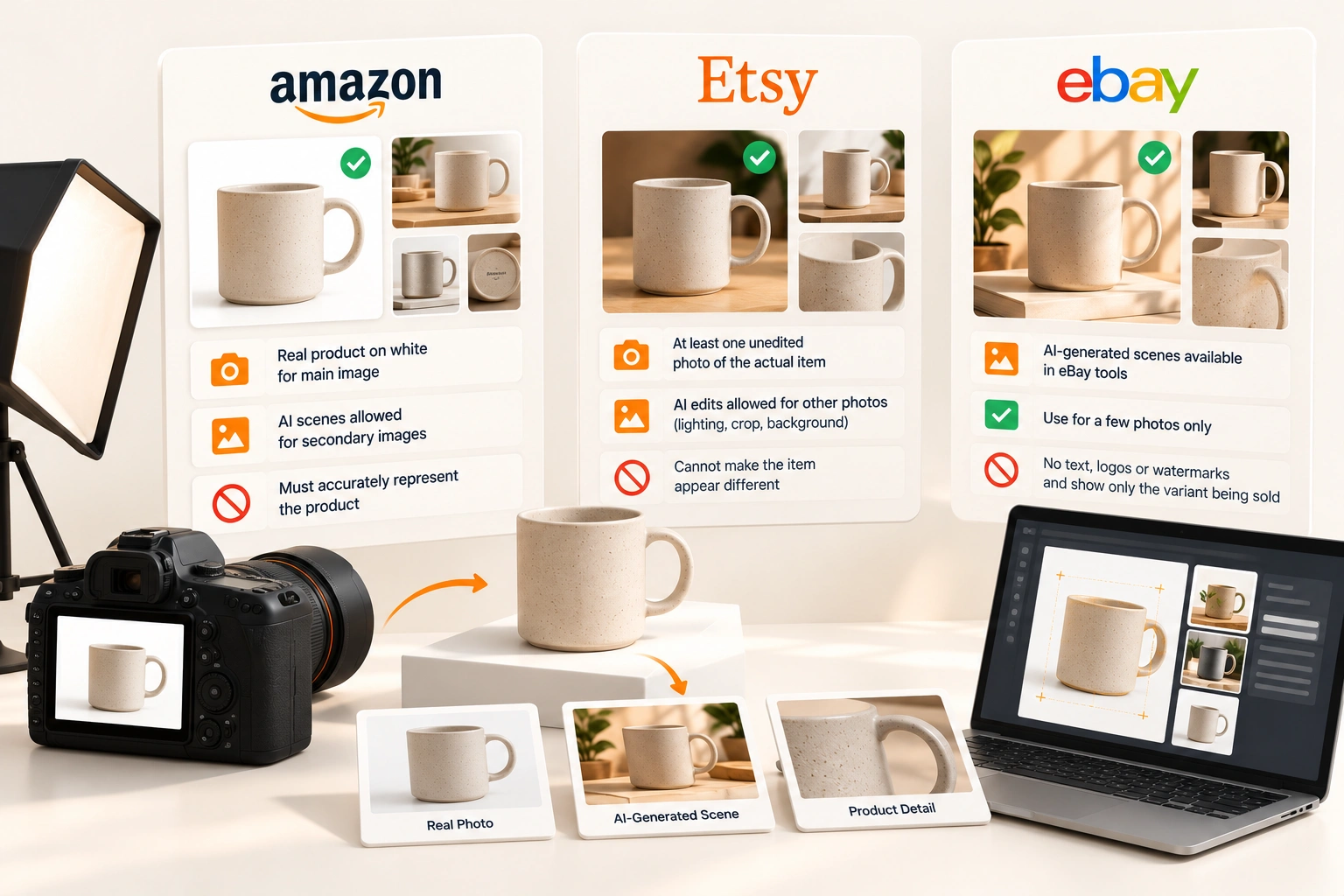
Imagery. The photographic style, what the product appears with, and the rule that every image is owned or cleared. Marketplace image rules sit on top of it, starting with Amazon's main image requirements.
Other companies' marks. Which retailer logos the brand may use, where, and with whose permission. Amazon lets sellers show its "available at Amazon" logo in their ads with "No formal review or approval", and keeps its own logo out of sellers' ads that link to Amazon; Walmart's brand center says its logos may only be used with its prior written permission. The rules for the retailers' own marks differ enough to need a section of their own.
The written standard
The other half is words, and most guidelines leave it out. A marketplace brand needs it more than most, because most of what it publishes is text, written by somebody else to a character limit.
The brand in two sentences. What it is, and what it will not do.
Who each product is for, and who it is not for. The audience map, exclusions included, because a product sold to the wrong buyer tends to come back.
The vocabulary. Product names as the brand spells them, its terms for its own features, and its house style for capitals. Amazon sets that last one for its self-service ads: "You should only capitalize the first word in a headline, sentence, any proper nouns, or trademarks".
The facts shoppers ask about. Sizes, compatibility, what is in the box, how long it lasts.
Amazon is about to read this half aloud. Its Branded Conversations format, which "will launch in January 2027 in the United States", adds "brand-provided expertise" to Alexa for Shopping, and what to write down before Branded Conversations launch sets out that standard section by section. Amazon's creative tools already make ads from a product page, and what they make and what a brand still supplies is the same question, asked sooner.
The claims register
Every claim the brand makes, beside its evidence and the places it is cleared to appear. It is the section that keeps an ad from being rejected and a listing from being challenged.
The standard behind it is old. The FTC's policy statement on advertising substantiation, of 23 November 1984, expects advertisers to "have a reasonable basis for advertising claims before they are disseminated", and where an ad states a level of support, "at least the advertised level of substantiation."
Amazon applies its own version to ads. "Advertising claims have to be the same ones as on your product detail page"; claims in a headline, on the detail page or on the packaging "will also require proof and substantiation"; and superiority claims, "the best, the most, the biggest", "will be rejected unless they can be substantiated."
So the register lists each claim, its evidence, the channels it is cleared for, and the words nobody uses. Shared by the listing writer, the designer and the media buyer, it keeps the ad and the detail page saying the same thing, which is what Amazon checks.
Carrying it into each platform
A guidelines document works only where it is used, and for a marketplace brand that is a list of places, each with an owner.
Listings and A+ content. The vocabulary and the claims register, applied to titles, bullets and modules. A+ and Premium A+ content is where the visual system and the written standard meet on one page.
The Brand Store. Structure, imagery and voice taken from the document; what an Amazon Brand Store is for sets out the job it does.
Ads. The logo versions, the colour pair and the substitute typeface, entered once from the document into Amazon Ads and Google Ads rather than chosen again for each campaign.
Search and Merchant Center. The square logo for the brand profile, and a business name that matches the domain or the verified legal name.
The log. The date each platform's rules were last read, and every written permission the brand holds. Platforms change their rules on their own timetable; the log is how the document keeps up.
Where we fit
Writing the visual system and the written standard together, in the versions and the words each platform checks, is how we build brand guidelines for brands that sell on marketplaces. If the brand looks different on every surface, the logo versions and the claims register are where we would begin.
More in this guide: The Available at Amazon Logo and Other Retailer Marks: What Amazon and Walmart Let a Brand Use.
Frequently asked questions
The questions that come up most often on this subject.
Two halves. The visual system: square and wide logo versions on white and on transparent, the palette with its values, typefaces with ad-system substitutes, image rules and the retailer marks the brand may use. And the written standard: the brand in two sentences, who each product is for, the vocabulary, the facts shoppers ask about and a claims register.
A square and a wide version of the registered logo, each on white and on transparent. Amazon's Sponsored Brands moderation guide asks for the registered logo, filling the image or on a white or transparent background, the same on every ad. Google's Merchant Center brand profile takes a 1:1 logo between 500 and 2000 pixels, and Performance Max takes one to five logos legible at small sizes.
Because the platforms check claims. Amazon's moderation guide says ad claims have to match the product detail page and that superiority claims are rejected unless they can be substantiated, and the FTC expects a reasonable basis for a claim before it runs. A register of each claim and its evidence lets the listing, the packaging and the ad say the same thing.
Versions, yes; different marks, no. Amazon's moderation guide asks for a logo that is consistent across all ads, and Google asks for Performance Max logos that are visible on the brand's landing page. A square and a wide version of one registered logo meet both, while a new mark for each channel splits the brand a shopper is trying to recognise.
When the brand changes, and whenever a platform changes what it asks for. Amazon, Google and the retailers revise their creative rules on their own timetable, so we record the date each platform's rules were last read and check them again before a major campaign or a new channel.