eBay Inventory Management: Where Cancellations Come From
Almost no seller oversells on one channel. They oversell across four, and eBay charges the most for it because cancellations become defects.


Loading Article banner
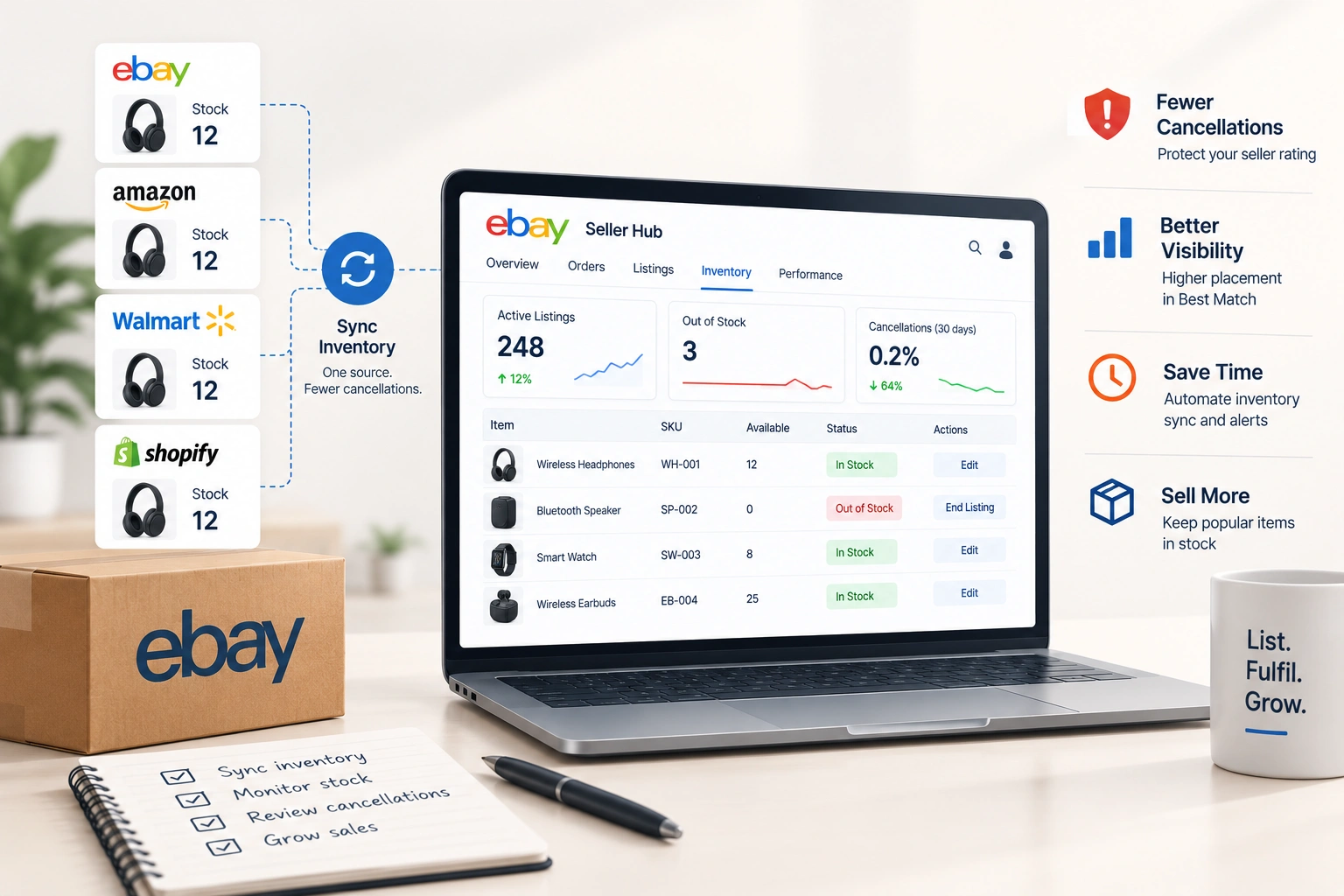
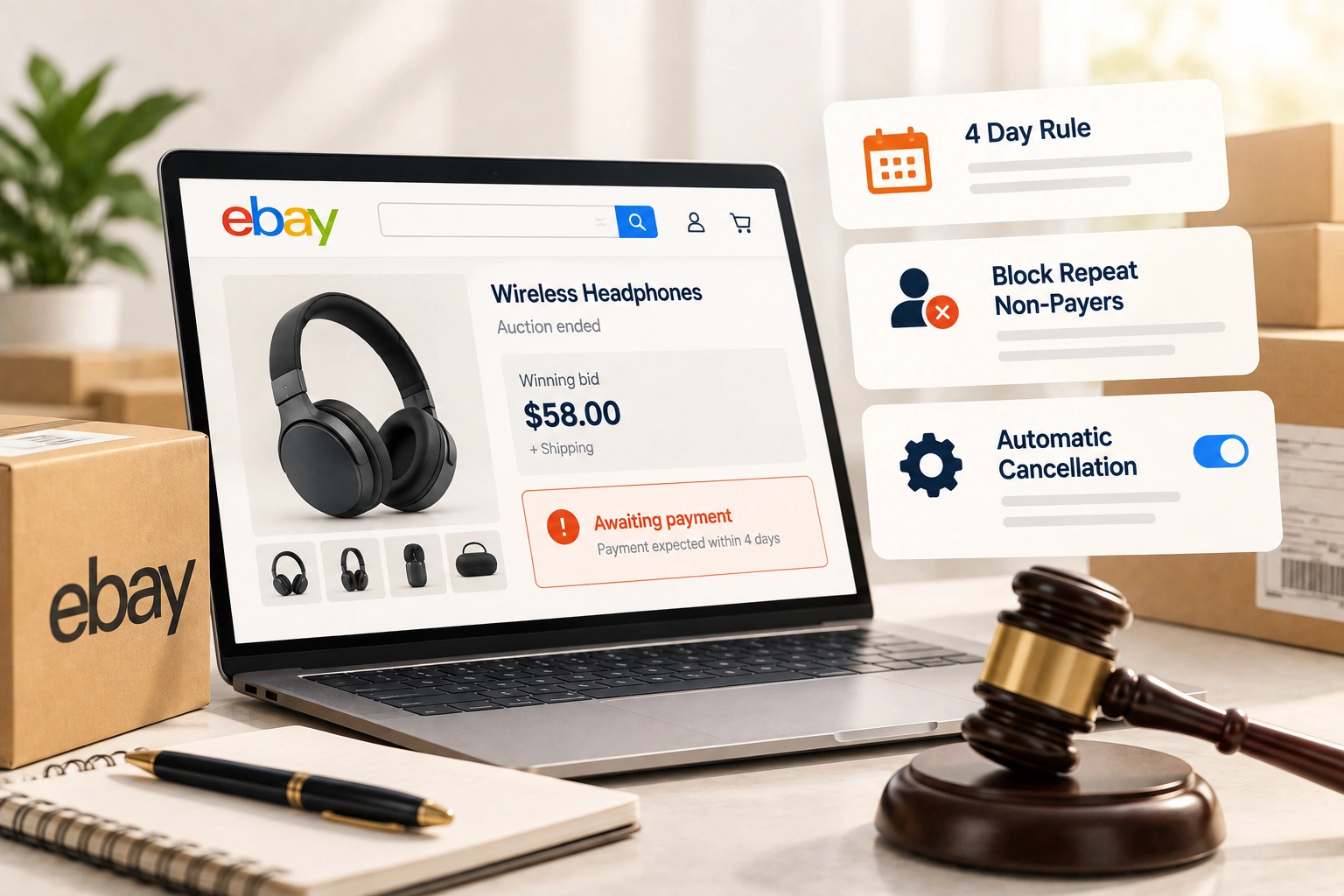
Inventory management on eBay looks like a stock problem and behaves like a performance problem, because of one rule: a seller cancelling an order for an item that was not available takes a transaction defect for it.
Defects reduce Best Match placement, threaten Top Rated status and can reduce selling limits. So a spreadsheet that is a day out of date is not an administrative inconvenience on this channel, it is the mechanism by which good sellers slowly become less visible.
Overselling is arithmetic, not carelessness
Almost nobody oversells on a single channel. They oversell across several, where the same physical unit is offered on eBay, on Amazon, on Walmart and on their own Shopify store, each of which has been told it has all of it.
The unit sells twice within the window between synchronisations, and one of those two buyers is going to be disappointed. Which channel takes the hit is a matter of timing rather than intent.
So the question is not whether people are careful. It is how long the window is and what happens inside it.
Two honest answers, and one that fails quietly
Ring-fencing. Allocate a fixed quantity per channel. Each channel has stock nobody else can sell. It wastes inventory, because eBay's allocation sits unsold while Amazon's runs out, and it never oversells.
Real-time synchronisation. One source of truth pushes quantities to every channel as they change. It uses stock efficiently and it oversells occasionally, because no synchronisation is instantaneous.
Periodic syncing. Updating every few hours and hoping the gaps do not matter. This is the one most sellers actually run, and it works until an item sells quickly, which is exactly when it is worst to fail.
Ring-fencing suits accounts where defects are expensive, which on eBay is all of them. Real-time syncing suits accounts with the volume to justify the software.
What to hold on eBay specifically
Slow movers do well here. eBay's audience browses, searches for discontinued and hard-to-find items, and tolerates longer decision windows, so stock that ages badly on a faster marketplace can sell steadily here.
Condition variety is an advantage rather than a complication. Used, refurbished and open-box are ordinary, so returns and B-stock have a natural home instead of being written off.
Multi-quantity listings accumulate sales history on one listing rather than spreading it across several, which matters because that history is what Best Match reads.
What to automate and what to keep human
Automate quantity synchronisation. It is arithmetic performed continuously, which is the definition of a machine's job.
Automate the alerts. Low stock on a listing that is selling, a cancellation, a listing live with nothing behind it.
Automate ending and relisting where stock genuinely runs out, because a live listing with no stock is a cancellation waiting to be recorded.
Keep buying decisions human. How much to order and when depends on supplier reliability this month and a seasonality no system knows about.
The same division holds for advertising, and the reasoning is set out in when manual management stops working.
A routine that keeps the account clean
Reconcile quantities against the source of truth on a schedule, and treat every difference as a symptom rather than something to correct silently.
End listings for items you cannot fulfil rather than leaving them live and hoping. An ended listing costs the sales it would have made; a cancelled order costs a defect that lingers for months.
Review cancellations by cause monthly. If they cluster on one supplier or one channel pairing, that is the thing to fix rather than the individual orders.
Running that routine across several marketplaces at once is what our eBay management and back office team do together, because it is continuous work rather than a project.
Business models change the exposure
Wholesale. Deep stock in fewer lines, so ring-fencing costs little and buys certainty.
Private label. One source, long lead times, and running out costs ranking that took months to build.
Dropshipping. You are republishing somebody else's stock position as your own, and their errors become your defects. The hardest model to run cleanly here.
Arbitrage. Small, unrepeatable quantities where a single listing left up after the item sold elsewhere is a cancellation. Ring-fencing is essentially mandatory.
B2B and bulk. Large orders against a shared pool, which is precisely when a synchronisation gap does the most damage.
Related reading: eBay Top Rated Seller: The Requirements and What They Cost and eBay Negative Feedback: What to Do and What Not to Say.
Related reading: Selling on eBay as a Business: The Account, the Limits, the Fees and How Listings Rank.
Frequently asked questions
The questions that come up most often on this subject.