eBay Payment Holds: Why Your Money Is Held and When It Is Released
A $6 sale on hold feels like a fault. It is a rule, and the rule has dates. Every reason eBay holds funds, how long each hold lasts, what releases it, and the two habits that end most holds for good.


Loading Article banner
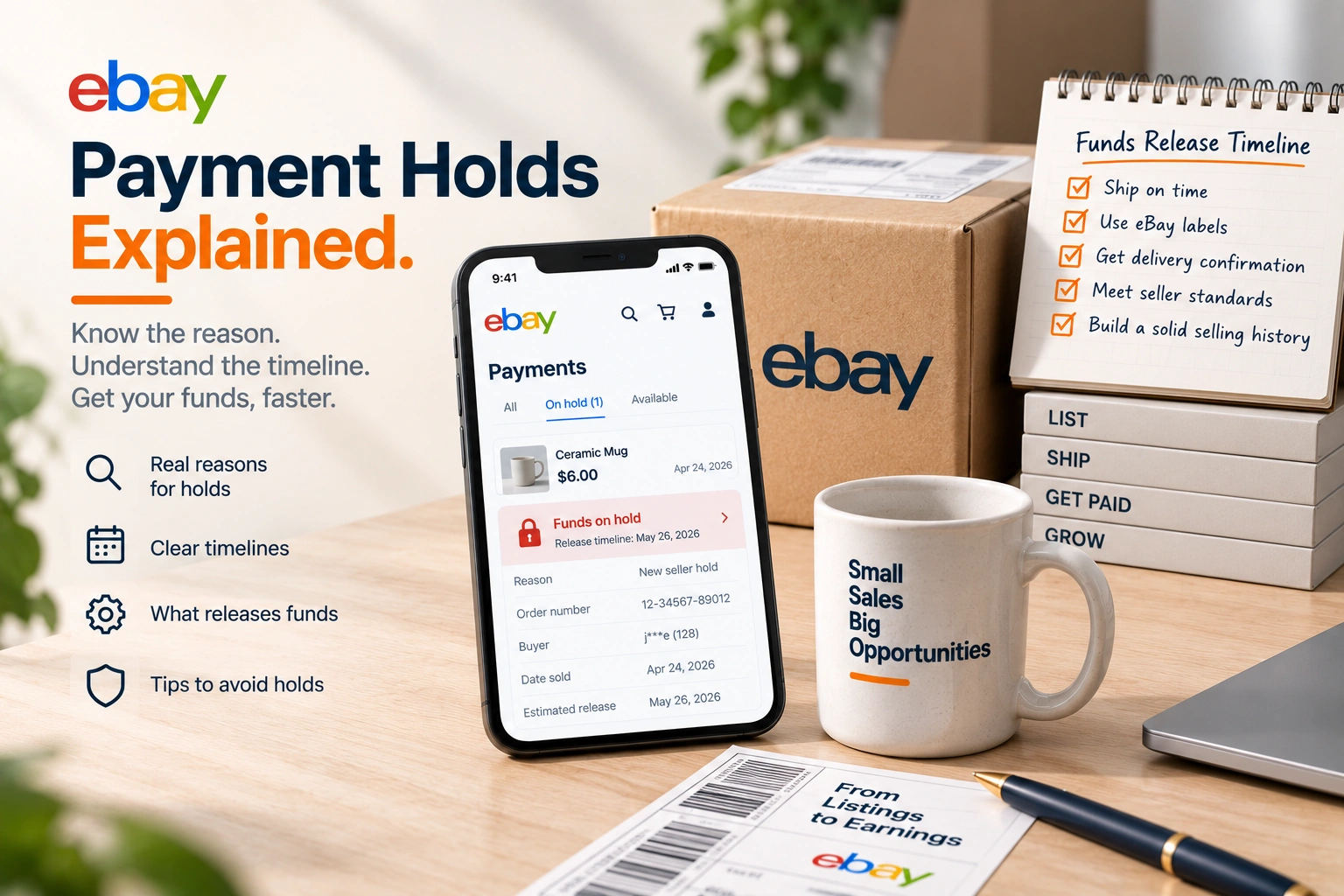
They have my six dollar payment on hold, one seller wrote this week, and the thread under it was the same one that appears every week on the eBay Community: a sale made, the buyer paid, and the money sitting in a state called on hold with no obvious reason and no obvious end. Another seller, selling a few things a year, was told the hold was because they were an infrequent seller, which is a category most people did not know they were in.
The holds are a policy, published, with reasons and timelines. This is that policy in plain words, taken from eBay's own page on payment holds, with what to do in each case.
The reasons, in eBay's own list
eBay names the situations in which it holds funds. A new seller, whose funds may be held until a transaction has been completed successfully. An account eBay is confirming information about. A buyer dispute, where a payment dispute hold applies until the dispute or case is resolved. Unusual selling activity on the account. A sudden increase in order volume. The thirty days after a restriction or suspension is lifted. Certain high priced items. And sales under the Authenticity Guarantee, held until the item has been inspected.
The infrequent seller hold is the new seller rule applied again. eBay's threshold for the faster release schedule is at least ten completed sales with a combined total of $150 or more within the last five years. A seller below that, however long the account has existed, is treated as new for the purpose of holds, which is why a ten year old account that sells twice a year meets them.
How long each hold lasts
For a new private seller, eBay's timelines are: funds released two days after delivery confirmation when the item shipped with an eBay label, seven days after delivery confirmation with a label bought elsewhere, and thirty one days after the buyer paid when there is no tracking at all. For a new business seller: twenty four hours after delivery confirmation with an eBay label, and fifteen days after the buyer paid otherwise. High priced items are held thirty one days after the transaction date. After a restriction is lifted, thirty days.
Two things in those figures decide everything. An eBay label with a delivery scan is the fastest route in every category, by a wide margin. And no tracking is the slowest, at a month, which is the case the six dollar seller is usually in: a small item sent as a letter, untracked, and the hold runs its full thirty one days because nothing can tell eBay it arrived.
What releases a hold
Delivery confirmation, from tracking or from a QR code scan at the counter, or the expiry of the waiting period. Nothing else. Messaging eBay does not release a hold; the buyer leaving feedback does not, on its own, release a hold; and a seller who uploads tracking after delivery gets the delivery confirmation on the day it is uploaded, not the day the parcel arrived. The upload is the event.
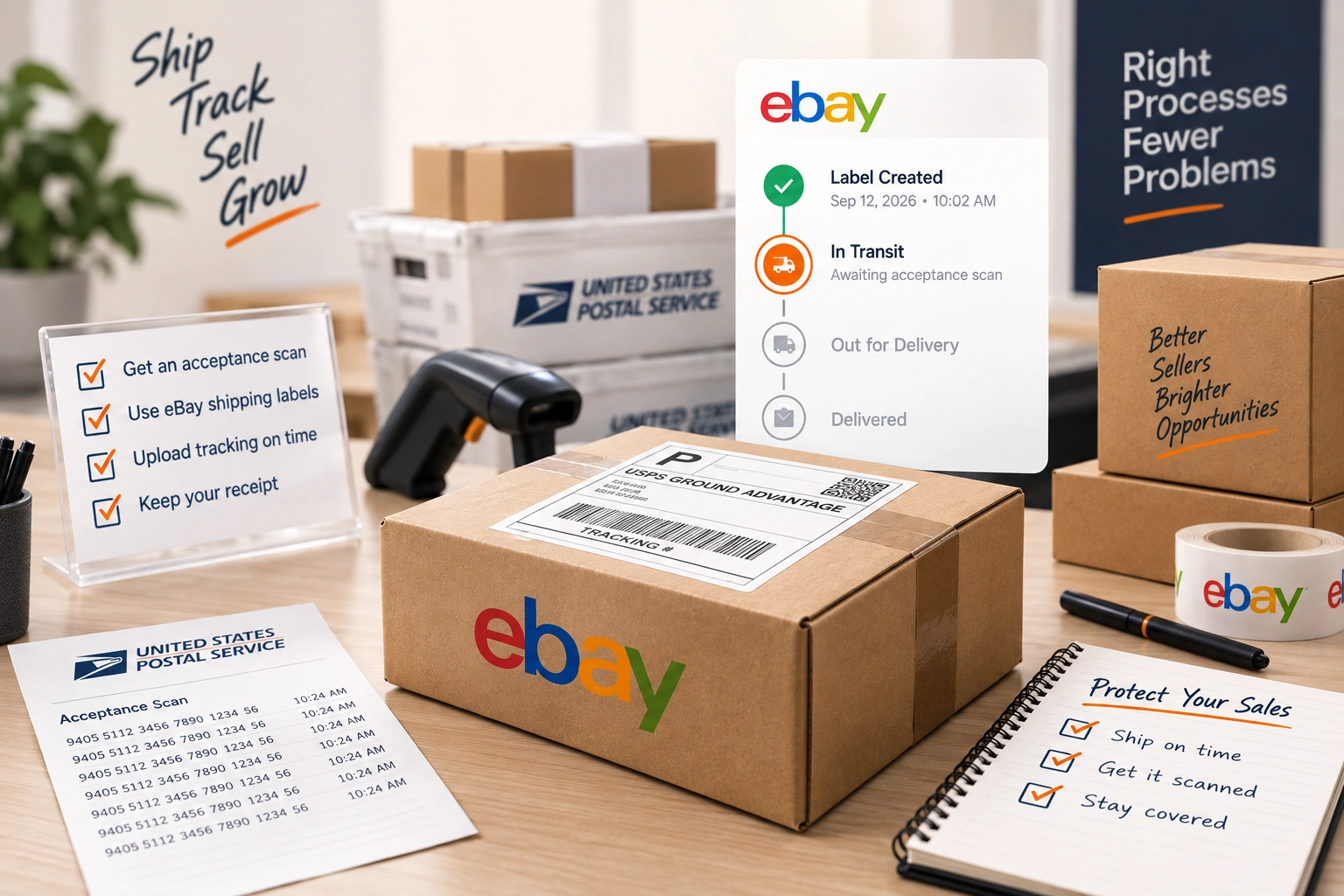
The practical rule is the one the fast timelines already point to: ship with an eBay label, upload the tracking at the moment of shipping, and the hold ends two days after the carrier's delivery scan. A seller who does that on ten sales totalling $150 leaves the new seller schedule and most holds with it. The selling limits article covers the parallel rule on how much a new account may list, which lifts on the same evidence.
Where to read the hold, and what the buyer sees
The payments section of Seller Hub shows every held transaction with its reason and, where the hold has a date, the date it is expected to release. That line answers most of the forum's questions on its own: a hold marked as awaiting delivery confirmation is waiting for tracking, and a hold with a date is waiting for the calendar. The total held is separate from the available balance, and a payout scheduled for a day when the available balance is zero is a payout of zero, which is the surprise most new sellers meet in the first month.
The buyer sees none of it. A hold does not delay the order, change the delivery estimate or appear in the buyer's messages, and a seller who tells a buyer the item is waiting because eBay is holding the money has given the buyer a reason to open a case. Ship on time regardless of the hold; the hold is the reason to ship on time.
The holds that are not about being new
A dispute hold lasts as long as the dispute. The fastest way through it is the evidence eBay's seller protection asks for anyway: shipped within the handling time, tracking from an integrated carrier uploaded before the estimated delivery date, delivery shown. With that, the seller is not responsible for refunding an item not received claim, and the hold ends with the case. The negative feedback article covers the feedback side of the same dispute.
A volume spike hold is the one that catches a growing business: a product that starts selling ten times faster than the account's history triggers it, and eBay holds funds while it confirms the sales are real. It ends as the orders deliver and the tracking confirms them, which means the growing seller's cash flow depends on shipping the spike fast rather than in batches. The hold after a suspension is fixed at thirty days and the only way through it is the calendar.
For the businesses we run on eBay under eBay marketplace management, holds are treated as a cash flow rule rather than a fault: every order on an eBay label, tracking uploaded at the counter, the ten sales threshold crossed in the first fortnight, and the seller standards that keep an account out of the unusual activity category, which are the ones in the Top Rated Seller requirements.
Frequently asked questions
The questions that come up most often on this subject.
For one of the reasons eBay publishes: a new or infrequent seller, information being confirmed about the account, a buyer dispute, unusual activity, a sudden increase in volume, a high priced item, the thirty days after a restriction, or an Authenticity Guarantee sale awaiting inspection. The payments page names the reason on the held transaction.
For a private seller, two days after delivery confirmation with an eBay label, seven days with another label, or thirty one days after the buyer paid with no tracking. For a business seller, twenty four hours after delivery with an eBay label or fifteen days after payment otherwise.
A seller who has not reached at least ten completed sales with a combined total of $150 or more in the last five years. Below that, an account of any age is treated as new for payment holds.
Ship with an eBay label and upload tracking the moment the item ships. Delivery confirmation from the carrier's scan or a QR code scan releases the hold on the fast schedule. Messaging eBay does not release a hold.
Not on its own. Holds end on delivery confirmation or when the waiting period expires. Feedback is not one of the release conditions on eBay's policy page.