eBay Buyer Requests That Put You Outside Seller Protection
Ship it with my label. Send it to my other address. Meet me for cash and skip the fees. Take it back even though you said no returns. Each one arrives as a reasonable message, and each one moves the order outside the rules that protect a seller. What the policy says and what to reply.


Loading Article banner
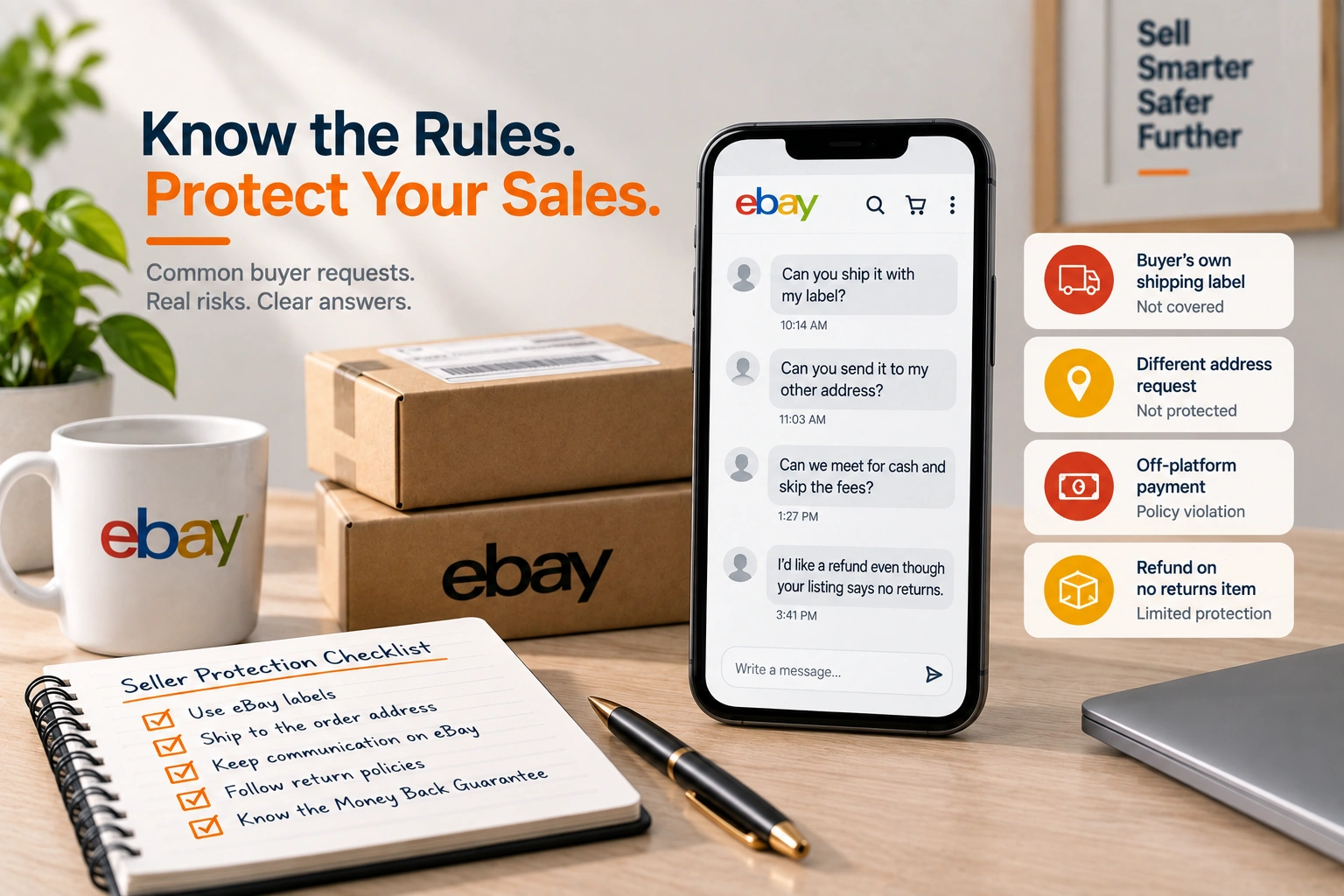
The messages on the eBay Community's Selling board this week were ordinary ones. A buyer wants to provide their own overnight shipping label. A buyer asks to meet for cash to avoid seller fees and delivery. A buyer on a no returns listing is pushing for a refund. Each is a request a helpful seller wants to say yes to, and each moves the order outside the conditions that protect the seller when something goes wrong.
This is what the policy says about each one, in eBay's own terms, and the reply that keeps the order inside the rules without losing the sale.
What seller protection actually requires
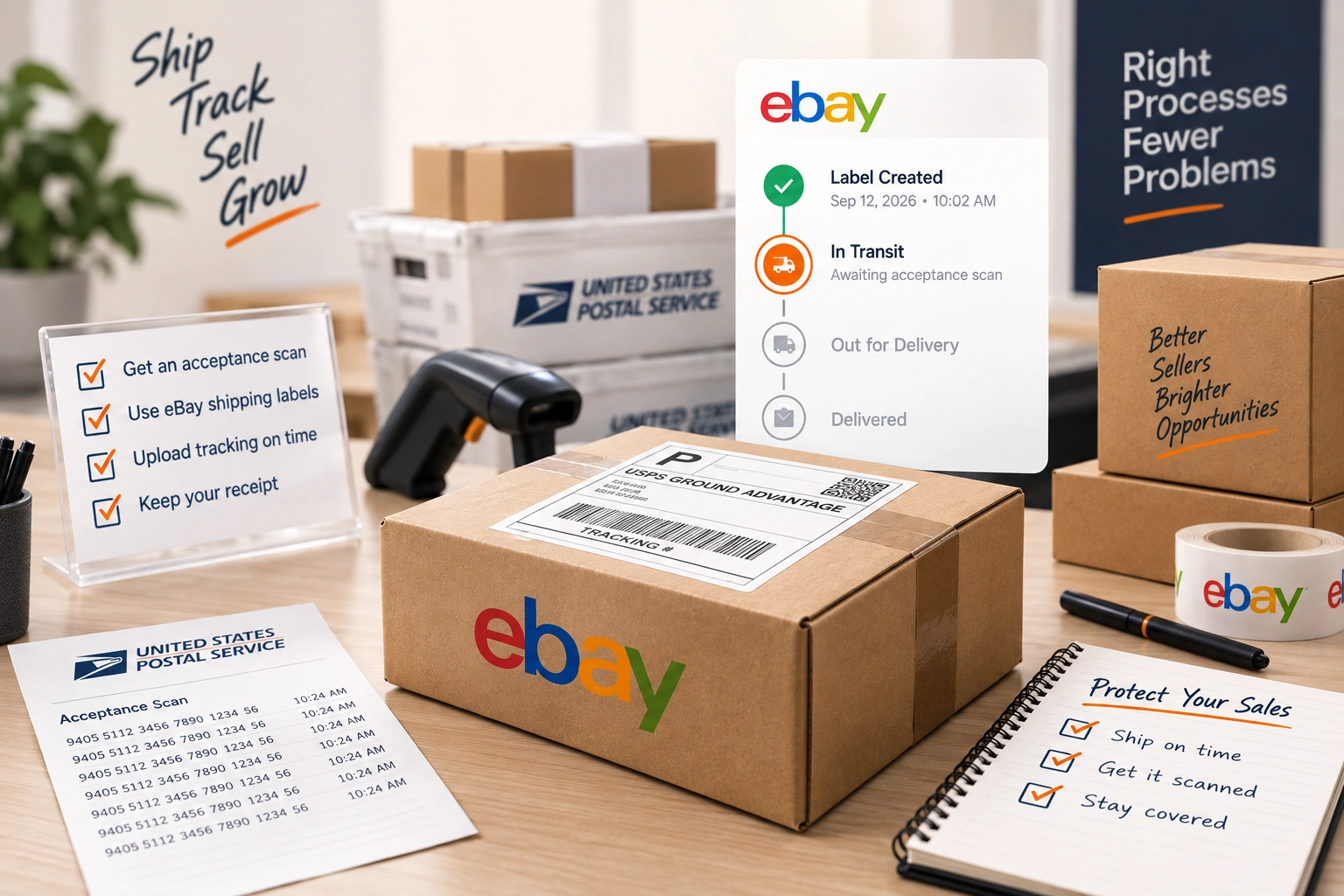
eBay's protection against an item not received claim has three conditions, and its own page states them: ship the item within the stated handling time, and upload tracking before the estimated delivery date from one of eBay's integrated shipping carriers that shows evidence of successful delivery. With all three, the seller is not responsible for refunding the buyer. With an eBay label, there is a fourth benefit: if the item is delivered after a refund has been issued, eBay reimburses the seller automatically, removes the defects and excludes the case from the service metrics.
Every request below breaks one of those conditions, and that is the whole reason to refuse it. The tracking has to be eBay's or an integrated carrier's, uploaded by the seller, showing delivery to the address on the order.
Ship it with my label
A buyer who supplies their own label controls the tracking number, the service and the destination, and none of it is uploaded through the seller's account from an integrated carrier in the way the protection requires. If the parcel goes missing, or the buyer says it did, the seller has no tracking of their own to show, and the claim is decided on that. A label from the buyer that redirects the parcel is the version of this that appears in the fraud threads.
The reply is that eBay's protection requires the seller to buy and upload the label, and that the seller will happily send it on whatever service the buyer wants to pay for, priced through eBay's shipping. A buyer who wanted overnight delivery accepts that. A buyer who wanted control of the label does not, and that is the answer to whether the sale was worth having.
Send it to my other address
Protection applies to delivery to the address on the order. A parcel sent to an address the buyer supplied in a message, however plausibly, is a parcel with delivery confirmation to the wrong place, and an item not received claim succeeds against it. The buyer can change the address before paying; after payment, the order carries the address it carries.
The reply is that the item can only ship to the address on the order, and that the buyer can cancel and repurchase with the right address if they need to. That costs nothing and it keeps the tracking and the address aligned, which is what the claim will be judged on.
Meet me for cash and skip the fees
eBay's policy on offers to buy or sell outside eBay is short. Users may not engage in any action on the site designed to complete or facilitate a transaction outside of eBay, may not share or request direct contact information before completing a sale, and may not use contact information from an eBay transaction to offer to buy or sell outside it. The consequences are listed: the listing or content removed, a warning, restricted activity or suspension. And the line that matters more than the enforcement: transactions outside eBay are not eligible for eBay's protection programmes or the Money Back Guarantee.
eBay's instruction for the seller who receives the offer is to report it, and the reply is that the sale completes through eBay or not at all. The fee saved is the fee that buys the protection, and a cash meeting has none of it: no record of payment, no recourse if the buyer does not appear, and a policy breach on the account for having agreed. A warning on a newer account also touches what it may list, which the selling limits article explains.
No returns, but the buyer wants a refund
A no returns policy means the seller does not accept returns for a change of mind. It does not switch off the Money Back Guarantee, which covers an item that arrives not as described, damaged or not at all, and a buyer who opens a not as described case on a no returns listing is inside the guarantee. Refusing it does not make it go away; eBay steps in, decides it, and a seller found responsible loses the case, the ability to deduct for a used item and the right to feedback removal, as the protections page sets out.
The reply depends on which case it is. A buyer who changed their mind on a no returns listing can be told no, politely and once, and the listing terms hold. A buyer who says the item is not as described is asked for photographs, and if the photographs show what the listing showed, the reply says so with the listing's own images beside it, which is what eBay will read. If they show a fault, the return is accepted, because the alternative is losing the case with the defect on top. The listing's own accuracy is the defence, and the listing article is where that accuracy is built.
Keep reading
For the businesses we run on eBay through eBay marketplace management, every one of these has a template reply, sent within the hour, and the pattern of who asks is tracked. A buyer who asks for two of the four in one order is reported before the parcel ships. The metrics all of this protects are the ones in the Top Rated Seller requirements, and the feedback consequences of getting one wrong are in the negative feedback article.
Frequently asked questions
The questions that come up most often on this subject.
They can offer, and the seller should decline. Seller protection against item not received claims requires tracking uploaded by the seller from an eBay label or an integrated carrier showing delivery to the address on the order. A buyer's own label gives the seller none of that.
Protection applies to delivery to the address on the order. Ask the buyer to cancel and repurchase with the right address rather than shipping to one supplied in a message.
eBay's policy forbids arranging a transaction outside the site and sharing contact details before a sale; enforcement ranges from a warning to suspension, and the transaction has no eBay protection or Money Back Guarantee. eBay asks sellers to report the offer.
It stops change of mind returns. The Money Back Guarantee still covers items not as described, damaged or not received. A not as described case on a no returns listing is decided by eBay on the evidence, and an accurate listing with its own photographs is the defence.
If the item shipped with an eBay label, eBay reimburses the seller automatically, removes any defects and excludes the case from service metrics. That is one of the reasons to buy the label through eBay.