How to Sell on Amazon Renewed: Who Qualifies, the Invoice Threshold, and What Approval Asks For
Amazon Renewed is a separate approval, not a condition setting. Who Amazon accepts, the $50,000 invoice threshold and its windows, the condition and photograph standard, the pricing rule against new, and what to have ready before applying.


Loading Article banner
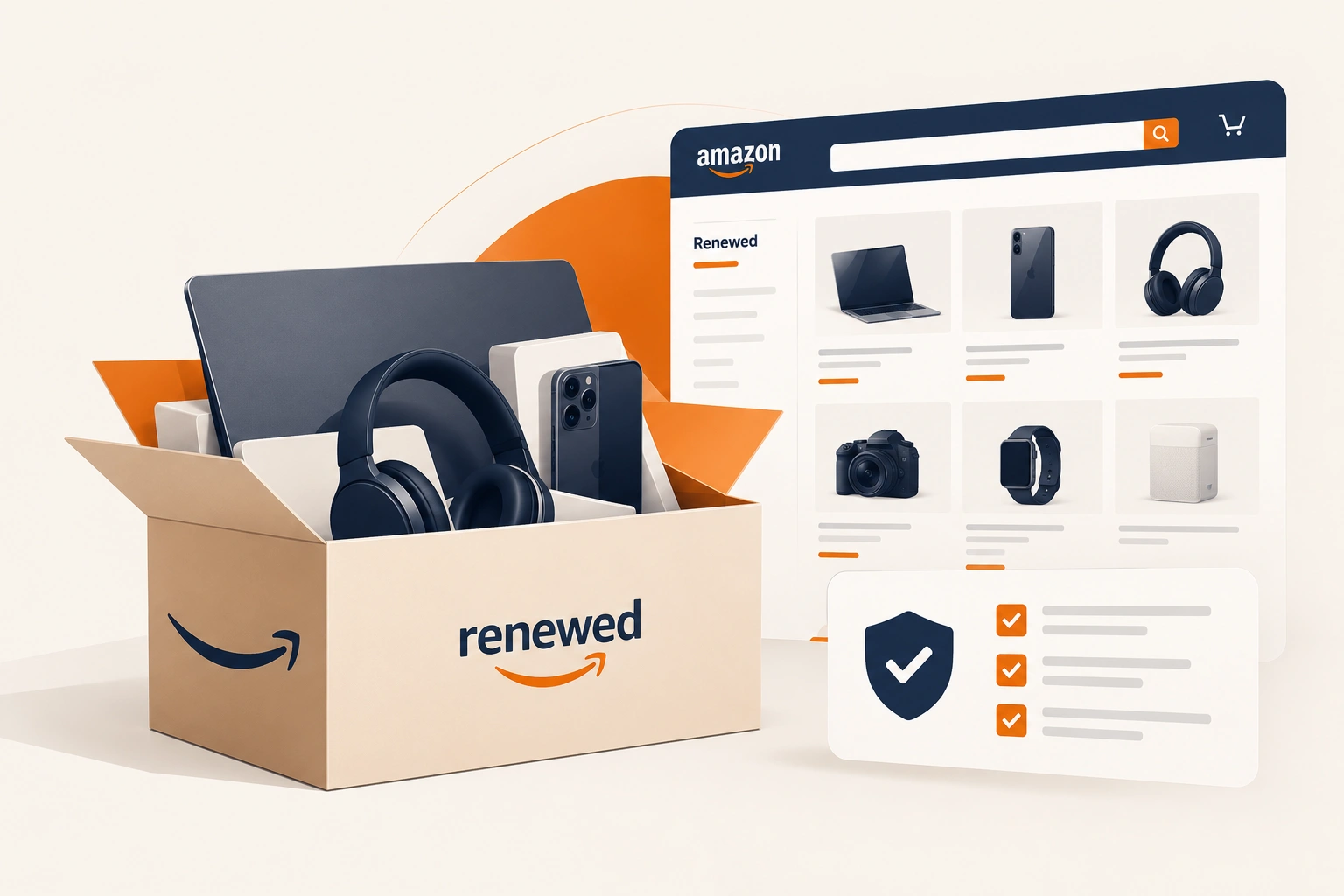
Selling refurbished products on Amazon as renewed is not a matter of choosing a condition from a drop-down. It goes through Amazon Renewed, which has its own application, its own evidence and its own standard for what a renewed product has to be. A seller who lists without that approval is not selling on Renewed at all.
This is who Amazon accepts, what the application asks for, and what to have in hand before starting it, all from Amazon's own programme page.
What Amazon Renewed is
Renewed is Amazon's programme for products that have been "inspected, repaired, cleaned, tested, and repackaged (if applicable)" to meet the original manufacturer's specifications. Shoppers find it as its own section of the store. For a seller it is a separate programme sitting on top of an ordinary selling account.
It is different from selling used goods in their used condition, which has its own grades and category rules. Selling used items on Amazon covers that route. Renewed is for stock that has been through a refurbishment process and can prove it.
Who Amazon accepts
Amazon names six kinds of seller: "Distributor or reseller," "Manufacturer or brand owner," "Brand-authorized refurbisher," "Refurbisher," "Repairer," and "IT Asset Disposition (ITAD) provider." The application starts by asking which one you are, and the evidence it asks for follows from the answer.
A Professional selling account is needed, which Amazon lists at $39.99 a month plus selling fees. The account's health matters too. Amazon's programme policy, inside Seller Central, sets performance requirements for Renewed sellers; it needs a sign in to read, so check the current figures there rather than trusting a number quoted elsewhere. What Amazon measures in account health is the place to start if the account has had problems.
The invoice threshold
The first real hurdle is volume. The application needs "itemized invoices showing a minimum total value of $50,000 in qualifying refurbished purchases" within the last 90 days, or within 180 days "for products related to Home, Tools, Kitchen, or Lawn & Garden categories." For Apple branded items the figure is $2.5 million over the same periods.
That rules out most small operators, which is the point: Amazon wants sellers with a real supply of refurbished stock. It also means the invoices have to be in order before applying. Invoices that do not itemise the products, that do not add up to the threshold within the window, or that come from a supplier who cannot be verified are the obvious ways to be turned down.
What else the application asks for
Brand owners and manufacturers add "Trademark documentation or proof of enrollment in Amazon Brand Registry." Everybody adds photographs: "Images included with your application should show a sample product from all sides (front, back, top, bottom, left side, right side), the product packaging, and accessories showing the brand." The sample has to meet the cosmetic standard, which Amazon puts as "Excellent condition."
Photograph the sample the way an inspector would look at it. Six sides means six pictures, not three angles and a hopeful seventh of the box. The packaging and the accessories are part of what is being approved, so a sample shipped in a plain carton with a generic cable is showing Amazon what the customer would get.
Pricing and fulfilment
Renewed products must be priced below new. In Amazon's words, under its fair pricing policy, sellers "must list Renewed products at a 5% or more discount than their new product counterpart." That is a floor on the discount, not a guide to the right price, and it moves whenever the new product's price moves, so it needs watching.
Orders can be fulfilled by the seller or through FBA. The choice turns on the same things as any other stock, volume, margin and returns, and FBA against FBM sets out how to decide. Returns deserve a line of their own in the numbers: a returned renewed item has to be inspected again before it can be sold again, and that work has a cost whichever route fulfils it.
Before you apply: what to have in hand
The seller type first, chosen honestly, because the rest of the evidence follows from it. A reseller of refurbished stock and a refurbisher who does the work are judged on different things, and an application that claims one while its invoices show the other invites questions.
The invoices next: itemised, dated inside the window, and adding up to the threshold on their own. Amazon's page does not define every purchase that counts as qualifying, so check the programme policy in Seller Central before relying on invoices for mixed stock. Then the brand evidence, if the products carry your own brand, and the sample photographed to the brief.
And a plan for the listings. Which products will be listed, against which new product pages, at what price below new. The 5% rule means the price is tied to somebody else's price, so the margin has to survive the new product going on sale. Amazon also runs Renewed in its European stores; the thresholds above are the US programme page's, and an application in Europe follows that store's own terms.
How long approval takes
Amazon says "Approval decisions are typically made within 10 days," and that processing times may vary. A decision is not a guarantee of approval, and nobody outside Amazon can promise one. What shortens the process is an application that answers every question the first time: the right seller type, invoices that clearly meet the threshold, the trademark evidence where it applies, and photographs that meet the brief.
How we work on Renewed
Our Amazon Renewed service prepares the application with the seller and then runs the account: listings, pricing against the new product, customer service and account health. Enrolment and eligibility depend on the seller's circumstances and on Amazon's criteria, and approval is Amazon's decision. For what the selling itself costs once approved, see what it costs to sell on Amazon.
Frequently asked questions
The questions that come up most often on this subject.
Apply through Amazon's Renewed programme with your seller type, itemised invoices showing at least $50,000 of qualifying refurbished purchases in the last 90 days (180 days in Home, Tools, Kitchen, or Lawn and Garden), trademark or Brand Registry evidence if you are the brand, and photographs of a sample product from all six sides with its packaging and accessories.
Amazon asks for itemised invoices totalling at least $50,000 in qualifying refurbished purchases within 90 days, or 180 days for Home, Tools, Kitchen, or Lawn and Garden products. For Apple branded items the minimum is $2.5 million over the same periods.
Amazon lists six seller types: distributors or resellers, manufacturers or brand owners, brand-authorised refurbishers, refurbishers, repairers, and IT asset disposition providers. A Professional selling account is required.
Under Amazon's fair pricing policy, Renewed products must be listed at a discount of at least 5% against the same product new. Because the new price changes, the Renewed price needs checking against it regularly.
Amazon says approval decisions are typically made within 10 days, and that processing times may vary. A complete application with clear invoices and the right photographs avoids the back and forth that makes it longer.