Amazon's Multichannel Selling Tools: What Seller Central Now Runs for Your Other Channels, and the Partner Question
At Accelerate 2026 Amazon said Seller Central will connect a seller's eBay, Shopify, TikTok and Walmart accounts and run their listings, orders and profitability from one place, at no extra cost. What is live, what comes later, what the tools do not do, and the build, consolidate or partner decision they sharpen.


Loading Article banner
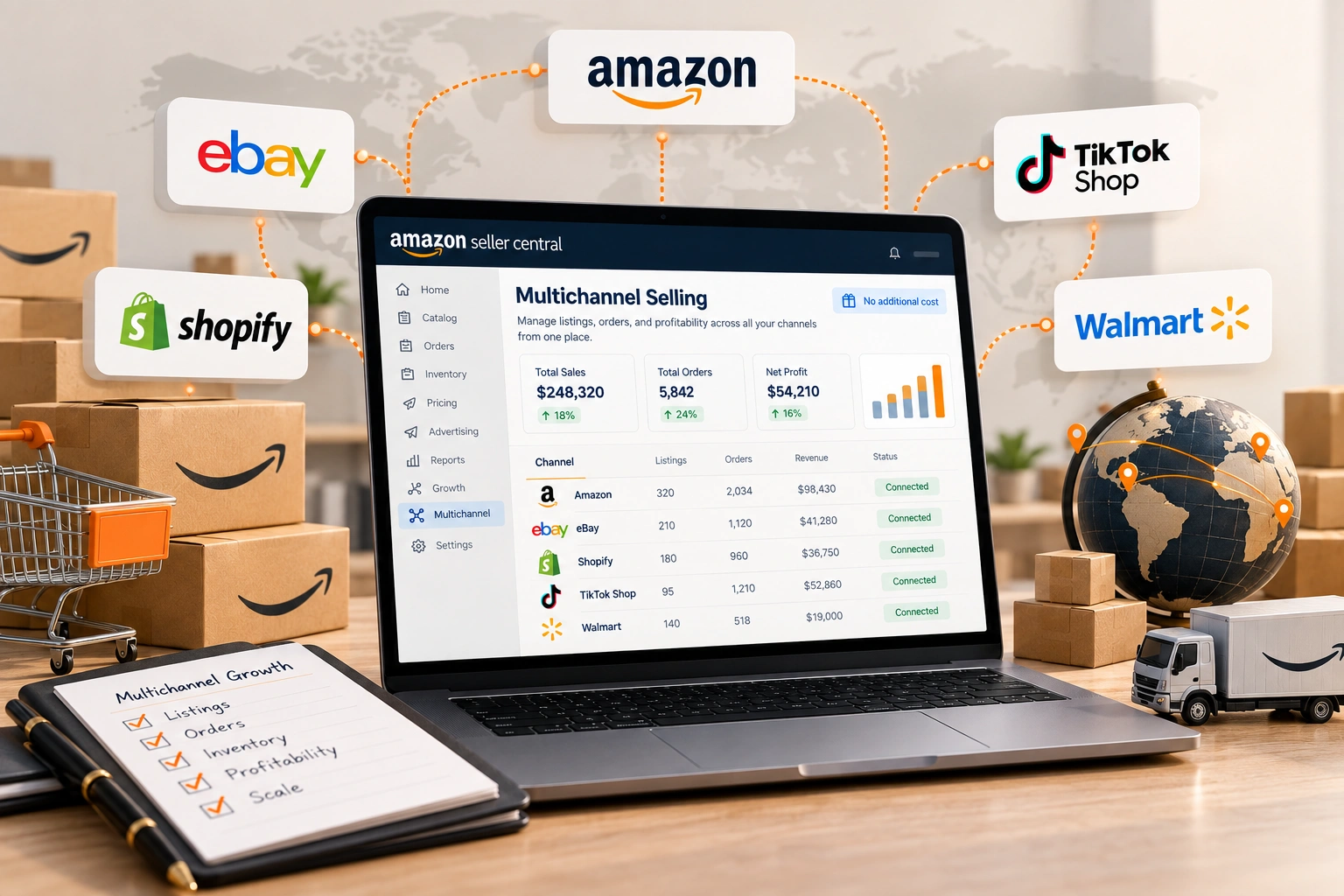
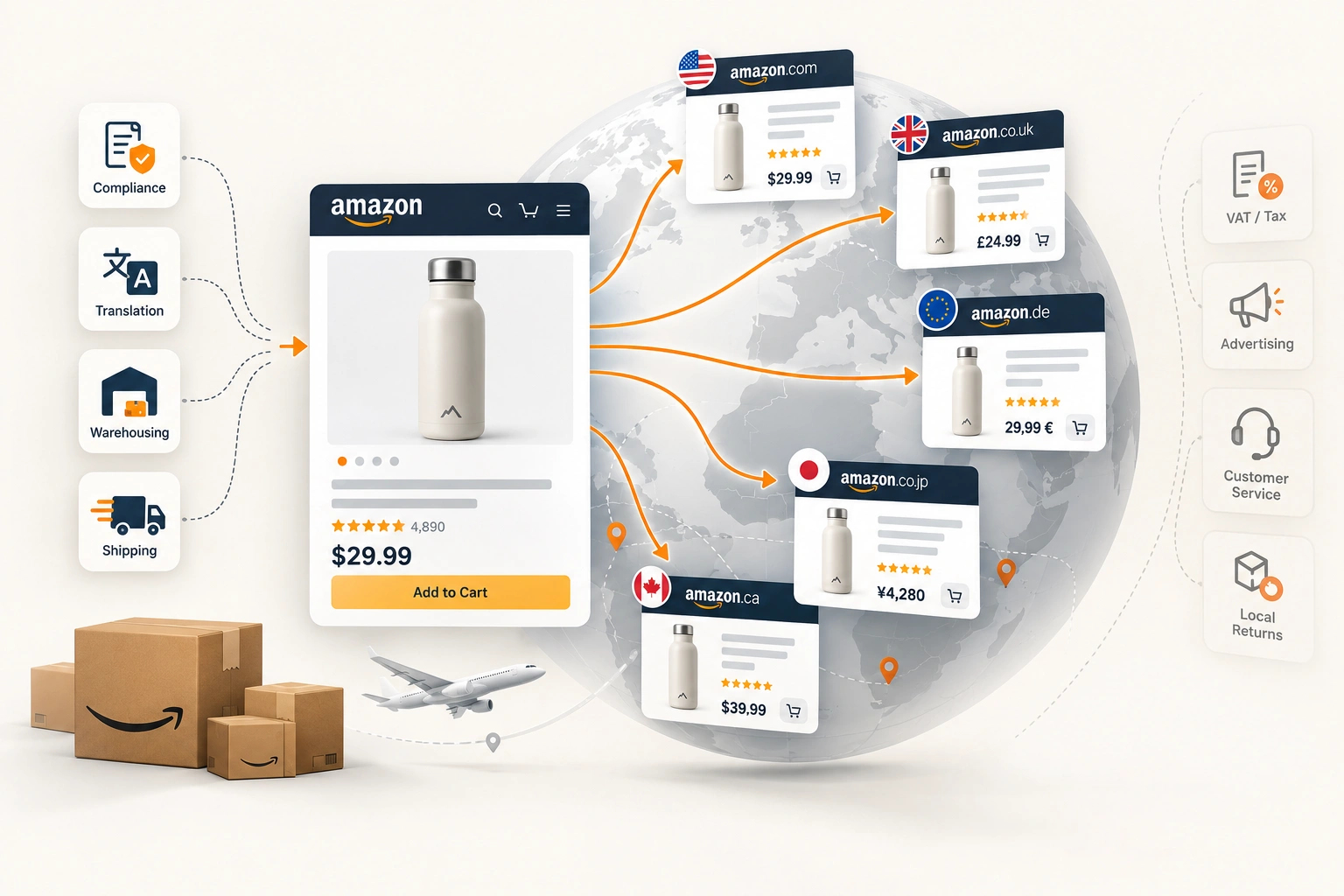
The question every brand selling on Amazon eventually asks is how to run the other channels without doubling the team. At Accelerate 2026, its seller conference held in Seattle in the last week of September, Amazon gave its answer: do it from Seller Central. Its announcement describes Multichannel Selling Tools as a single place for "orders, listings, profitability, and more across Amazon, eBay, Shopify, TikTok, and Walmart", with more channels to come, "at no additional cost to sellers".
Amazon's framing figure is that "more than 95% of independent sellers in Amazon's store sell across multiple channels". The tools are aimed at all of them. This article sets out what is available now and what Amazon says is coming, what the tools do not do on any channel, and the decision they sharpen rather than settle: whether a brand builds its own multichannel operation, consolidates it in Amazon's console, or partners for the channels it cannot run well.
What is live, and what Amazon says comes later
At launch, rolling out "gradually to sellers in the U.S. store over the coming months", the tools do four things: connect a seller's accounts on the other channels to Seller Central; import and link the off-Amazon listings; show sales and orders across the channels; and fulfil orders across them with few steps.
Four more are described as coming. Listing synchronisation: update a product description once and have it formatted automatically for each channel's requirements. AI-generated listings: "channel-ready listing content, such as optimized titles and product details" built from the product data Amazon already holds. Unified fulfilment: every order in one dashboard whatever channel it came from. And profitability analytics: earnings "by product, across every channel", with ad spend and traffic from the connected channels pulled in beside them.
Amazon quotes one seller whose reporting team spends about five hours at the end of each month compiling figures from every channel. That is the job the profitability view is built to remove, and for most brands it is the most immediately useful of the eight.
What the tools do not do
They do not know each marketplace's rules. A listing synchronised to Walmart is scored by Walmart's listing quality dashboard, a listing on TikTok Shop by TikTok's tier guidelines, an eBay listing by eBay's item specifics. Formatting a description for each channel's fields is not the same as writing what each channel rewards, and the channel-ready content Amazon describes will be generated from the Amazon listing, which was written for Amazon.
They do not run the channel. Walmart's Pro Seller tiers, eBay's Top Rated requirements, TikTok's Account Health Rating and Shopify's own storefront are each a performance system with its own thresholds and its own notices. A unified orders screen shows the orders; it does not keep the account in good standing. Order management across marketplaces describes what that work involves on each.
They do not make the strategic decisions. Which products go to which channel at which price, whether TikTok is a content operation the brand can staff, whether Walmart's economics work for a category, whether the store should carry the brand's full range. Selling on Walmart against Amazon is one of those decisions in full, and no console answers it.
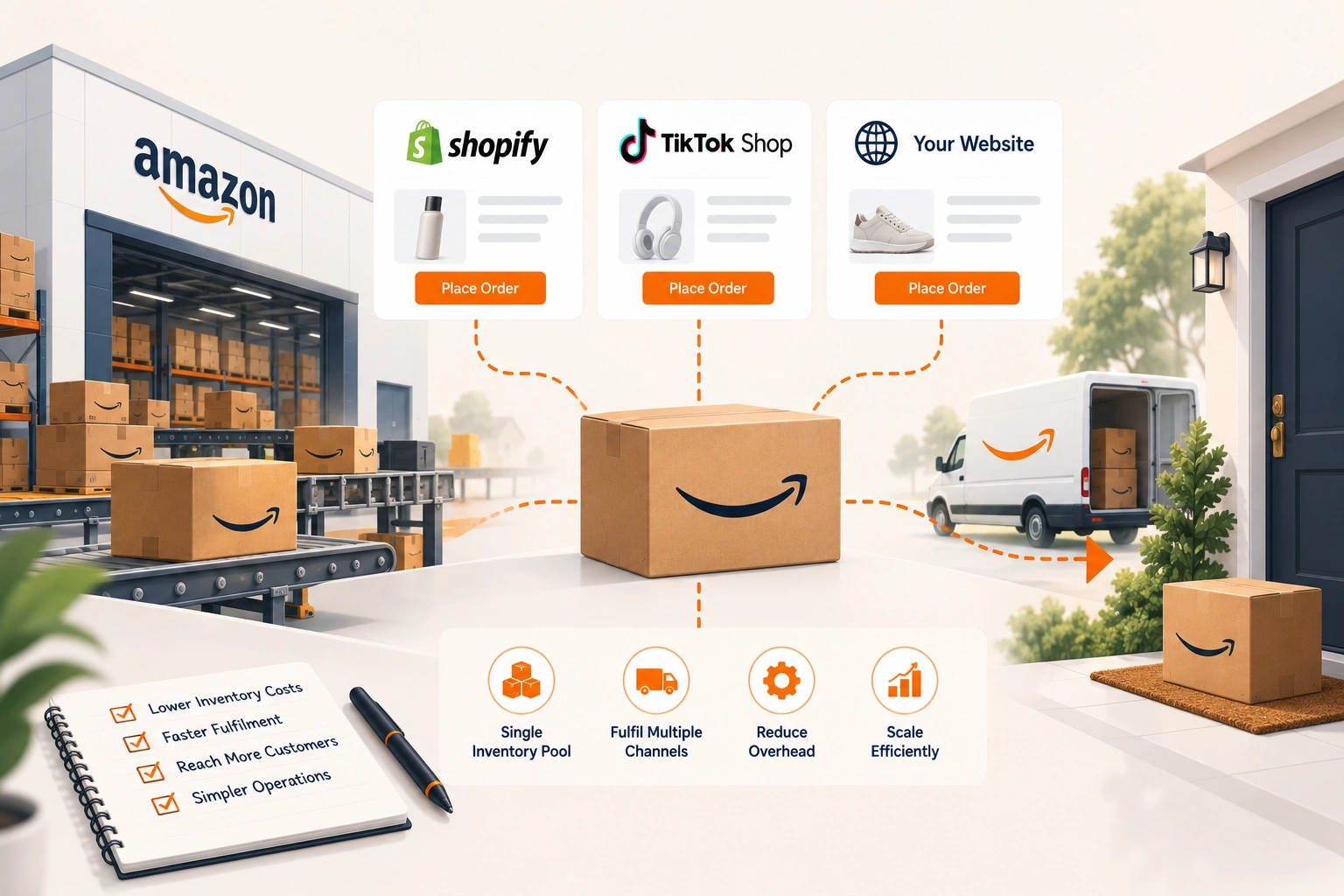
They do not replace fulfilment choices. Fulfilling other channels' orders through Amazon is a choice with costs and consequences, set out in multi-channel fulfilment for Shopify and TikTok; the tools make the click easier, not the decision.
And one thing to ask rather than assume: what the connection shares with Amazon about a brand's performance elsewhere. Amazon's announcement does not say, and a brand connecting its Walmart and TikTok accounts to a competitor's console should read the terms before it does.
The decision the tools sharpen: build, consolidate or partner
Before Accelerate the options were two: build an in-house multichannel operation, with its own tools and people, or hand channels to a partner. Amazon has added a third, consolidate in its console, and made it free. That does not make it the right answer; it makes the comparison honest, because the cost of the tooling is now zero and what remains is the cost of the people and the knowledge.
Consolidate when the brand already runs each channel competently and the problem is reporting and order handling. The tools remove the five hours a month and the three order screens. The channel expertise stays in-house because it already exists.
Build when the channels are a large enough business to justify a team that owns them, with the brand's own data layer, because a brand of that size will want the profitability view in its own systems rather than in a marketplace's console.
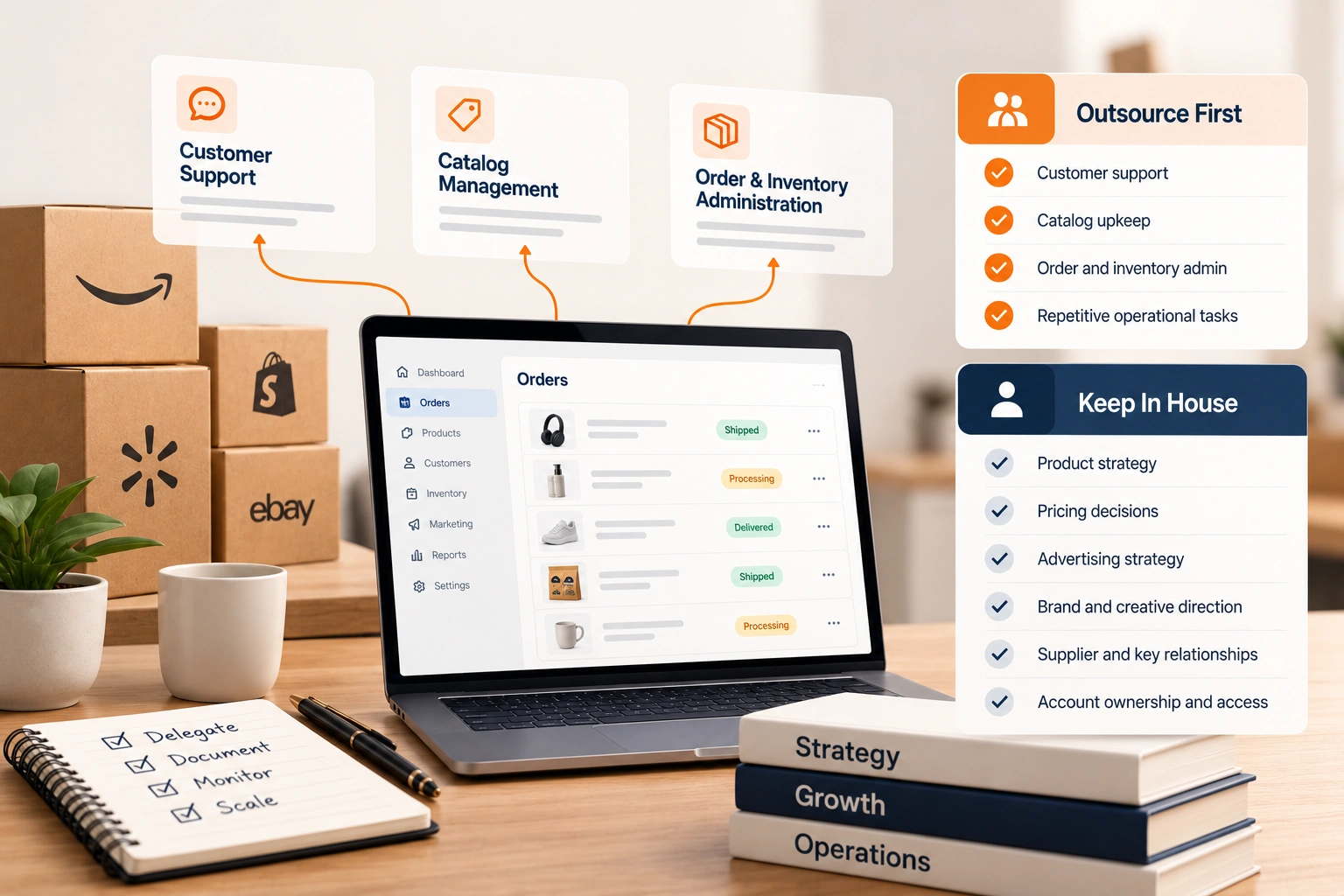
Partner when the constraint is not the tooling but the capability: nobody in the business who knows Walmart's listing score or TikTok's content economics, no capacity to answer four channels' notices, no appetite to learn each channel's rules under a deadline. What to outsource first and what to keep gives the test for which work that is. The tools make partnering cheaper too, because a partner working inside a consolidated console is a partner the brand can see.
The honest test is to list, channel by channel, who in the business knows that channel's performance thresholds and could act on a notice from it tomorrow. Where the answer is a name, consolidate. Where it is nobody, the console will not fill the gap, and the choice is build or partner.
What to do while the rollout reaches you
Reconcile the catalogue across channels now, so that when listings are imported and linked the matches are clean: one product record, one set of identifiers, one set of images and copy that each channel's version is derived from. Write down each channel's current performance thresholds and who owns them. Decide the fulfilment route per channel on its own economics. And read the terms when the connection prompt appears, because that is the moment to decide what Amazon sees.
Where we fit
We are the partner option, and the tools do not change what that means: we run the channels a brand cannot run well itself, inside whatever console the brand prefers, with the listing, performance and compliance work each channel actually rewards, and we hand back the ones a brand grows into. That is the shape of our strategic partnerships, from a single channel to the whole operation. If Amazon's announcement has put the build, consolidate or partner question on your desk, the channel-by-channel test above is where we would start it with you.
Frequently asked questions
The questions that come up most often on this subject.
A set of tools in Seller Central, announced at Amazon Accelerate 2026, that connect a seller's eBay, Shopify, TikTok and Walmart accounts and bring their orders, listings and profitability into one place, with more channels to come. Amazon says they are available at no additional cost and are rolling out gradually to sellers in the US store over the coming months.
At launch, according to Amazon: connect external channel accounts to Seller Central, import and link off-Amazon listings, view multichannel sales and orders, and fulfil orders across channels in a few steps. Listing synchronisation, AI-generated channel-ready listings, unified fulfilment and cross-channel profitability analytics are described as coming later.
Amazon says the tools are available at no additional cost to sellers. Fulfilling other channels' orders through Amazon's fulfilment network carries its own fees, which are separate from the tools.
They will format a description for each channel's requirements and, later, generate channel-ready titles and details from Amazon's product data. They do not apply Walmart's listing quality scoring, TikTok Shop's tier guidelines or eBay's item specifics, which decide how a listing performs on each channel.
Consolidate in the tools when the brand already runs each channel competently and the problem is reporting and order handling. Partner when nobody in the business knows a channel's performance thresholds or can act on its notices. The tools make the tooling free; they do not supply the channel knowledge.