Amazon MCF or Walmart MCS: Which Marketplace's Warehouse Should Ship Every Channel's Orders
Walmart's Multichannel Solutions ships Amazon, eBay, Temu, TikTok Shop and Shopify orders from WFS stock, inside the Shopify admin since 21 October 2026, and Amazon's MCF ships Walmart orders in plain boxes. What each network offers in its owner's words, what each channel asks, and when to consolidate or partner.


Loading Article banner
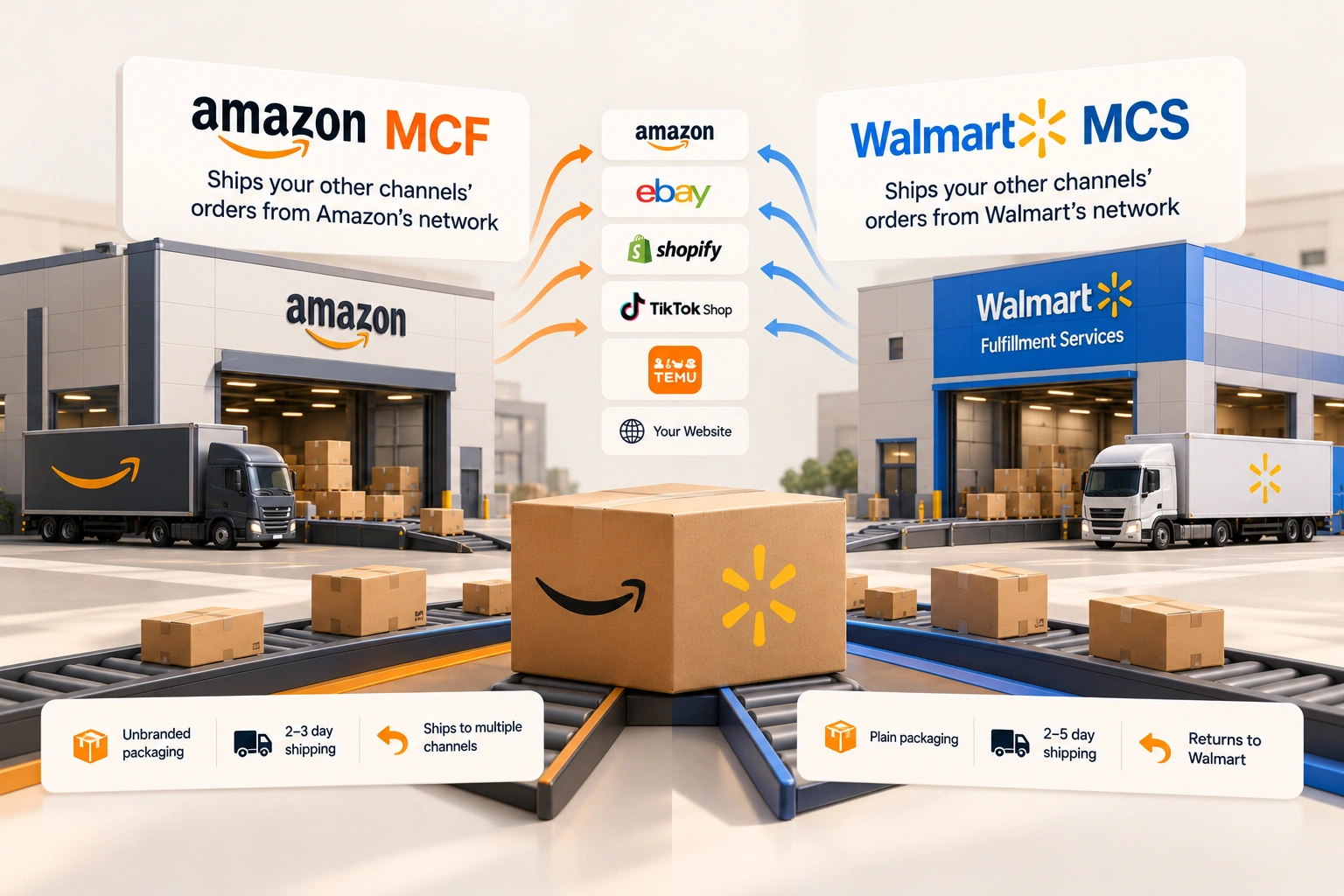
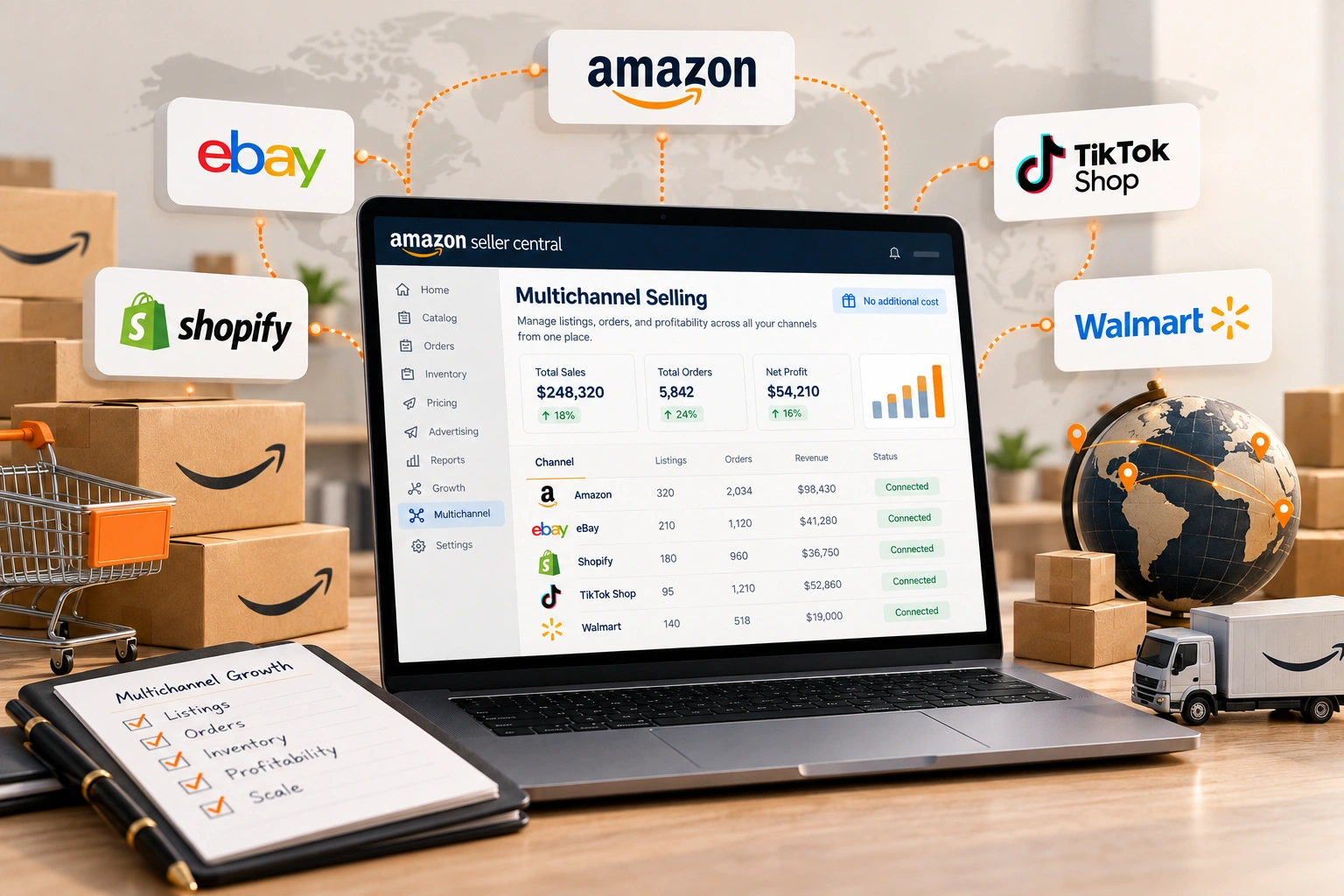
For years the choice had two answers. A brand kept its stock in Amazon's network and let Amazon ship its other channels' orders as well, or it paid a third-party warehouse to ship everything. Walmart has made it three. Its Multichannel Solutions ships orders taken on Amazon, eBay, Shopify, Temu and TikTok Shop from Walmart Fulfillment Services stock, and on 21 October 2026 it put the service inside the Shopify admin.
So a brand selling on both marketplaces now chooses which marketplace's warehouse, if either, runs the orders it takes everywhere else. This is what each network offers in its owner's words, what each channel still asks of an order, and the questions that decide between consolidating in one network, splitting the work and handing it to a partner.
Walmart's Multichannel Solutions, in Walmart's words
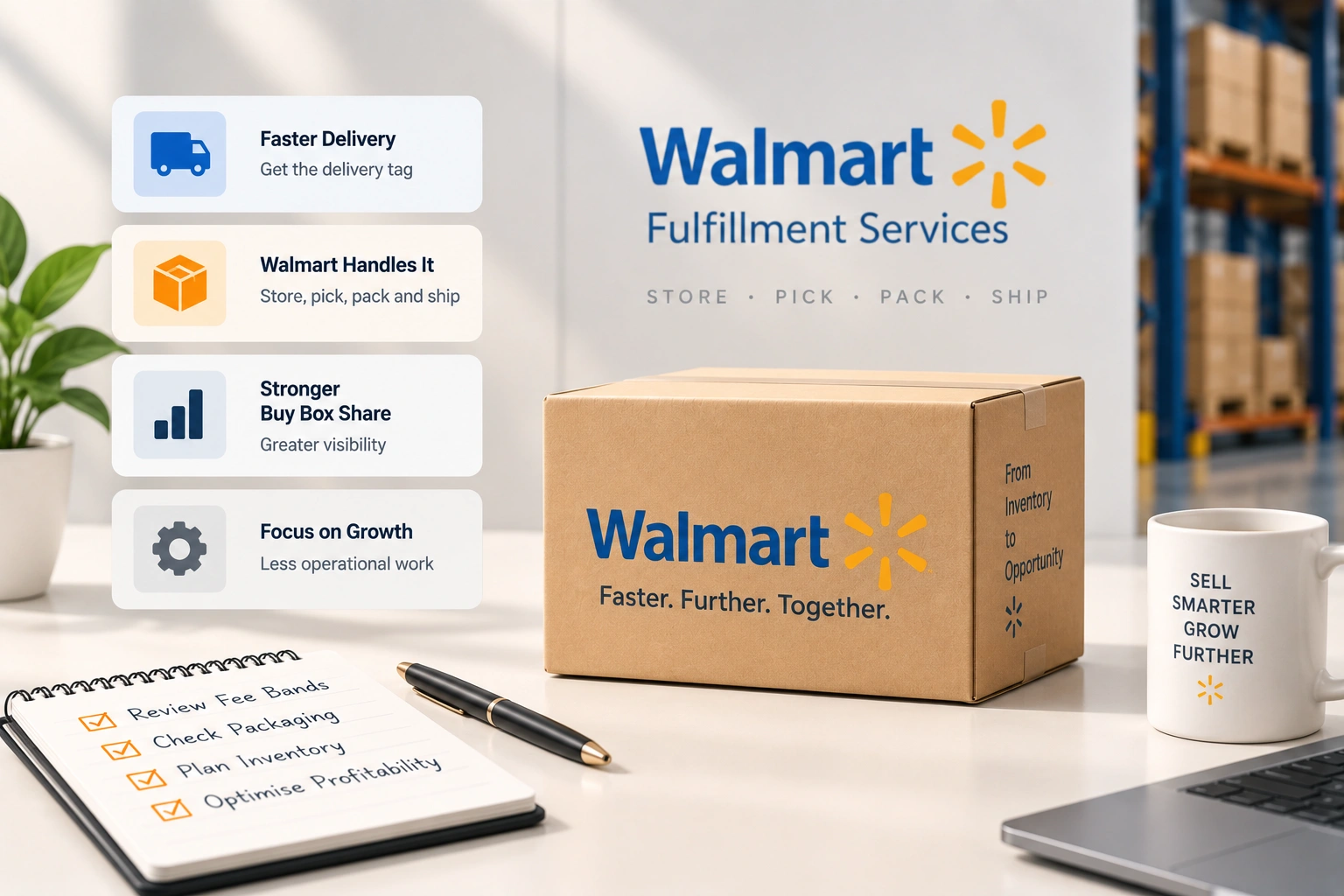
Walmart's page states the offer in a line: "Leverage Walmart's trusted logistics network to fulfill orders everywhere you sell". The channels it names are Amazon, eBay, Shopify, Temu and TikTok Shop, and a brand's own website, and orders ship in "unbranded poly bags or brown boxes with plain tape and dunnage."
The conditions are short. "You must first set up your WFS account to utilize Multichannel Solutions." Orders go out expedited in two business days or standard in three to five, and Walmart does not guarantee either speed during peak, which it dates 1 October to 31 December, or during sales events. Returns come back to Walmart: "Customers return items by mail directly to Walmart facilities." An item can even be set for "multichannel sales only, meaning they will not be sold on Walmart.com."
On cost, Walmart says "Multichannel Solutions costs 15% less, on average, than the cost of our competitors", by its own data for the year to 31 January 2026, and the orders carry "zero Marketplace referral fees for non-Walmart orders". First-time users get a discount for 90 days, an offer that "ends Jan. 31, 2027." The 15% is Walmart's own comparison; the rate card on the same page is what a brand prices against.
The Shopify connection is the news. The app, Walmart MCS Fulfillment, has been in the Shopify App Store since 18 August 2026, and Walmart's release note of 21 October says: "You can access Multichannel Solutions (MCS) directly from your Shopify admin and use your existing Walmart Fulfillment Services (WFS) inventory to automatically fulfill orders." The listing describes SKU mapping to WFS inventory, stock synced from WFS to Shopify, and tracking and returns handled from Shopify. It is free to install, and Walmart bills the fulfilment directly.
Amazon's Multichannel Fulfillment, in Amazon's words
Amazon's offer is older and runs the other way. MCF will "pick, pack, and ship customer orders across all your sales channels" from "a single pool of inventory", and "We pick and pack orders with unbranded packaging by default before prepping for shipment to customers." Standard orders arrive in three business days and expedited in two. Holiday peak fees apply from 15 October 2026 to 14 January 2027, and "A 3.5% fuel and logistics-related surcharge applies to MCF fulfillment fees in the US." How it works day to day is in using Amazon to fulfil orders you did not sell on Amazon.
Walmart's own orders need two settings. Amazon's post of 13 November 2025 explains that some channels "don't allow orders to be delivered by Amazon Logistics, such as Walmart Marketplace", so a seller shipping Walmart orders through MCF must "select unbranded boxes and choose alternate carriers" by blocking Amazon Logistics. "There is a 5% surcharge to using a carrier other than Amazon Logistics", and Amazon adds: "We are waiving the 5% surcharge fee when you select block Amazon Logistics until January 14, 2027."
What each channel still asks of the order
Whichever warehouse ships it, the order belongs to the channel that took it, and on our reading each channel judges it by its own rules. An Amazon order shipped from Walmart's network is a seller-fulfilled order to Amazon, held to the seller's own record, as Amazon's delivery rate rule for seller-fulfilled orders shows. A TikTok Shop order carries TikTok's handling time and tracking thresholds. A Walmart order shipped by Amazon has to avoid Amazon's vans as well as its boxes.
Two things follow, both our reading. The network's speed has to fit the promise each channel displays, so a channel promising faster than the standard service needs the expedited one, at its price. And tracking has to reach the channel on time, which is the integration's job and the first thing to test before peak.
Five questions that decide it
Our practice, in the order we ask them.
Where does most of the volume sell? That marketplace's own orders ride on its own fulfilment rates, FBA or WFS, and every other channel pays the multichannel rate. On our reading, consolidating in the bigger marketplace's network puts the most orders on the cheaper rate.
Which badge would the move cost? On our reading, Amazon orders moved out of FBA lose the Prime badge unless the seller qualifies for Seller Fulfilled Prime, and Walmart orders moved out of WFS have to earn Walmart's delivery badge on the seller's own record, as what Walmart now pays for delivery speed sets out.
Is the box part of the product? Both networks ship unbranded by default. A brand whose packaging, inserts or unboxing is part of the offer needs a warehouse that packs its own.
Where should returns go? Walmart's page sends them to Walmart's facilities. Amazon's MCF page does not describe returns, so we confirm the route in Seller Central before choosing. A brand that inspects, refurbishes or resells its returns wants them back.
What happens when one network stops? One pool of stock is one point of failure. On our reading, a receiving backlog, stranded stock or an account problem on one marketplace then stops every channel that network ships, and a good week on TikTok Shop can empty the stock a marketplace listing ranks on. The discipline that answers it is the one in Walmart inventory management for sellers, read across every channel.
Consolidate, split or partner
On our reading the answers point one of three ways. Consolidate in one network when one marketplace carries most of the sales, the products are small and the box is not the offer. Split, each marketplace's orders through its own network and the rest shared between them, when both marketplaces matter and neither badge can be given up; the price is two stock pools to forecast. Partner with a third-party warehouse when the brand's own site or packaging is the point, or when returns must come home.
None of the three removes the operating work. Somebody maps the SKUs, watches for orders an integration fails to pass, chases tracking that does not post and reconciles two fee statements. That is the work an outsourced operations team carries, and where consolidation fails quietly when nobody owns it. The same build, consolidate or partner decision applies to listings, set out in Amazon's multichannel selling tools and the partner question.
Where we fit
Deciding, channel by channel and function by function, what a brand runs itself, what it consolidates in a platform's own tools and what it hands to a partner is the centre of our strategic partnerships work. If one marketplace's warehouse already ships another's orders, the badge and the returns route are where we would look first.
Frequently asked questions
The questions that come up most often on this subject.
Yes, through Multichannel Solutions. Walmart's page names Amazon, eBay, Shopify, Temu and TikTok Shop among the channels it fulfils from WFS inventory, in unbranded packaging, and a WFS account is required first. On our reading Amazon still treats the order as seller fulfilled, so the seller's own shipping metrics apply.
Yes, with two settings. Amazon's guidance says Walmart orders need unbranded boxes and a carrier other than Amazon Logistics, which is blocked on the order or in the integration. Amazon charges a 5% surcharge for other carriers and says it is waiving it, when Amazon Logistics is blocked, until 14 January 2027.
Install the Multichannel Solutions app from the Shopify App Store, then follow the prompts in the Shopify admin to connect the Walmart Marketplace account, as Walmart's release note of 21 October 2026 describes. The app maps Shopify products to WFS inventory and handles stock levels, tracking and returns. It is free to install; Walmart bills the fulfilment.
No. Walmart's Multichannel Solutions page says sellers pay zero Marketplace referral fees for non-Walmart orders. The fulfilment is charged at the rates on that page, and the channel where the sale was made still charges its own fees.
Often, when one marketplace carries most of the sales, the products are small and the packaging is not part of the offer. On our reading, moving Amazon orders out of FBA gives up the Prime badge unless the seller qualifies for Seller Fulfilled Prime, and one stock pool means one network's delay stops every channel, so we weigh both before consolidating.