Order Management Across Marketplaces
The second channel is easy. The third is where stock, orders and returns stop agreeing with each other, and the fix is structural.


Loading Article banner
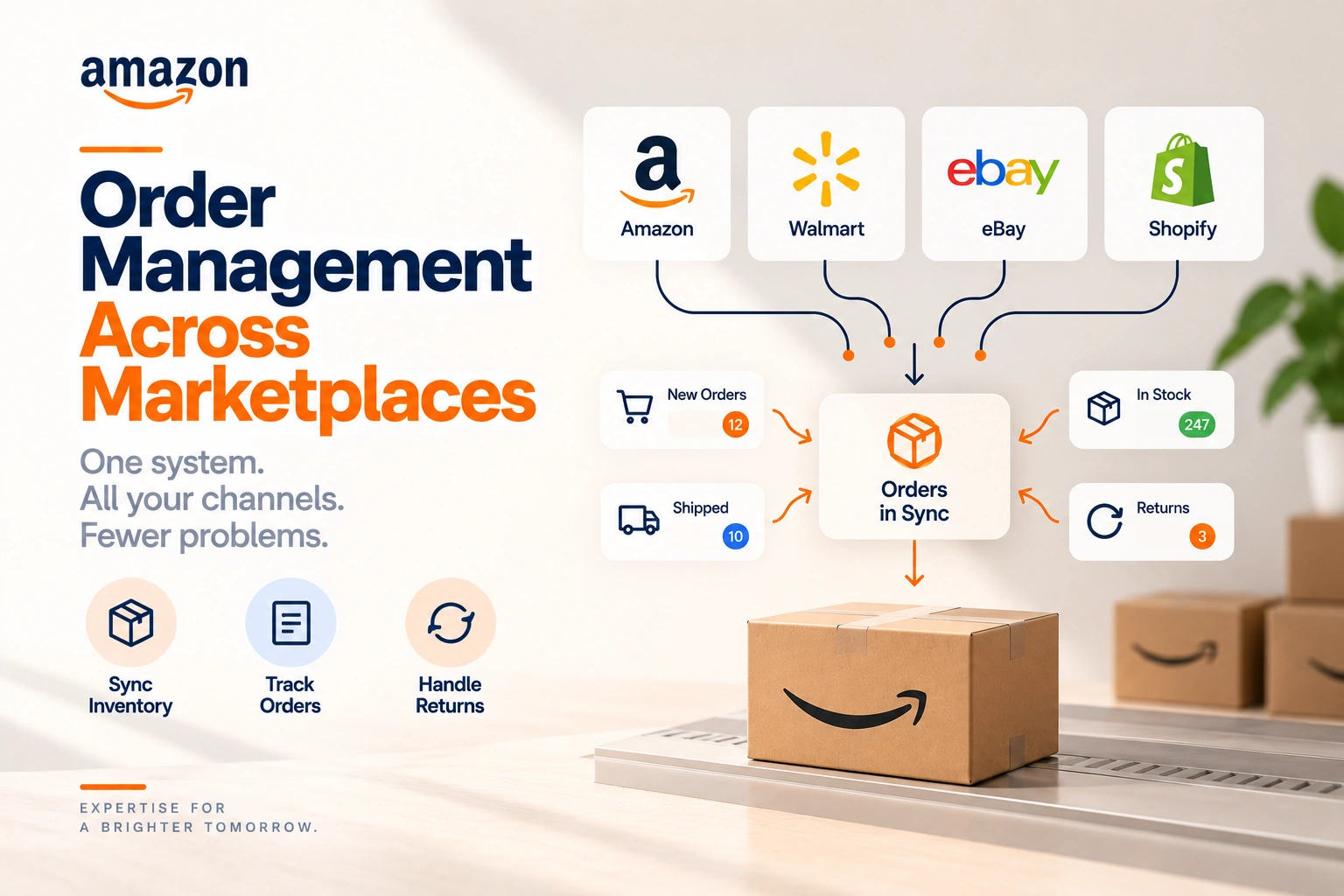
One marketplace is a spreadsheet. Two is a spreadsheet somebody updates twice. Three is where the spreadsheet starts being wrong, and the first sign is usually an oversell on the channel that matters most.
Distributed order management is the unglamorous name for the answer: one place that knows what stock exists, which channel sold it, and where it has to ship from.
What actually goes wrong
Overselling. Two channels sell the last unit within the same few minutes. One of those orders has to be cancelled, and a cancellation is a metric on every marketplace, not just an apology.
Stale availability. Stock is there, the channel does not know, and the listing sits unavailable while a competitor takes the sales.
Split fulfilment. The same product held in two places, so which warehouse ships depends on which channel sold, and nobody knows why one channel's delivery times are worse.
Returns nobody reconciles. A return goes back into stock on the channel it came from and stays invisible to the others, so the numbers drift a little every week.
The one rule that fixes most of it
One system owns the stock number, and every channel reads from it. Which system does not matter much. That there is exactly one matters enormously.
The most common failure is two systems that both think they are authoritative, usually an accounting package and a listing tool, reconciled by a person. That works until the person is on holiday.
Buffers, and why they are not a fix
Holding back a few units per channel prevents oversells and costs sales on everything with thin cover, which is usually the products worth the most.
Use a buffer while the sync interval is long, and treat it as a symptom. When the sync is quick enough, the buffer comes down, and the products that were quietly capped start selling again.
What not to centralise
Pricing. Each marketplace has its own competitive position and its own fee structure, so one price pushed everywhere is either uncompetitive in one place or unprofitable in another.
Listing copy, to a point. The product is the same and the way people search for it is not: a title written for Amazon's search box is not the title that works on eBay, and a feed that pushes identical copy everywhere is leaving ranking on the table on at least two channels.
Customer messages. Each marketplace has its own response time expectations and its own rules about what may be said, and a single templated reply is how a seller gets a policy warning for offering something off-platform.
When a tool pays for itself
Roughly: more than two channels, or more than a few hundred SKUs, or any product held in more than one place. Below that a disciplined spreadsheet and one person is genuinely fine and much cheaper.
What to ask of a tool: how often it syncs, what it does when a channel's API is down, whether it maps your own SKU across channels rather than making you rename everything, and whether it handles returns back into stock. The last question is the one that gets skipped and the one that causes the drift.
Fulfilment is part of the same question
If Amazon holds your stock and another channel sells it, something has to raise a fulfilment order and pass the tracking back before the channel's dispatch deadline. That is a real integration and not a manual job at any volume.
The alternative is holding separate stock per channel, which is simpler to run and ties up more money. Neither is wrong; what is wrong is drifting into one of them without deciding.
What we do with this
The order layer is what decides whether a third channel is a growth or a mess, which is why it comes up before anybody adds Walmart or eBay to an account that already sells in two places.
It is also the argument for keeping your own store honest: a store that reads the same stock number as the marketplaces is a channel, and one that keeps its own is a fourth thing to reconcile.
Every one of those channels is a service we run, and the reason they are described together on one page rather than sold separately is that the order layer underneath them is one problem, not four.
If your numbers stopped agreeing and nobody is quite sure when, it is usually one missing sync rather than everything.
Related reading: Amazon FBA Explained: How It Works, What It Costs, and Whether It Is Worth It, Using Amazon to Fulfil Orders You Did Not Sell on Amazon, eBay Inventory Management: Where Cancellations Come From and Shipping Hazmat From a Marketplace: Lithium Batteries, Perfume, Aerosols and the USPS Fee.
Frequently asked questions
The questions that come up most often on this subject.
One system that knows what stock exists, which channel sold it and where it ships from, with every marketplace reading from that single number instead of keeping its own. The distributed part is the stock and the fulfilment; the management is having one authority over both.
Make one system the owner of the stock number and have every channel read from it, then shorten the sync interval until a buffer is no longer needed. Buffers prevent oversells by capping sales on exactly the products with the thinnest cover.
Roughly above two channels, a few hundred SKUs, or any product held in more than one place. Below that a disciplined spreadsheet and one responsible person genuinely works and costs nothing.
How often it syncs, what happens when a channel's API is unavailable, whether it maps your existing SKUs rather than forcing a rename, and whether returns go back into stock automatically. The last one gets skipped and is what causes numbers to drift.
Yes, through multi-channel fulfilment, and it needs a real integration: something has to raise the fulfilment order and pass tracking back before the other channel's dispatch deadline. At any volume that is not a manual job.
It is simpler to run and ties up more money, and it is a legitimate choice. What causes trouble is drifting into it without deciding, so that nobody can say which pool a given unit belongs to.
Often enough that the buffer can come down. The right interval is the one where two channels cannot both sell the last unit, and on fast-moving lines that is minutes rather than hours.
More than the order. A cancellation is a performance metric on every marketplace, it can affect the buy box on Amazon and seller standing on eBay, and a run of them attracts attention that a single one does not.
They are the part most setups handle worst. A return that goes back into sellable stock on one channel and stays invisible to the others makes the numbers drift a little every week until somebody counts by hand.
It should be. A store reading the same stock number as the marketplaces is one more channel; a store keeping its own numbers is a fourth thing to reconcile, and it is usually the one that gets reconciled least often.