Image to Video Ads: What Meta, Google, Amazon and TikTok Now Make From a Product Photo, and the Photography It Needs
On 6 October 2026 Meta made video from static images generally available in Advantage+ creative, so all four platforms a product brand advertises on now animate its photographs. What each generator makes in the platforms' own words, what it cannot add, and the photography and filming a brand still has to commission.


Loading Article banner
On 6 October 2026 Meta said that generating "video from existing static assets" in Advantage+ creative is "now generally available", and that "Catalog advertisers can now turn their product images into product video, at scale". Its reason was one number: "More than 60% of the time people spend on Facebook and Instagram is with video".
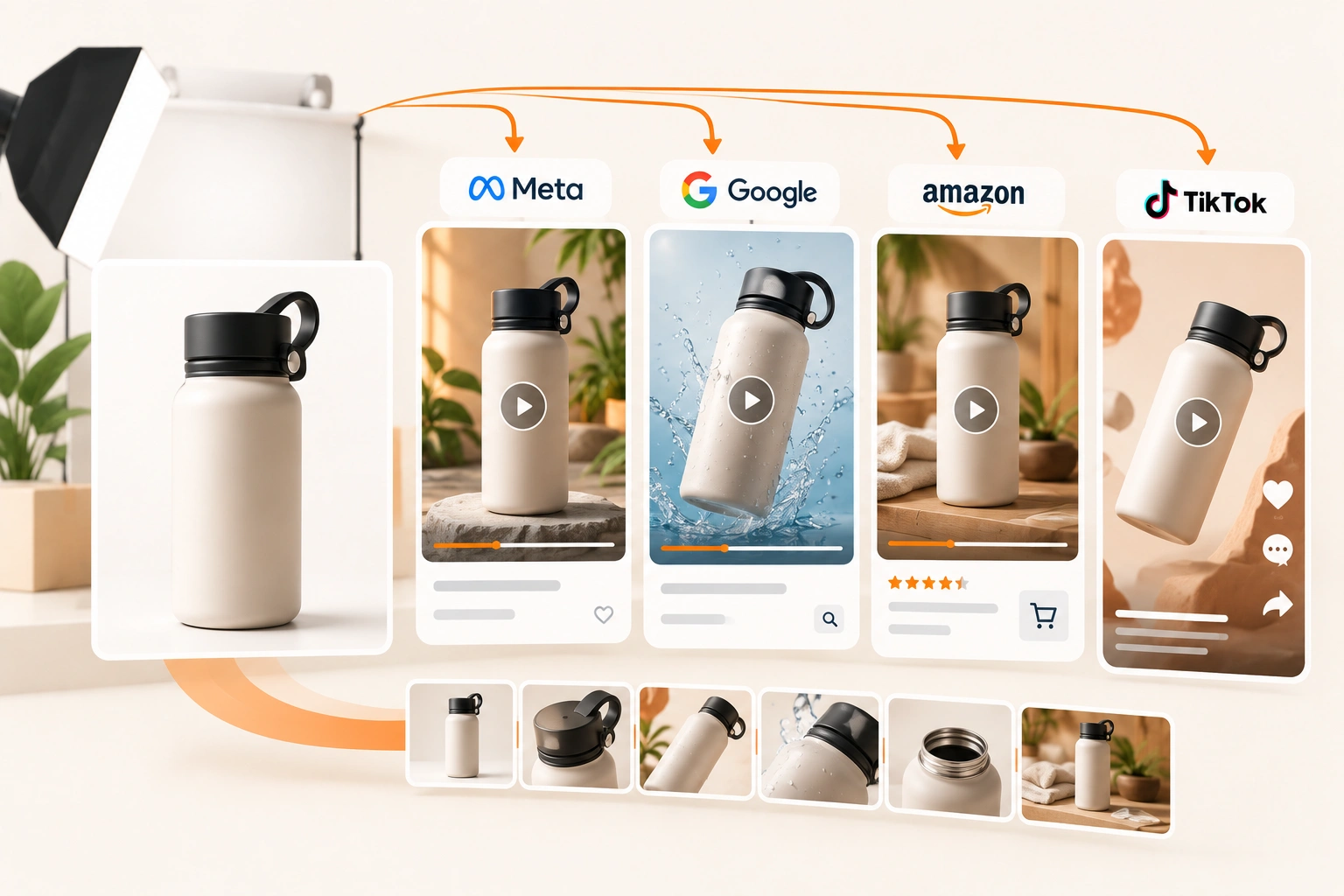
With that, every platform a product brand is most likely to advertise on makes video from a still photograph. Google has Veo in Asset Studio, Amazon has Video Generator, TikTok has Symphony's Image to Video. For a brand deciding next year's creative budget, the question is no longer whether a platform can make a video from its photos. It is what the platforms make, what they cannot, and what the brand still has to shoot so that the output is worth running.
What each platform makes from a photo
Meta. Three routes, at different stages. Video from static assets in Advantage+ creative is generally available. Product video from catalogue images is for "Eligible beta advertisers". Ads Creative Studio, which can "generate new video concepts and variations" and edit the hooks, audio, clip length, text overlays, captions and end scenes, "is rolling out more broadly after our initial tests this summer".
Google. Since March 2026, Veo "is now available in Asset Studio within Google Ads". An advertiser can "upload up to three static images as source material" and Veo makes "a unique, high-quality video up to 10 seconds long", "available for all campaigns and for auto-generated Demand Gen campaigns". Asset Studio's prompt features support Global English only, and for product images an advertiser adds, Google says "the AI will maintain product faithfulness".
Amazon. Video Generator is "a free tool provided by Amazon Ads" that lets advertisers "create an unlimited number of videos at no additional cost", working from "product details, images, and brand elements" and starting six videos per request, inside the Sponsored Brands workflow. Amazon Ads' AI creative tools covers it beside Amazon's other generators.
TikTok. Symphony's Image to Video, announced in June 2025, turns "product photos, mood boards, or brand assets" into clips from an image and a short text prompt, "using dynamic backgrounds, effects, and camera movements". Symphony Creative Studio is "free to use with a TikTok for Business account".
What a generator cannot add
Read the four descriptions together and they share one shape: the input is the brand's photograph, and the output is that photograph with motion, background, camera movement, text and sound added. That is our reading of what the platforms describe, and it sets the limit. A generator can move between what was photographed. It cannot invent an angle nobody shot, the texture of a fabric at close range, the product working, or a person using it, and a version that appears to show those things is showing something the brand never verified.
That matters most where a picture is a claim. How a product folds, what fits inside it, what the colour really is: a shopper who buys on a generated video and receives something different returns it, and on a marketplace the return lands on the listing. TikTok Shop's rules on AI-generated content and Amazon's disclosure for AI-generated people show where the marketplaces already draw the line, and every output is reviewed against the product before it runs, not after.
The photography a generator needs
Because the output is bounded by the input, the brief for a product shoot changes. It is no longer only the images a listing shows; it is the source library every generator will draw on.
Every angle that matters. Front, three-quarter, back, the detail that justifies the price, the packaging. A generator animating one front view makes many versions of one front view.
Room around the product. Lifestyle stills composed with space on every side, so a vertical cut for Reels, Shorts or TikTok and a square one for a feed both keep the product whole.
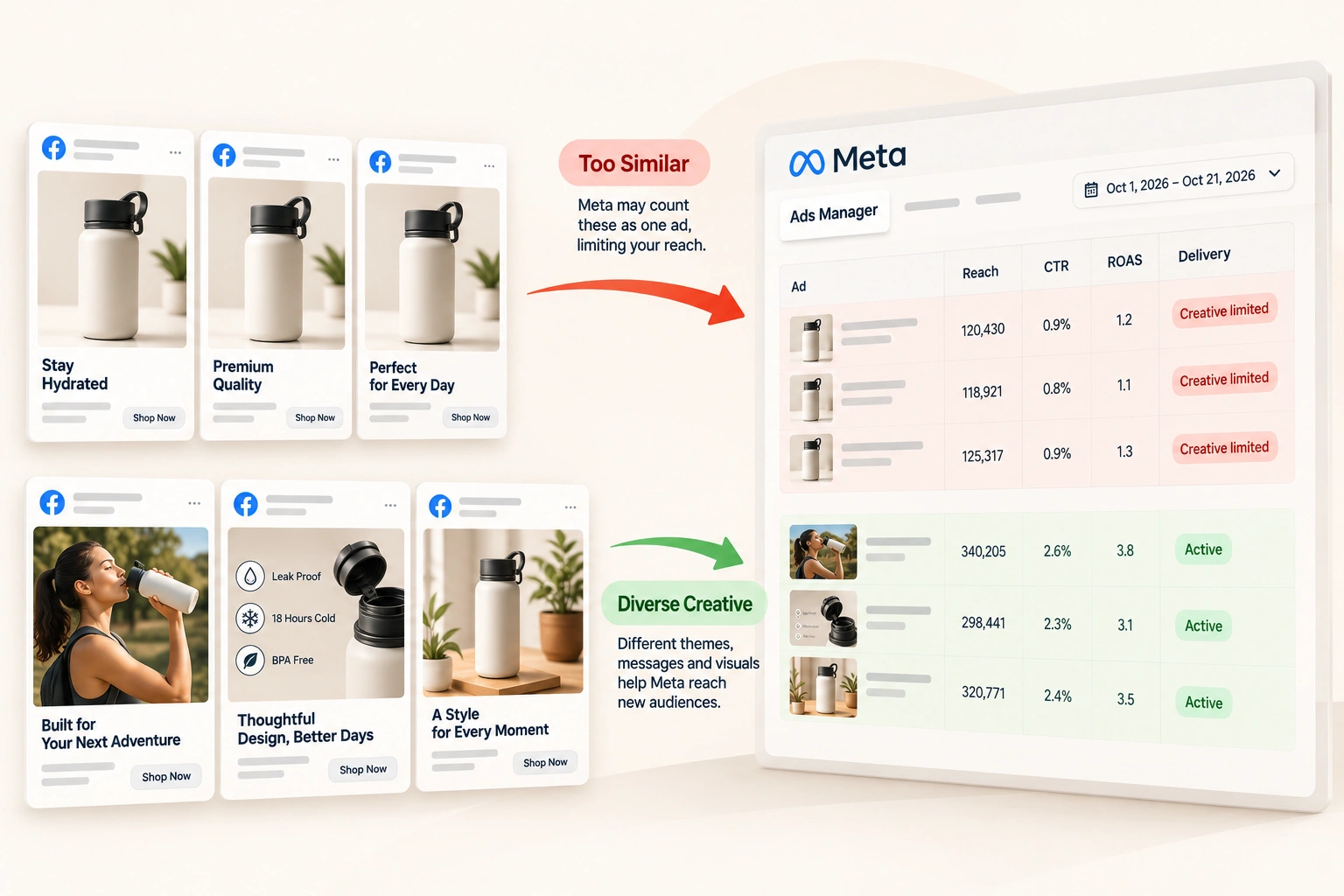
One light and one colour across the set. Variations from four generators look like one brand only if the photographs they start from do. This is where the brand's visual rules earn their keep.
The product as it is. No retouching that changes colour, size or features, because whatever the photograph says, every video made from it repeats. eCommerce product photography that sells covers the shoot itself.
What a brand still has to film
Three kinds of video stay outside what a still can become. The demonstration: how it works, how it fits, how it is assembled, before and after. The people: creators and customers using the product, which on TikTok is most of what sells, and which who should make your TikTok Shop content works through. And the longer brand film for YouTube and streaming, where ten seconds is an opening rather than an ad.
Everything else, the refresh of an ad that has tired, the twelve variations a delivery system wants to test, the vertical cut of a horizontal shot, is now cheap to generate, and is the right job to give the generators.
How to use them without wasting the budget
Approve one source library and feed every platform from it, so the brand is one brand in four feeds. Use the generators for variation and refresh, which is the use TikTok itself describes for Image to Video. Review each output for product accuracy before it runs. And test generated video against filmed video on the same audience before deciding that either one is enough, because the platforms' own figures describe their advertisers on average, not your product.
Where we fit
The generators move the creative budget rather than remove it: less spent on making many versions, more on the photographs and the footage they are made from. Planning that source library, shooting it, and keeping every platform's output faithful to the product is the work of our creative and media team. If you would like to know what your current photographs will give the generators, a look at the image set is where we would start.
Frequently asked questions
The questions that come up most often on this subject.
Yes. Meta said on 6 October 2026 that generating video from existing static assets in Advantage+ creative is generally available, and that catalogue advertisers in a beta can turn product images into product video at scale. Ads Creative Studio, which generates video concepts and variations, is rolling out to more advertisers.
Veo is in Asset Studio in Google Ads. An advertiser uploads up to three static images as source material, and Veo generates a video of up to ten seconds, which can then be packaged into ads with templates. Google says it is available for all campaigns and for auto-generated Demand Gen campaigns.
Amazon describes Video Generator as a free tool that creates an unlimited number of videos at no additional cost. It works from the product's details, images and brand elements, starts six videos per request, and is used through the Sponsored Brands campaign workflow.
TikTok says Symphony Creative Studio, where Image to Video sits, is free to use with a TikTok for Business account. An advertiser uploads an image and a short prompt, and Symphony generates a clip with backgrounds, effects and camera movement added.
A set rather than a single shot: every angle that matters, close detail, packaging, and lifestyle stills with space around the product so vertical and square cuts keep it whole, all in consistent light and colour. Avoid retouching that changes the product, because every generated video repeats what the photograph shows.