Amazon Streaming TV Ads in 2026: What a Product Brand Can Now Buy, and Whether It Belongs in Your Plan
Prime Video, Netflix and Disney can all be bought through Amazon now, and since May a Prime Video ad can change with the viewer's shopping. What a product brand can buy in streaming TV in Amazon's own words, what it costs to start, the creative it needs, and how to decide whether it belongs in the plan.


Loading Article banner
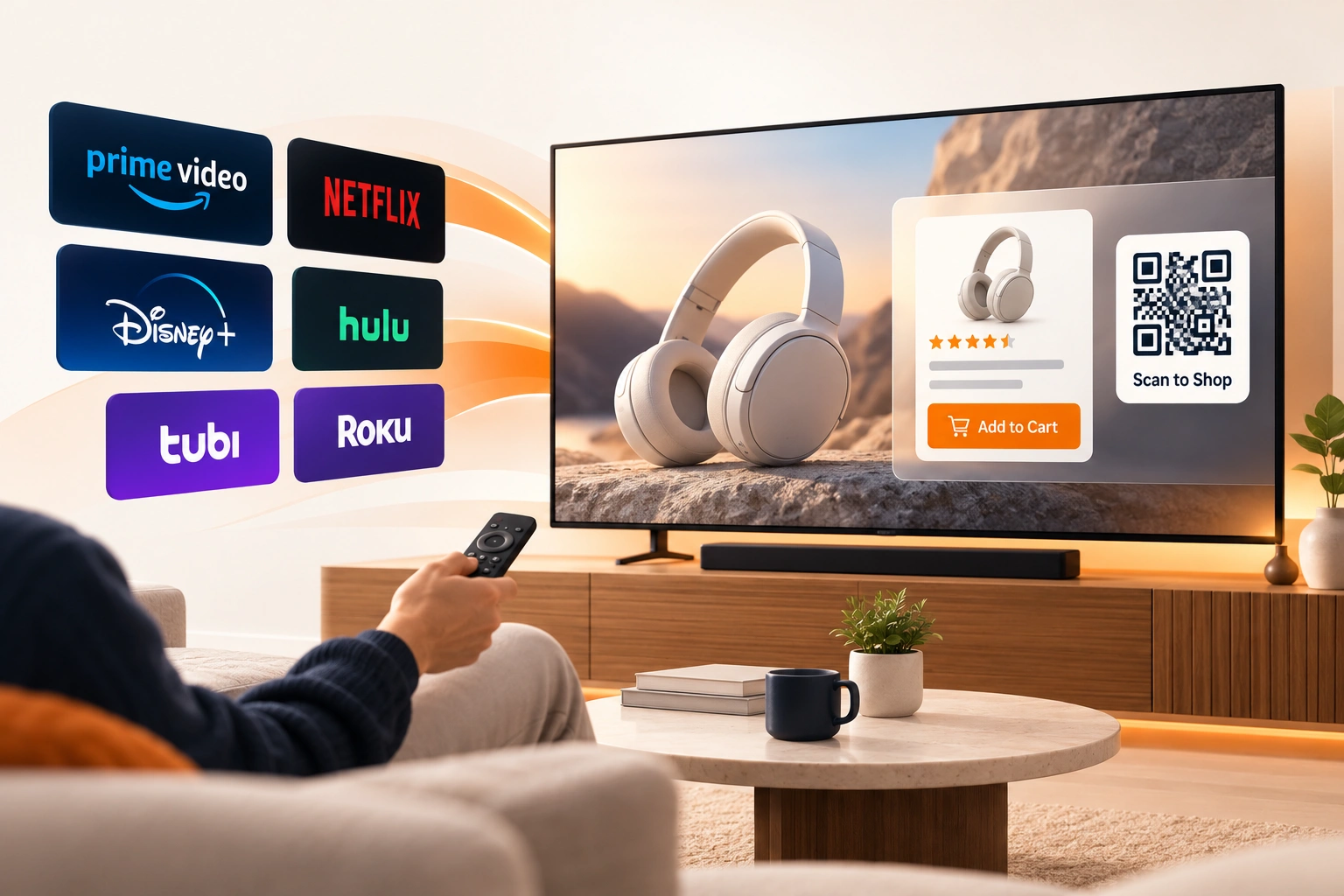
For most product brands, television has meant a production budget, a media agency and a commitment made months ahead. Amazon now sells it like the rest of its advertising. Its streaming TV page says the ads are "available to sellers enrolled in the Amazon Brand Registry, vendors (including book vendors and publishers), agencies and technology providers, and brands in the U.S., whether or not they sell on the Amazon store, with no minimum spend requirement."
At its Upfront on 11 May 2026 Amazon launched a way for a Prime Video ad to change with the viewer's shopping. This is what a product brand can buy in streaming TV through Amazon, in Amazon's words, what it costs to start, and how to decide whether it belongs in this year's plan or next year's.
What Amazon sells as streaming TV
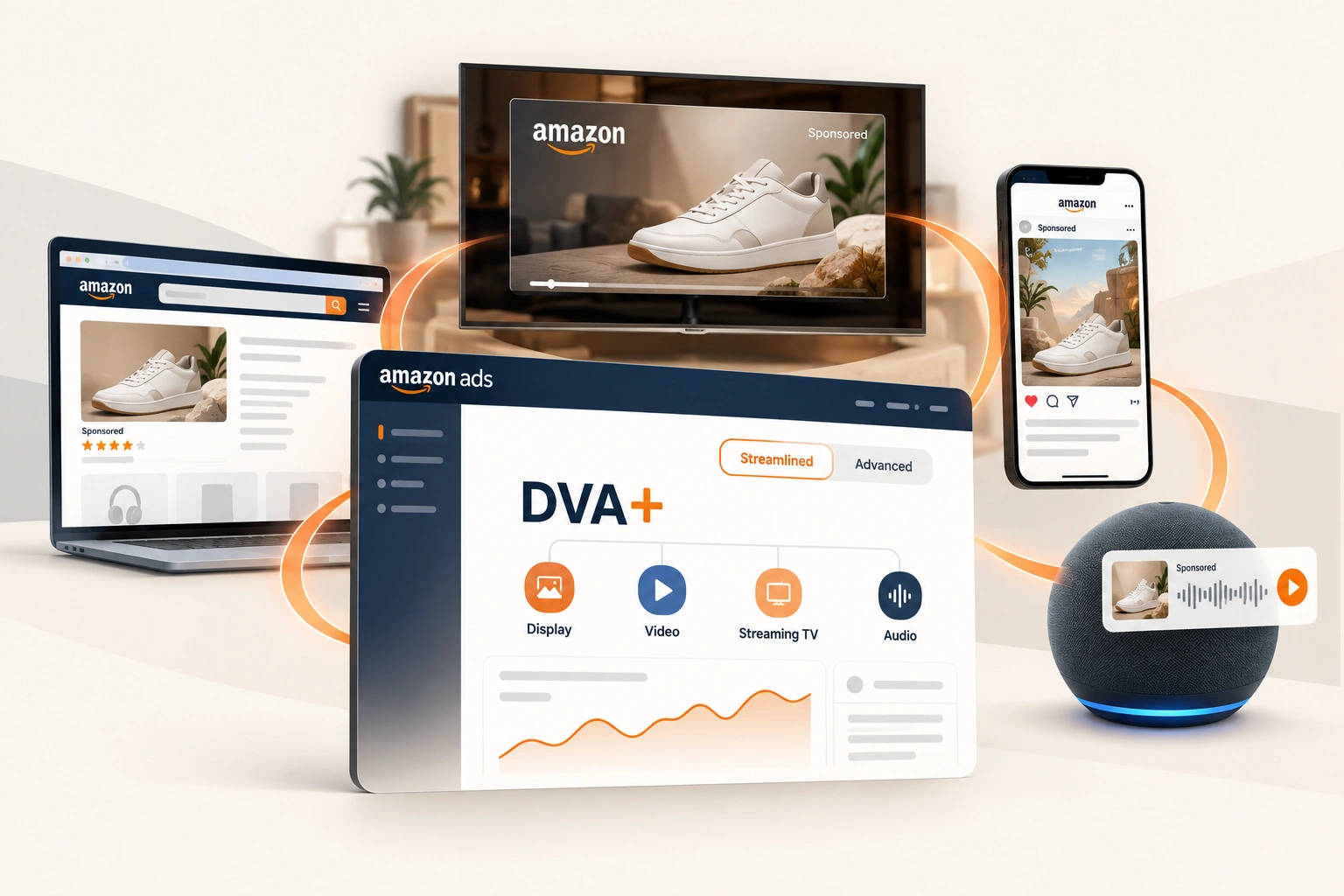
Amazon defines streaming TV ads as "full-screen, non-skippable video ads" shown around shows, films and live events, on "Prime Video, Twitch, live sports, Fire TV Channels, and top third-party TV publishers and broadcasters." The third-party list is the part that has grown, all of it bought through Amazon DSP, Amazon's programmatic buying platform.
Netflix. Announced on 10 September 2025: advertisers using Amazon DSP get "direct access to Netflix's premium ad inventory" in eleven countries, the United States among them, from the fourth quarter of 2025.
Disney. Announced on 17 June 2025: "direct access to Disney's premium inventory across platforms, like Disney+, ESPN, and Hulu", available "to all U.S. advertisers that use Amazon DSP beginning in Q3 2025."
Roku. Announced on 16 June 2025: a shared identifier giving "logged-in reach to an estimated 80M U.S. CTV households", so Amazon DSP can recognise one household across Roku and Fire TV devices and limit how often it sees an ad.
Samsung TV Plus and Tubi. At the NewFronts in March 2026, Amazon announced interactive ads on Samsung TV Plus, "launching in July 2026", and a Tubi offer through Amazon DSP.
One buying seat now reaches most of the services a household streams, with Amazon's shopping data behind the audiences.
What changed in 2026: TV ads that change with the shopper
Prime Video ads can be interactive, letting viewers "browse and shop your brand with a click of their remote or a scan of their mobile phone". On 11 May 2026 Amazon added Dynamic TV Creative, "our first capability to automatically personalize Interactive Video Ads (IVA) on Prime Video series and films based on viewer shopping behavior."
The mechanics matter for the creative brief. "Advertisers upload a single base creative asset", and Amazon changes four things for each viewer: the product imagery, the call to action ("Add to Cart," "Send to Phone," "Save to Cart," or "Visit Brand Store"), the headline, and product details such as "ratings, Prime benefits, or pricing". Note the last: a product with a weak rating can have that rating shown on a television.
Availability is narrower than the launch suggests. In May it was "currently available to select U.S. advertisers that sell on Amazon and are running campaigns on Prime Video", and Amazon said it "will expand to more customers in Q3". We found no later Amazon post confirming that expansion on 22 October 2026, so whether an account has it is a question for its console.
Amazon's case for interactivity is its own study of 2025 campaigns: interactive video ads drove "6x higher brand search, 4x more detail page views, 4x more add-to-cart actions, and 5x higher purchase rates" than streaming TV campaigns without interactive features. Those are Amazon's figures, and they compare interactive TV with plain TV, not TV with no TV. They help choose a format once a brand is buying, not whether to buy.
How it is bought, and what it costs to start
Sponsored TV, the self-service route many sellers saw first, has been folded in. Amazon's page says it "is now a part of Amazon's wider streaming TV ads offering", now named Streaming TV and found "within Display, Video, and Audio campaigns in Amazon Ads Agent." That is the campaign type set out in what DVA+ merges and whether a brand is ready for it.
On cost, the same page says two things: "no minimum spend requirement", and, in its questions section, "Self-service packages have a $10K recommended campaign minimum, and managed-service packages have a $50K campaign minimum." Our reading is that $50,000 is the floor for having Amazon run it, $10,000 is Amazon's advice for running it yourself, and the absence of a minimum describes access, not a sensible test. The console decides.
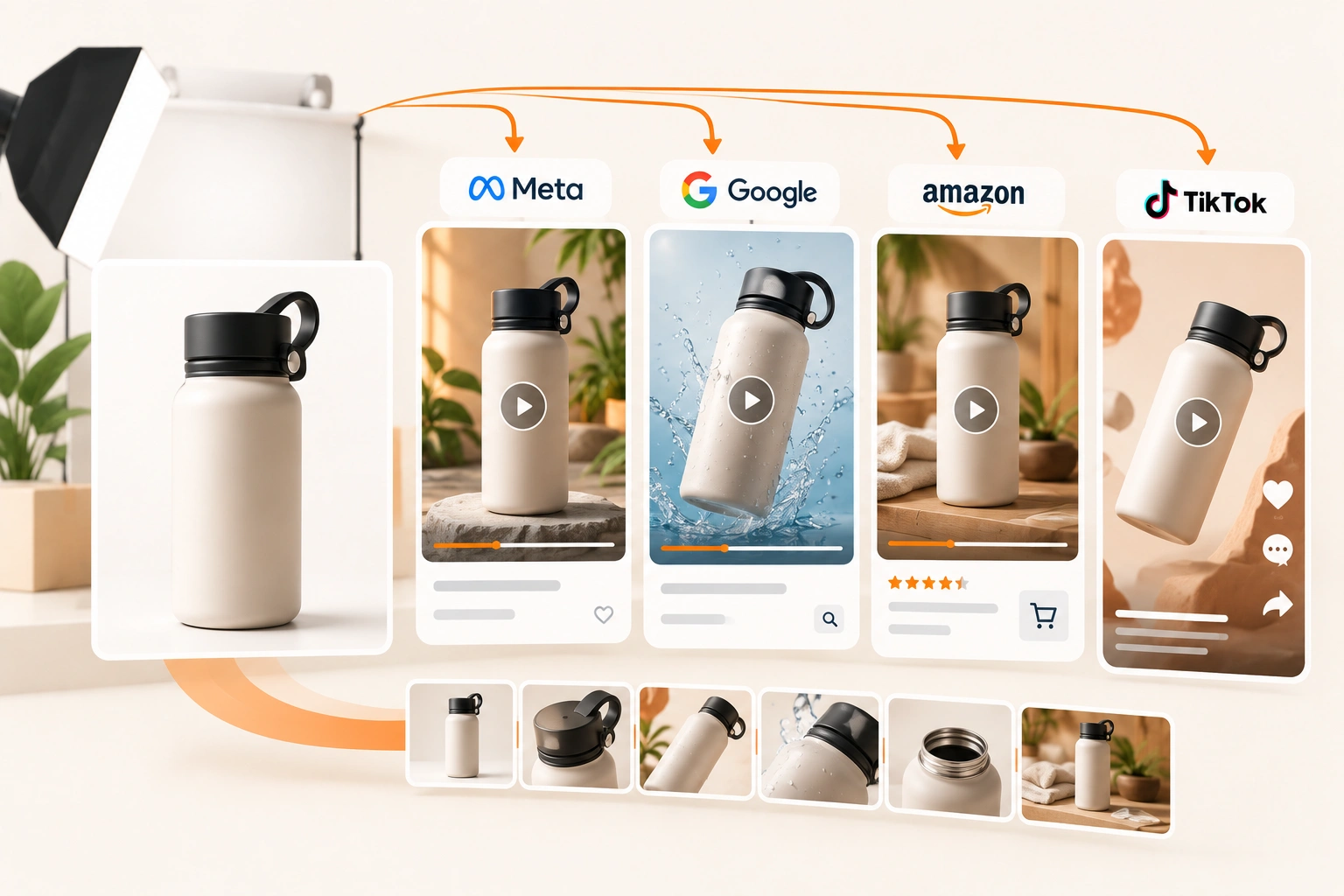
Prime Video in the United States takes spots of "15, 30, 45, 60" seconds, at a minimum frame size of 1920x1080, and Amazon warns that non-interactive ads "should not include call-to-action elements that encourage clicking", so a social video with a Shop Now button needs editing. Amazon's generative tools can produce video from a product page, as what Amazon's AI creative tools make explains, but we still treat a TV spot that carries the brand as a production job.
Does streaming TV belong in your plan?
Whether a brand should buy the top of the funnel yet comes down to four questions, the ones whether a brand is ready for Amazon DSP asks, made stricter by the size of the screen.
Does the brand win its own search? A TV ad creates interest that arrives later as a search. If sponsored search is not yet profitable, or a competitor's ads sit above the brand's own name, the spot is paying to send people elsewhere. The order in which Amazon's ad types earn their budget puts search first for that reason.
Does the product read on a television in fifteen seconds? A product whose point is visible, a meal, a garment, a tool in use, suits the screen. One whose point is a specification suits a search result.
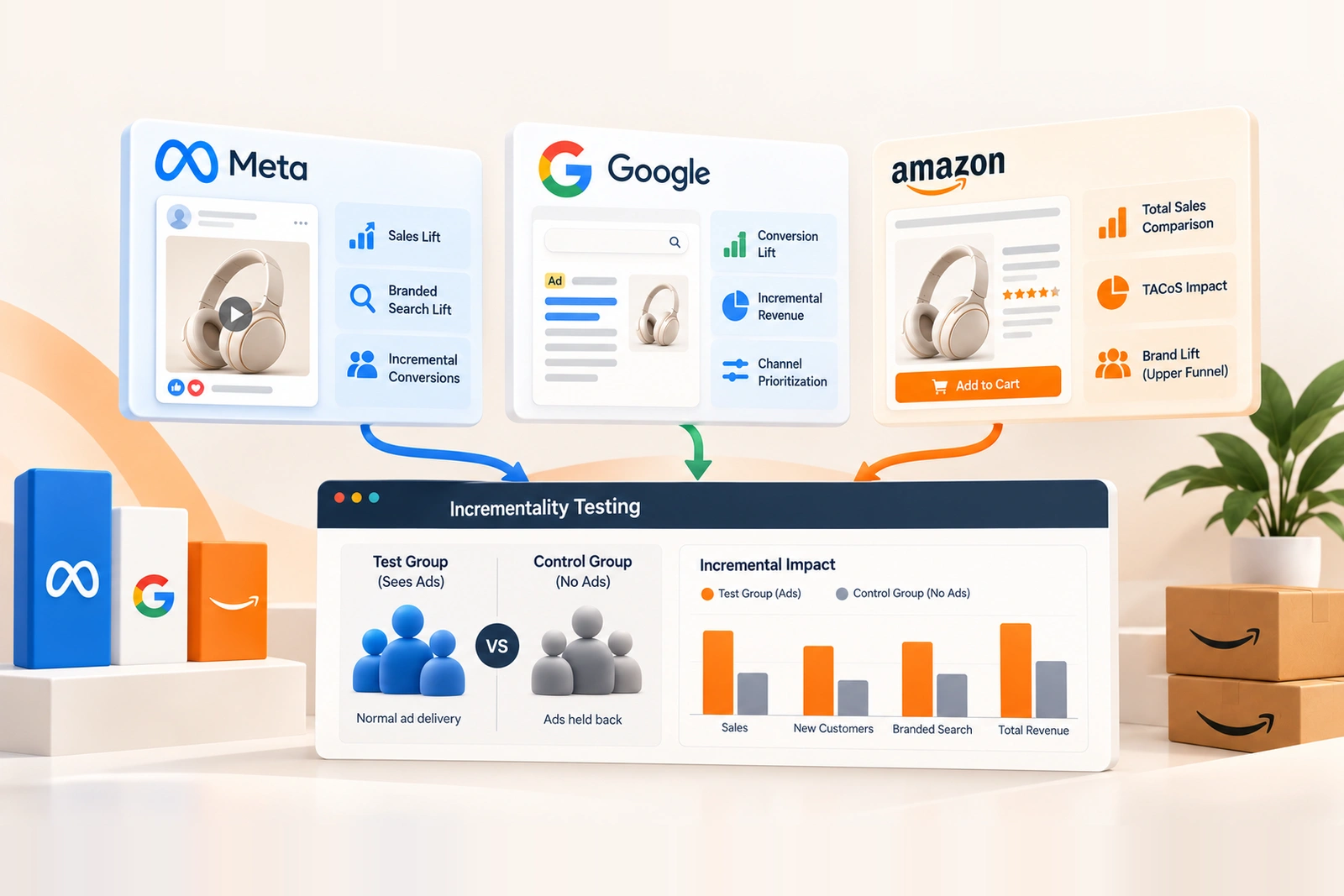
Can the budget be read? A test spread across every publisher proves nothing. One market, a fixed period, enough frequency for a household to see the spot more than once, and a region held back for comparison, which Amazon DSP's location-based ads make practical.
Is there a baseline? Branded search volume, new-to-brand orders and organic sales for the products in the spot, measured for the weeks before the first impression. A TV campaign judged on its own return will always look worse than it is, which is why TACoS rather than ROAS is the honest figure here.
Prime Video first, or the open internet?
For a brand that sells on Amazon, we start on Prime Video, where Add to Cart puts the product in the viewer's Amazon basket from the remote. Amazon's specifications note that "Add to Cart is not available for 3PAS creatives", the ads served through a third party, so the spot is served by Amazon. The other publishers add reach and, through the Roku identity, control of frequency across devices. They come second, once Prime Video has shown what a household that saw the spot does next.
Should a first test start now?
Not a first one. A test started in late October runs into the holiday weeks, when every brand's search and sales move for reasons that have nothing to do with a TV spot, and the baseline is the noisiest of the year. Fourth quarter advertising budgets belong to the search campaigns that harvest the season. The useful work now is the spot, the baseline and the region plan, for a test that starts in January.
Where we fit
Deciding whether streaming TV earns a place in the plan, designing a test whose effect shows in branded search, and running it beside the search campaigns it feeds is part of our programmatic advertising work. If you are not sure the brand is ready, the search results for your own brand name are where we would start.
Frequently asked questions
The questions that come up most often on this subject.
Amazon's streaming TV page says sellers enrolled in Brand Registry, vendors and brands in the US can buy streaming TV ads, whether or not they sell on Amazon, with no minimum spend requirement. The same page recommends a $10,000 minimum for a self-service campaign and sets a $50,000 minimum for a managed one.
Yes. Amazon announced on 10 September 2025 that advertisers using Amazon DSP would get direct access to Netflix's ad inventory in eleven countries, the United States among them, from the fourth quarter of 2025. Disney+, Hulu and ESPN inventory is available through Amazon DSP in the US as well.
A Prime Video capability Amazon announced on 11 May 2026. The advertiser uploads one interactive video ad, and Amazon changes its product imagery, call to action, headline and product details, such as ratings or price, for each viewer based on shopping behaviour. At launch it was open to select US advertisers that sell on Amazon.
In the United States, Amazon accepts Prime Video ads of 15, 30, 45 or 60 seconds, at a minimum frame size of 1920x1080. A spot that will run without interactivity should carry no button or click prompt, because Amazon delivers it where nothing can be clicked.
Not by the campaign's own return. Measure branded search, new-to-brand orders and organic sales on the advertised products against a baseline taken before launch, and against a region where the ads did not run. Amazon's published figures compare interactive with plain TV ads, not TV with no TV.