Meta Creative Diversification: Why Similar Ads Count as One, and How to Brief Ads Meta Treats as Different
Meta says creative that is too similar may not be recognised as different, reaches the same people and limits reach. How Meta's system chooses an ad in its own words, what it says counts as different, what agencies report about how similarity is judged, and a brief for a set of ads that are genuinely distinct.


Loading Article banner
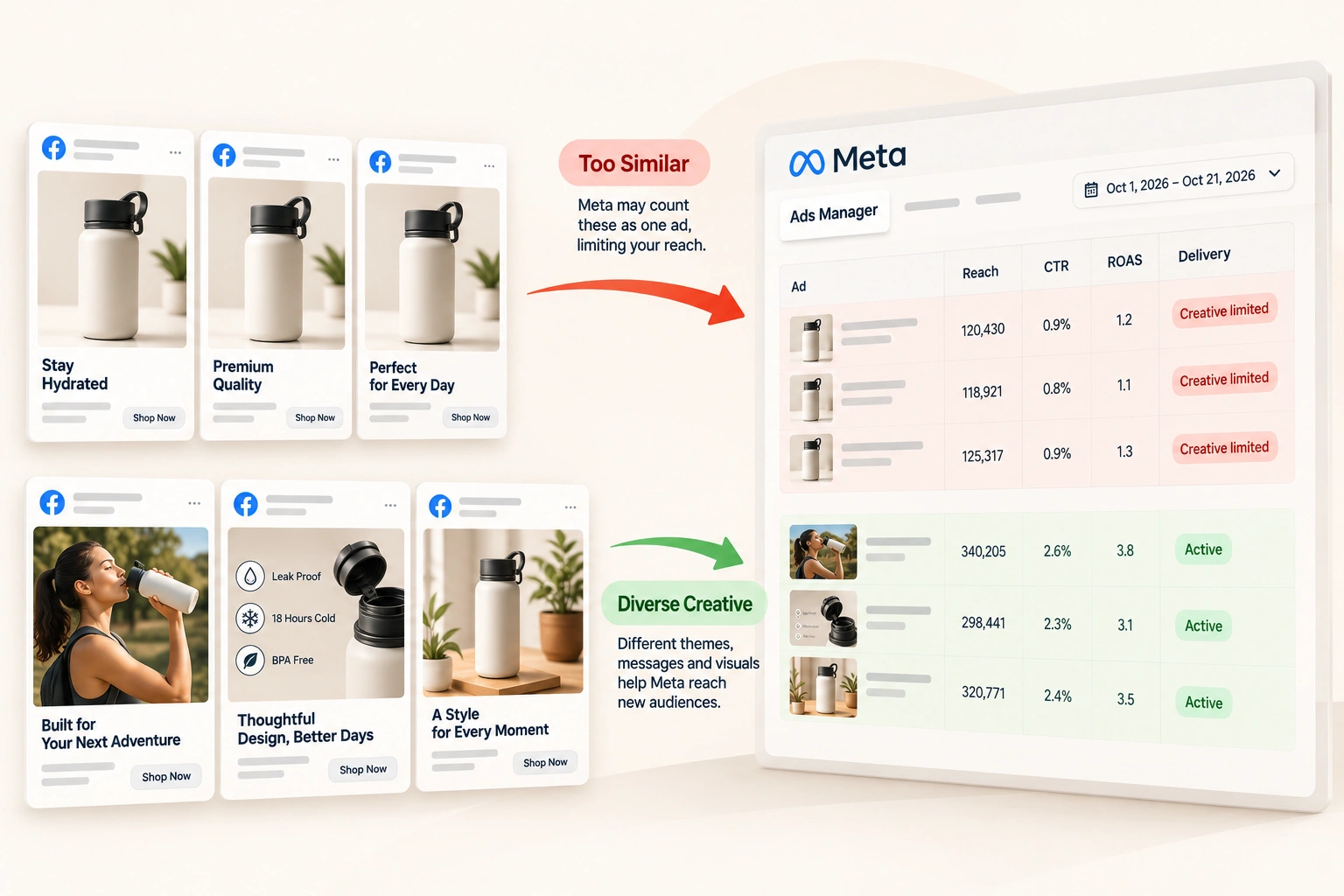
Two ads with different headlines over the same video look like two ads to the person who made them. Meta says its system may not see it that way: "When creative is too similar, our system may not recognize it as different and could deliver it to the same sets of audiences." And: "This overlap limits your reach and ultimately leads to Creative limited or Creative fatigue status."
On 19 October 2026 Meta published an agency's account of its work that put the same point plainly: "The Meta ad delivery system rewards a diverse mix more than repeated variations of similar assets." Below: how Meta's system chooses an ad in Meta's words, what Meta says counts as different, what agencies report and Meta has not confirmed, and a brief for ads the system can tell apart.
How Meta chooses which ad a person sees
Meta's engineers describe a pipeline: "Retrieval is the first step in our multi-stage ads recommendation system." Meta's retrieval system, Andromeda, narrows "a pool of tens of millions of ads to the few thousand we consider showing someone", and larger ranking models choose from those. The same engineering post says why variety matters to Meta: "Increased ad diversity can improve people's experience with ads and drive better advertiser outcomes."
Meta has also said where the lever moved. In April 2025 it described the focus shifting "from niche targeting to creative diversification". Our reading of that: with broad audiences, the creative is much of what tells the system who an ad is for, so ten ads that look alike give it one signal ten times. Meta's own warning about similar creative reaching "the same sets of audiences" is the same point from the other side.
The October agency post on Meta's news site is candid about the direction: "As the system takes on more of the decisioning, performance depends more and more on the creative it has to work with."
What Meta says counts as different
Meta defines creative diversification as "a wide range of ad creatives with different themes, messages, and visuals." Its suggestions for Reels are formats, not edits: a listicle, a "types of" piece reimagining the product in different situations, transitions, a question and answer, a product demonstration, a point of view.
Its earlier guidance adds people. Meta's example: younger shoppers may respond to deals, older shoppers to reviews and demonstrations. Each is a different reason to buy aimed at a different person, which is what makes it a different ad.
Meta's own tools make variety of a narrower kind. Advantage+ creative can animate a static image, generate new backgrounds around the product and expand an image to other shapes. Those vary the asset. In our reading they do not add a new idea, so they suit covering placements and formats, and they work best on a set that is already diverse.
What agencies report, and what Meta has not said
Meta has not published how similarity is measured or where a threshold sits. Asked by Marketing Brew in September 2026, a Meta spokesperson said: "We don't get into the specifics of how our ranking models represent individual creative assets."
The same report quoted agency executives saying that ads sharing a look or an opening hook with an advertiser's other creative rank lower, and that two videos of one person differing only in on-screen text count as the same creative. That is reported experience, not Meta's statement. So is a Creative diversity column rating ad sets Low, Medium or High, which Common Thread Collective reported live from 26 August 2026; no Meta page we could read describes it, so check Customize Columns in your own account rather than plan around it.
What Meta does publish is the result: the Creative limited and Creative fatigue statuses, which its page says to read in the Ads Manager Delivery column. Figures for similarity scores in blog posts are estimates, whoever states them.
How many ads, and how often
Meta's most specific numbers date from November 2024: "maintaining at least 20 diversified ads in Advantage+ shopping campaigns", "dedicating 20-30% of your overall ad budget towards testing new ads", and launching new ads weekly.
The word that matters is diversified. Twenty ads that are four ideas with five headlines each are, on everything Meta and the agencies describe, closer to four. For a brand without a studio, fewer genuinely different concepts refreshed steadily beat a large count of near copies.
A brief for ads Meta can tell apart
Start from reasons to buy. List four to six: the problem it solves, the proof, the value, the gift, the comparison. Each is a separate concept, not a separate headline.
Change the person, not only the words. A creator, a customer, the founder, the product alone. Partnership ads through Meta's Creator Marketing Hub are the most direct way to add voices the brand does not have in-house.
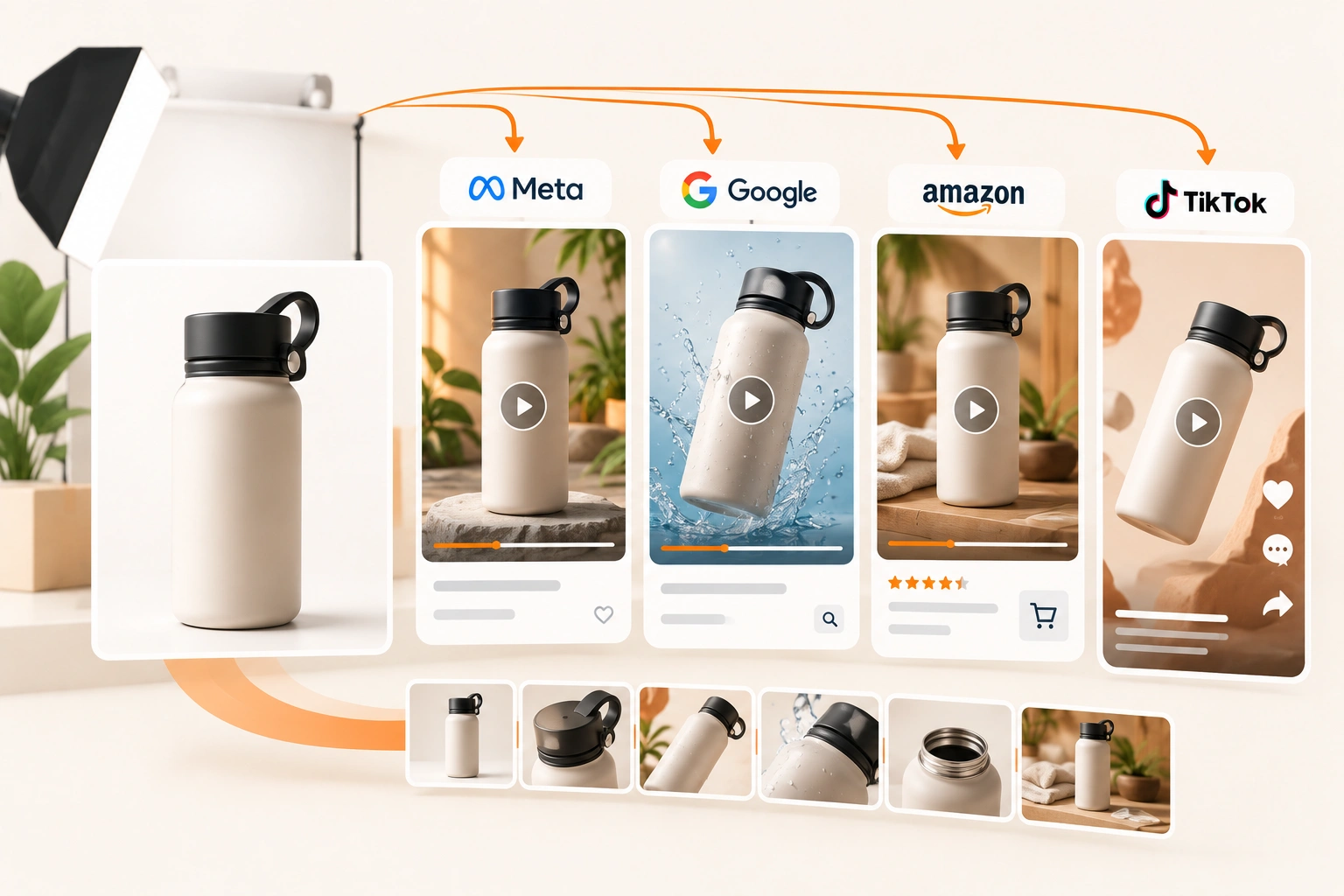
Cover the formats. Vertical video first for Reels and Stories, then static and carousel. The vertical cuts serve TikTok as well, and the video formats that sell on TikTok Shop overlap with Meta's prompts more than they differ.
Build the source library once. Several angles, close detail and lifestyle scenes give every concept something new to show; eCommerce product photography that sells covers the shoot.
Retire on the status, test concept against concept. When the Delivery column shows Creative fatigue, replace the concept rather than its headline, and test a new idea against an old one rather than one headline against another. In the fourth quarter, when Q4 advertising budgets rise and a small set tires sooner, have the next concepts made before the current ones fade.
Where we fit
Meta's system now does much of the targeting a media buyer once did, which moves the work into the brief. Planning concepts the system can tell apart, making them across formats and people, and retiring them on evidence is the centre of our Meta advertising work. If your Delivery column shows Creative limited, a look at how many genuinely different ideas the account is running is where we would start.
Frequently asked questions
The questions that come up most often on this subject.
Running ads that differ in theme, message and visuals, rather than many versions of one ad. Meta describes it as a wide range of ad creatives with different themes, messages and visuals, and a post on its business news site says the delivery system rewards a diverse mix more than repeated variations of similar assets.
Meta says that when creative is too similar its system may not recognise it as different and could deliver it to the same audiences, which limits reach. It has not published how similarity is measured. Agencies quoted by Marketing Brew in September 2026 report that ads sharing a look or an opening hook are treated as the same creative.
Meta's page points to the Delivery column in Ads Manager, where Creative limited and Creative fatigue statuses appear. Agencies also report a Creative diversity column rating ad sets Low, Medium or High, found under Customize Columns; Meta has not described it on a page we could read, so check whether your account has it.
Meta's most specific advice, from November 2024, was at least 20 diversified ads in Advantage+ shopping campaigns, 20 to 30 percent of the ad budget on testing new ads, and new ads launched weekly. The count only helps if the ads are genuinely different concepts rather than copies with new headlines.
They add variety of the asset: Advantage+ creative can animate a static image, generate new backgrounds and expand an image to other shapes. In our reading they do not add a new idea or a new person, so they work best for covering formats and placements on top of a set of different concepts.