Importer of Record for Marketplace Sellers: What CBP Changed in 2026 and What to Check
CBP can now void an importer of record number over inaccurate identity data, and foreign importers face new restrictions and extra broker vetting. What has been announced, what is only reported, and what a marketplace seller importing stock should check.


Loading Article banner
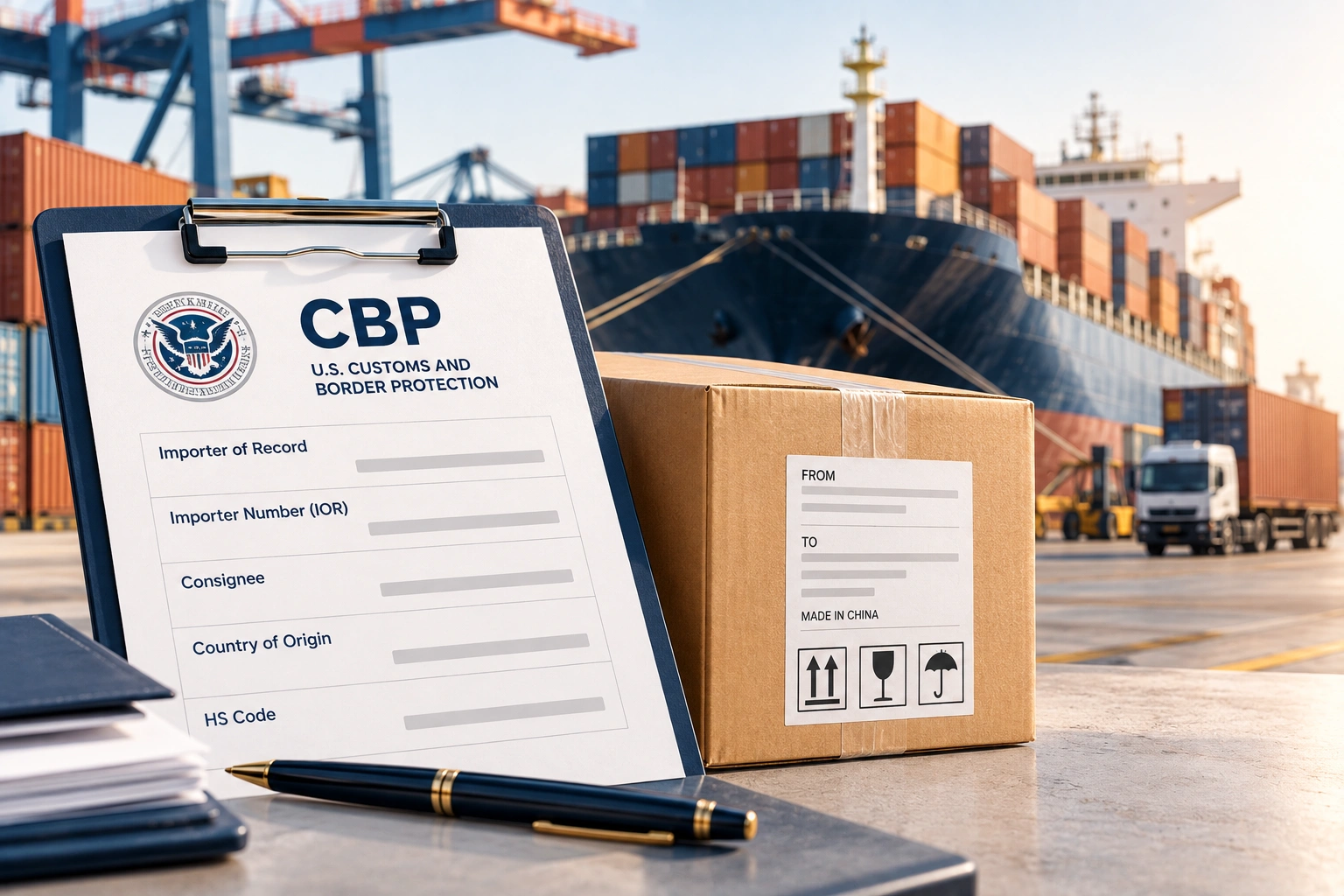
Every unit that reaches a US fulfilment centre from overseas crossed the border under somebody's name. That name is the importer of record, and for a good many marketplace sellers it is not their own: the supplier ships with duties paid, a forwarder offers to act as importer, or an overseas company the seller controls is named on the entry. It has worked, in the sense that the stock arrived.
In 2026, US Customs and Border Protection began changing who can be named and what happens when the details behind that name are wrong. CBP's page on strengthening customs enforcement, last updated on 2 September 2026, sets out what has been decided so far. None of it is aimed at marketplaces, and all of it reaches sellers who import stock. We are not customs brokers and this is not legal advice; it is what the announcements say, and the questions a seller should put to the broker who is.
What the importer of record is
The importer of record is the party responsible for an entry: that the goods are declared, classified and valued correctly, and that the duties are paid. Its identity is registered with CBP on Form 5106, and the number that comes from it goes on every entry made in its name.
The marketplace is not the importer. Neither is the fulfilment centre that receives the stock. Whatever is decided at the border about the importer's number decides whether the stock gets as far as the inbound rules at all, and the duties that party pays are the ones covered in what import duties cost a seller.
What CBP has announced
The starting point is Executive Order 14411, which, in CBP's words, "directs comprehensive reform of U.S. customs and trade laws to strengthen enforcement, combat duty evasion, modernize processes, and protect national security and the domestic economy." Several changes have followed.
Importer identity. A Federal Register notice titled "Accuracy of Importer of Record Data Submitted to CBP" was published on 19 August 2026 and takes effect 30 days after publication. Under it, "CBP may immediately void an associated IOR number and take other appropriate enforcement actions if CBP determines that the CBP Form 5106 information is inaccurate or incomplete." A voided number is not a fine or a delay. It is an importer that cannot make entries until the problem is resolved.
A new status. An "Inactive for Entry Purposes" status went live in ACE, CBP's system for trade filings, on 16 July 2026. CBP's page does not set out who it applies to, so the question to ask a broker is simply whether any number you rely on carries it.
Foreign importers. CBP says foreign importers will face restrictions on their ability to file entry, because of "the inherent risks posed by foreign importers, particularly when assets, operations, and key individuals are located outside the United States." In the meantime, CTPAT-validated customs brokers must do "additional vetting on their foreign importer clients" to "ensure that foreign importers are held to the same rigorous standards as U.S. importers."
A consultation. CBP has published an advance notice of proposed rulemaking, the stage before a rule is written, through which it will "solicit feedback from the trade community to consider data availability, protection of business-sensitive information, and potential impacts on small businesses." Comments close on 1 December 2026.
Reported, not yet on CBP's page
Trade lawyers writing about the order report that further changes are expected later in the year, including higher bond and asset requirements for importers and more disclosure about who owns them. CBP's page does not yet set those out, so treat them as reported rather than settled, and plan for the possibility rather than the detail.
Why it matters to a marketplace seller
The risk is not a bigger duty bill. It is stock that does not clear. An importer number voided over an out of date address, or a foreign importer whose broker now needs more before filing, means containers waiting at a port while listings run down. A seller who planned the fourth quarter around stock landing in October carries the cost of that delay in lost sales and in deal windows they can no longer fill.
Sellers who sell direct from their own store as well as on marketplaces have a second version of the same question on outbound orders, covered in duties at checkout.
What to check this month
Find out whose name is on your entries. Ask your forwarder or broker for the entry summaries of your last few shipments and read the importer on each. If the answer surprises you, that is the first finding.
If the importer is your company, check the details on Form 5106 are current: the company name, the address and the identifying numbers, as they are now rather than as they were when the account was opened. Accurate and complete is the standard CBP has set.
If the importer is a foreign company, yours or your supplier's, ask your broker what the additional vetting means in practice, how long it adds, and what they will need from you. Whether a US company should be the importer instead is a question about structure as much as customs, and it belongs in the same conversation as how the business is set up.
Build slack into inbound plans for the next two quarters while the changes settle, and put 1 December in the diary if the consultation affects you.
What we do with it
For the brands we run, the importer of record is a line in the compliance review, not a detail left to the forwarder: whose name is on the entries, whether the identity data behind it is current, and whether the inbound plan can absorb a delay at the border. When the answer needs a customs broker or a lawyer, we say so and bring them in, which is how marketplace compliance works for every account.
Frequently asked questions
The questions that come up most often on this subject.
The importer of record is the party responsible for a customs entry into the United States: that the goods are declared, classified and valued correctly, and that duties are paid. Its identity is registered with CBP on Form 5106.
Yes. Under a Federal Register notice published on 19 August 2026, taking effect 30 days later, CBP may immediately void an importer of record number and take other enforcement action if it determines that the Form 5106 information is inaccurate or incomplete.
For now, yes, but CBP says foreign importers will face restrictions on their ability to file entry, and CTPAT-validated customs brokers must do additional vetting on their foreign importer clients. Ask your broker what that means for your shipments.
It is the executive order that, in CBP's words, directs comprehensive reform of US customs and trade laws to strengthen enforcement, combat duty evasion, modernize processes, and protect national security and the domestic economy. CBP's page on strengthening customs enforcement lists the changes that have followed from it.
The marketplace and its fulfilment centres receive the stock, but the importer of record is whoever is named on the customs entry, usually the seller, the supplier or an importer arranged through a forwarder. Check the entry summaries for your shipments to see whose name is on them.