Trademarks for Amazon Stores Outside the US: The Madrid Route From a US Application, and What Changed in 2026
Amazon recommends a trademark for each country store a brand sells in. How the Madrid Protocol extends a US application to other countries, what changed in 2026 with WIPO's Madrid e-Filing and Saudi Arabia joining, and the five-year link to the US filing that decides whether it suits a young brand.


Loading Article banner
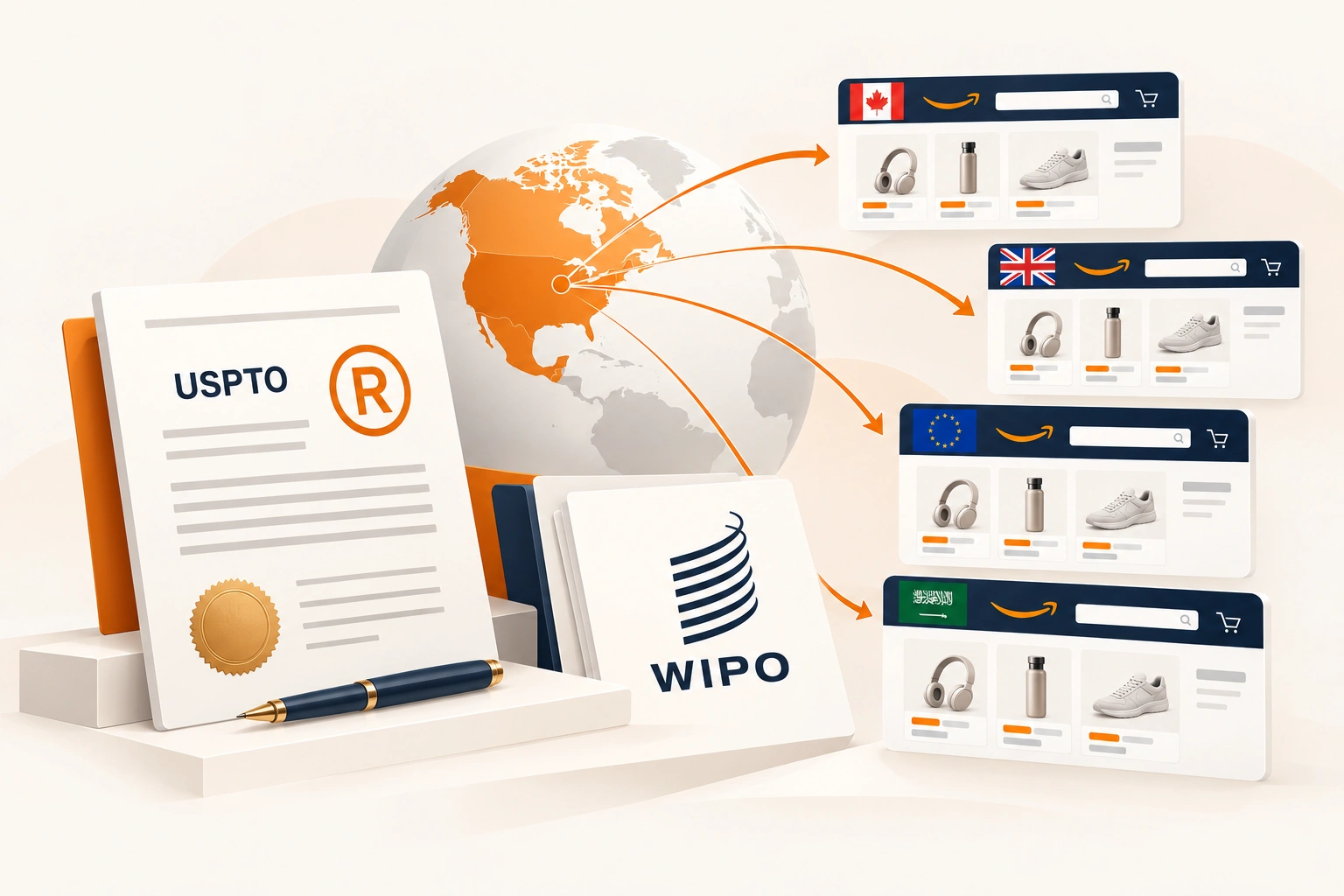
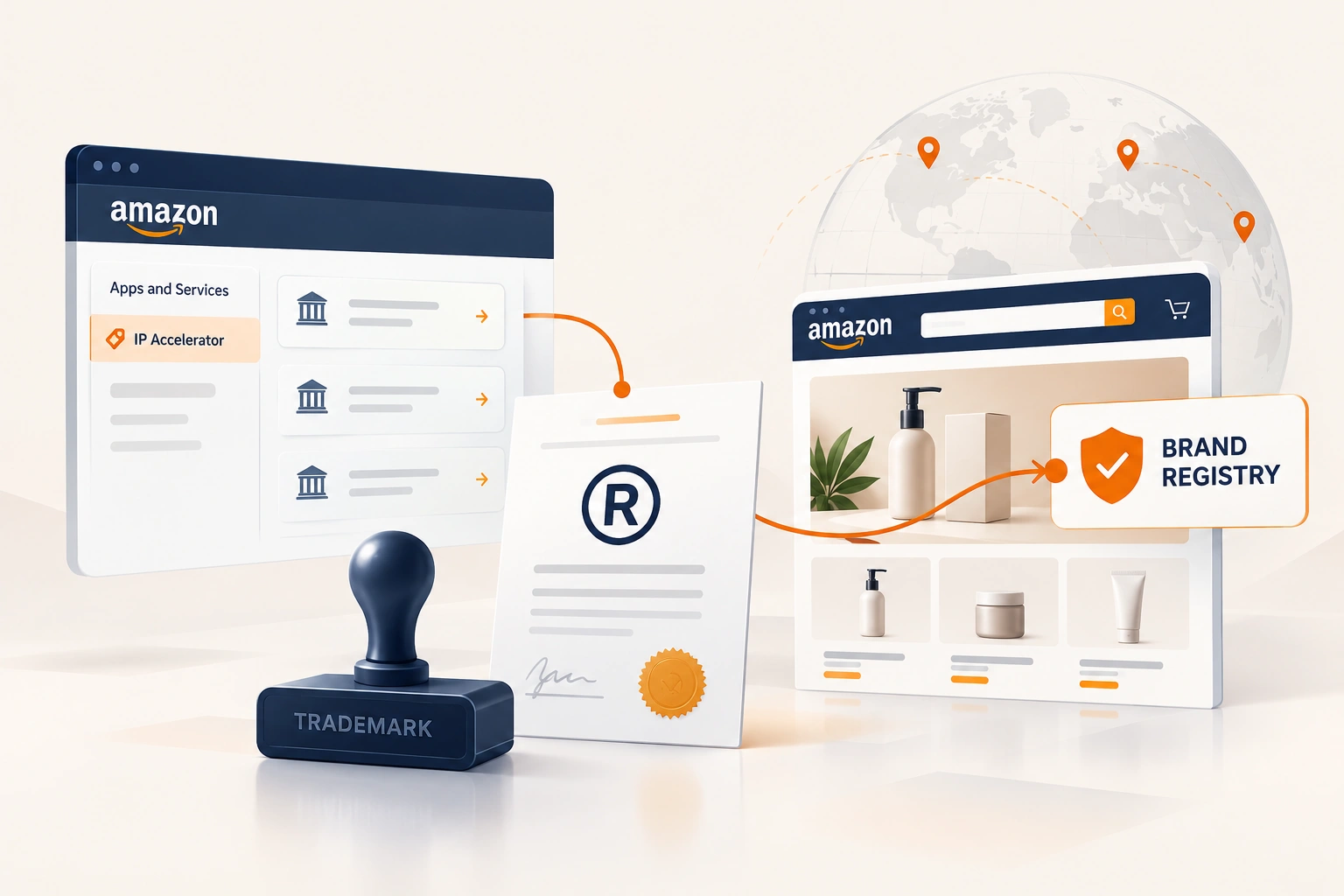
A US brand opening an Amazon store in the UK, Germany, Canada or Saudi Arabia meets the same question at Brand Registry: does the US trademark cover it? Amazon's page answers it. The mark has to come from "the designated government trademark office of a country with a corresponding Amazon store", and the advice is plain: "We recommend submitting trademarks for each country-based Amazon store you want to sell in."
A US filing is a US right. What it can be is the starting point for the others, through the Madrid Protocol, and that route changed twice in 2026. This is how it works for a brand that sells on Amazon, what changed, and the link to the US application that decides whether it suits a young brand.
What Amazon asks for, store by store
Brand Registry accepts "an active, registered trademark or a pending trademark application" for the brand name or logo, and "Your trademark text must match the brand name on your Brand Registry application." At enrolment a brand selects one country's office, and Amazon says marks from other countries' offices can be added once the enrolment is approved.
Access and enforcement are not the same thing. An Amazon moderator answered on the UK Seller Forums, three years ago by the forum's own date, that a brand can reach Brand Registry's tools in another store with an account in that store, but that reporting infringement there through Report a Violation needs a trademark registered in that store. That is an old forum answer, not Amazon's current page, so confirm it in the store you are opening. It points the same way as the page's advice: Brand Registry's protection tools are only as strong as the mark behind them in that country.
Three ways to a mark in another country
There are three routes, and a brand can mix them.
A national filing with each country's office, under that office's rules, fees and language.
A regional right where one exists. The EU trade mark regulation says an EU trade mark "shall have a unitary character. It shall have equal effect throughout the Union", so one EU right serves Amazon's stores in EU countries such as Germany, France, Italy and Spain. The UK is outside it, and is a separate member of the Madrid System.
An international application under the Madrid Protocol: one application, based on the US one, designating the members the brand wants. WIPO counts 117 members covering 133 countries, the European Union, the UK, Canada, Mexico, Japan, Australia and India among them.
How the Madrid route works from a US application
The owner of a US application or registration who "is a national of, is domiciled in, or has a real and effective industrial or commercial establishment in the United States" files the international application with the USPTO as the office of origin. The USPTO certifies that it corresponds to the US basic application, WIPO's International Bureau registers it, and each designated office examines it under its own law. The Protocol gives that office one year to notify a refusal, or 18 months where the country has declared the longer period.
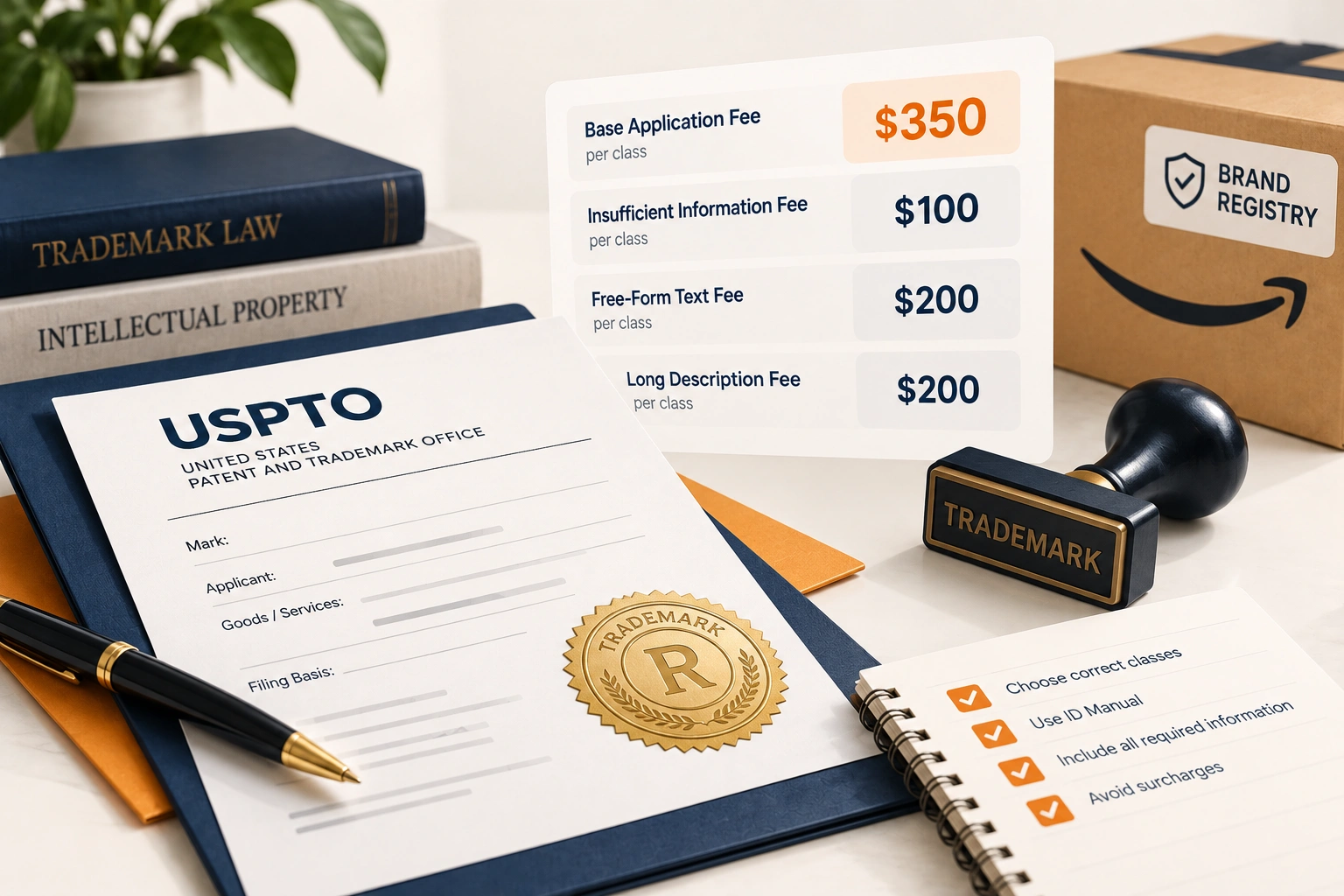
The fees are in Swiss francs. WIPO's schedule, in force since 1 February 2023, sets a basic fee of 653 francs, or 903 where the mark is in colour, 100 for each class beyond three, and for each country designated either a complementary fee of 100 or an individual fee that country sets. The USPTO's certification fee is $100 per class for an electronic application based on one US filing. These are WIPO's and the USPTO's fees, paid to them.
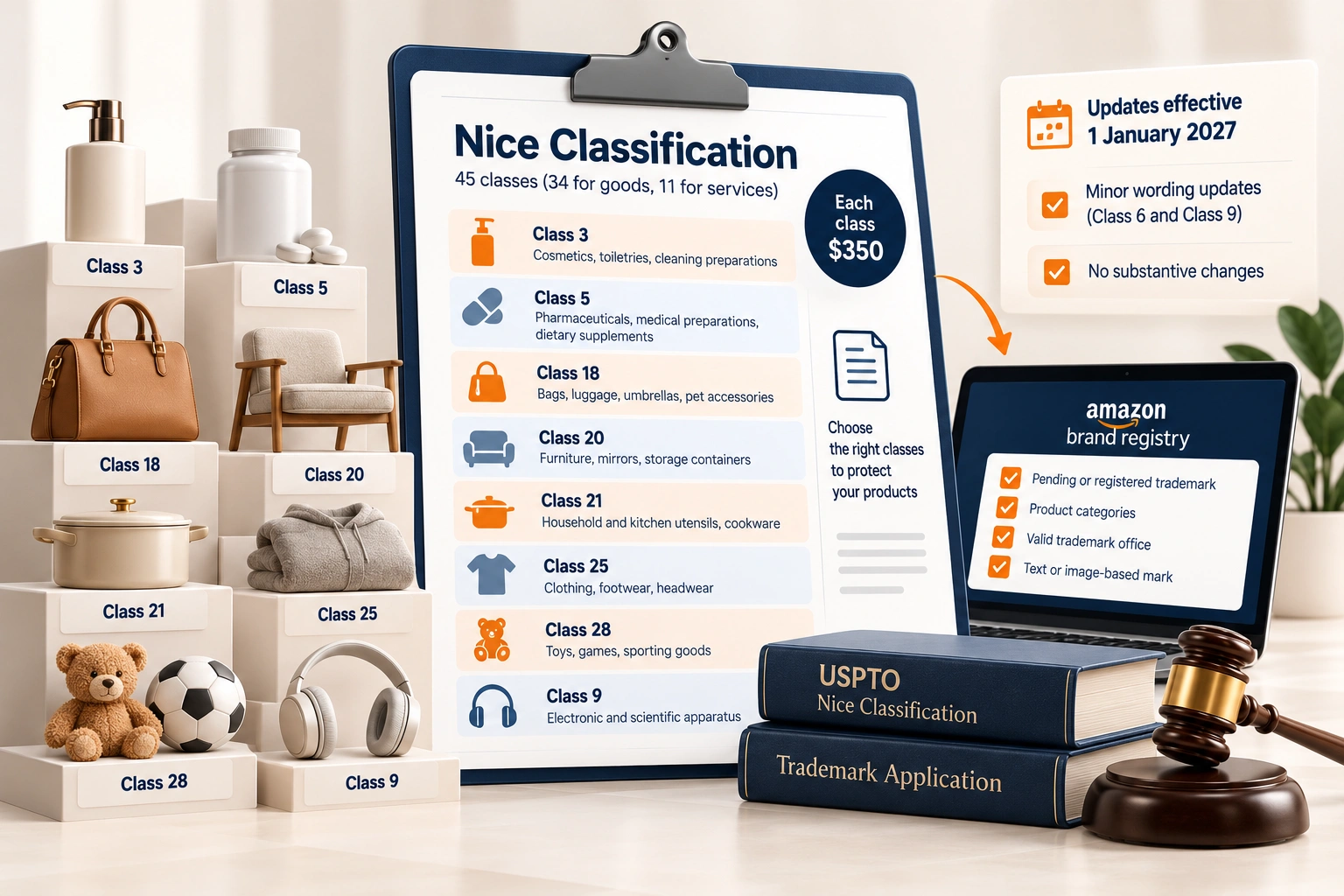
The goods are capped by the US filing. The USPTO accepts amendments to the goods only "within the scope of the identification in the U.S. basic application". A narrow US description becomes a narrow description in every country, which is why the classes and the wording are worth settling before the US filing, not after it.
What changed in 2026
A new filing system, from 31 July 2026. The USPTO's notice in the Federal Register of 15 July 2026 designated WIPO's Madrid e-Filing for international applications from the US, available from 31 July. The USPTO's own form "will remain available until at least September 2026 when Madrid e-Filing becomes the sole platform". Filing now needs a WIPO Account, and payments, the USPTO's certification fee included, "will be processed in Swiss francs" by WIPO current account, card, e-wallet or PayPal.
Two changes help a first-time filer. When an application cannot be certified, the USPTO can now email a correction request with a short window to fix it, where it would have issued a denial; it expects this to "significantly reduce the number of certification denials". The certification fee is still not refunded when certification is denied. And the record has moved: documents filed through Madrid e-Filing are viewable only there, and the USPTO's public database shows the reference number and the filing date. Whoever holds the WIPO Account holds the file, so it should belong to the brand, not to whoever filed for it.
Saudi Arabia, from 8 October 2026. WIPO announced on 23 July 2026 that the Protocol would enter into force in Saudi Arabia on 8 October, and that a brand which already holds an international registration "can expand protection to include Saudi Arabia." For a brand on Amazon's Saudi store, that is a designation added to a registration it may already have, not a new filing.
The catch: five years tied to the US filing
For five years from the international registration, its protection depends on the US basic application. Article 6 of the Protocol says protection "may no longer be invoked if, before the expiry of five years from the date of the international registration," the basic application or registration has been withdrawn, has lapsed, has been renounced, or has been finally rejected, revoked, cancelled or invalidated, for the goods affected. After five years the international registration stands on its own.
For a brand whose US application is still being examined, every country rides on the US result. A US refusal for likely confusion with an earlier mark, or a lapse because a deadline was missed, takes the designations with it. The Protocol leaves a way back: within three months of the cancellation, the brand can file national applications in those countries and keep the international registration's date.
Our view, which is a judgement and not a rule: Madrid suits a brand whose US mark is registered, or well into examination without an objection, and which wants several countries. A brand with a new US application and one urgent store abroad may be better served by filing in that country directly, so the store does not wait on the US. The fees are part of that choice, and what the US filing itself costs is the first line of it.
The order we work in
The US filing first, done carefully. Its classes and wording cap every other country.
The stores, with dates. Which Amazon stores the brand will open, and when. Amazon's 2026 expansion tools make opening a store easier; they do not file the trademark.
A route for each country. A Madrid designation, a direct filing, or the EU right for the EU stores, chosen by the state of the US application and the dates.
Each mark into Brand Registry as it is filed or registered, so each store has its own office's mark behind it.
The account and the deadlines with the brand. The WIPO Account, the refusal periods and the five-year date belong in the brand's own records, not in a freelancer's inbox.
Where we fit
Our trademark registration service prepares the US filing with the brand and plans the countries that follow it, store by store. We are not a law firm and do not give legal advice; where an attorney or a local representative is required, the work runs through independent counsel. If you are opening a store abroad in the next year, the state of your US application is the first thing we would look at.
Frequently asked questions
The questions that come up most often on this subject.
Not as a rule. Amazon asks for a trademark from the government office of a country with an Amazon store, and recommends a trademark for each country store a brand sells in. A US mark is a US right, but it can be the basis of an international application under the Madrid Protocol that extends it to other countries.
A treaty administered by WIPO that lets a trademark owner file one international application, based on a home application or registration, and designate other member countries. WIPO counts 117 members covering 133 countries, including the European Union, the UK, Canada, Mexico, Japan, Australia, India and, from 8 October 2026, Saudi Arabia.
Yes. A pending US application can be the basis. For five years the international registration depends on it, so if the US application is refused, withdrawn or lapses in that time, the protection it supports falls for the goods affected, with three months to turn the designations into national applications that keep the original date.
WIPO's basic fee is 653 Swiss francs, or 903 for a mark in colour, plus 100 for each class beyond three and a fee for each country designated, either 100 or an individual fee that country sets. The USPTO's certification fee is $100 per class for an electronic application based on one US filing.
Through WIPO's Madrid e-Filing, designated by the USPTO from 31 July 2026, which needs a WIPO Account and takes payment in Swiss francs. The USPTO said its own form would stay available until at least September 2026, when Madrid e-Filing becomes the only route.