Scam Ads Using Your Brand: The FTC's September 2026 Review, and How to Get Impersonators Taken Down Now
The FTC is asking whether platforms should do more about ads that impersonate businesses. What it asked, what it does not change yet, and how a brand reports copies on Amazon, Facebook, Instagram and Google today.


Loading Article banner
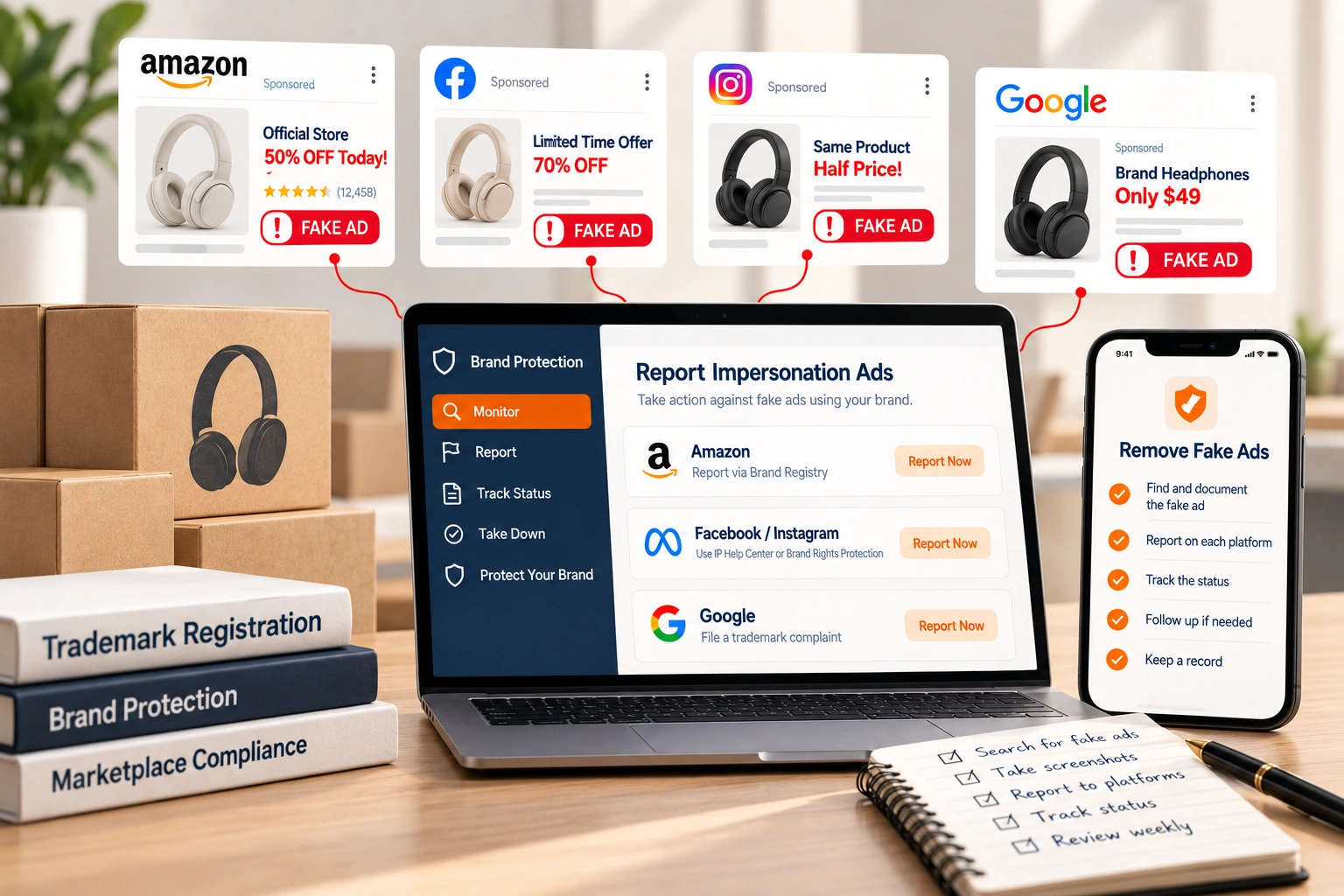
A shopper sees an ad with your product, your logo and your photographs at a price that is too good, pays, and receives nothing, or something that is not yours. Then they find your real store and write to you, angry. For a brand that advertises, this is no longer rare, and until now the only question was how fast each platform would take the copy down.
On 24 September 2026 the Federal Trade Commission asked a larger one: whether the platforms that carry these ads should be doing more to stop them. This is what the FTC asked, what it does not change yet, and what a brand can do today on the platforms where most copies appear.
What the FTC announced
The FTC voted 2 to 0 to publish an advance notice of proposed rulemaking about its Rule on Impersonation of Government and Businesses. The rule already makes impersonating a business unlawful for the impersonator. The question now is the platforms: whether the tools that optimise and target ads help impersonation scams reach people, whether that is unfair or deceptive, and whether the problem is widespread enough to need a rule.
The measures it asks about are specific: "vetting advertisers, monitoring posted ads, investigating suspected impersonation scam ads, removing confirmed impersonation scam ads." And the scale it cites is large. People reported more than a million imposter scams in 2025, with "$3.5 billion" in reported losses; nearly 30% of victims were first contacted on social media, accounting for "$2.1 billion" of it.
What it does not change yet
An advance notice is the first step of rulemaking, not a rule. It places no new duty on any platform today, and it may never lead to one. The FTC's own words on timing: "The deadline for submitting comments will be 60 days after the notice is published in the Federal Register." Comments go to Regulations.gov.
So for now a brand's protection rests on two things: the platforms' own policies, and the rights the brand can prove it holds. Both are worth putting in order before the next copy appears rather than after.
The foundation: a registered trademark
Every platform acts faster on a right it can check. Amazon's brand programme starts from a trademark, Meta's reporting forms ask which right is being infringed, and Google acts on complaints from the owner of the mark. A brand name that is only a name gives a platform nothing to verify.
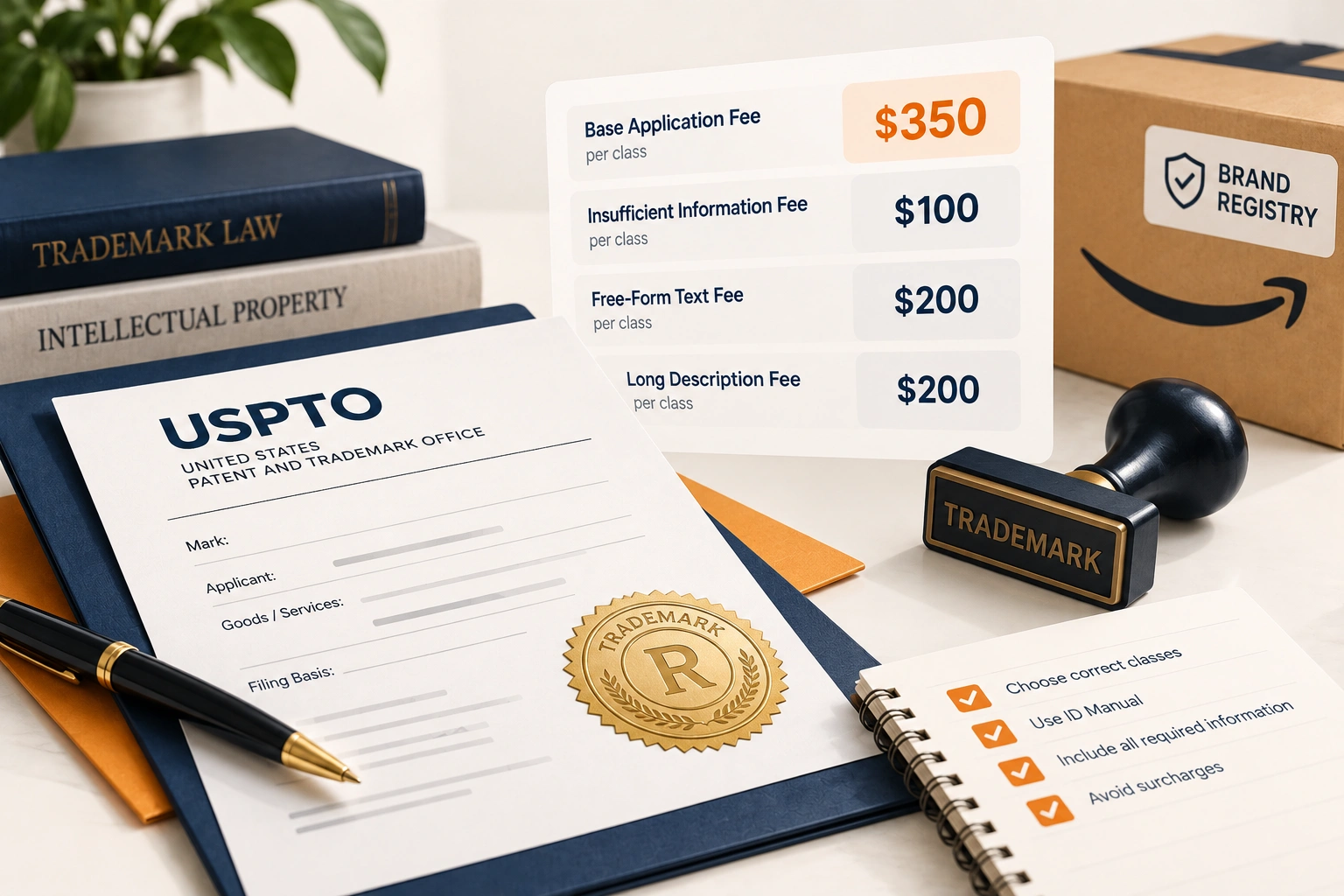
If the brand has no registered mark, that is the first job, and a pending application already counts on Amazon. Our trademark registration service prepares the filing; we are not a law firm, and where an attorney is required the filing runs through independent counsel.
On Amazon: Brand Registry
Amazon's condition is stated plainly: "You must have an active, registered trademark or a pending trademark application for your brand name or logo." Once enrolled, the protection tools Amazon lists are Transparency, Report a Violation, Project Zero and the Counterfeit Crimes Unit. Report a Violation is the everyday one: search the store for the brand, the logo or the product images, and report the listing that misuses them.
What each tool does, and how they fit together, is in Brand Registry and listing protection. Our Brand Registry service enrols the brand and runs the reporting.
On Facebook and Instagram
Meta's ad policy already forbids the copies. Ads may not "Promote or sell counterfeits, knockoffs, or replicas of another company's products," and may not be "likely to confuse people about the source, sponsorship or affiliation of the goods or services."
Meta names two routes for a rights owner. The Intellectual Property Help Center takes reports one at a time. Brand Rights Protection is a programme a brand applies to: when Meta launched its current version, it described a tool to find and report counterfeit, trademark, copyright and impersonation problems across ads, Facebook Pages, Instagram accounts, Groups and posts, from inside Business Manager. For a brand that is copied often, the programme is the one worth applying for, because it searches rather than waiting for somebody to notice. And a brand that runs its own Meta Ads has a second reason to act quickly: a copy running beside the real campaign competes for the same shoppers with the same pictures.
On Google
Google's trademark policy restricts ads that use a trademark "in a confusing, deceptive, or misleading way," with room left for resellers and for sites that inform about the product. It does not restrict a trademark as a keyword. A complaint goes through Google's legal reporting route, and it has to name the advertiser: "Google will only accept complaints against specific advertisers identified on the basis of their URL(s)." So record the address the ad leads to before reporting it, because an ad that has rotated away is hard to name.
A routine that keeps up
Once a week, search for the brand where copies appear: the Amazon store, Meta's public Ad Library, Google results for the brand with words like sale or discount. Capture each copy with its address, a screenshot and the date. Report it through the route above, and keep a log of what was reported and what came down, because a pattern across platforms is exactly the evidence the FTC's questions ask for.
Then make the real store easy to find. List your official shops and profiles on your own site, so a customer who suspects a copy can check in one place. And answer the customers who were caught with a reply ready to send, since the ones who write to you are the ones still willing to buy from you.
Should a brand comment to the FTC?
If the brand has been copied in ads, it holds what the FTC is asking for: how the copies were targeted, how long they ran, what the platforms did when told. A comment with dates and screenshots is more useful to a rulemaking than an opinion, and the window is sixty days from publication. It is optional, and it does not change what can be done this week, which is the list above.
Frequently asked questions
The questions that come up most often on this subject.
On 24 September 2026 the FTC voted to publish an advance notice of proposed rulemaking asking whether platforms' ad optimisation helps impersonation scams, and whether platforms should vet advertisers, monitor ads, and investigate and remove impersonation scam ads. Comments are due 60 days after it is published in the Federal Register.
Through Meta's Intellectual Property Help Center, one report at a time, or through Brand Rights Protection, a programme brands apply to that searches ads, Pages and Instagram accounts for impersonation, counterfeits and trademark or copyright misuse.
File a trademark complaint through Google's legal reporting route. Google only accepts complaints against specific advertisers identified by their URLs, so record the address the ad leads to. Google's policy does not restrict using a trademark as a keyword.
Amazon Brand Registry requires an active registered trademark or a pending trademark application for the brand name or logo. Enrolment gives access to Report a Violation, Transparency, Project Zero and the Counterfeit Crimes Unit.
No. An advance notice of proposed rulemaking starts the process and places no new duty on platforms. Until a rule is made, if one is, removal depends on each platform's own policies and on reports from the brand.