Amazon IP Accelerator: How It Works and When a Brand Should Use It
IP Accelerator puts a brand in touch with trademark firms Amazon has vetted, at rates Amazon has negotiated for some services, and lets it enrol in Brand Registry once the application is pending. How it works, what it does not include, and when it is the right route.


Loading Article banner
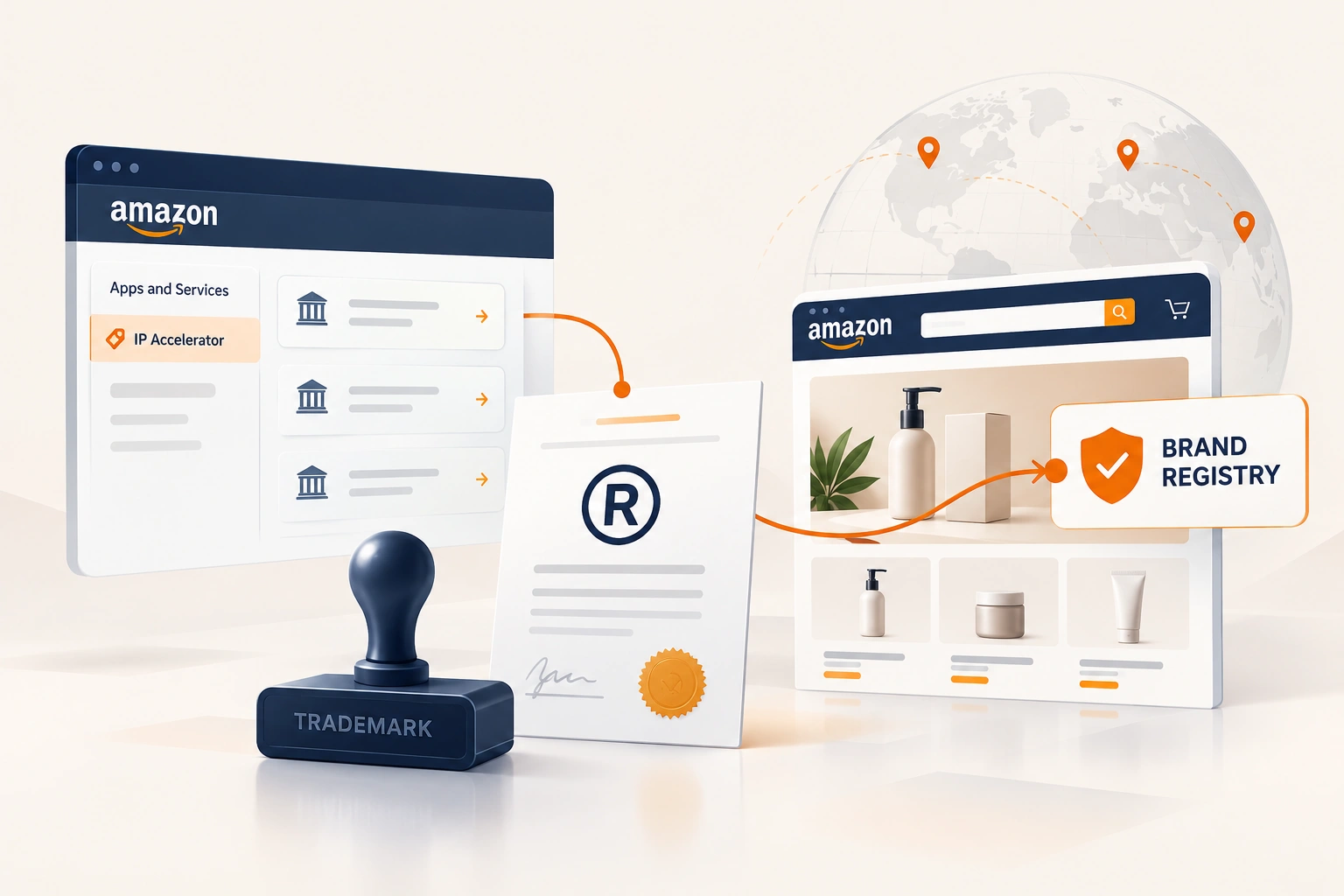
A brand without a registered trademark meets the same wall on Amazon sooner or later. Brand Registry asks for a trademark, registration takes as long as the trademark office takes, and in the meantime the listings are open to the hijacking and the unwanted edits Brand Registry exists to stop.
Amazon's IP Accelerator is its answer. In Amazon's words, it "connects you with a network of vetted legal service providers that offer trademark support and other intellectual-property services." This is how it works, what it changes about Brand Registry, what it does not include, and when it is the right route compared with filing another way.
What IP Accelerator is
Amazon says it built the programme "with small and medium businesses in mind". It is a directory of legal service providers inside Seller Central, not a filing service run by Amazon: "Amazon doesn't charge a fee to connect you with service providers. When you select a service provider, you work with and pay them directly."
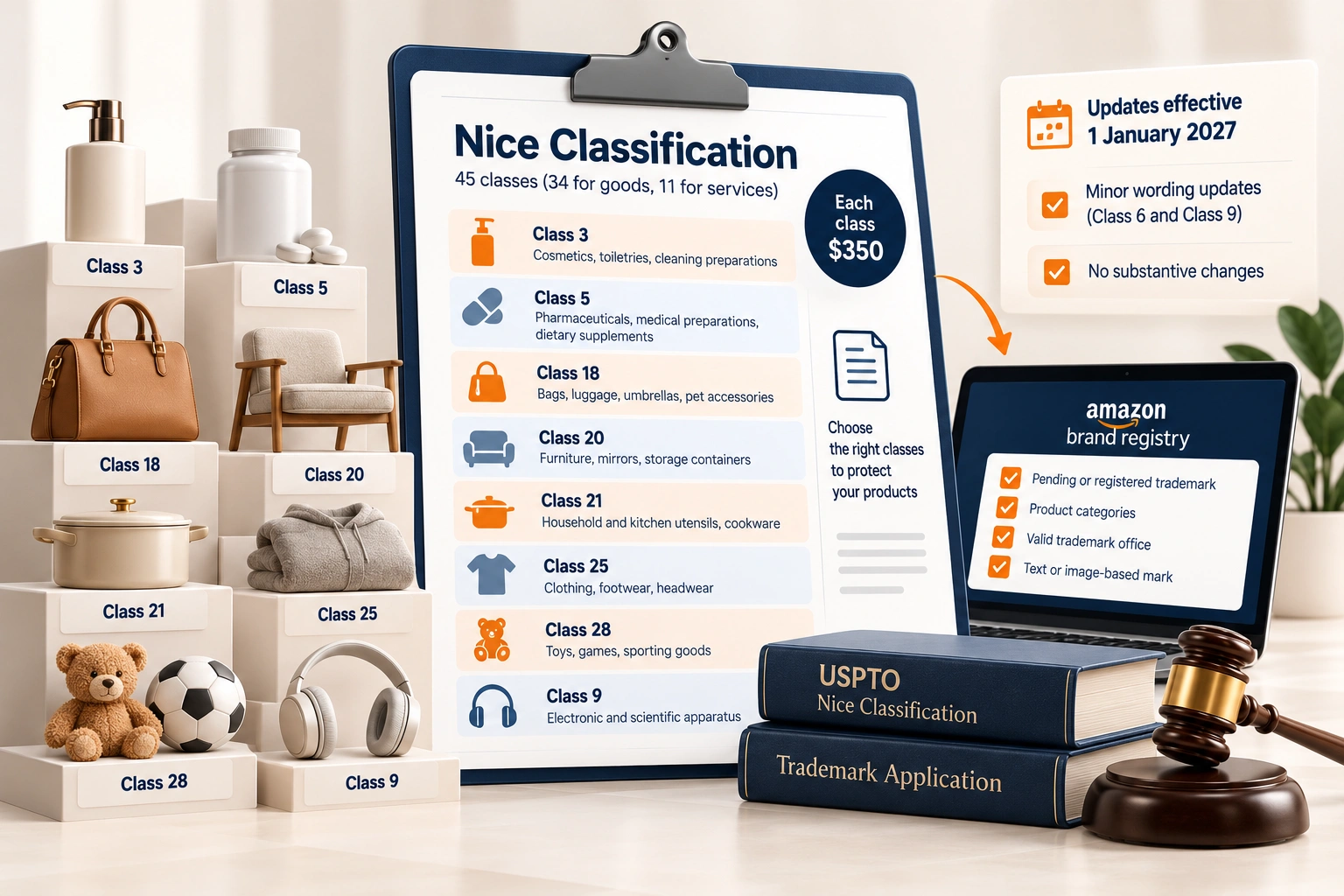
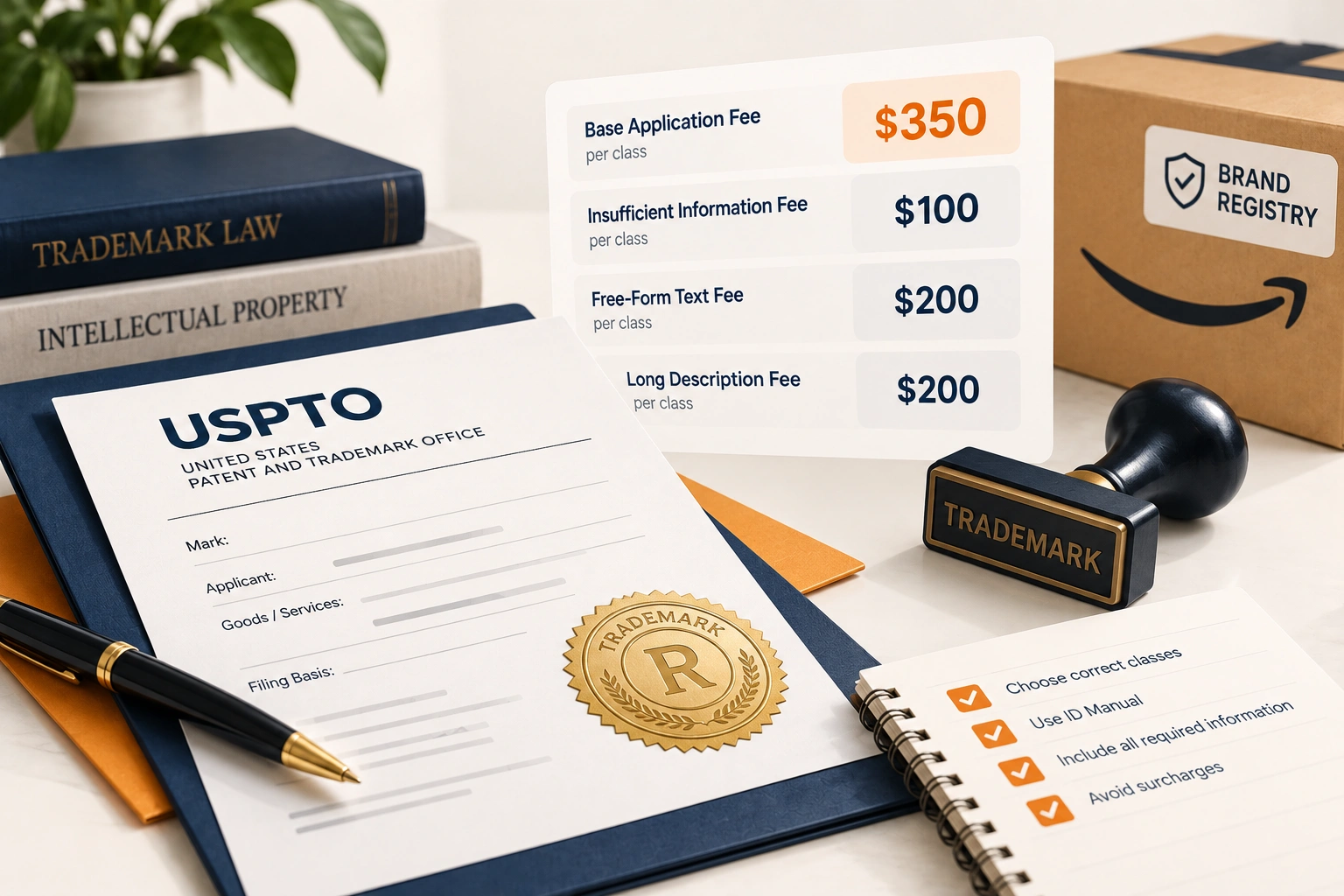
The price is partly fixed. "Amazon has pre-negotiated rates for certain services covering a single brand for a single class of goods or services", and anything wider costs more: "Additional fees will apply for other services, including searching for multiple brands or filing for additional types of intellectual property." The trademark office's own fees are on top; the USPTO's filing fees sets out the American ones.
The reach is wide. "IP Accelerator supports trademark filings across 22 trademark offices worldwide, with assistance available in 18 languages", and Amazon credits its network of firms with trademark protection for "33,000+ brands".
The Brand Registry shortcut
This is why most brands use it. Amazon's page says participants "can access a broader range of brand protection benefits sooner, even if their trademark registration is still pending", and its FAQ is plain: "Once your application is pending, you can enroll in Brand Registry."
Brand Registry's own page is more guarded about a mark filed another way: "In some cases, you may also enroll with a pending trademark registration." Through IP Accelerator a pending application is enough; outside it, it is a case by case question.
Two limits apply either way. Enrolment is not every tool: "each tool has its own access requirements", so some benefits may wait on further conditions. And the basics of Brand Registry still hold: the trademark text must match the brand name on the application, and the brand name has to be on the product or its packaging.
How it works, step by step
Log in to Seller Central; Amazon recommends a Professional account. Then, in Amazon's words, "click Apps and Services, then Explore Services", select IP Accelerator and browse the providers. Choose one and press Contact Provider; "Providers should respond within two business days." The provider takes the application from there and tells you when you can enrol, and you then create the Brand Registry account and apply.
One detail catches people. If a Brand Registry account already exists, Amazon asks you to "make sure the email address associated with your request matches the address you use to log into Brand Registry."
Timing belongs to the trademark office, not to Amazon: "Trademark registration times vary by trademark office." What the programme shortens is the wait for Brand Registry, not the wait for the registration.
What to have ready before contacting a provider
A provider can only file what it is given, and a request that arrives complete is quicker to answer. Have the brand name exactly as it appears on the product and the packaging, and the logo if the logo is to be protected too. Have a plain list of what the brand sells, in the words a customer would use, because the description of goods is built from it and decides the classes. Have the countries, now and in the next two years. And decide who will own the mark, the company or a founder, before anything is filed, since Brand Registry will follow the owner.
It is also worth a first look at the trademark office's own search before paying for anything. Finding an identical name already registered for the same kind of product is a five minute answer that saves a filing fee, and a provider's full search is still worth having afterwards.
Using the time between enrolment and registration
Enrolment on a pending application opens a window that is worth using. Build the brand's A+ Content and Brand Story, set up the Store, and start reporting the listings that misuse the name, so the brand's pages are the ones customers see while the registration is still in the office's queue.
Keep the application moving too. Amazon's FAQ says you can ask your service provider about the status of your trademark application at any time, and an examiner's question answered quickly is weeks saved. A pending application is a promise of a registration, not the registration itself, so the filing deserves the same attention after enrolment as before it.
What it does not do
It does not choose the classes or write the description of goods for you. The provider does that with you, and the rate Amazon negotiated covers one brand in one class; a brand selling across several classes pays for each.
It does not make a weak mark strong. A descriptive or common name meets the same examination whichever route files it, and a search before filing matters more than the route.
It does not police the marketplace. Registration and enrolment hand the brand the tools; somebody still has to use them, every week: watching the brand's listings, reporting what is wrong with them, and answering whatever Amazon sends back about each report.
And it does not change who owns the result. Brand Registry's page says "You must be the trademark owner"; an agent or agency is added as a user afterwards rather than enrolling the brand itself, so the application should be in the owner's name whoever files it.
IP Accelerator or another route
Three questions decide it. If Brand Registry protection is urgent, because listings are being hijacked or edited now, the pending-application enrolment is the strongest reason to use the programme. If the brand already has a trademark adviser who knows its products, there is little to gain from changing provider, and the only question for Amazon is whether that filing qualifies under the in some cases rule. If the brand plans filings in several countries, the 22 offices are a convenience worth checking against the markets it intends to enter.
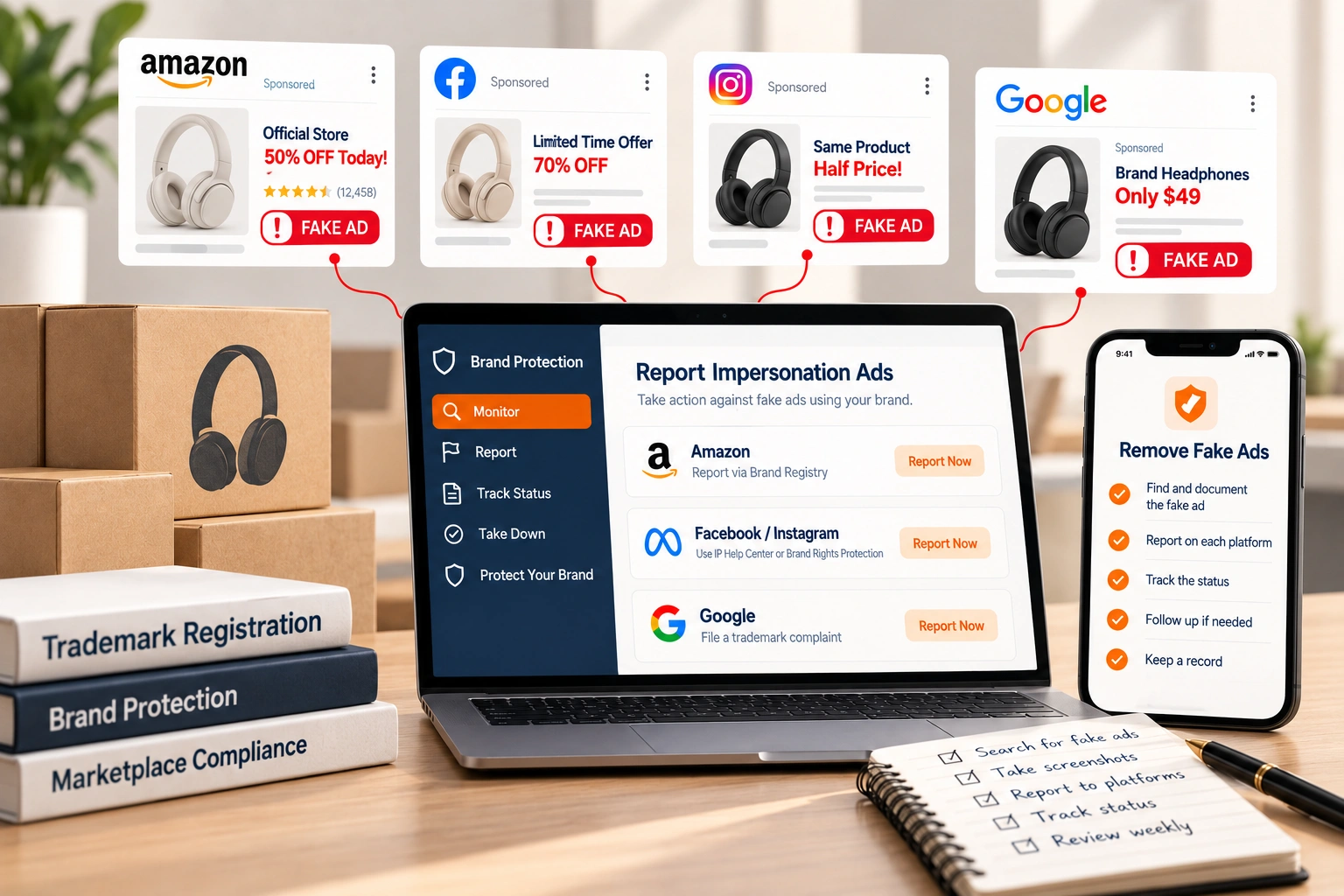
Once enrolled, the tools are the point. What Brand Registry protects covers them, how to report impersonation covers the scams that borrow a brand's name, and brand approval and ungating covers the separate gate a brand meets when selling in a restricted category.
How we approach it
Our Brand Registry work starts with the trademark, because everything else depends on it. Where a brand has no application yet, we compare the routes with it, IP Accelerator included, and our trademark filing assistance where that fits better. Where an application is pending, we enrol as soon as the route allows and switch the protection tools on in the order the listings need them.
Frequently asked questions
The questions that come up most often on this subject.
A programme in Seller Central that connects brands with a network of vetted legal service providers for trademark registration and other intellectual property services, at rates Amazon has pre-negotiated for some services. Amazon charges nothing for the connection; the brand pays the provider directly.
Through IP Accelerator, yes: Amazon says that once your application is pending, you can enroll in Brand Registry. Outside the programme, Amazon's Brand Registry page says that in some cases you may also enroll with a pending registration, so check whether your filing qualifies.
Amazon says providers should respond within two business days, and that trademark registration times vary by trademark office. Enrolment in Brand Registry can start once the application is pending, before the registration is granted.
Amazon says it supports trademark filings across 22 trademark offices worldwide, with assistance in 18 languages, among them the United States, the United Kingdom, Canada, Germany, France, Japan, India, Australia, Brazil, Mexico, Saudi Arabia and the United Arab Emirates.
No. Enrolment opens Brand Registry, but Amazon says each tool has its own access requirements, so some benefits may depend on further conditions. The trademark text must also match the brand name on the application.