Which Trademark Class Do My Products Go In? Nice Classes for Online Brands
Every US trademark application sorts its goods into the Nice Classification's 45 classes, and each class is priced on its own. How a product brand picks its classes, the headings for the classes online sellers use most, what Brand Registry asks, and what changes on 1 January 2027.


Loading Article banner
The first real decision on a trademark application is not the logo or the wording. It is the list of goods the mark will cover, and the classes those goods fall into. Each class is paid for separately, and a mark protects the goods it names, so a class chosen badly is money spent on protection for something you do not sell, or a gap where your product actually sits.
This is how the classification works, the headings for the classes product brands file in most, how many classes an online brand usually needs, and the small change that takes effect on 1 January 2027.
What a trademark class is
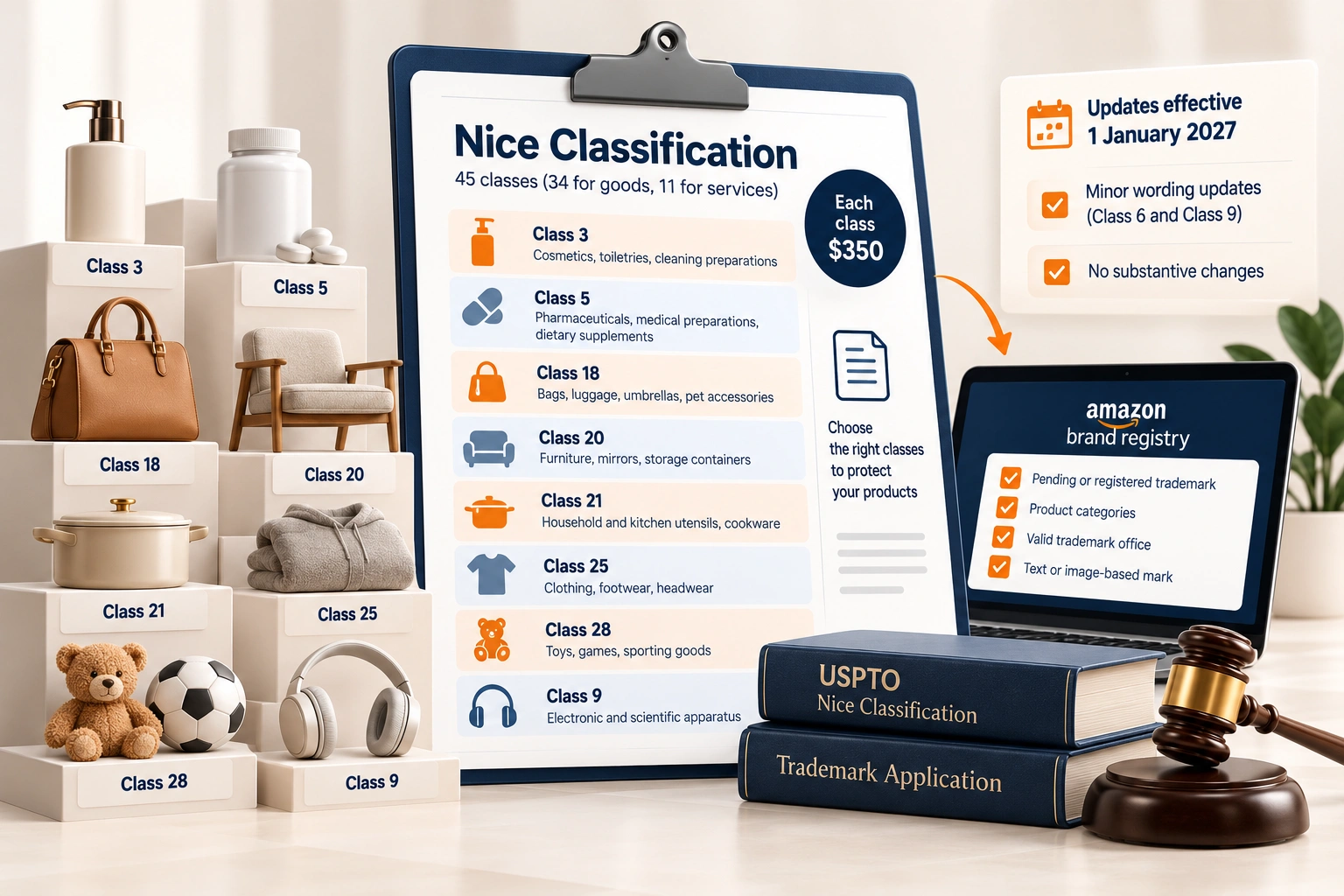
The United States sorts goods and services by the Nice Classification, an international system run by the World Intellectual Property Organization under the Nice Agreement. The USPTO's rule of 26 August 2026 sets out how it works: it has been the controlling system for every US application filed since 1 September 1973, and it has 45 classes, 34 for goods and 11 for services.
Each class has a heading. In the USPTO's words, "class headings generally indicate the fields to which goods and services belong." The heading is a guide to the field, not the description you file. The description is the list of your actual goods, and the class follows from it.
The classification is revised every year. The annual versions take effect on 1 January, and since 2023 a new edition, which can move goods between classes, is published every three years.
The classes product brands file in most
These are the official headings, from the USPTO's schedule of classes, for the classes the brands we work with meet most often. Read the heading, then find your product's wording inside it.
Class 3: "Non-medicated cosmetics and toiletry preparations; non-medicated dentifrices; perfumes; bleaching preparations and other substances for laundry use; cleaning, polishing and abrasive preparations." Skincare, shampoo and household cleaners usually start here.
Class 5: "Pharmaceuticals, medical and veterinary preparations; sanitary preparations for medical purposes; dietetic food and substances adapted for medical or veterinary purposes, food for babies; dietary supplements for human beings and animals". A supplement brand lives here, which is also why the medicated or non-medicated wording of a cosmetic matters: it decides between Class 3 and Class 5.
Class 18: "Leather and imitations of leather; animal skins and hides; luggage and carrying bags; umbrellas and parasols; walking sticks; whips, harness and saddlery; collars, leashes and clothing for animals." Bags sit here, and so do pet collars and leashes.
Class 20 covers "Furniture, mirrors, picture frames; containers, not of metal, for storage or transport", and Class 21 "Household or kitchen utensils and containers; cookware and tableware, except forks, knives and spoons". Home and kitchen brands often need both.
Class 25 is short: "Clothing, footwear, headwear." Class 28 is "Games, toys and playthings; video game apparatus; gymnastic and sporting articles; decorations for Christmas trees." Class 9 is the long one: scientific, measuring and electronic apparatus among much else. Read it in full before assuming an accessory belongs there.
How many classes an online brand needs
As many as the goods you sell or genuinely intend to sell under the mark, and no more. Under the USPTO's fee rule the base application is $350 per class, so a three-class application costs three times a one-class one before any surcharge. The USPTO trademark filing fees article sets out the base fee and the three surcharges in detail.
Two patterns cover most product brands. A brand with one line, a supplement or an apparel label, files in the one class that line falls in. A brand that sells across a category, cookware with storage containers, or skincare with supplements, files in each class its products actually occupy, which is often two.
What a brand should not do is add classes for the sake of breadth. A class pays for protection of the goods named in it, and the application names goods, not ambitions. A product range you are planning for next year is a reason to check that the name is clear in that class too, not necessarily to pay for it today.
Describe the goods from the USPTO's own list
The class heading tells you which class to look in. The description you file should come from the USPTO's Acceptable Identification of Goods and Services Manual, the ID Manual, which holds pre-approved wording for each class. Under the fee rule, typing your own description into the free-form box instead adds a surcharge per class, and a description longer than the box's first 1,000 characters adds another.
Choosing ID Manual entries does two things at once. It keeps the fee at the base, and it gives the examiner wording already accepted for that class, which removes one common reason for a description to be questioned.
What Amazon Brand Registry asks about classes
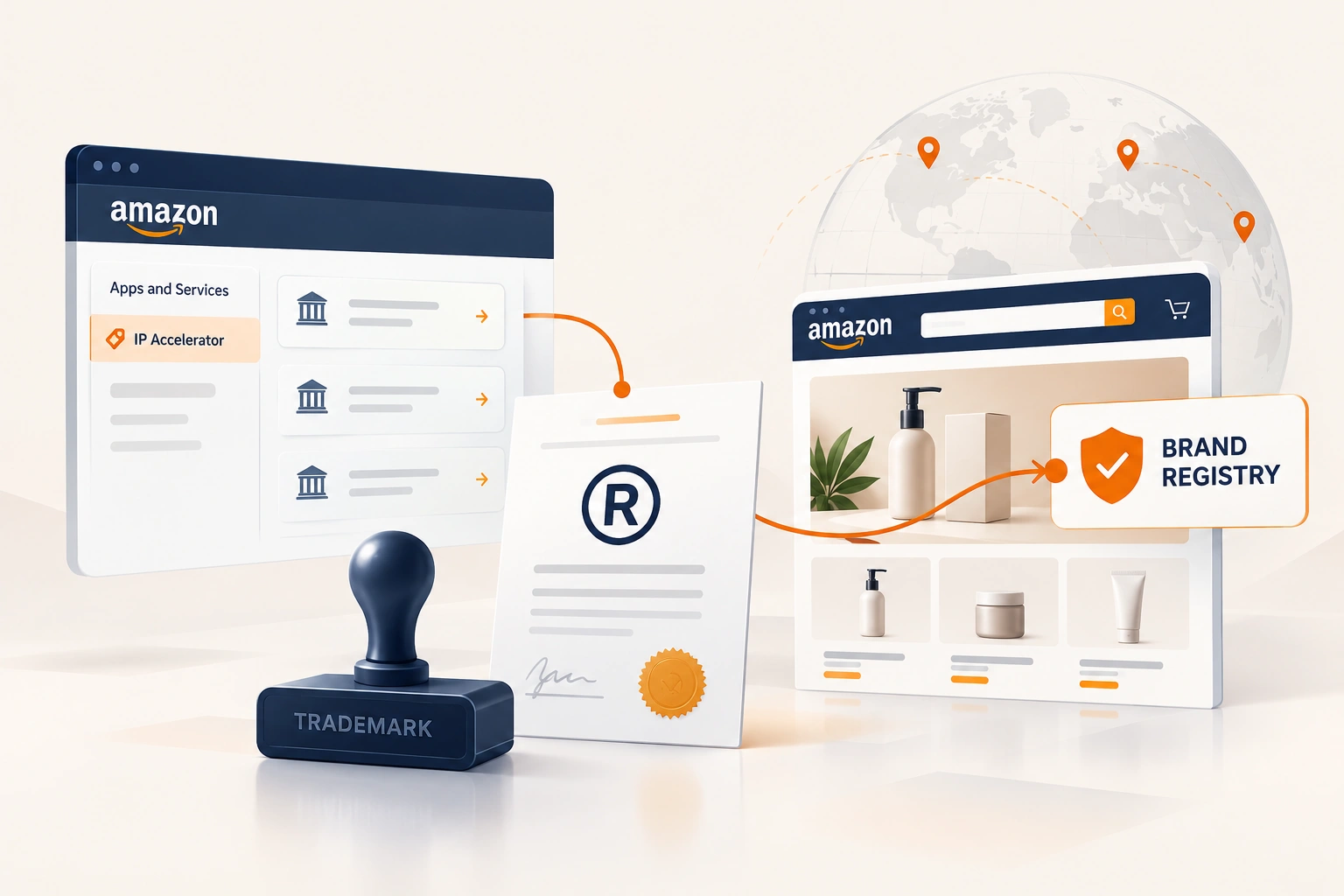
Most of the brands that ask us about classes are filing so they can join Amazon Brand Registry. Amazon's own page asks for "a pending or registered trademark for your brand name or logo", "issued by the designated government trademark office of a country with a corresponding Amazon store", in the form of "a text-based mark (word mark) or an image-based mark with words, letters, or numbers".
On classes it says only that "trademarks can have different classifications based on their issuing trademark office", and that "you must have a list of product categories in which your brand should be listed." It does not name a class a mark must cover. The practical point stands anyway: the categories you list for Amazon should be the goods your mark actually names, because a mark that covers clothing is little help against a copy of your kitchenware.
Amazon also notes that during enrolment you can select only a single country-based trademark office, so a brand selling in several Amazon stores chooses which registration it enrols with.
What changes on 1 January 2027
The USPTO's rule of 26 August 2026 adopts the 2027 version of the Nice Classification's thirteenth edition, effective 1 January 2027. The change is small. Class 6 gains a semicolon after "alloys" in its heading. Class 9 replaces "divers' masks" with "diving masks", "ear plugs for divers, nose clips for divers" with "ear plugs for diving, nose clips for diving", and "gloves for divers" with "diving gloves".
In the USPTO's words, the changes "do not change the substantive criteria for the registration of a trademark." An application already filed is not affected, and nothing moves between classes this year. The point worth taking from it is the rhythm: the list changes every 1 January, so wording copied from an old guide or an old application is worth checking against the current ID Manual before you file.
Get the classes right before the name matters
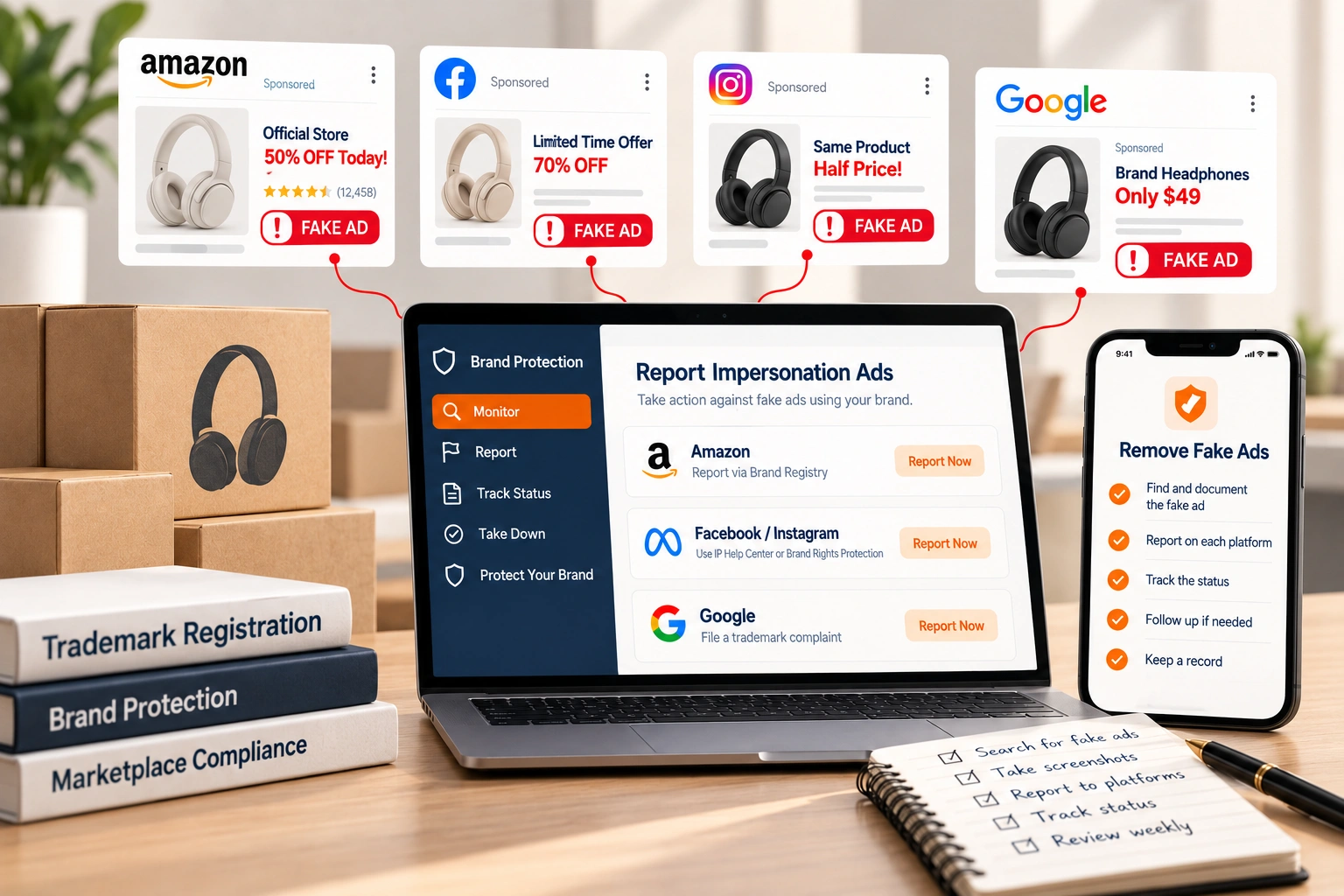
The time to settle classes is before you are spending on the brand: before the packaging, the domain and the listings. A clean, correctly classed application is also the fastest route into Brand Registry, which is what most of the protection on Amazon hangs on, from reporting impersonation ads to the brand tools that come with enrolment.
If you are deciding where your products belong, our trademark registration team prepares the application with you: the goods from the ID Manual, the classes they fall in, and the filing itself. For the wider picture of launching a brand on Amazon, start with how to start selling on Amazon and what it costs to sell on Amazon.
Frequently asked questions
The questions that come up most often on this subject.
Forty five. The Nice Classification, which the United States has used for every application since 1973, has 34 classes for goods and 11 for services. Each has a heading that shows the field it covers, and each class on an application is paid for separately.
Class 5. Its official heading includes "dietary supplements for human beings and animals", alongside pharmaceuticals and medical and veterinary preparations. A cosmetic is Class 3 when it is non-medicated, so the wording of the product decides between the two.
Yes. One application can list goods in several classes, but the fee is charged per class: the USPTO's base application is $350 for each class. A brand files in the classes its goods actually fall in rather than as many as possible.
Amazon's page does not name a class. It asks for a pending or registered word mark or image mark from the trademark office of a country with an Amazon store, and a list of the product categories your brand should be listed in. Those categories should match the goods your mark actually covers.
Two class headings are reworded. Class 6 gains a semicolon after "alloys", and Class 9 replaces divers' masks, ear plugs and nose clips for divers and gloves for divers with diving masks, ear plugs and nose clips for diving and diving gloves. The USPTO says the changes do not alter the criteria for registering a mark.