Premium A+ Content Eligibility: What Amazon Actually Requires
Reports in May 2026 said Premium A+ was open to every Brand Registered seller. Amazon's own staff said otherwise. The two criteria, how they have changed, what Premium adds, how to qualify on purpose, and how to tell when access has arrived.


Loading Article banner
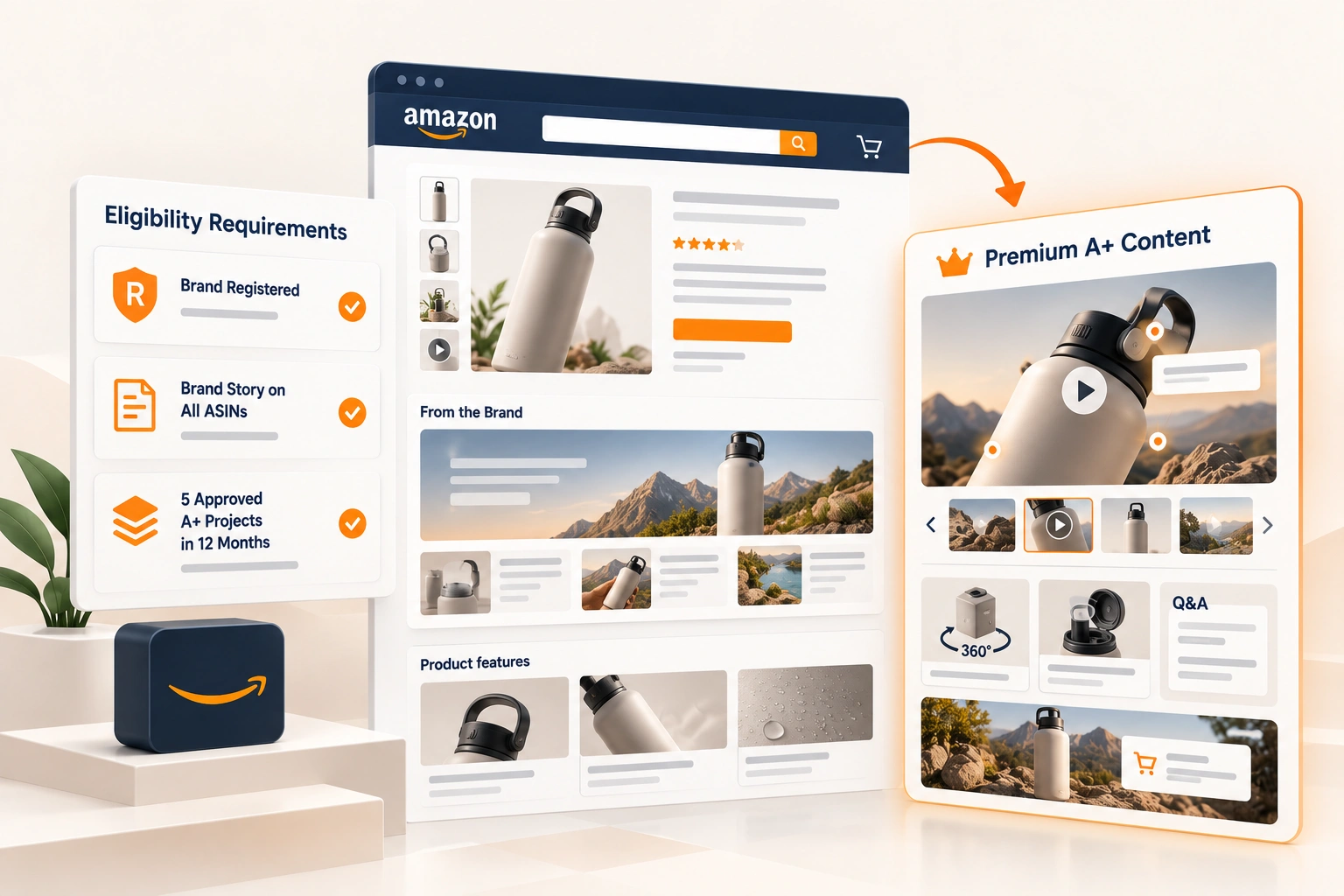
In May 2026, seller news sites reported that Amazon had opened Premium A+ Content to every Brand Registered seller, with no threshold and no invitation. A seller on Amazon's forums asked the obvious question: did that mean the five Basic A+ submissions were no longer needed? They had found no official notice either way.
An Amazon staff account answered: "Premium A+ Content is available to brand-registered sellers, but it's not immediate access just from being brand registered." This is what Amazon requires, how the rule has moved, what Premium adds once it arrives, and how to qualify on purpose rather than by accident.
The criteria, in Amazon's words
The reply, posted on the Seller Forums by TaylorR_Amazon and shown as five months old when we read it in October 2026, names two requirements on top of brand registration.
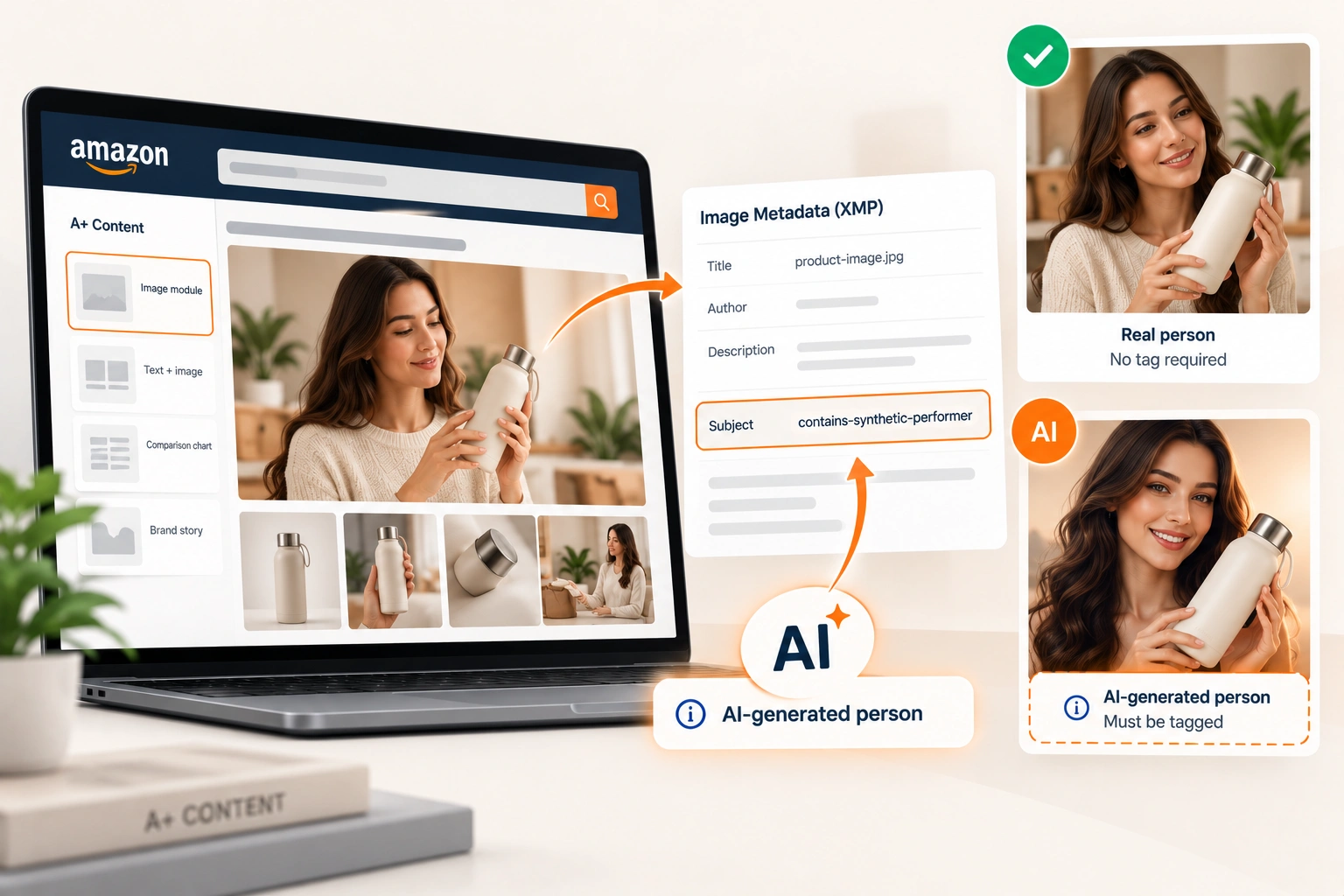
The first: "You have already published A+ Brand Story to all ASINs that you own within your catalog." Every ASIN in the A+ Content Manager needs a published Brand Story, which shows on the detail page under From the Brand.
The second: "You have had at least 5 project submissions of A+ Content that have been approved and published within the past 12 months." The reply's summary is blunt: "yes, you will still need those 5 approved Basic A+ content submissions. That requirement has not been removed."
There is nothing to apply for: "Once you meet all three criteria, you don't need to apply or contact anyone. You'll see a banner notification confirming your access."
How the rule has moved
An earlier staff post, by Tiff_Amazon about four years ago, set the bar higher: the same Brand Story on every owned ASIN, and "at least 15 project submissions of A+ Content that have been approved within the past 12 months". It also said the criteria apply "per country that you sell and publish A+ Content in", so "you may meet criteria in one country, but not another."
The later reply does not mention countries. Until Amazon says otherwise, plan as if each store is judged on its own: a brand with Premium in the United States may not have it in the United Kingdom or Germany until the Brand Story and the approvals exist there too.
The earlier post also set out the price: access at no cost "during our promotional period", with a promise that "We will not charge any fees without your consent." Amazon's current A+ page says A+ Content "is free for sellers who meet eligibility requirements." We have found no announced fee.
What Premium adds
Amazon's A+ page lists what Premium brings: "larger images, videos", "interactive hotspots that allow customers to hone in on product features", and "clickable image or video carousels, Q&A modules, and shoppable content." Basic covers images and text placements "and shoppable product-comparison charts".
Amazon's own figures, footnoted as Amazon internal data, are that "Basic A+ Content can increase sales by up to 8%" and "well-implemented Premium A+ Content can increase sales by up to 20%". Up to is doing a lot of work in both sentences, and well-implemented is doing the rest. What A+ and Premium A+ are each worth covers where the extra modules change a decision and where they are decoration.
One practical rule from the earlier post: once Premium arrives you have "access to Basic & Premium Modules", but "each project must be set-up using either Premium or Basic Modules." A page cannot mix them, so a Premium page is planned as Premium from the start.
Qualifying on purpose
A Brand Story on every owned ASIN. This is the criterion brands miss, because a Brand Story is usually built for the hero products and never applied to the long tail. An old variation, a discontinued bundle still in the catalogue, a product added last month: one ASIN without it keeps the brand short of the criterion. Apply one Brand Story across the catalogue and check for stragglers in the A+ Content Manager. It is also the module that sends shoppers to the Store, and what a Brand Store is for explains why that link matters.
Five approved projects in the last twelve months. The count is approvals and publication within a rolling year, so a brand that built its A+ two years ago and has not touched it since does not qualify, however good the pages are. Five real improvements, on the products where A+ is weakest, meet the criterion and improve the catalogue at the same time. Rejections do not count, so write to Amazon's content rules first: unsupported claims, references to price or shipping, and contact details are the usual reasons for one.
Each store on its own. Assume the criteria are counted per country, as the earlier post said, and track them store by store.
Brand Registry first. None of it starts without a registered brand and an account holding the right role on it; Brand Registry and what it protects covers the enrolment.
What the Brand Story has to carry
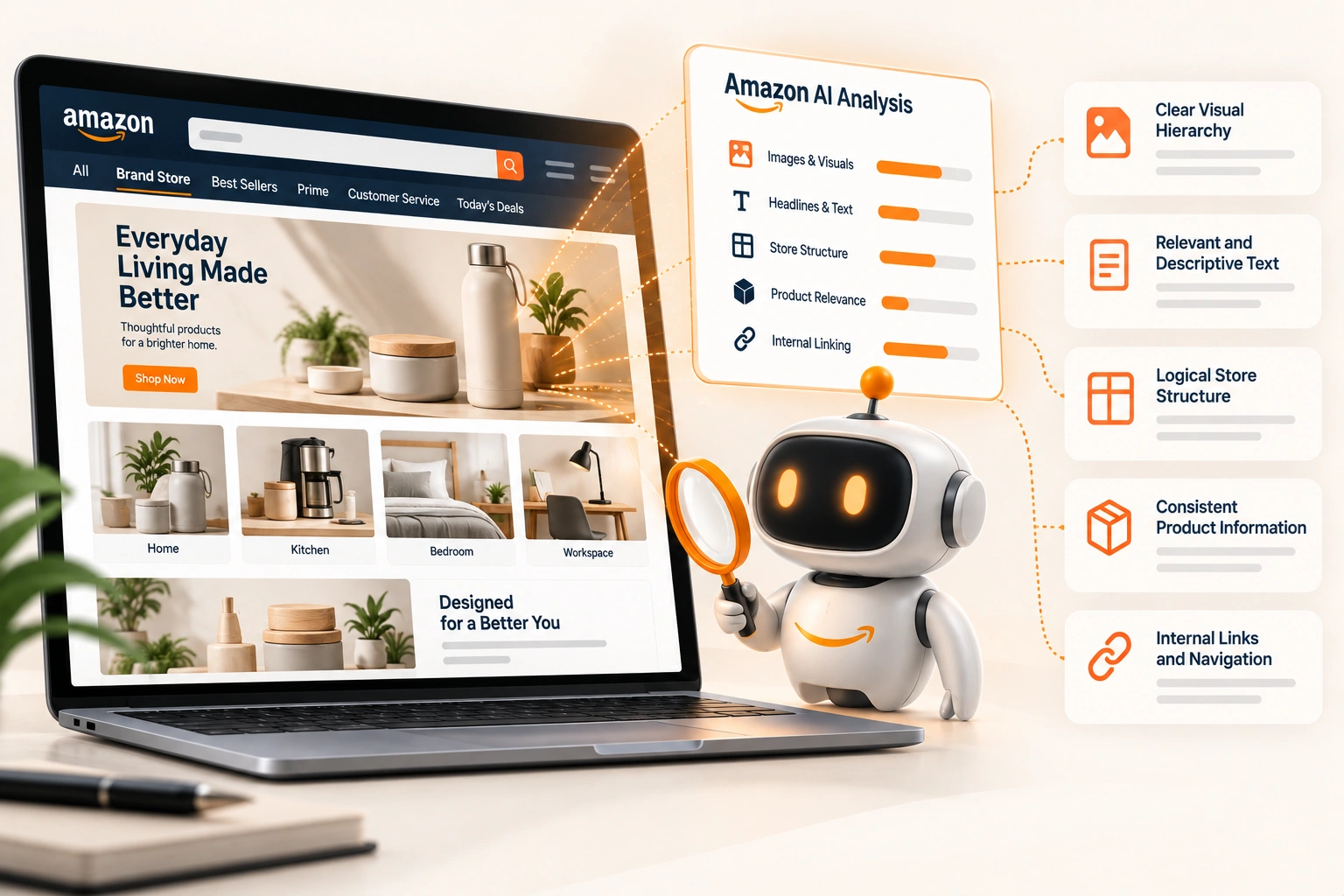
Because the Brand Story is the criterion that touches every ASIN, it is worth building once, properly. Amazon describes it as a way to "Share your brand's story, values, and mission across all your product listings" and to "drive traffic to your Amazon Brand Store." It sits in its own band on the detail page, separate from the product's A+ modules, so it answers a different question: not what this product does, but who makes it and what else they make.
That makes it a catalogue piece rather than a product piece. One version, true of every product the brand sells, applied to all of them, says who the brand is in a line a shopper reads in seconds, shows the range so a shopper on one product sees the next, and sends the curious to the Store. A Brand Story written for the hero product and copied onto a phone case it does not describe is worse than a plain one.
Is it worth chasing?
For a brand with a few considered, higher priced products, usually yes: a video or a hotspot answers a question a still image cannot, and those are the purchases where a shopper scrolls far enough to see it. For a catalogue of cheap, obvious items, Basic modules done well will carry most of the value, and Premium adds production cost without changing many decisions.
Either way, the work of qualifying is worth doing for its own sake. A Brand Story across the catalogue and five better A+ pages in a year are improvements a brand would want anyway; Premium is what Amazon hands over when they are done.
When the banner does not come
If both criteria look met and no banner appears, check them again before assuming a fault: an ASIN added since the Brand Story was applied, a project approved but never published, an approval older than twelve months dropping out of the window. If they all hold, Seller Support is the route, since the staff reply is clear that there is no application to make.
How we approach it
We plan A+ Content work so eligibility arrives as a by-product: a Brand Story across the whole catalogue first, then Basic projects on the products with the most traffic and the most returns, each answering a real objection, until the approvals in the year pass five. Premium then goes where a video or a hotspot would change a decision, built on product photography made for it, not onto every listing because it is available.
Frequently asked questions
The questions that come up most often on this subject.
Amazon's A+ page says A+ Content is free for sellers who meet the eligibility requirements, and an earlier Amazon staff post described Premium access at no cost during a promotional period, with no fee charged without the brand's consent. We have found no announced fee.
At least five A+ Content projects approved and published within the past 12 months, according to an Amazon staff reply in 2026, together with a published Brand Story on every ASIN the brand owns. An earlier staff post, about four years older, put the figure at fifteen.
Not automatically. Amazon's staff say brand registration alone does not give access: the brand also needs a Brand Story on every owned ASIN and five approved A+ projects in the past 12 months. Reports in May 2026 that it had opened to every Brand Registered seller were answered by that staff reply.
A banner in the A+ Content Manager confirms access once the criteria are met, and there is nothing to apply for. From then on, the Premium modules are available alongside the Basic ones when you create a project.
No. Amazon's staff post says each project must be set up using either Premium or Basic modules, so a page is planned as one or the other from the start.