Your Amazon Brand Store Is Now Something Amazon's AI Reads: What It Looks For, and How to Build a Store That Reads Right
Amazon's Branded Conversations and Creative Agent both draw on the Brand Store, and Amazon's section-level insights show which parts of it shoppers use. What the Store has become since 2026, what Amazon's own tools take from it, and the structure that makes it legible to a shopper and a machine at once.


Loading Article banner
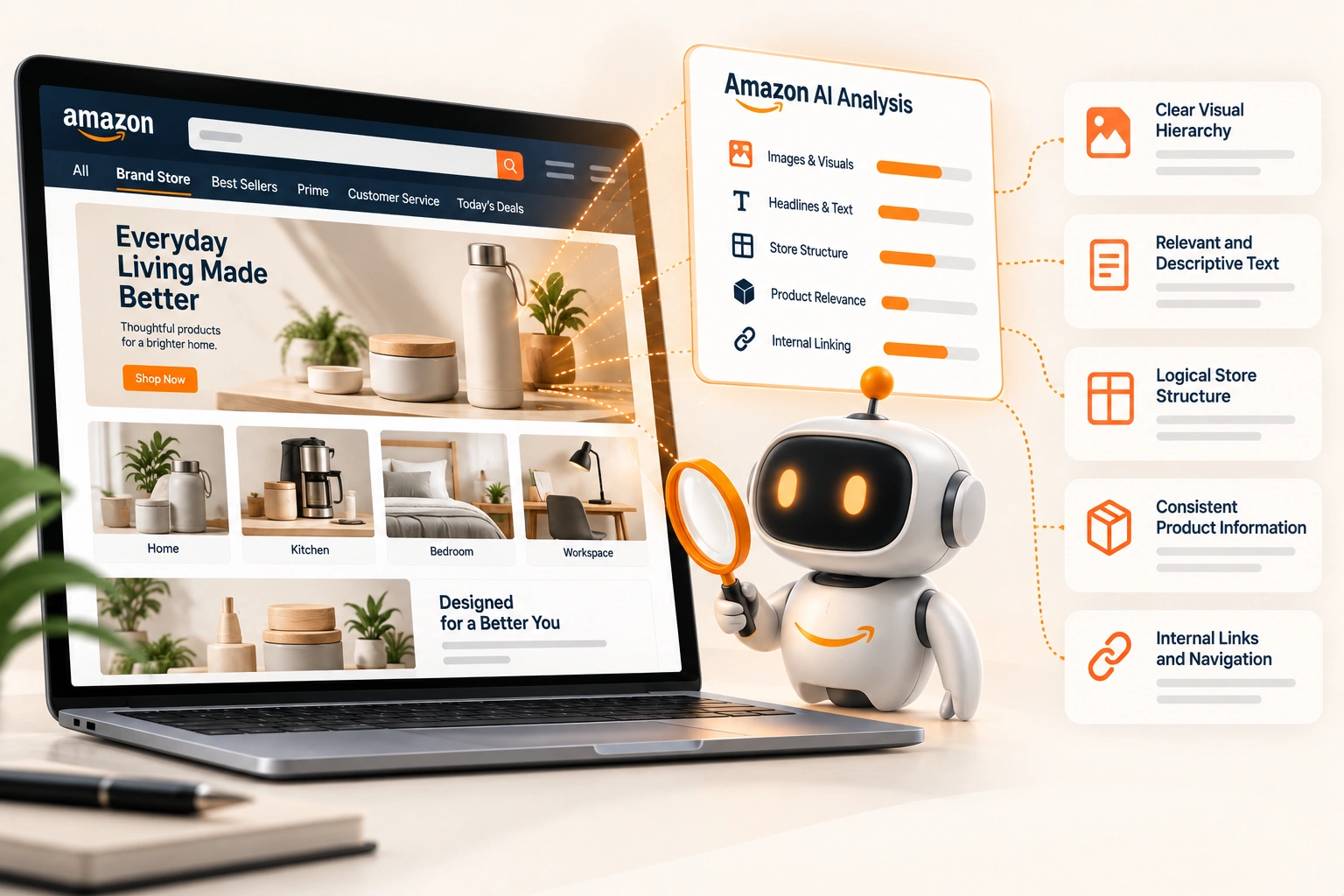
For most of its life the Brand Store has been judged on one question: does anybody visit it. That question still matters, and what a Brand Store is actually for answers it, with the four routes that bring people in. But 2026 has added a second reader that never visits at all. Amazon's own tools now read the Store to learn what the brand is, and they use what they find to speak and to make creative on the brand's behalf.
That changes what a well built Store is. It is no longer only a page a shopper scrolls. It is a structured statement of the brand's range that a machine can parse, and a Store designed for the first reader without thinking about the second will be misread by it.
The two Amazon tools that read the Store
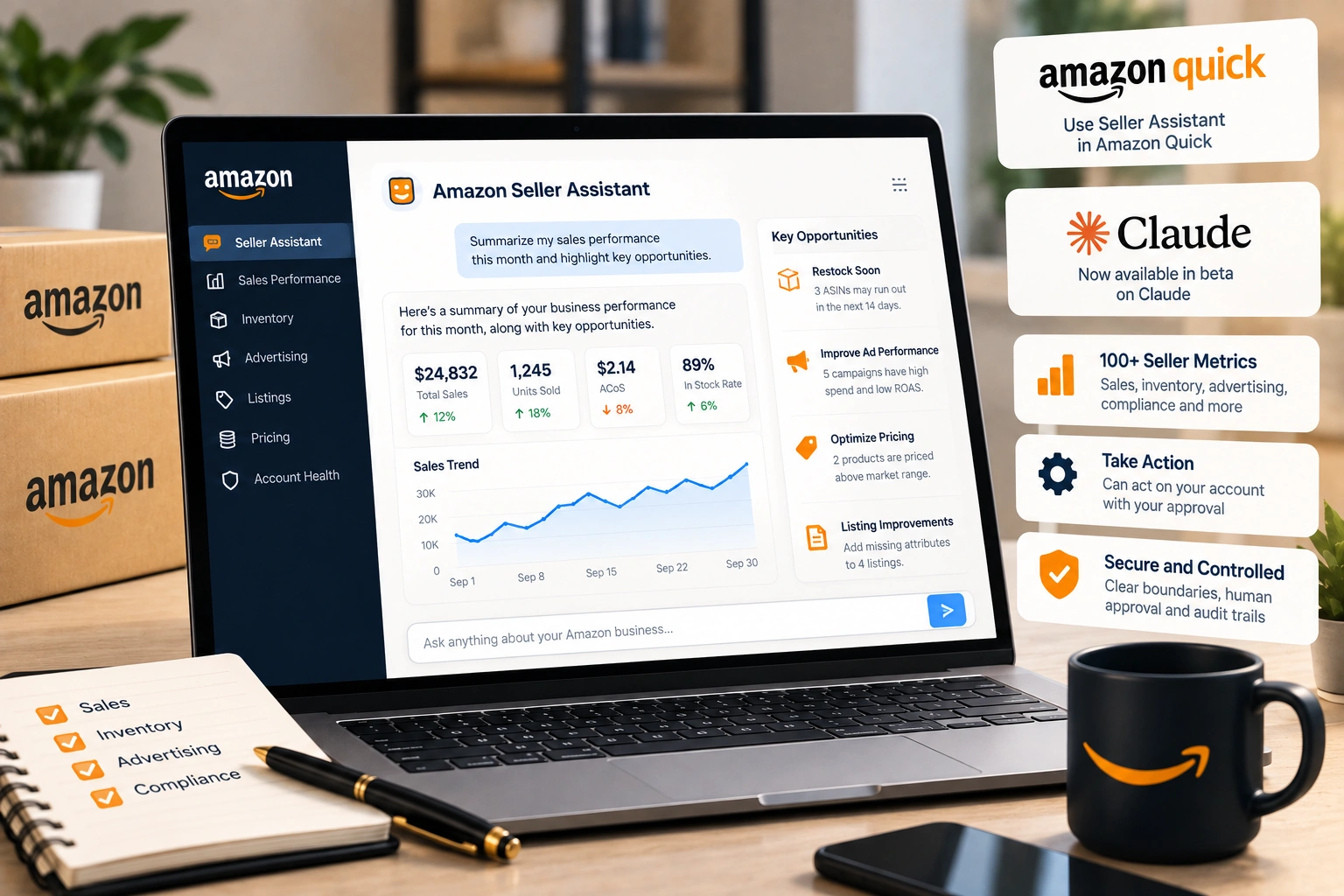
The first is conversational. When a shopper taps a Sponsored Brands prompt, Amazon says the conversation that opens with Alexa for Shopping draws on "Amazon's first-party signals from a brand's detail pages, Brand Store, campaign data, and more." Branded Conversations, announced on 29 September 2026 for a January 2027 launch in the US, adds the brand's own written expertise on top of those signals, but the Store stays one of the sources underneath.
The second is creative. When Amazon launched Creative Agent in Europe on 24 February 2026, it said the agent examines "product pages, brand stores, websites, and customer shopping signals" to understand a brand before it writes a line of copy or frames a shot. The generated video the Video Generator produces can, in Amazon's words, "be used in other locations like Brand Stores", so the Store is both an input to the creative tools and a destination for their output.
Neither tool explains how it weighs the Store against the detail page, and nothing here guesses. What can be said is that a Store that groups products the way a shopper thinks, names each group plainly and says who each group is for gives both tools a map. A Store that is a grid of tiles under a hero banner gives them a list.
What the Store can say that the listings cannot
A detail page is about one product. It cannot say where that product sits in a range, which product to buy instead if this one is wrong for you, or what to add to it. The Store is the only Amazon surface where the brand controls the whole screen, and that is exactly the information the conversational tools need and the detail pages do not hold.
So the structure is the content. A Store built as one page per need (sensitive skin, large dogs, small kitchens) states the audience map on its navigation. A Store built with a routine or a system page states which products go together. A Store with a comparison page states the differences between products in the brand's own terms rather than leaving a shopper, or an assistant, to infer them from four bullet lists. The same statements belong in the A+ content on each listing, and the discipline is that the two agree.
The build: pages, sections and copy
Pages by need, not by SKU. Top-level navigation that reads like the questions shoppers ask. Where a product belongs to two needs, it appears on both pages; the Store is a map, not an inventory.
A sentence of copy on every section. Tiles with images and no words are the common Store design, and they are the least legible to anything that reads text. One plain sentence above a product grid, saying who the products below are for and why, is worth more than another banner. It is also the sentence the conversational tools can repeat.
Product names as the brand spells them. The Store, the A+ content and the listings should use the same names for the same products. A Store that calls something the Daily Cleanser while the listing calls it the Gentle Foaming Face Wash has told the reader two things.
A comparison page. The Store's version of the A+ comparison chart, for the range rather than for one product's neighbours. For a brand with more than four products this is the page a shopper lands on from the byline and the page an assistant has most use for.
Video where it answers something. A generated video of a product turning on a plinth answers nothing. A video that shows the product doing the thing the bullets claim answers the question that stops the purchase. Product photography that sells is built on the same rule, and the Store is where the resulting shots have room.
Nothing that is only true today. A Store page built around a deal that ended in July is still being read in October. Seasonal pages should be scheduled and removed; the evergreen structure is what the tools should find.
Measuring it by section, not by visit
Since 16 January 2026 the advertising console has carried section-level insights for Brand Stores, in beta. Amazon describes them as "detailed engagement metrics for each section of your store", reporting "renders, viewable impressions, clicks, and click-through-rate (CTR) for each section", broken out by traffic source, in a Sectional performance tab on the Brand Store insights dashboard. The metrics run from 10 January 2026, and the feature is listed for Amazon's stores in North America, Europe, the Middle East, Asia Pacific, Brazil and South Africa.
That is the first time a Store has been measurable as a structure rather than as a page. A section that renders for everybody and is clicked by nobody is a section in the wrong place or with the wrong words. A section far down the page that earns a high click-through rate among the shoppers who reach it is a candidate for the top. The traffic source split answers the harder question: whether shoppers arriving from a Sponsored Brands click use the Store differently from shoppers arriving from the byline, which decides what the ad should land on. Which ad type earns its budget is the companion decision.
Read the sections monthly, move or rewrite the ones that render without clicks, and keep the structure stable between readings so the comparison means something.
What this does not change
Brand Registry is still the gate, and the Store is still only worth the traffic pointed at it. A Store nobody visits and no tool reads is still a Store nobody visits. The change is that the second reader now exists, that Amazon has said so in its own announcements, and that the structure which serves a shopper well is the same structure a machine can parse. Building for one is building for the other, which is why it is worth doing properly once.
How we build them
We design the Store from the audience map outward: the needs become pages, the range becomes a comparison, the system becomes a routine page, every section carries its sentence, and the names match the listings. Then we read the section-level insights and move what the numbers say to move. That is the work of our Brand Store design service. If you would like to know what Amazon's tools would conclude about your brand from the Store as it stands, that is a short review and we are glad to do it.
Frequently asked questions
The questions that come up most often on this subject.
Yes, by Amazon's own description. A Sponsored Brands prompt conversation with Alexa for Shopping draws on signals from the brand's detail pages, Brand Store and campaign data, and Creative Agent examines product pages, Brand Stores and websites to understand a brand before producing ads. Branded Conversations, launching in January 2027, adds brand-supplied expertise on top of those sources.
By need rather than by SKU: top-level pages that read like the questions shoppers ask, a comparison page for the range, a routine or system page where products go together, one plain sentence above every product grid saying who it is for, and product names that match the listings exactly.
A beta feature in the advertising console, announced by Amazon Ads on 16 January 2026, that reports renders, viewable impressions, clicks and click-through rate for each section of a Store, broken out by traffic source, in a Sectional performance tab on the Brand Store insights dashboard. Metrics run from 10 January 2026.
Amazon says the videos it produces are made for Sponsored Brands video ads and can also be used in other locations such as Brand Stores. A video earns its place on a Store page when it shows the product doing what the listing claims, not when it only moves.
Yes. Brand Registry is the eligibility rule for a Brand Store, as it is for Sponsored Brands and A+ content, and a reseller cannot build a Store for a brand it does not own on Amazon.