Amazon Transparency Codes: What They Cost, How They Are Applied and Which Brands Should Enrol
Brand Registry reports a counterfeit after it is listed; Transparency stops the unit before it ships. How the codes work, what Amazon charges, the review before protection starts, and when it is worth it.
 Muhammad Shehryar2026-11-037 min read
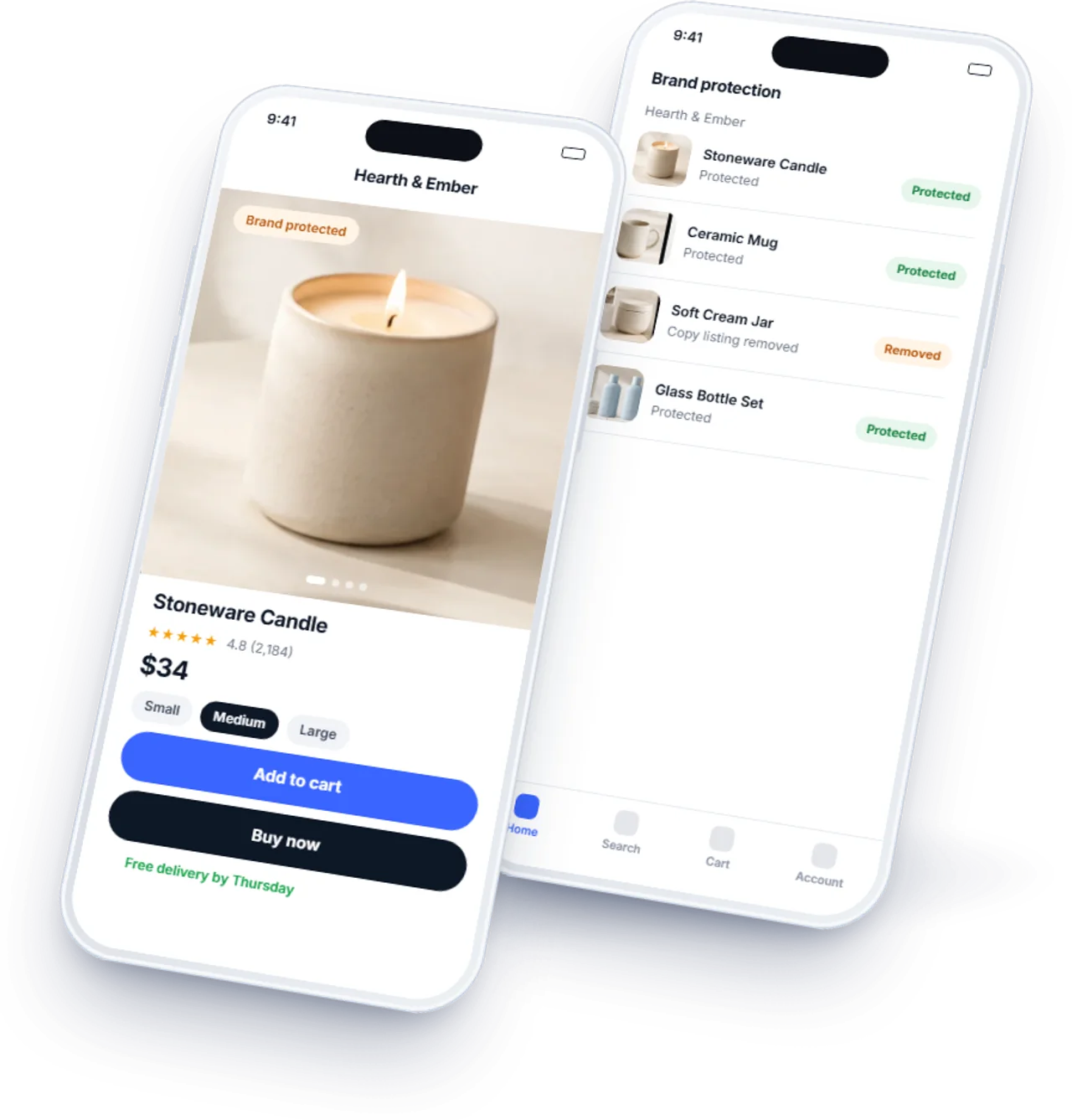
Brand Registry gives a brand the tools to report a counterfeit listing once it appears. Amazon Transparency is the programme meant to stop the counterfeit before a buyer ever receives it: every unit of an enrolled product carries a unique code, and a unit without a valid code is not listed or shipped in the stores Transparency covers. Amazon’s page says more than 90,000 brands have enrolled and more than 2.7 billion units have been verified as genuine through it.
This is how it works in Amazon’s own words, what it costs, the ways to put codes on products, the review that comes before any protection starts, and how to decide whether it is worth it for a brand that already has Brand Registry.
What Transparency Does, in Amazon’s Words
Amazon calls Transparency “a product serialization service and anti-counterfeiting program”. Each unit of an enrolled product is given a unique code, which is scanned on its way through the supply chain. Once a product is protected, a valid code must accompany every unit listed or shipped in Amazon’s Transparency-supported stores, whether the order is fulfilled by Amazon or shipped by the seller, and a product cannot be listed there by anybody without valid codes that match it.
It catches more than fakes. Amazon says the checks also stop materially different versions of a genuine product, ones that differ in materials, compatibility, colour or language, or that do not meet a store’s regulatory requirements, and that units made for another country’s store do not pass listing verification either. For the brand’s own operations, codes can carry batch or lot information, so a defect or a pattern of returns can be traced back to where it started.
Where It Works, and Who Can Enrol
Transparency protects products in ten Amazon stores: the US, Canada, Germany, France, Italy, Spain, the UK, Australia, India and Japan. A product is enrolled once and is then protected in all of them. Brands can enrol from the US, Canada, Germany, France, Italy, Spain, the UK, India, Japan and China; Amazon says brands from Australia cannot currently enrol, though a brand enrolled from elsewhere is still protected in the Australia store.
Enrolment uses the brand’s Amazon Brand Registry credentials, so Brand Registry comes first, and Amazon publishes eligibility requirements on its enrolment page that are worth reading before ordering a single code. The relationship between the two programmes, and what Brand Registry already does on its own, is set out in Amazon Brand Registry and listing protection.
What It Costs
Amazon charges nothing to enrol, no subscription and no minimum. The cost is per code ordered, for Amazon-issued codes and for a brand’s existing serial codes connected to Transparency alike. Amazon notes that fees vary by volume and geography; its table is $0.05 a code for the first 1,000,000, $0.03 from 1,000,001 to 10,000,000, and $0.01 beyond 10,000,000. The volume is counted over a year that resets on the date the account was created, and adding or removing products costs nothing.
The arithmetic is simple and worth doing. A brand that ships 50,000 units a year pays $2,500 a year in codes at the first tier, before the cost of putting a label on each unit, which depends on the method below. Against that sits the cost of counterfeits: sales lost to them, the returns and reviews they produce, and the hours spent reporting them one listing at a time.
The Ways to Put a Code on Every Unit
Amazon lists seven, each for a different kind of brand. Self-printed labels suit small and medium brands that want full control and no third party. Pre-printed labels from Amazon’s partners are for brands wanting low-cost labels quickly with no equipment. Service providers and co-packers apply the labels for brands that want somebody else to label, pack and ship. Printing codes directly on the packaging is for larger brands seeking the lowest per-unit cost, with an investment up front. Print workflow software connects ordering codes to existing systems, serialization service providers let a brand bring codes it already uses, and regional integration partners serve sellers based in China.
The choice between Amazon’s codes and your own matters beyond the label. Connecting existing serial codes enrols a brand faster with no change to its packaging, but Amazon says those products do not get customer verification, where a buyer scans the code in the Amazon Shopping or Transparency app to check the item is genuine, or the customer engagement that comes with Amazon-issued codes.
Nothing Is Protected Until the Review Passes
Enrolment alone protects nothing. Amazon requires an operational performance review once a brand starts labelling and shipping coded units. For orders the brand ships itself, the brand asks Transparency support to start the review and gives the codes at order confirmation in Seller Central. For Fulfilment by Amazon, the review is started in the Transparency portal and the codes are scanned as units arrive at the fulfilment centre. In Amazon’s words, “Transparency protections aren’t active until your product passes the operational performance review.”
After that, every unit needs a valid code or it fails the check, and Amazon investigates each failure and tells the brand. On our reading, that makes the first weeks the risky part: stock already sitting with a third-party warehouse, a distributor or Amazon itself must be coded before protection goes live, or genuine units will be stopped along with the fakes. Plan the change around a production run, not in the middle of one.
Before Ordering the First Codes
Five decisions make the change go smoothly. Choose the products: adding and removing them costs nothing, so start with the ones that are copied or diverted, not the whole catalogue. Count the units each will need in a year, to know the tier and the bill. Agree with the manufacturer or the warehouse who applies the label, and where on the pack, before the next production run. Find every unit already in the channel, at Amazon, a third-party warehouse or a distributor, and decide how each will be coded. And date the review for when coded stock is actually arriving, so protection starts on stock that can pass it.
When It Is Worth It
On our reading, Transparency pays where counterfeits or grey-market units are a real and repeated problem on listings the brand owns: several unexpected sellers on a branded listing, buyers complaining of fakes or of the wrong version arriving, or a product made in different versions for different countries. It pays less for a product that is rarely copied and sold by the brand alone, where the codes and the labelling are a cost against a risk that is not there.
It does not replace the rest of a brand’s protection. A registered trademark is what Brand Registry and Transparency both rest on, and Amazon’s IP Accelerator is the route for a brand whose application is still pending. Fakes advertised outside Amazon are another problem with other remedies, covered in brand impersonation scam ads and how to report them.
Where We Fit
We help brands make the decision and then carry it out: enrolling through Brand Registry, choosing a labelling method with the manufacturer or the warehouse, coordinating the first coded shipment so genuine stock is not stopped, and reading the portal’s performance report, which shows units blocked for missing or invalid codes, scans that did not match the product, listing attempts rejected and notices of suspected counterfeits. It sits alongside the rest of Amazon account management; if counterfeits are costing you sales now, tell us what you are seeing.
Frequently Asked Questions
The questions that come up most often on this subject.
There is no enrolment fee, subscription or minimum; you pay per code ordered. Amazon’s table is $0.05 a code for the first 1,000,000, $0.03 from 1,000,001 to 10,000,000 and $0.01 beyond, with the volume counted over a year that resets on the date your account was created, and Amazon notes that fees vary by volume and geography. The same per-unit cost applies to existing serial codes connected to Transparency, and the labour or printing to apply each code is on top.
Yes. Amazon says brands enrol in Transparency using their Amazon Brand Registry credentials, so the brand must be in Brand Registry first, which in turn rests on a registered or pending trademark. Amazon also publishes eligibility requirements on its enrolment page, worth reading before ordering codes. Brands can enrol from the US, Canada, Germany, France, Italy, Spain, the UK, India, Japan and China, but not currently from Australia.
Yes. For Fulfilment by Amazon, the brand starts its operational performance review in the Transparency portal, and the codes are scanned when units arrive at the fulfilment centre. For orders the brand ships itself, it asks Transparency support to start the review and enters the codes at order confirmation in Seller Central. In both cases protection only begins once the review passes, and after that every unit needs a valid code.
Yes, through Amazon’s serialization service providers, which connect codes a brand already uses to Transparency. It is faster and needs no change to the packaging, and it gets the core protection against counterfeits, wrong versions and diverted units. What it does not get, Amazon says, is customer verification, where a buyer scans the code in the Amazon Shopping or Transparency app, or the customer engagement that comes with Amazon-issued codes.
Ten Amazon stores: the US, Canada, Germany, France, Italy, Spain, the UK, Australia, India and Japan. A product enrolled once is protected in all of them, so a brand does not enrol store by store. Protection reaches the Australia store even though brands based in Australia cannot currently enrol.