Google and Meta Ads That Send Shoppers to Amazon: Amazon Attribution and the Brand Referral Bonus
Google and Meta cannot see a sale made on Amazon, and Amazon's ad reports cover only its own ads. Amazon Attribution measures the shoppers a brand sends from outside, and the Brand Referral Bonus credits back part of the referral fee on what they buy. Both in Amazon's words, the arithmetic, and a setup.


Loading Article banner
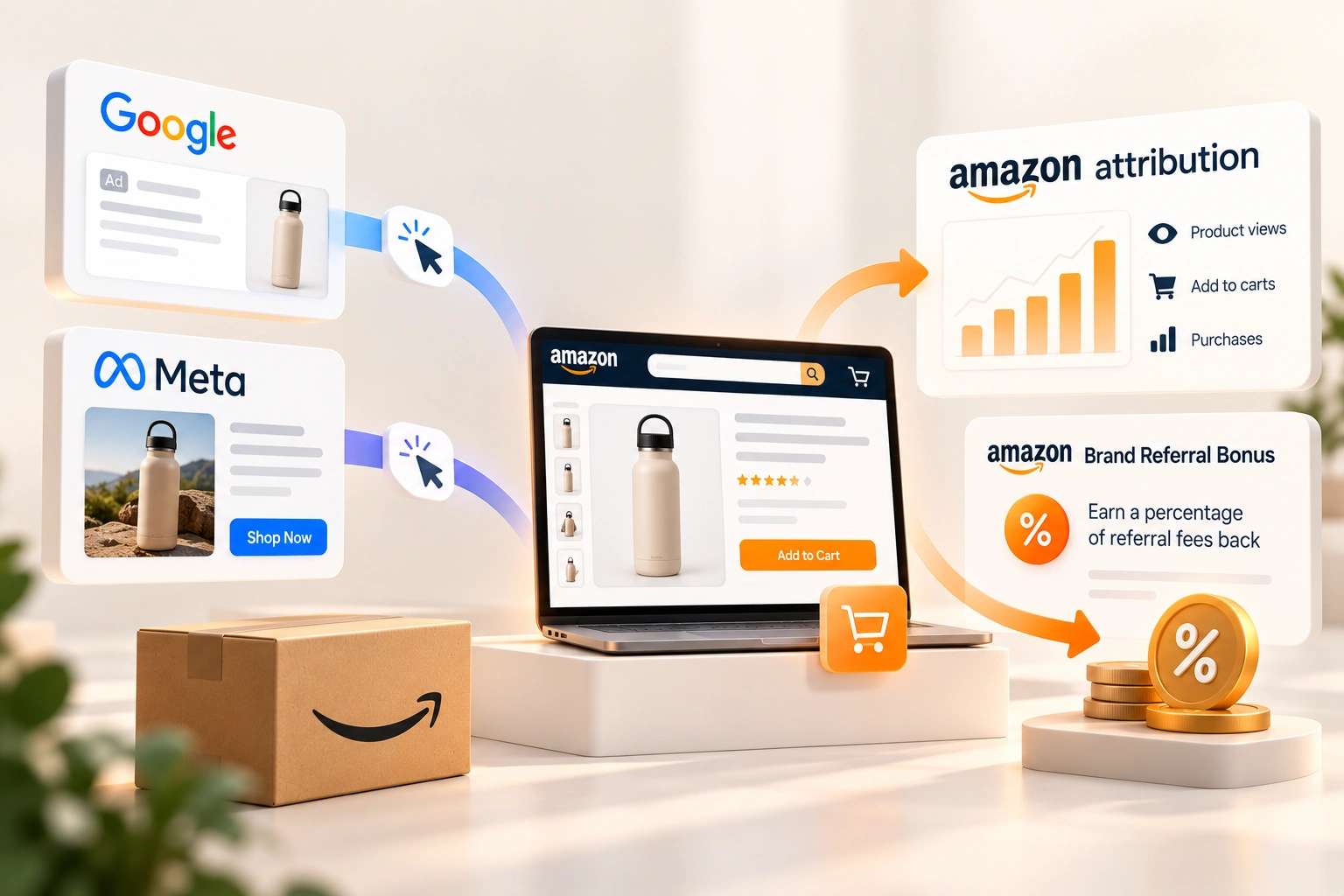
A brand that advertises on Google and Meta sends some shoppers to its own store and some to its Amazon listing. The second group drops out of every report the brand reads. Google and Meta see the click and never the sale, and Amazon's advertising reports cover only Amazon's own ads.
Amazon has two tools for that traffic. Amazon Attribution measures it, and the Brand Referral Bonus credits back part of the selling fee on the sales it brings. Here is each in Amazon's words, what moved this autumn, the arithmetic they change, and how we set them up.
Why Google and Meta never see the Amazon sale
Both learn what an ad achieved from code on the page it sends people to. Meta's pixel is "a snippet of JavaScript code that allows you to track visitor activity on your website." Nobody but Amazon puts code on an Amazon detail page, so on our reading the purchase never reaches Meta, or Google's conversion tag either.
Google adds two rules. Its destination requirements disapprove an ad when "The domain or domain extension in the display URL doesn't match the final and mobile URLs", so an ad that sends people to Amazon shows Amazon's address. And Shopping ads need a Merchant Center website the advertiser has verified, to show "that you have administrative access to the website." On our reading, a brand's Google Ads traffic to Amazon therefore comes from Search, YouTube and display campaigns, not Shopping.
Amazon Attribution, in Amazon's words
Amazon calls Attribution "a free, advertising and analytics measurement solution" for marketing "across non-Amazon channels including (but not limited to) search, social, display, video, and email channels." It is "currently available for professional sellers enrolled in Amazon Brand Registry", as well as vendors, Kindle Direct Publishing authors and agencies, in eighteen Amazon stores.
It works by tags. The brand is told to "generate tags for each of your marketing strategies" and "implement tags across your search ads, social ads, display ads, video ads, and email marketing." The reports count what tagged shoppers did next on Amazon: clicks, detail page views, add to carts, purchases, sales and new to brand purchases. "Amazon Attribution reports have a 14-day attribution window."
Where the reports live moved this autumn. On 29 September 2026 Amazon said Amazon Ads Agent is "the new name of the unified platform", and the Attribution page now says the reports "can be located in Amazon Ads Agent or in the Amazon Attribution API." One report gives keyword-level results for Google search campaigns created through Bulk Operations; another covers the promoted products "and brand halo products (any other products within the same brand)."
Since September 2023, US sellers can also reach people "directed from ad traffic anywhere" "into Amazon, in the last 30 days" as an audience in Amazon DSP and Sponsored Display, once their tags have "directed enough traffic to Amazon". That is programmatic advertising finding again a shopper whom a Meta ad brought to Amazon and lost.
The Brand Referral Bonus, in Amazon's words
Amazon's post on the bonus, of 20 October 2023, says "you can earn a bonus averaging 10% of qualifying sales when you drive traffic to products in the Amazon store from search, social media, and other sources." The rate "varies according to several factors, including sales price and product category"; clothing's is "an estimated bonus rate of 11%." Each category's rate sits behind a Seller Central sign in, so we leave out the tables that circulate elsewhere.
It is a fee credit, not cash. "Bonuses accumulate as credits that offset the referral fees for future sales", credited in full "after a waiting period of two months (to accommodate sales or returns)."
"Sellers in Amazon's US store with a Professional selling plan can enroll their brand in Amazon Brand Registry" to qualify, which makes Brand Registry the gate. A vendor pays no referral fee, so on our reading a vendor gets Attribution and nothing for a credit to offset.
And one sentence keeps it honest: "The bonus isn't available for Amazon advertising (like sponsored or video ads), but you can earn a bonus from your social media campaigns, search and display ads, emails, and other marketing beyond the Amazon store."
Amazon's launch announcement on its Seller Forums also described "an additional bonus averaging 10% of sales on any of your brand's products" "purchased by the customer in the following two weeks". The 2023 post does not repeat it, so we confirm it in Seller Central before it enters a forecast.
Each ad carries its own tag: "each tag should be unique, meaning apply only one to each ad (or one link or button within an ad)." The destination "can be a specific product detail page or your brand's Amazon storefront", which is where the Brand Store earns its keep.
The arithmetic it changes
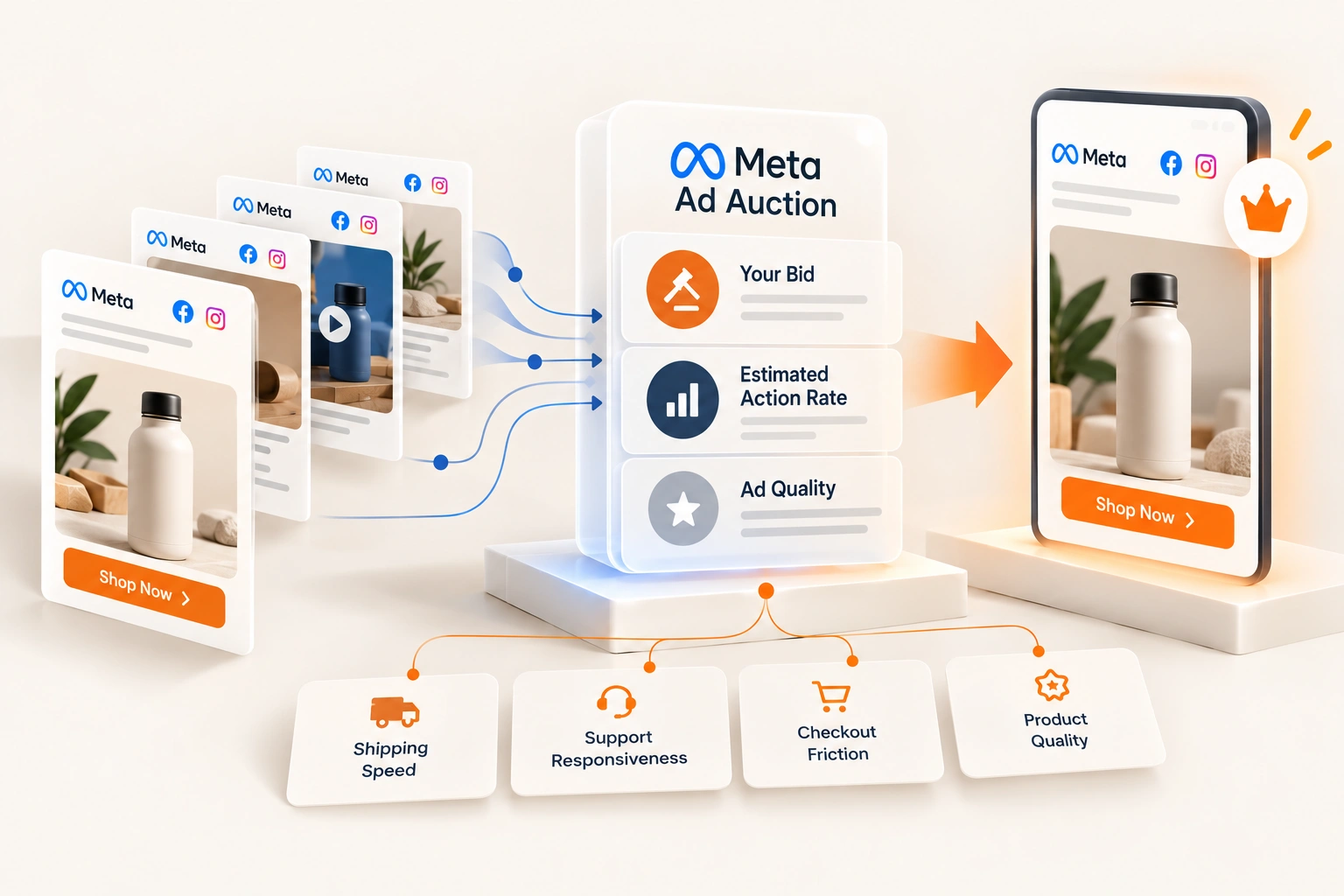
Sending a paid click to Amazon means paying twice: the ad platform for the click, and Amazon its referral fee on the sale, "a percentage of the total price or a minimum amount, whichever is greater." The case for the brand's own store as the destination is set out in Google Ads against Amazon Ads. The bonus changes the second half of that sum.
Where a category's bonus rate sits near its referral fee, most of the fee on a tagged sale comes back as credit. On our reading that is the strongest case for pointing a launch at Amazon rather than at a store that converts worse, with three cautions: the credit arrives two months late, a return can take it back, and it is worth something only to a brand that keeps selling. Nor does it change who keeps the customer, which for anything bought again may still favour the store.
Reading three dashboards as one
Each platform tells part of the story, on its own terms. Amazon's own terms moved on 1 January 2026 to "a shopping-signal enhanced last-touch attribution model" for Sponsored Brands, Sponsored Display on viewable impressions and Amazon DSP in its store, while "Click-based attribution remains unchanged." On our reading, adding the reports together counts some sales twice.
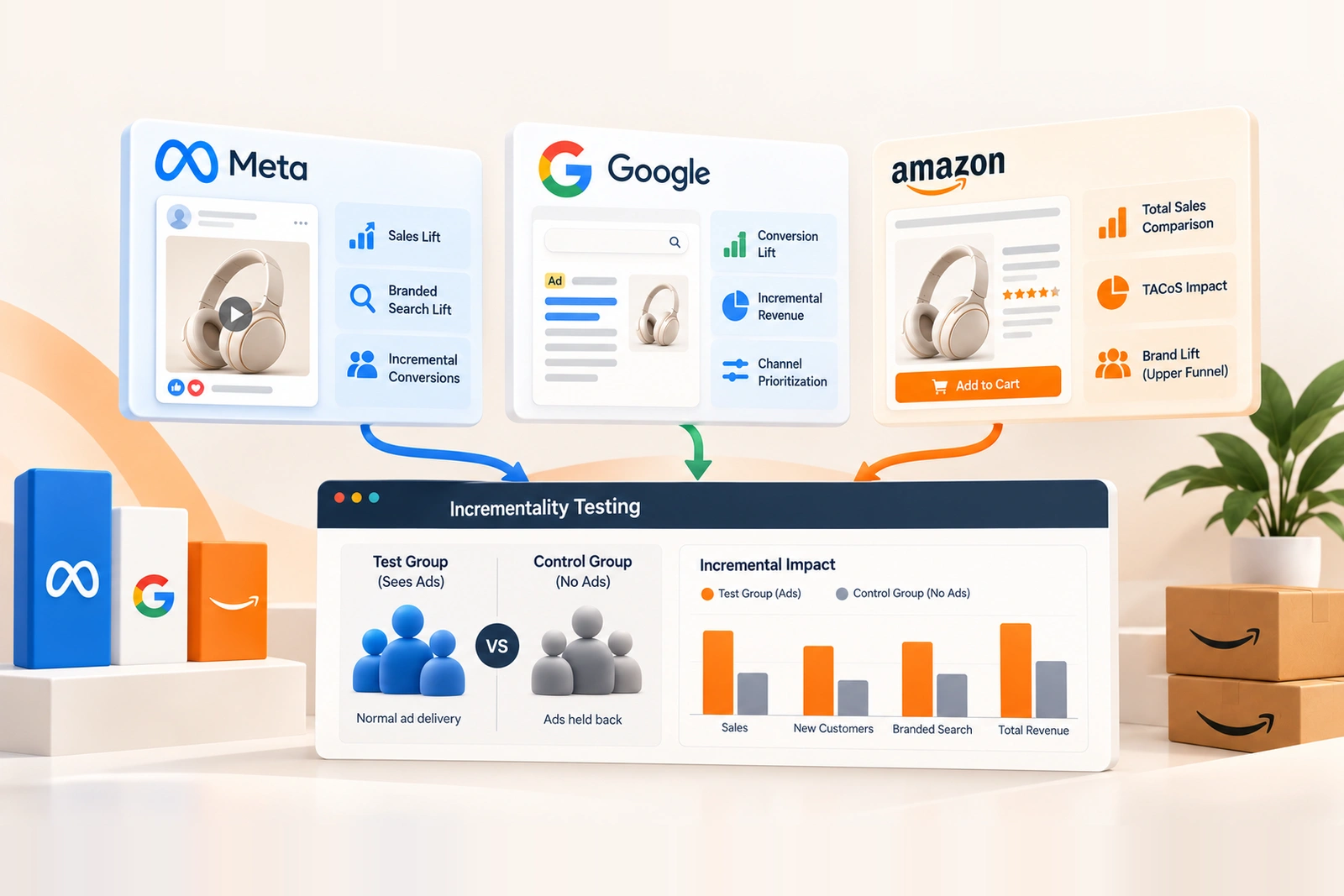
So we keep one sheet per campaign: spend from the ad platform; purchases, sales and new to brand purchases from Attribution; the bonus from Seller Central; and the cost net of the bonus, read against margin as in what ACoS, TACoS and ROAS each answer. A tagged sale is credit, not proof. Incrementality testing across Meta, Google and Amazon asks whether it would have happened anyway, and branded search is where we test first.
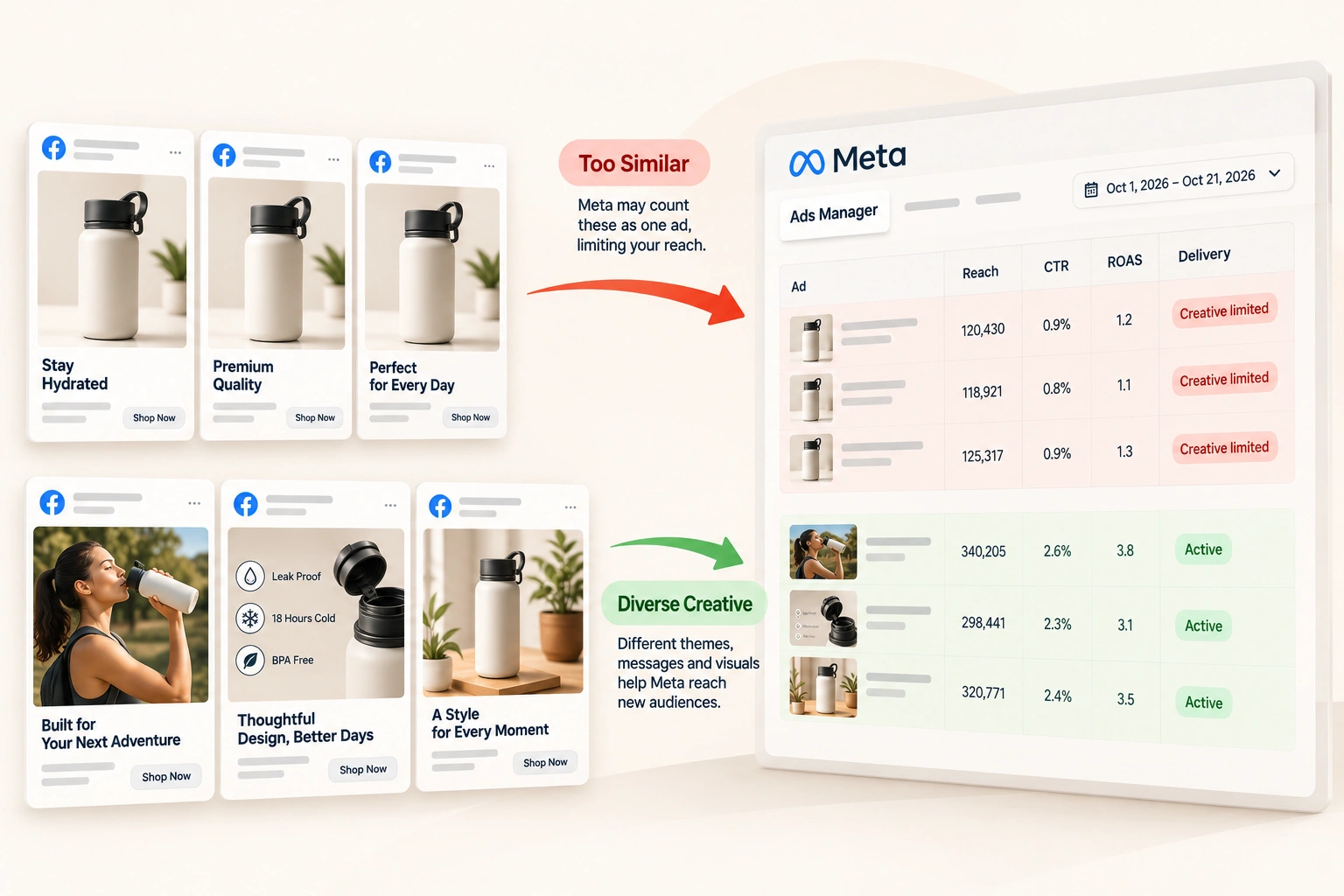
Meta cannot optimise toward a purchase it never sees, so on our reading a campaign pointed at Amazon optimises toward the link click or landing page view and is judged on Attribution's sales. Building Meta ads that way is a different brief from selling on the brand's own store.
Five steps before the first tagged click
Our practice, for a brand whose Google or Meta budget points at Amazon.
Check eligibility. Brand Registry and the Professional plan, the US store for the bonus, and the bonus's own enrolment in Seller Central.
One tag per ad, named by channel, campaign and ad, so forty tags stay readable.
One destination per ad. A detail page for one product, the Store for a range.
Google search through Bulk Operations, the route Amazon names for keyword-level results.
A monthly reconciliation, with the bonus two months behind the spend it came from.
Where we fit
Planning Google, Meta and Amazon spend as one budget, measured where the sale happens rather than where the click did, is how we approach growth and advertising for marketplace brands. If off-Amazon ads already point at Amazon without tags, tagging them is where we would begin.
Frequently asked questions
The questions that come up most often on this subject.
Yes, Amazon calls it a free measurement solution. It is available to professional sellers enrolled in Amazon Brand Registry, to vendors, to Kindle Direct Publishing authors who use sponsored ads, and to agencies whose clients sell on Amazon, in the eighteen stores Amazon lists on its Attribution page.
Amazon's Attribution page says the reports are in Amazon Ads Agent, the name Amazon gave its unified advertising platform on 29 September 2026, or available through the Amazon Attribution API, which tool providers connect to. The reports count results over a 14-day attribution window.
As credits rather than cash. Amazon says bonuses accumulate as credits that offset the referral fees on future sales, and that the full amount is credited after a waiting period of two months, to allow for sales or returns. The credits build up in the seller's Seller Central account.
No. Amazon says the bonus isn't available for Amazon advertising, such as sponsored or video ads. It is earned on shoppers brought from marketing beyond the Amazon store, such as social media campaigns, search and display ads and emails, each carrying an Amazon Attribution tag.
Not from its own data. Meta's pixel tracks visitor activity on the advertiser's website, and an Amazon detail page is not one, so the purchase never reaches Meta. On our reading the campaign optimises toward the clicks or landing page views Meta can see, and is judged on the sales Amazon Attribution reports.