Shopify Checkout in 2026: The Changes That Reward Signed-In Customers, and Which Apply to Your Store
Shopify's changes this year all shorten checkout for a customer who signs in: new customer accounts, default addresses, a customisable sign-in page and the last used payment method. What each does, which depend on your plan, and how to get more customers signed in.


Loading Article banner
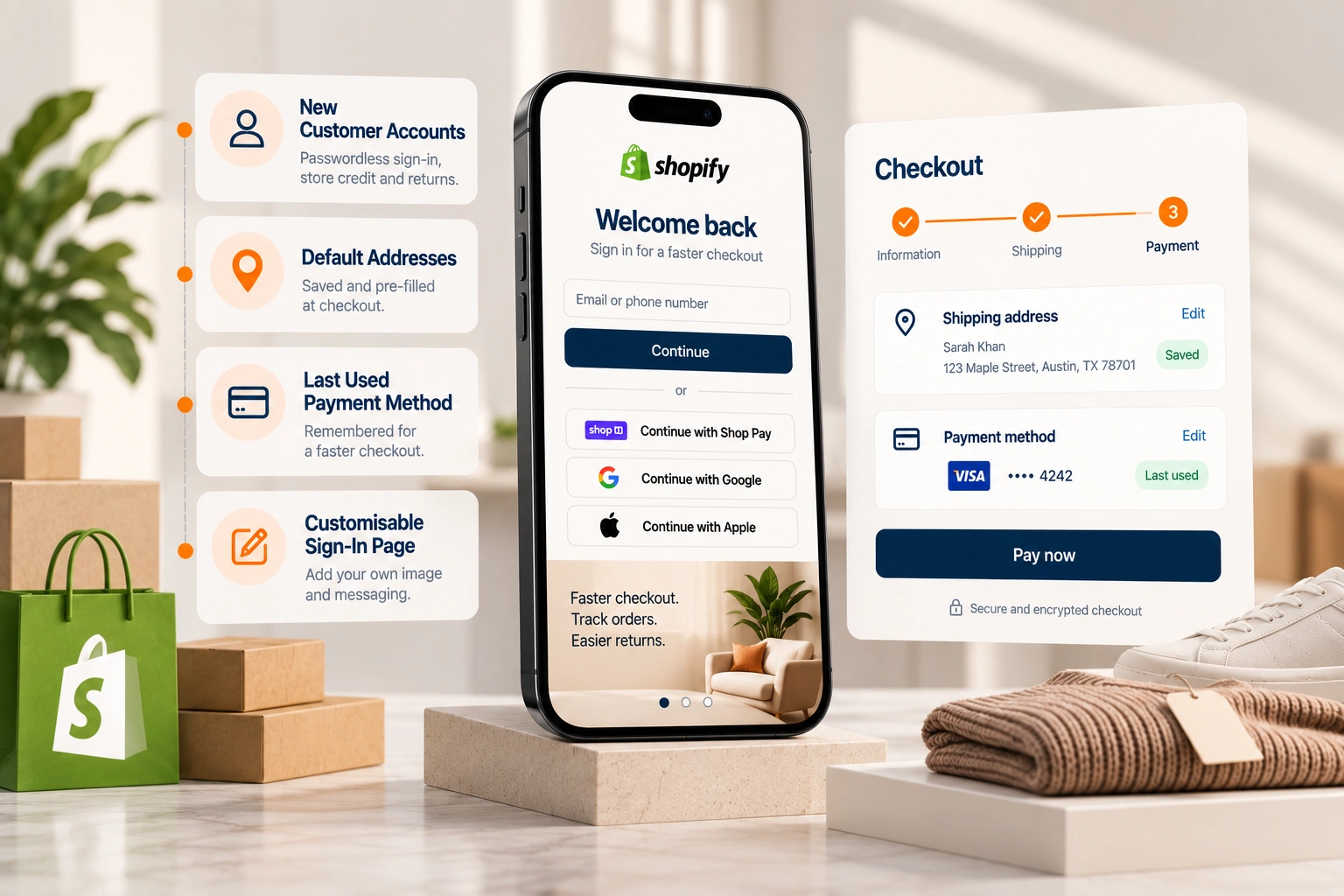
The fastest checkout is the one a customer has already filled in. Through 2026 Shopify has made a run of changes that all point the same way: a customer who signs in gets a shorter checkout than one who does not. For a store where repeat customers matter, that turns signing in from an account feature into a conversion lever.
This is what changed and when, which changes depend on the store's plan and settings, and the practical work of getting more customers signed in before they reach the payment step.
What changed, in order
On 26 February 2026 Shopify deprecated legacy customer accounts. In its words, "Legacy customer accounts are no longer available to new stores," existing stores on them can carry on for now, and "a final sunset date for legacy customer accounts will be announced later in 2026." The newer accounts bring passwordless sign-in, store credit and returns built in, and app blocks that need no code.
On 13 April 2026, "Customers can set and manage default addresses in checkout." A signed-in customer's default address replaces the old behaviour of reusing the last address, it is set automatically the first time an address is entered or an order placed, and the customer can change it at checkout or in their account.
On 20 May 2026 the customer account sign-in page was refreshed and made editable: a two-column layout, the form on the left and "a customizable background image on the right," edited in the checkout and accounts editor. And on 21 August 2026, "Checkout now remembers a signed-in customer's last-used payment method and pre-selects it on future purchases."
Which of these apply to your store
Default addresses reach any signed-in customer. If the store still runs legacy customer accounts, the upgrade is the first job, both for the features and because the sunset date is coming.
The payment change is narrower than it sounds. It applies where saved payment methods are turned on, for direct sales, or to B2B vaulted cards. And Shopify's help centre is clear about who has saved payment methods: they "are available only to stores that use Shopify's Enterprise offering, including commerce components, and have customer accounts set up," and they are "turned off by default." For most stores the remembered card comes from Shop Pay instead, which Shopify says is compatible with saved payment methods where both are on.
So the honest summary for a typical store: the address change helps now, the sign-in page can be made to work harder now, and the payment change helps through Shop Pay rather than directly.
Why signing in matters to conversion
Every field a returning customer has to fill again is a chance to stop, and the checkout fields are the ones a customer on a phone least wants to type: a full address, a card number. A signed-in customer with a default address and a remembered payment method skips most of them. Shopify has not published what these changes do to conversion, so measure it on your own store rather than borrowing somebody else's number.
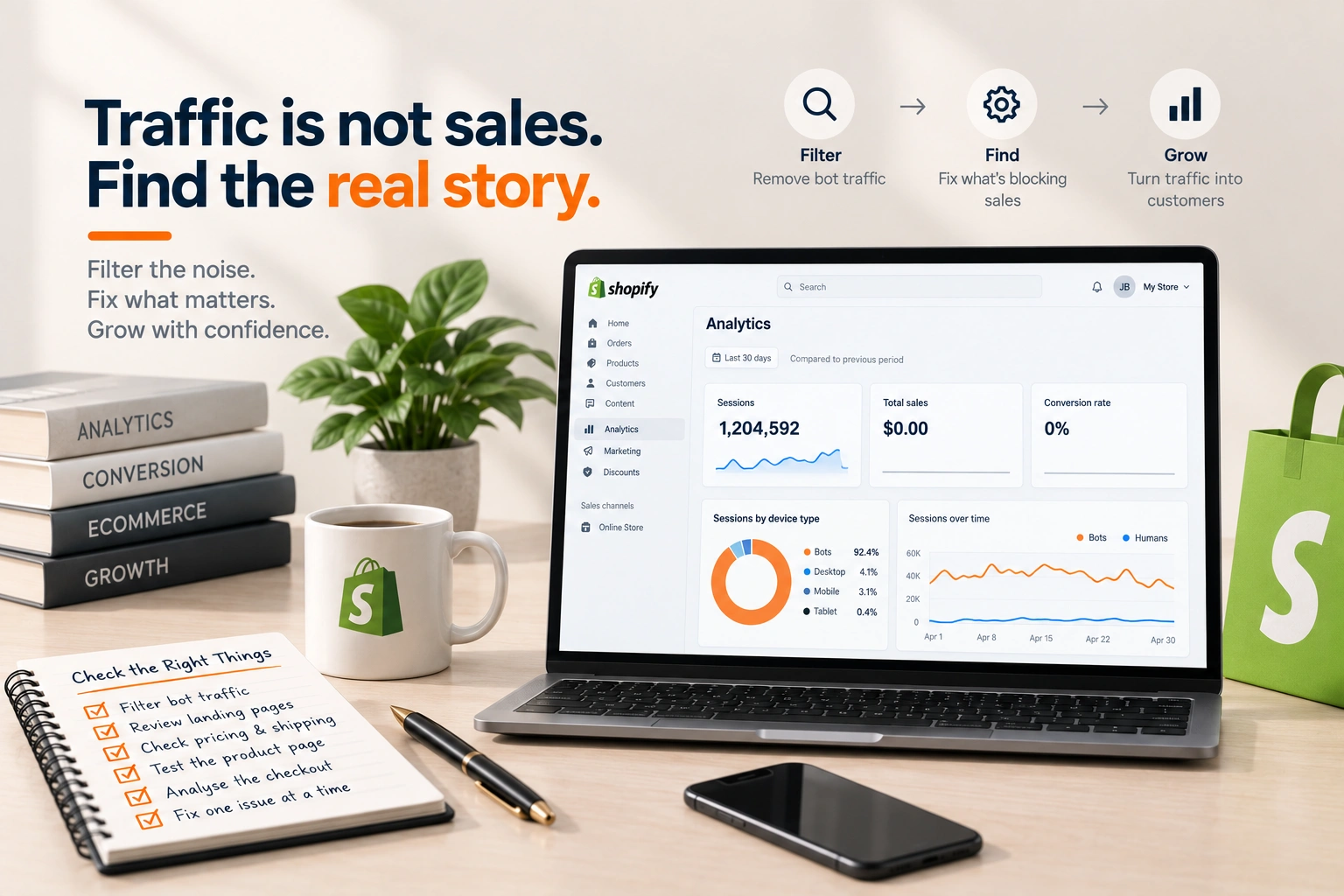
It matters most where customers come back: consumables, replenishment, anything bought more than once a year. A store that sells a single purchase in a lifetime has less to gain here than from the product page and the first checkout, and what actually slows a Shopify store is the better place for it to start.
Getting more customers signed in
Ask at the moment it pays off for the customer, not at the door. The order status page and the confirmation email are where a customer has just bought and is most willing to keep the details for next time. A sign-in wall before the first purchase does the opposite.
Use the sign-in page Shopify has just made editable. The background image and the text can say what signing in gets the customer here, the saved address, faster checkout, order tracking, instead of a bare form. Passwordless sign-in, part of the newer accounts, removes the forgotten password that stops a returning customer at exactly the wrong moment.
And give the signed-in customer something the guest does not get, if the business can: early access, store credit, easier returns. A reason to sign in beats a request to.
What to check this week
Which customer accounts the store runs. The customer accounts settings in the admin say whether it is on the newer accounts or the legacy ones; a legacy store has the upgrade to plan, and the sooner it happens the less it collides with the busy season.
Whether Shop Pay is on, since for most stores that is where a remembered card comes from. Whether the sign-in page still shows Shopify's default text and no image, which is a free improvement now that it can be edited. And whether the order status page and the confirmation email invite the customer to keep their details, because that is where the next checkout gets shorter.
A store on Shopify's Enterprise offering has one more setting to look at: saved payment methods are off until somebody turns them on, and the August change does nothing until they are.
What to measure
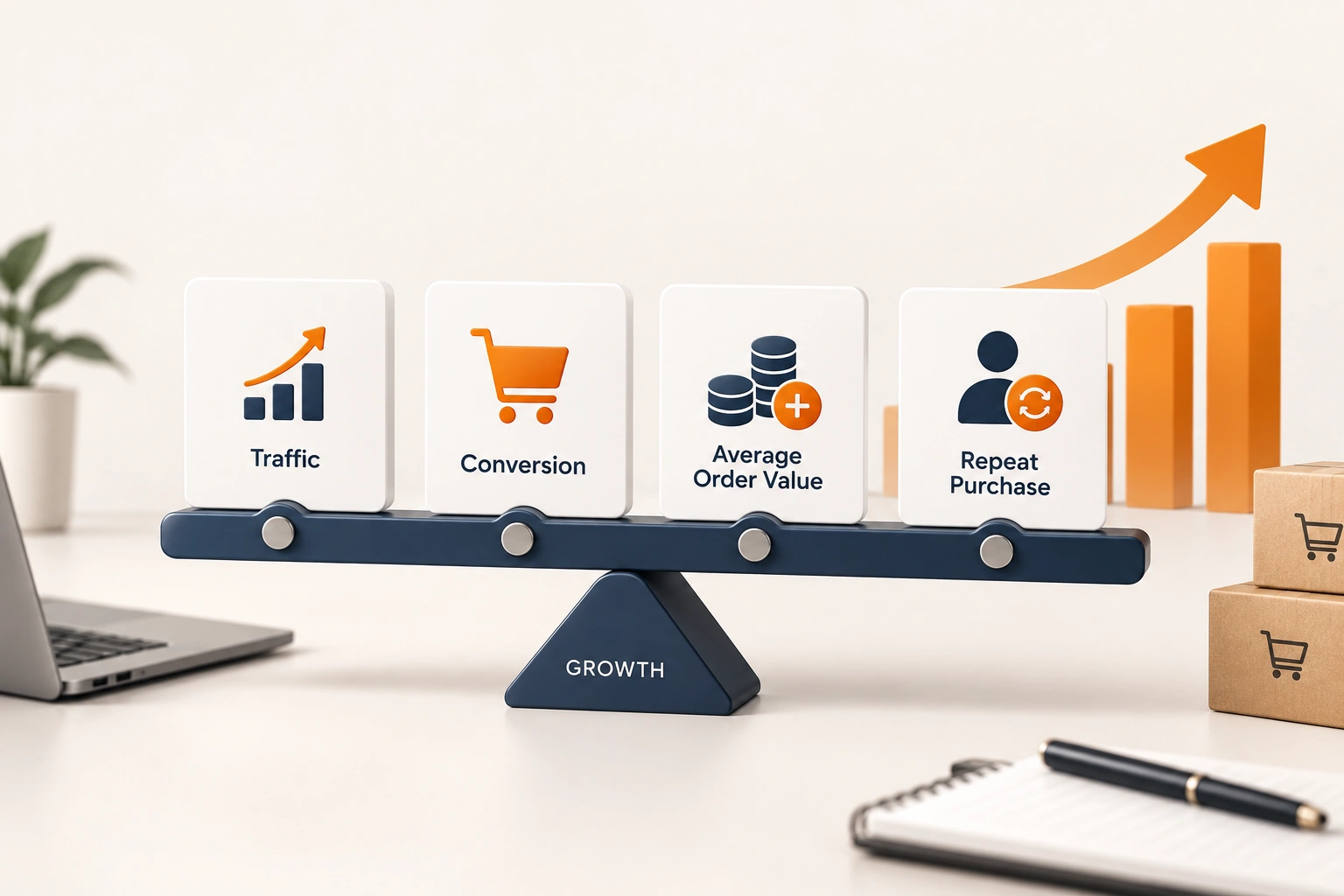
Three numbers, compared month on month: the share of orders placed by signed-in customers, checkout completion for signed-in customers against guests, and how often customers return to buy again. If the first rises and the second holds its lead over guests, the work is paying. Seasonal swings move all three, so compare like months, and read them beside the rest of the store's figures, as the BFCM checklist does for the busiest weeks.
How we work on it
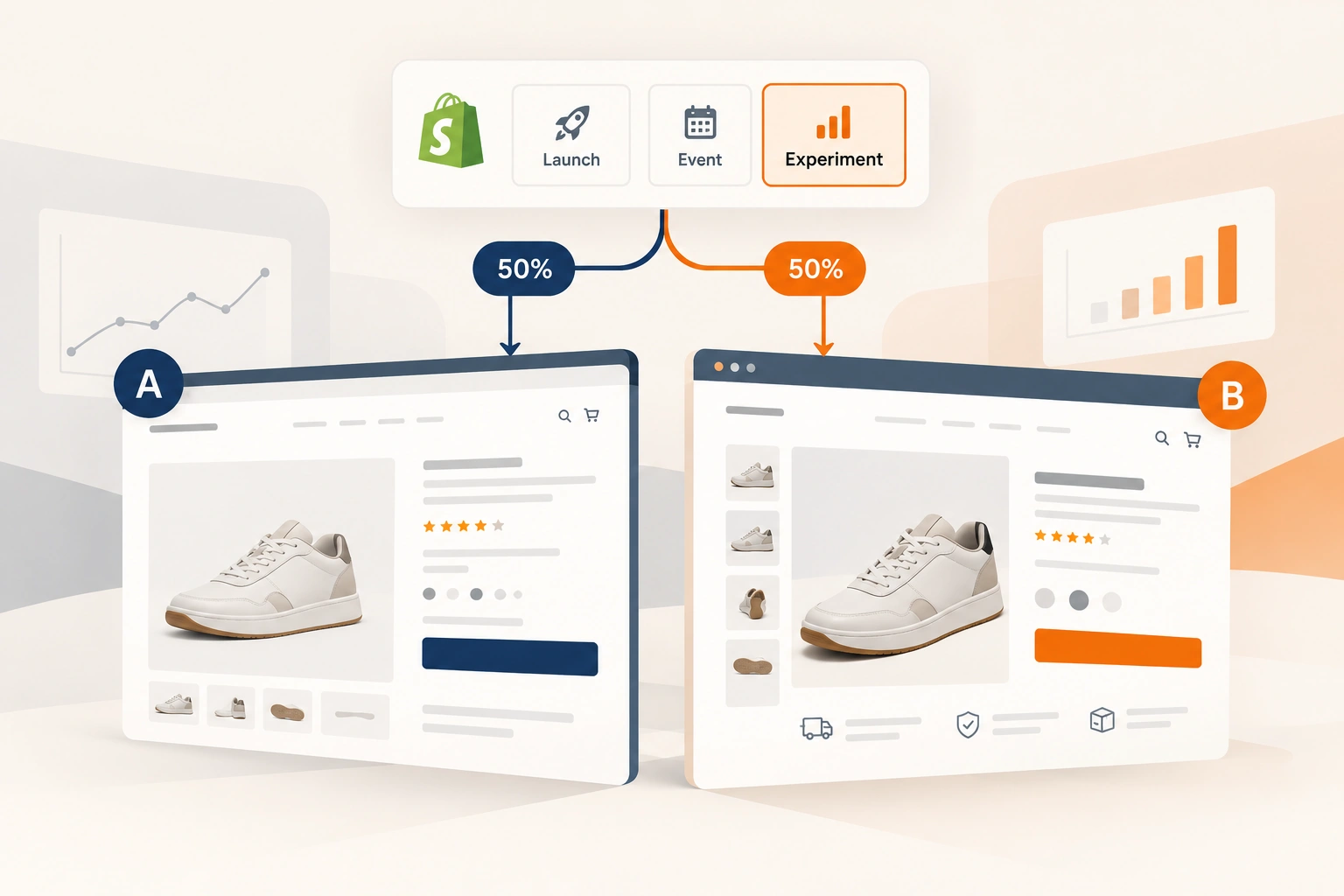
Our conversion rate optimisation work starts with where customers stop, and on a store with repeat buyers checkout is usually on that list. The sign-in prompts, the account upgrade and the order status page are changes we test rather than assume. For the store as a whole, our Shopify service covers the rest of the work around it.
Frequently asked questions
The questions that come up most often on this subject.
Legacy customer accounts were deprecated on 26 February, default addresses arrived in checkout on 13 April, the sign-in page became editable on 20 May, and on 21 August checkout began pre-selecting a signed-in customer's last used payment method where saved payment methods are enabled.
Shopify's help centre says saved payment methods are available only to stores on Shopify's Enterprise offering, including commerce components, with customer accounts set up, and that they are turned off by default. They work alongside Shop Pay.
They are deprecated. Since 26 February 2026 they are not available to new stores, existing stores can keep using them for now, and Shopify says it will announce a final sunset date later in 2026.
A signed-in customer's default address is set automatically the first time they enter an address or place an order, replaces the old last used address behaviour, and can be changed at checkout or in their account.
Ask after the first purchase, on the order status page and in the confirmation email, rather than before it; use the editable sign-in page to say what signing in gets them; turn on passwordless sign-in through the newer customer accounts; and give signed-in customers a benefit guests do not get.