Google Ads AI Max Auto-Upgrade: What Changes in Your Search Campaigns, and When
From September 2026 Google upgrades Search campaigns that use automatically created assets or campaign-level broad match to AI Max; Dynamic Search Ads follow from February 2027. What each part of AI Max does, what is switched on for you, the controls, and what to check first.


Loading Article banner
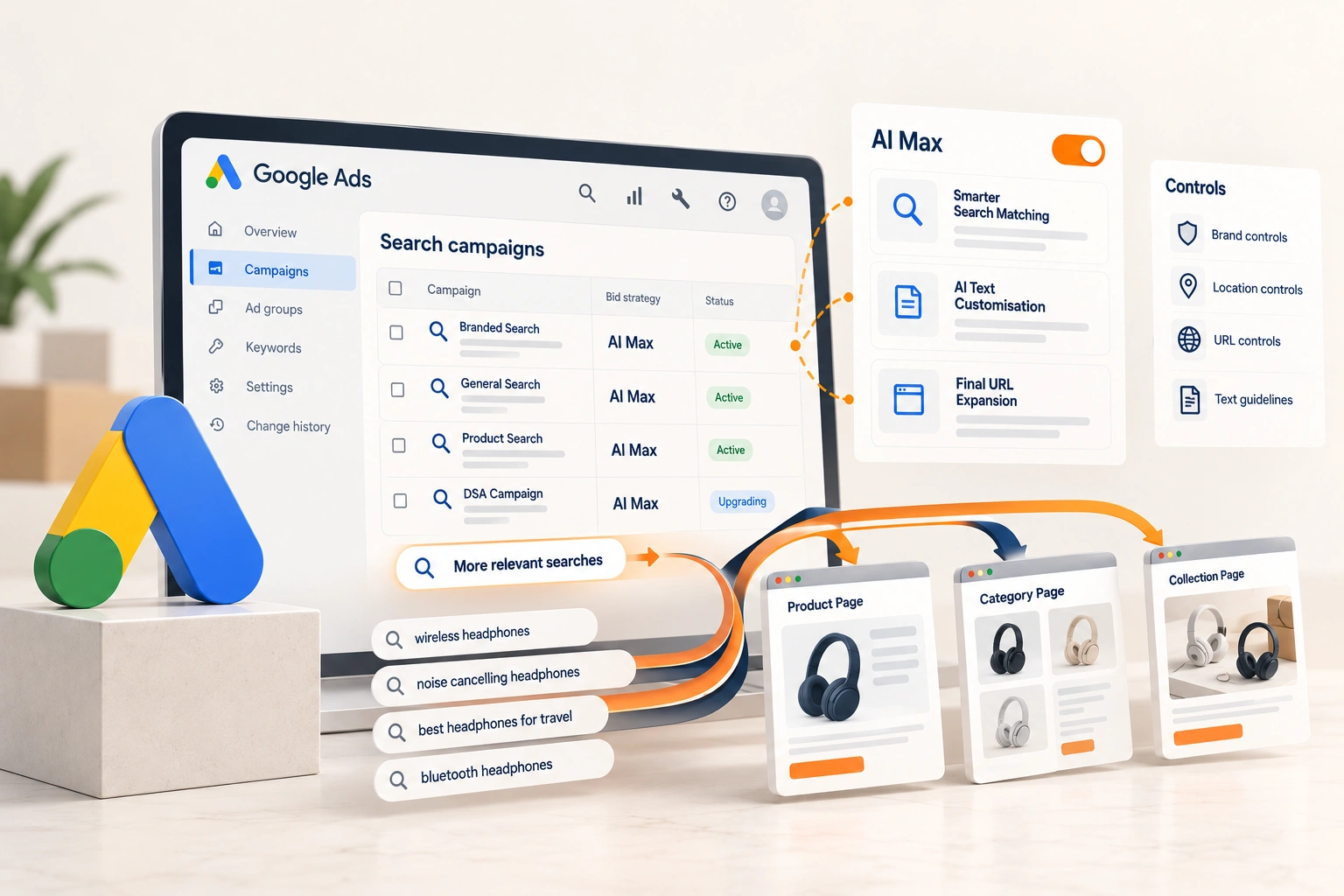
Google is moving Search campaigns onto AI Max, and for many accounts it is doing the moving itself. From September 2026, Search campaigns that still use automatically created assets or the campaign-level broad match setting are upgraded to AI Max automatically. Dynamic Search Ads follow later, from February 2027.
An automatic upgrade is still an upgrade you are responsible for. It changes which searches your ads can show on, what the ads say and which pages they send people to. This is what AI Max is, what the upgrade switches on, the controls that steer it, and what to check in an account before and after.
What AI Max is
Google launched AI Max for Search campaigns in May 2025 as a "one-click feature suite" of targeting and creative enhancements. It has three parts. Search term matching uses "broad match and keywordless technology to find more relevant and high-performing search queries." Text customisation, "formerly known as 'automatically created assets'," writes new headlines and descriptions from the landing page, the ads and the keywords. And final URL expansion sends a searcher to the page on the site Google judges most relevant to the search, rather than always to the page the ad names.
Put simply: AI Max decides more of where the ad shows, what it says and where it lands. That can find good searches a keyword list missed. It can also spend on searches, words and pages nobody in the business chose.
The timeline, and what is switched on
Google's post, first published on 15 April 2026 and updated on 11 June, sets out two phases. Now, Google "strongly recommend[s] transitioning to AI Max now to maintain full control over your campaign setup." Then, from September 2026, "remaining eligible Search campaigns with legacy settings will automatically upgrade to AI Max."
The June update split the dates. Campaigns using automatically created assets or campaign-level broad match still upgrade from September 2026, with "search term matching and text customization enabled by default." For Dynamic Search Ads, Google is "extending the timeline for Dynamic Search Ads sunset and auto-upgrade, which will begin in February 2027," and when it comes, all three AI Max features will be enabled: search term matching, text customisation and final URL expansion.
Google's own figure for the result is that AI Max campaigns "see an average of 7% more conversions or conversion value at a similar CPA/ROAS," from "Google internal data, 2026; for non-Retail advertisers." It is Google's average, not a forecast for any one account, and it excludes retail advertisers, the group an online store belongs to.
The controls
Google describes AI Max as coming with "more advanced controls" to "steer AI with greater precision," naming brand controls, location controls and text guidelines. In practice there are four worth setting before the upgrade rather than after. Brand controls, at campaign and ad group level, include or exclude searches mentioning particular brands, which keeps a non-brand campaign from quietly buying your own brand's searches. Locations of interest, at ad group level, keep matching tied to where the business actually sells. URL controls keep final URL expansion away from pages that should never be a landing page: careers, blog posts, policy pages. And text guidelines, with asset removal, keep the generated copy inside what the brand will say.
What to check before September
Find the campaigns that will move. Any Search campaign using automatically created assets or the campaign-level broad match setting is in scope for September, and any Dynamic Search Ads campaign for February 2027. Google's recommendation is to move them yourself, so that the upgrade happens with your controls set, not with the defaults.
Decide final URL expansion deliberately. For a store with clean category and product pages it can help; for a site with thin pages, old promotions or content pages that do not sell, it can send paid clicks to the wrong place. Set URL exclusions first.
Set a budget and a review date. Wider matching can mean a period of spend while the campaign finds its feet. Agree in advance what cost per acquisition or return on ad spend the campaign must hold, and read it after two to four weeks, before judging the change a success or a failure.
How to see what AI Max did
Google Ads Help sets out where the matches show. In the search terms report, filter the match type column for AI Max, or add the Source column to see which terms AI Max brought in. The "Search terms and ad combinations" view shows "the headlines, landing pages, campaigns, and ad groups that made up the full customer ad journey." Assets written by text customisation are marked "Google AI" in the Added by column. Google notes one limit: filtering for AI Max "may show lower numbers" because the filter does not include "Other search terms."
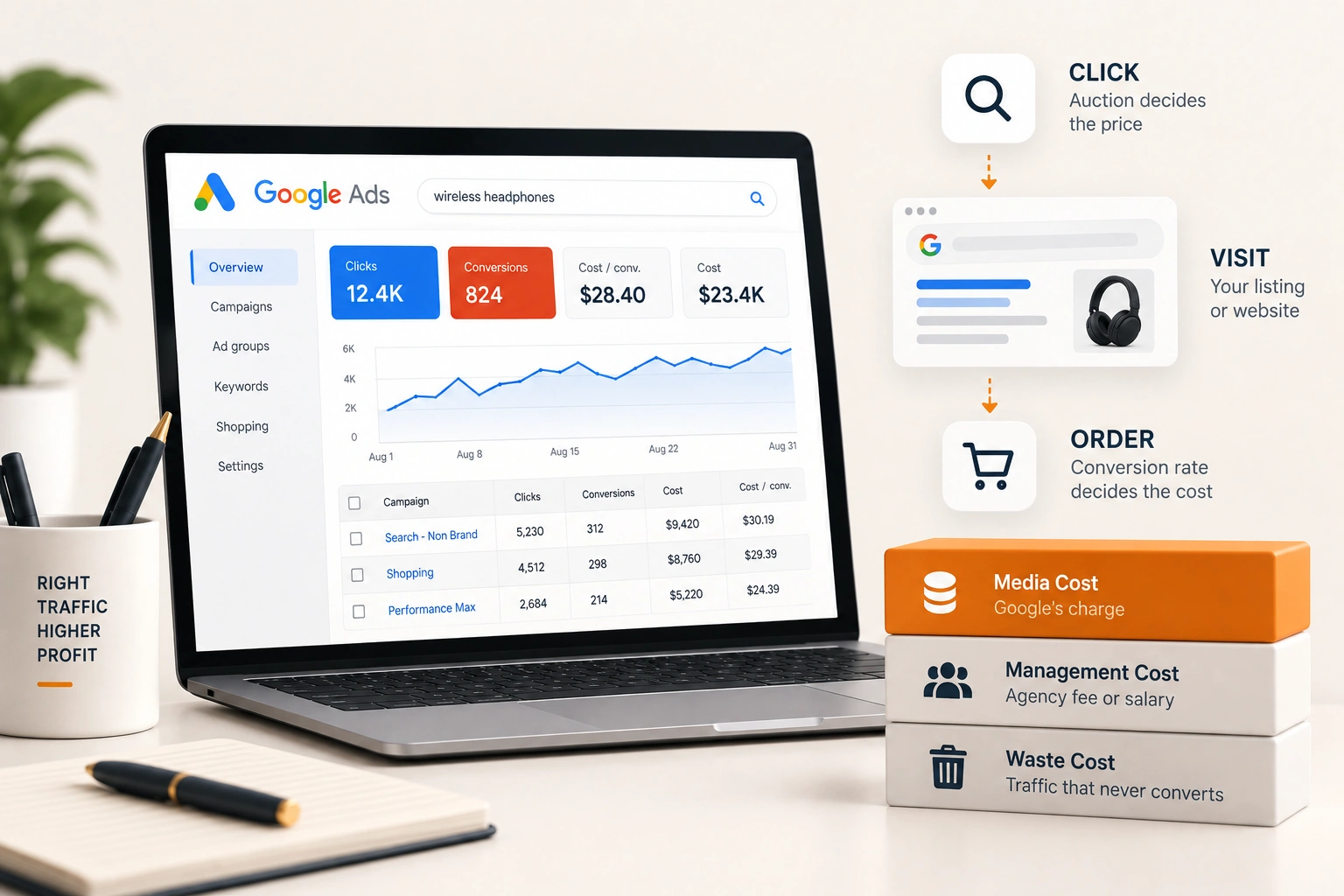
Read those weekly for the first month. The questions are simple: which new searches did it buy, did they convert, which pages did it send them to, and what did the ads say. What Google Ads actually costs sets out how to judge the cost side of the answers.
The other automation to know about: promotions
Separately, Google Ads Help describes automated promotions as a feature that "automatically sources, validates, and displays high-quality deals and offers from your website and other sources," served in "Search and Performance Max campaigns that use location assets." The help page says nothing about how to review or turn them off, so a business using location assets should check its ads for offers it did not write. And the promotion assets you do write have a clock: "Existing promotion assets that haven't been modified for the last 6 months are automatically paused."
How we approach it
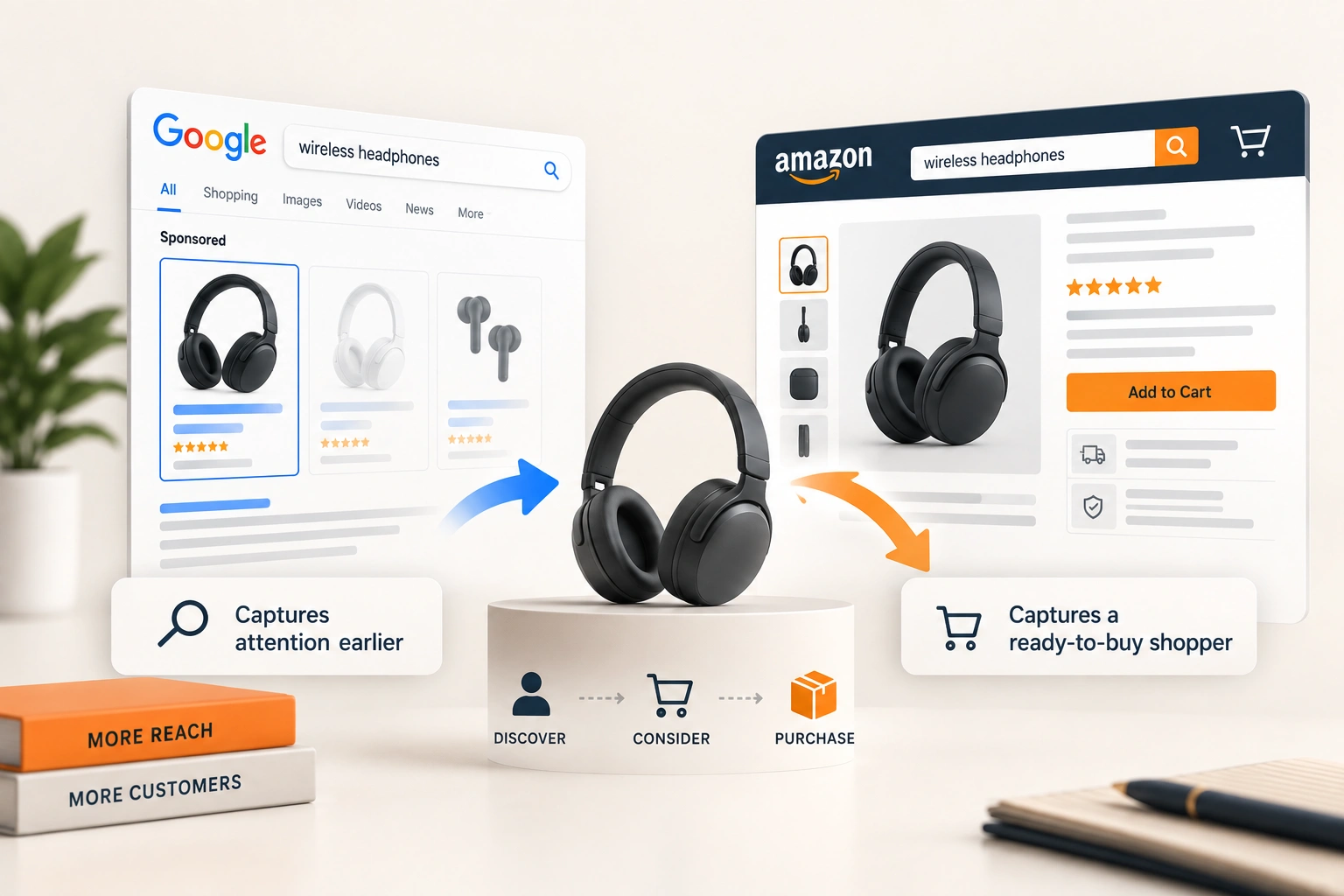
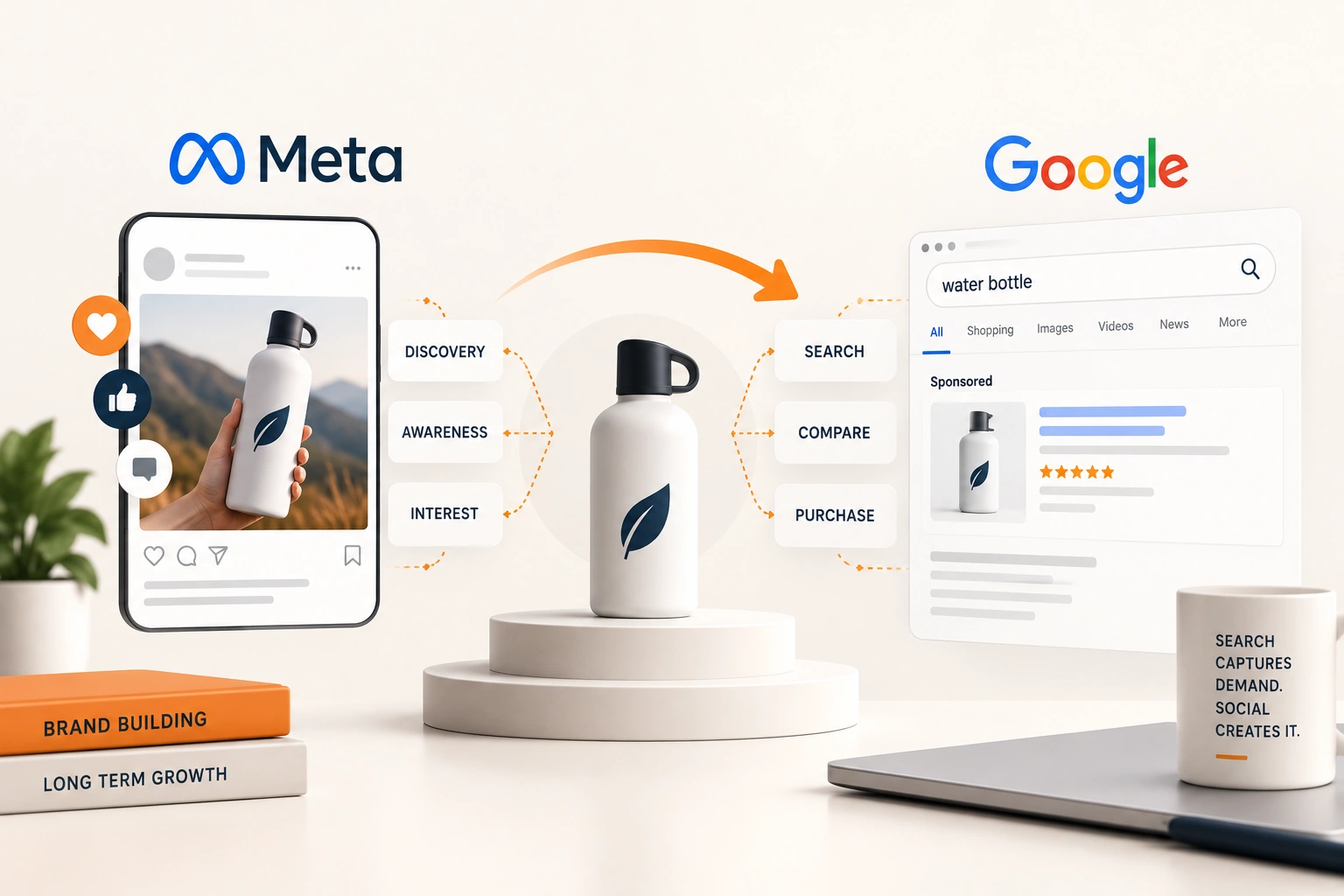
An upgrade Google applies by default is a decision the account owner should still make. Our Google Ads management moves campaigns onto AI Max deliberately, with brand, location and URL controls set first and a review date agreed. How search fits beside the other channels is in Google Ads against Amazon Ads and Meta Ads against Google Ads, and where paid media sits in growth as a whole is in the growth strategy pillar.
Frequently asked questions
The questions that come up most often on this subject.
From September 2026 for Search campaigns using automatically created assets or the campaign-level broad match setting. Google moved the Dynamic Search Ads sunset and auto-upgrade to begin in February 2027.
For campaigns using automatically created assets or campaign-level broad match, search term matching and text customisation are enabled by default. For Dynamic Search Ads, all three features, search term matching, text customisation and final URL expansion, will be enabled.
It is the AI Max feature that sends a searcher to the page on your site Google judges most relevant to their search, instead of always to the ad's final URL. URL controls let you exclude pages that should never be used.
In the search terms report, filter the match type column for AI Max or add the Source column. The Search terms and ad combinations view shows the headlines and landing pages used. Google notes the AI Max filter may show lower numbers because it excludes Other search terms.
Google recommends it, so the move happens with your controls set rather than the defaults. Set brand, location and URL controls first, agree the cost or return the campaign must hold, and review it after two to four weeks.