Intent to Use Trademark: The Statement of Use, the Deadlines and Brand Registry
A brand can file its trademark before it sells anything, but the application cannot register until use is proven, on a deadline set by the notice of allowance. The two windows, the extensions, the fees, what an Amazon listing must show and where Brand Registry fits.
 Muhammad Shehryar12 min read
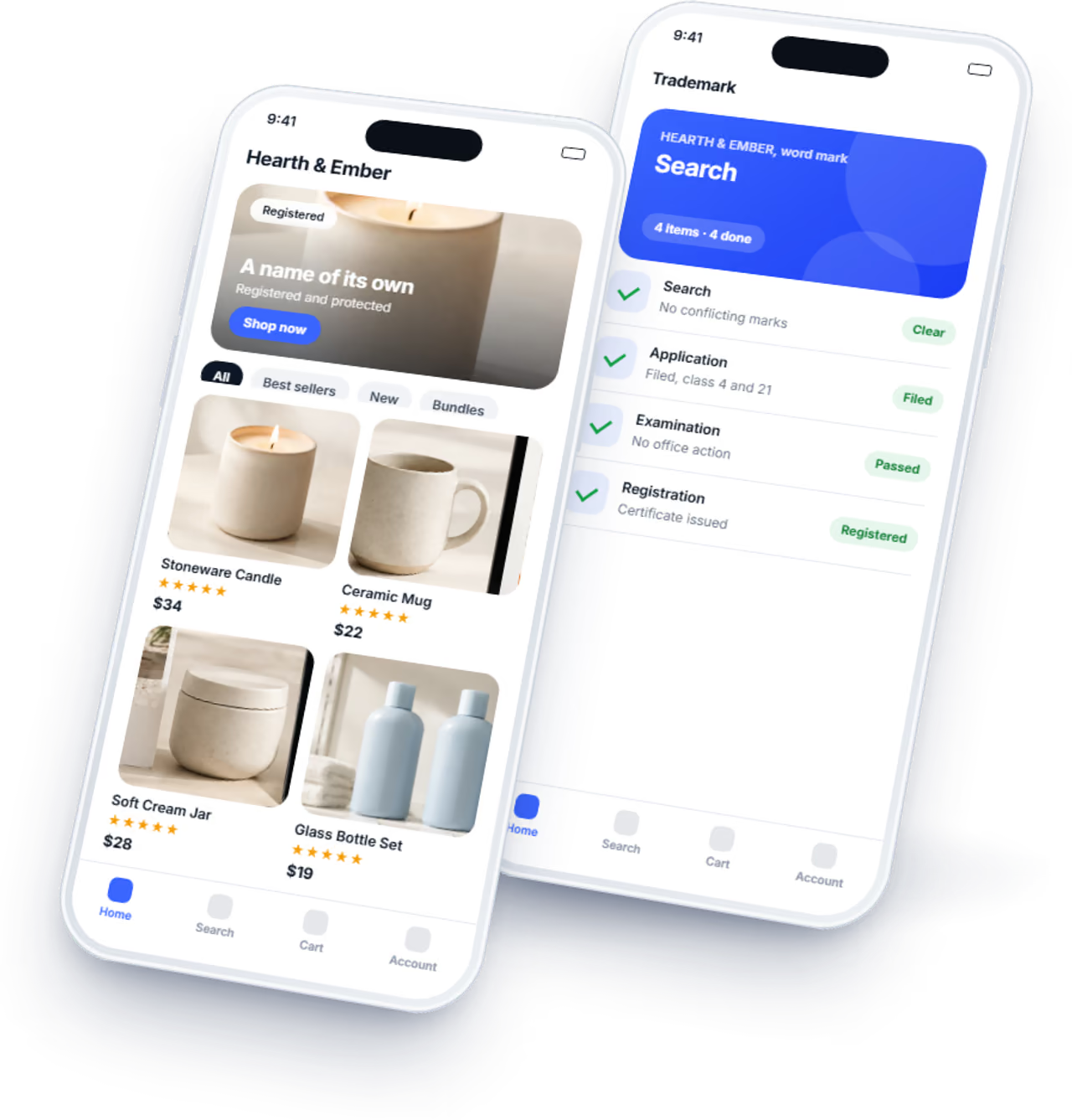
Most marketplace brands choose their name months before the first carton ships. The United States Patent and Trademark Office (USPTO) lets a brand file an intent to use trademark application for that name before it sells anything, and the filing date it gets is the date that counts if somebody else files a similar mark later.
The catch is that an intent to use application cannot become a registration until the brand proves the mark is in use, and the deadline for that proof starts on a date the brand does not choose. This guide covers when to file on intent, the two windows for proving use, the deadlines after the notice of allowance, what an Amazon listing must show, and where Brand Registry fits.
What Is an Intent to Use Trademark Application?
An intent to use application is one filed under section 1(b) of the Trademark Act, where the applicant swears to a bona fide intention to use the mark in commerce instead of showing use on the day it files. It needs no specimen and no dates of use at filing. It is examined like any other application, but it cannot register until use is proven.
The rule is 37 CFR 2.34. An application on the use basis, section 1(a), must state the date the mark was first used anywhere and the date it was first used in commerce, and include a specimen showing it in use. An intent to use application needs only the applicant's verified statement of a bona fide intention to use the mark in commerce.
The words bona fide matter. The Trademark Act defines use in commerce as the bona fide use of a mark in the ordinary course of trade, "and not made merely to reserve a right in a mark". For goods, the mark has to be on the goods, their containers, their labels or tags, or a display associated with them, and the goods have to be sold or transported in commerce. An intent to use filing holds a place in line for a brand with a real plan to sell. It is not a way to park names.
Should a Marketplace Brand File on Use or on Intent to Use?
File on use when every product listed in the application already carries the mark and is being sold or shipped in US commerce: you supply the specimen now and skip a later filing and its fee. File on intent to use when the packaging, the listing or some of the listed goods are not live yet, and prove use once they are.
| Step | Use basis, section 1(a) | Intent to use, section 1(b) |
|---|---|---|
| At filing | Dates of first use and a specimen | A verified statement of bona fide intention |
| Proof of use later | None | An amendment to allege use or a statement of use, each with a specimen and a fee per class |
| Deadline after approval | None for proof of use | Six months from the notice of allowance, extendable to 36 months |
| When it can register | After examination and publication | Only after the proof of use is accepted |
In practice the calendar decides. A brand that files while samples are still being approved, or that lists goods it plans for next year beside the ones it sells now, files on intent to use for at least those goods. A brand already selling the product under the name has no reason to add a step. Which goods and classes to list is covered in our guide to choosing trademark classes, and every class listed on intent is a class whose use has to be proven later.
The Two Windows for Proving Use
An intent to use application has two moments when proof of use can be filed, and a gap between them when nothing filed is looked at.
The first is the amendment to allege use. Under 37 CFR 2.76 it can be filed at any time between filing the application and the date the examining attorney approves the mark for publication. It carries the same content as a statement of use: a verified statement that the mark is in use, the dates of first use, one specimen and the fee per class. Where an acceptable amendment is filed during examination, no statement of use deadline follows.
The second is the statement of use, which 37 CFR 2.88 allows only after the notice of allowance. The manual says the notice of allowance issues when an intent to use application has been published for opposition and not successfully opposed, about eight weeks after publication, and that it is not announced in the Official Gazette: the brand learns of it from the notice itself or the application's status. A statement of use filed before it is premature and is not reviewed; an amendment to allege use filed after approval for publication is not reviewed either. Between the two, a brand that has launched waits.
Both filings carry the same condition. The mark must be in use on all the goods or services in the application, or the brand must ask to divide the goods not yet in use into a separate application, which keeps them pending while the rest goes ahead. Goods left out of a statement of use without dividing them are presumed deleted, and they cannot be put back.
How Long Do You Have to File a Statement of Use?
Six months from the date the notice of allowance issues. A brand not yet using the mark can ask for six-month extensions instead: the first within those six months, with a fee and a sworn statement that it still intends to use the mark, and up to four more, each filed before the last one runs out. Nothing can run past 36 months from the notice of allowance.
The rules are in 37 CFR 2.89. The first extension needs only the request, the fee per class and the verified statement of continued intention. The second to the fifth each also need a showing of good cause: a statement of the brand's ongoing efforts to use the mark on each of the goods, which the rule says may include product research or development, market research, manufacturing, promotional activity, steps to acquire distributors and steps to obtain government approval. A satisfactory explanation of why there were no efforts is the alternative.
One provision is worth knowing for a brand that launches late in the cycle. It may file one extension request together with its statement of use, or after it, if time remains in the current six months and the extension would not pass the 36 month limit. Its good cause can be the brand's belief that the statement is valid, with more time needed only if the Office finds it fatally defective. It costs one extension fee and guards against a specimen refused with no time left.
Miss the deadline and the application is abandoned. Under 37 CFR 2.66, a brand whose delay was unintentional can petition to revive within two months of the notice of abandonment, with a statement that the delay was unintentional and the statement of use or extension request it failed to file. After that, the filing date is gone, and a new application starts from the day it is filed.
What the USPTO Charges at Each Step
Each of these filings carries its own fee, set per class in 37 CFR 2.6. The fees for filing electronically, as the regulation stood when we read it on 27 November 2026:
| Filing | USPTO fee, filed electronically |
|---|---|
| Application, base fee | $350 per class |
| Amendment to allege use | $150 per class |
| Statement of use | $150 per class |
| Each six-month extension of time to file a statement of use | $125 per class |
| Petition to revive after an unintentional delay | $250 per petition |
| Request to divide an application | $100 per new application created |
A statement of use or an extension must pay for at least one class within the deadline, or the filing fails. And if a brand pays for fewer classes than it listed without saying which to drop, the Office gives it time to pay or choose, then applies the money to the classes in ascending order and deletes the rest. The application fee itself, and the surcharges that can be added to it, are in our breakdown of USPTO trademark filing fees.
What Counts as a Specimen When the Product Sells on Amazon?
A photograph of the mark on the product, its packaging, its labels or its tags, or a web page that shows the product, shows the mark in association with it and offers a way to order it. A marketplace listing can qualify: the page need not be the brand's own website. Its address and the date it was accessed must be given, and mockups are refused.
The specimen rule is 37 CFR 2.56, which says an artist's rendering, a printer's proof, a computer illustration, a digital image or a similar mockup is not a proper specimen. The USPTO's examination manual, the Trademark Manual of Examining Procedure (TMEP), sets out the web page test in section 904.03(i): a picture or a textual description of the goods, the mark shown in association with them, and a means of ordering. It says a page from a third-party retailer can be acceptable when it meets that test.
Two parts of the TMEP bear directly on Amazon listings. The mark has to be shown so that a shopper would recognise it as a brand, not buried as information in a description. And its list of signs that a specimen does not show real use in US commerce includes an online marketplace page whose language, currency, price, first available date or ship-to destination contradicts the use claimed. A listing that says it first became available in March does not support a claim that the mark was in use in January.
Examining attorneys may check whether a product really exists, and the TMEP gives "checked Amazon.com" as an example of the note they leave on the file. The safest specimen is the real thing: a photograph of the packaging or product with the mark on it, or a capture of the live listing with its address and date, taken when the product can be bought. Mockup refusals, and how to answer one, are in our guide to trademark office actions.
Brand Registry While the Application Is Pending
Amazon's Brand Registry page lists the requirement as a pending or registered trademark for the brand name or logo, and its questions add that in some cases a brand may enrol with a pending application. Enrolment asks for the registration or application number the office issued, and at first allows one country's trademark office, with others added after approval. The trademark text must match the brand name on the Brand Registry application, and the brand needs a logo with its name permanently affixed to its products or packaging.
An intent to use application has its number from the day it is filed, so the brand holds the number Amazon asks for long before it holds a registration, but no certainty that the application will finish. If no statement of use is filed in time, the application is abandoned; what that means in Brand Registry is covered in the office action guide linked above. The packaging requirement is the useful overlap: the logo affixed to the product that Amazon asks for is also the strongest specimen the USPTO accepts.
For a lawyer's help with the filing and quicker access to Brand Registry, Amazon's own route is set out in our guide to Amazon IP Accelerator. What Brand Registry unlocks once the brand is in is in our guide to Brand Registry and listing protection.
The Mistakes That Cost an Intent to Use Filing
The avoidable failures are about dates and paperwork, not the mark itself:
- Listing goods the brand will never sell. Every listed good has to be in use before the statement of use, or be divided out, and goods dropped from the statement of use are deleted for good.
- Filing at the wrong moment. An amendment to allege use after approval for publication, or a statement of use before the notice of allowance, is not reviewed.
- A specimen made for the filing. A rendering, a listing preview or a page captured before the product could be bought is a mockup under the rule.
- Dates the listing contradicts. The first use dates claimed have to fit what the listing and the brand's own records show.
- Letting the first six months pass. The first extension must be filed inside them, and each later one before the previous extension runs out.
- Treating the statement of use as a draft. Once filed on time it cannot be withdrawn to go back to waiting, so a weak specimen stays in the record.
- An unsigned or wrongly signed verification. A substitute has to reach the Office before the deadline, not after it.
A Calendar From Filing to Registration
Set out in order, the work for a marketplace brand filing before launch looks like this:
- File on intent to use, with the goods the brand sells or has a real plan to sell, and note the serial number.
- Enrol in Brand Registry with the pending application where Amazon accepts it, once the logo is on the packaging.
- If the product launches before the mark is approved for publication, file an amendment to allege use, so use is proven during examination rather than after the notice of allowance.
- When the notice of allowance issues, put the six month deadline in the calendar the same day, with a reminder a month before it.
- As soon as the product can be bought, capture the specimen: packaging photographs and the live listing with its address and date.
- File the statement of use inside the first six months if every listed good is in use; otherwise divide, or file an extension with the efforts made so far.
These deadlines end applications that were otherwise sound, which is why our trademark registration support tracks the notice of allowance and the statement of use from the day the application is filed. Registration is granted by the trademark office and by nobody else; our side is making sure what reaches it is complete and on time.
Frequently Asked Questions
The questions that come up most often on this subject.