Amazon Brand Registry Reseller Role: Who Can Create and Sell on a Registered Brand's Listings
To create a new listing for a brand enrolled in Brand Registry, Amazon says a seller needs a Brand Representative or Reseller role from that brand. What each role does, how a brand assigns one, how a reseller asks for it, and what the role does not do.
 Faizan Mughal2026-11-1310 min read
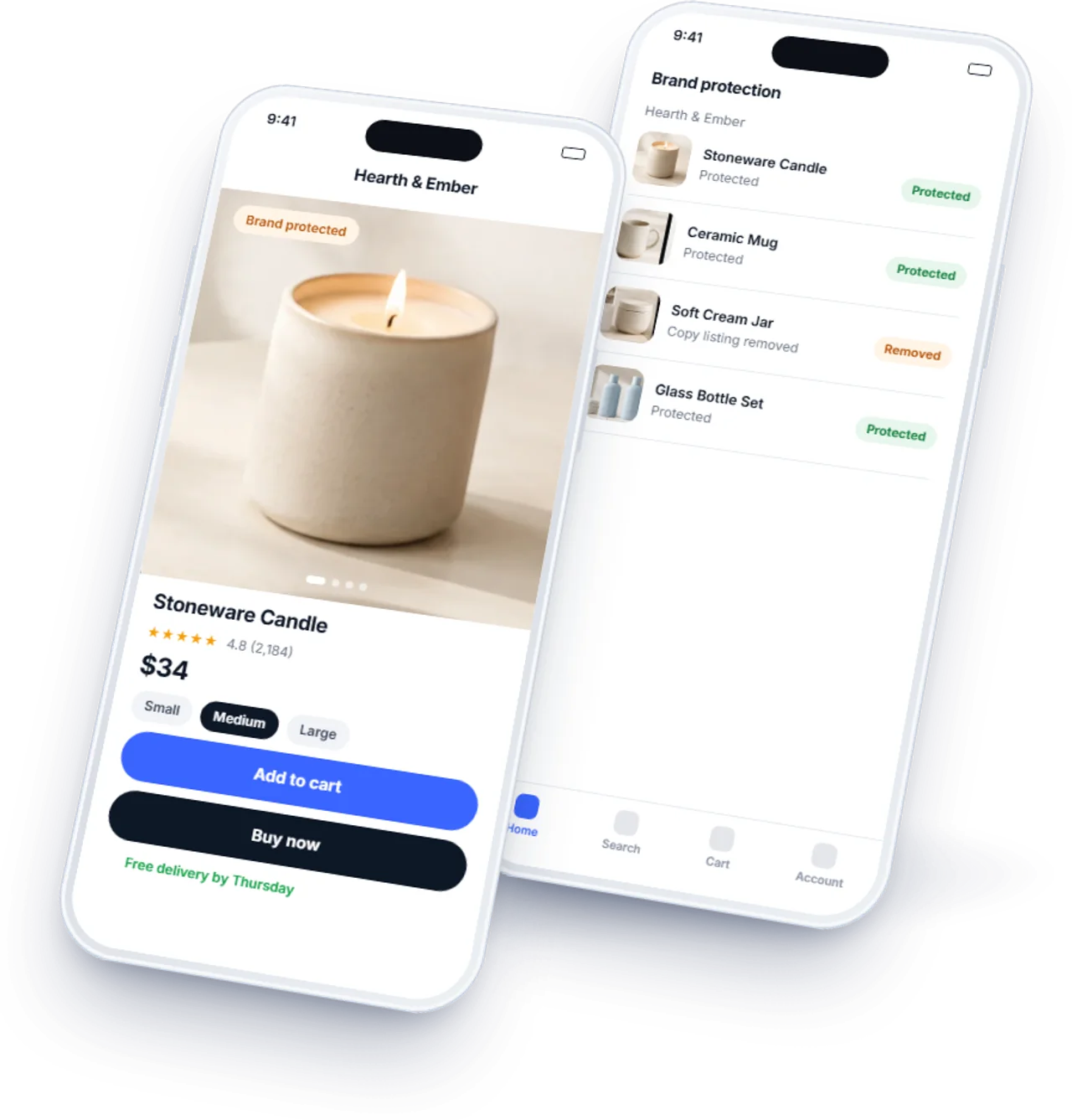
This year a lot of resellers found they could no longer create a listing for a brand they had sold for years, and a lot of brands started getting requests for something called a Reseller role. Both come from the same rule. Amazon's own guide to creating a new product page says: "If the product is part of a brand enrolled in Amazon Brand Registry, you need to be a Brand Representative or Reseller authorized by the brand to list it using our standard processes."
This guide is for both sides of that sentence: the brand deciding who gets a role, and the reseller asking for one. It sets out what Amazon has published, what has only been reported, and what each side should do now.
Selling Roles and Protection Roles Are Different Things
Brand Registry has two families of role, and most confusion starts with mixing them up. Amazon's guide to Brand Registry roles explains: "There are three types of protection roles: Rights Owner, Administrator, and Registered Agent." Separately, "There are two types of Brand Registry selling roles: Brand Representative and Reseller."
They unlock different things. In Amazon's words: "Protection roles don't provide access to brand selling benefits like A+ Content, while selling roles don't grant access to the User Permissions tool in Brand Registry, or protection benefits like Report a Violation." A selling role is attached to a selling account; Amazon's definition is that it "defines the relationship of a seller with a brand and can be assigned to a selling account".
If you are new to Brand Registry itself, our guide to Amazon Brand Registry and listing protection covers enrolment and what the protection side does.
Brand Representative and Reseller, in Amazon's Words
The Brand Representative role "is for internal, first-party sellers who are directly employed by the brand." When the trademark owner uses the same login for Brand Registry and Seller Central, Amazon assigns it automatically once the brand is enrolled.
The Reseller role "is for external, third-party sellers who are authorized to sell a brand's goods and services in the Amazon store." Amazon says it "can be manually assigned by the brand Administrator to distributors, manufacturers, or others who have a selling agreement with the brand and an Amazon selling account."
Three limits matter. "You can only have one role per selling account (Reseller or Brand Representative)." The Reseller role "unlocks brand selling benefits, but on a limited basis", and Amazon's own example is that "this role doesn't grant access to Brand Analytics." And the key benefit both roles share: "A selling role also gives a seller the ability to create new listings for a brand."
Both roles also open A+ Content. Amazon's A+ page asks for "a Brand Representative or Reseller role assigned to a brand enrolled in Amazon Brand Registry" and says A+ applies only to brand-owned ASINs. Premium A+ has its own criteria, covered in our article on Premium A+ eligibility.
Creating a New Listing for an Enrolled Brand
Without a role, a reseller can still sell an enrolled brand's products by adding an offer to a listing that already exists, where Amazon's approval rules allow. What it cannot do is create the page. Amazon's guide to selling branded products says matching an existing listing "doesn't provide you with the ability to create new product detail pages", while the Reseller role "grants you certain selling privileges and benefits, including the ability to create new product detail pages."
An Amazon staff post on the Seller Forums about ASIN creation sets out the conditions for brand-registered products: "New ASINs must be for active (not discontinued) products", "Products must be offered by authorized sellers or available in other retail stores", and "Non-standard multipacks aren't allowed unless offered by authorized brand sellers". New sellers also face weekly limits on new ASINs "until you establish a sales history with Amazon."
What changed in 2026 is mostly enforcement. Several seller publications reported that from 1 June 2026 Amazon tightened the rule and applied it to vendors as well, and one seller posted on the forums in May that they had "received notice that certain listings will be deactivated within 30 days". We found no Amazon page dating a change to 1 June; Amazon's public pages already required a role in 2025, and one analytics publisher argued that the policy did not change, only its enforcement. Claims that whole accounts are suspended for this come from a single law firm's page, and Amazon has not said so.
Why it matters to the brand: one product has one page, and whoever created it starts with a say in its content. Our explainer on how the Amazon catalogue works and who controls a listing covers why the brand's own contributions carry the most weight.
Approval to Sell Is Amazon's Decision; the Role Is the Brand's
Two separate gates sit in front of a reseller, and they are run by different people. Approval to sell a gated brand or category is Amazon's. An Amazon staff post from April 2026 is explicit: "Amazon determines which products, brands, or categories require approval." and "These decisions are made by Amazon, not by brand owners." A seller without that approval may see error code 5665 when listing.
The Reseller role is the brand's. An Amazon staff reply on the forums puts it simply: "In general Amazon does not approve Resellers, the Brand Owner approves them using their Brand Registry Account."
A letter of authorization sits between the two. The same April post calls it "one way to demonstrate supply chain integrity" and says it is "not universally required", with supplier invoices dated within the last 180 days as another route. Where Amazon does ask for a letter, it describes one that "Is dated within 180 days", is on the brand's letterhead with the brand's name and address, and includes the seller's name and address matching the selling account. A letter does not give anyone a Brand Registry role. Our guide to brand approval, gating and ungating covers Amazon's side in detail.
How a Brand Assigns the Reseller Role
Amazon's steps, from its roles guide: log in to Brand Registry and hover over Manage on the home page; select Connect a selling account; choose the role, Reseller or Brand Representative; specify the selling account; choose the brand and select Connect a selling account. Amazon then emails the seller an invitation, and once it is accepted "the selling role will display as active in the Connected tab of the Manage selling accounts page."
To identify an outside seller, Amazon's public guide still says to "provide a merchant token for the seller". Seller press reported that from 29 July 2026 Administrators assign selling roles using the seller's Account ID instead, a single identifier across every Amazon store, which a seller finds in Seller Central under the settings menu and Manage Accounts. Amazon's public guide has not caught up, so a brand should ask the reseller for whichever identifier its own Brand Registry screen asks for.
Vendors can receive selling roles too. Seller press reported in August 2025 that brand Administrators could assign roles to vendors with active Vendor Central accounts, using the vendor's Account ID. If your brand sells to Amazon Retail as well as through sellers, our comparison of Vendor Central and Seller Central explains how the two sit together.
How a Reseller Asks for It
Amazon's advice to resellers is short: "you can contact them to ask that they assign you a Reseller role in Brand Registry." Amazon will not assign it for you, and a support case asking Amazon to will not get anywhere.
A brand's Administrator is more likely to say yes to a request that answers their questions before they ask them. In our experience that means sending your selling agreement or proof of supply, the identifier their screen needs, the products you plan to list that are not yet on Amazon, and how you will handle content: whether you will send it to the brand first, and that you will not change titles or images on pages they created. Brands worry most about losing control of their pages, so say plainly that you will not touch theirs.
If a brand declines, you can still sell on existing pages where you are approved. Our guide to what reselling on Amazon actually allows covers invoices, condition and the complaints that follow unauthorised selling.
What the Reseller Role Does Not Do
It does not give access to Brand Analytics, the User Permissions tool or Report a Violation, as Amazon's own descriptions above make clear.
It does not exempt a reseller from Amazon barcode stickers. Amazon's notice on the end of commingling says that, for inventory shipped on or after 31 March 2026, "Brand owners with the Brand Representative selling role" may use manufacturer barcodes, while resellers without that role "will now be required to use Amazon barcode stickers for products even if they have a manufacturer barcode." The Reseller role is not the Brand Representative role. Our guide to ASINs, barcodes and product identifiers covers the stickers.
It has not been tied to the featured offer. Seller press has reported a brand approved label on some resellers' offers linked to the role, which the brand can remove, but Amazon has not announced it and has not said the role affects which offer wins.
Bundles Need the Brand's Permission From 11 January 2027
One more date involves brand authorisation. Amazon announced in September 2026: "Effective January 11, 2027, we're updating the product bundling policy so that most product bundles listed as a single ASIN must be packaged by the original manufacturer or brand."
A reseller who repackages can still bundle "if you have a letter of authorization from the brand owner or manufacture granting permission to repackage with all other included brands", and can upload that letter to the Account Health dashboard if a bundle is flagged after the date. Bundles in gifting browse nodes and camera product types are exempt, and Amazon says noncompliant bundles found after 11 January "will be deactivated and become listing violations". Amazon's post says Virtual Bundles serve "brand owners and authorized resellers", while older forum material limits that tool to the Brand Representative role, so a reseller should confirm access in its own account before planning on it. For the images those bundles need, see our guide to the multipack and bundle main image.
Report a Violation Is Now One Page
On the protection side, Amazon announced on 31 July 2026 that "A single landing page consolidates all violation reporting" and that "Any Brand Registry user associated with an enrolled brand can report store policy violations", without the Rights Owner role. A Submission History tab "tracks every report's status and outcome in real time." That makes it practical for the person who manages your authorised sellers to report the unauthorised ones from the same account.
A Simple Policy for Brands
Keep a written list of authorised sellers and the role each holds, and review it every quarter. Give the Reseller role only to sellers with a current agreement, and remove it the day an agreement ends. Decide in writing whether resellers may create new pages, and if so, that the brand supplies the content. Keep Brand Representative for your own accounts. And check the Connected tab of Manage selling accounts against your list, because a role nobody remembers granting is still a role.
If you would like help setting this up, or untangling roles granted over the years, our Brand Registry service covers enrolment, roles and the protection routine around them.
Frequently Asked Questions
The questions that come up most often on this subject.
The brand does, not Amazon. The brand's Administrator assigns the role from Brand Registry by connecting the reseller's selling account, and an Amazon staff reply on the Seller Forums says that in general Amazon does not approve resellers; the brand owner approves them using its Brand Registry account. The reseller then accepts an email invitation and the role shows as active in the Connected tab.
Only with a selling role from that brand. Amazon's guide to creating a new ASIN says that for a product from a brand enrolled in Brand Registry you need to be a Brand Representative or a Reseller authorized by the brand. Without a role, a reseller can add an offer to a page that already exists, where Amazon's approval rules allow, but cannot create the page.
No. A letter of authorization is evidence of supply that Amazon may accept when you apply for approval to sell a gated brand, and Amazon says it is one way to show that, not the only one. The Reseller role is a Brand Registry setting the brand assigns to your selling account. A letter does not give you a role, and a role does not replace Amazon's approval for a gated brand.
No. Amazon's notice on the end of commingling exempts only brand owners with the Brand Representative selling role, for products that already carry a manufacturer barcode and inventory shipped on or after 31 March 2026. Resellers without that role must use Amazon barcode stickers even when the product has a manufacturer barcode.
Give the brand whichever identifier its Brand Registry screen asks for. Amazon's public roles guide still asks for a merchant token, while seller press reported that from 29 July 2026 Administrators assign selling roles using an Account ID, a single identifier across Amazon stores found under Manage Accounts in Seller Central's settings. Sending both saves a round of emails.